Portret Gregorio De Ferrari

Obrazy: 9 najsłynniejszych dzieł artysty Gregorio De Ferrari – spojrzenie galerii

Aktualizacja: Listopad 2026 · ranking według naszego wskaźnika popularności (liczba wyszukiwań, wizyt i zamówień dla każdego dzieła) · 9 dzieł Gregorio De Ferrari w naszym katalogu

W skrócie

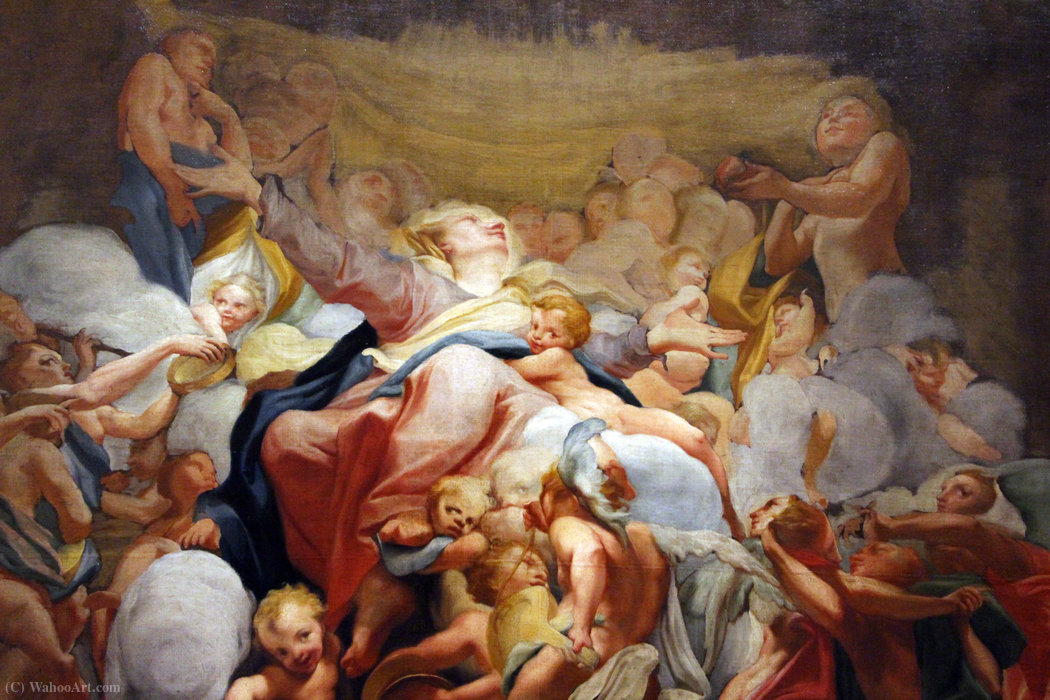
Według opinii kuratorów galerii, najsłynniejszym obrazem Gregorio De Ferrari jest Summer room (1688), którego oryginał znajduje się w Musei di Strada Nuova w Genova. The Assumption of the Virgin (1700) i Juno and Argus (1685) dopełniają trio, które zna każde oko. Z 9 dzieł Gregorio De Ferrari w naszym katalogu, galeria prezentuje poniżej 9 najsłynniejszych prac – każda z nich jest oryginałem z podaniem roku powstania, muzeum oraz cech wyróżniających ją na tle innych.

1647 – 1726, Porto Maurizio Najwięcej dzieł: Musei di Strada Nuova

10 najlepszych obrazów artysty Gregorio De Ferrari w galerii

1
Summer room (1688) autorstwa Gregorio De Ferrari

Summer room

1688 · Fresco · Musei di Strada Nuova, Genova

The ceiling opens up into the Summer room, a luminous fresco painting that captures a sense of celestial movement. This work emerges from the hand of Gregorio De Ferrari, a painter who brings a lyrical energy to the surfaces he touches. Born in Porto Maurizio in 1647, he carries the spirit of the Genoese School into this airy, expansive space. The light seems to dissolve the very architecture of the…

3
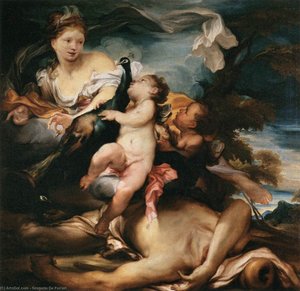
Juno and Argus (1685) autorstwa Gregorio De Ferrari

Juno and Argus

1685 · Oil On Canvas · Luwr, Paryż

To gaze upon this depiction of Juno and Argus is to step directly into the opulent heart of the Baroque age, where mythology was not merely recounted but dramatically lived. Gregorio De Ferrari captures a moment of profound intimacy amidst the grandeur expected of Roman divinity. The scene centers on Juno, the powerful goddess, portrayed in an act of tender motherhood as she cradles her infant son, Argus, allowing him…

4
Lot and his daughters autorstwa Gregorio De Ferrari

Lot and his daughters

The scene is set within a dim, cave-like environment where light falls upon three figures. On the left, a woman is draped in red fabric. A man lies with his head resting in her lap, his body positioned horizontally across the mid-ground. Behind them, a third figure, also dressed in red, stands in a vertical posture. The lighting creates deep shadows within the rocky recesses of the background. Near the…

5
Summer (1680) autorstwa Gregorio De Ferrari

Summer

1680 · Fresco

The scene unfolds through the hand of Gregorio De Ferrari, an Italian Baroque painter of the Genoese School. In this work, titled Summer, the artist captures a specific moment of seasonal grace. Created in 1680, the piece emerges from a period when De Ferrari was already establishing his presence within the artistic traditions of his homeland. He was born in 1647, bringing a sense of movement and light to the…

6
Hercules and Antaeus (1690) autorstwa Gregorio De Ferrari

Hercules and Antaeus

1690 · Oil On Canvas · Palazzo Cattaneo, Genova

Hercules and Antaeus by Gregorio De Ferrari captures a moment of intense physical conflict from classical mythology. The composition centers on the struggle between the hero Hercules and the giant Antaeus. Hercules is rendered with significant muscularity, his form locked in a dynamic wrestling pose with the more slender, long-haired figure of Antaeus. Their intertwined bodies convey the raw power and kinetic energy inherent in their mythic combat.

Tematy, które przyciągnęły wzrok Gregorio De Ferrari

Cztery motywy najczęściej powracające w tych oryginałach, z których każdy doczekał się swojego najdoskonalszego przykładu.

Muzea przechowujące oryginały Gregorio De Ferrari

4 muzeów, w których znajduje się najwięcej obrazów z tej strony.

Muzea Miasto Dzieła artysty Gregorio De Ferrari Obrazy z tej listy
Musei di Strada Nuova, GenovaMusei di Strada Nuova Genova 2 Summer room, Noli me tangere
Museo del Prado, MadrytMuseo del Prado Madryt 1 The Assumption of the Virgin
Luwr, ParyżLuwr Paryż 1 Juno and Argus
Palazzo Cattaneo, GenovaPalazzo Cattaneo Genova 1 Hercules and Antaeus

Gregorio De Ferrari, jedno kultowe dzieło na dekadę

Dzieła według dekad

Wybierz dekadę, aby zobaczyć dzieło, które ją definiuje.

Obrazy artysty Gregorio De Ferrari: odpowiedzi galerii

Który obraz Gregorio De Ferrari jest najsłynniejszy ze wszystkich?Odkryj odpowiedź

Summer room (1688), Musei di Strada Nuova, Genova. Następne są The Assumption of the Virgin (1700) oraz Juno and Argus (1685).

Ile lat miał Gregorio De Ferrari, gdy ukończył Summer room?Odkryj odpowiedź

41 lat: Summer room pochodzi z 1688, a Gregorio De Ferrari urodził(a) się w 1647.

Ile dzieł stworzył/a Gregorio De Ferrari?Odkryj odpowiedź

Nasz katalog zawiera 9 dzieł artysty Gregorio De Ferrari, datowanych od 1680 do 1700.

Gdzie można znaleźć najsłynniejsze oryginały autorstwa Gregorio De Ferrari?Odkryj odpowiedź

W większości znajdują się w Musei di Strada Nuova (Genova), Museo del Prado (Madryt) i Luwr (Paryż). Powyższa tabela muzeów zawiera ich pełną listę.

Kiedy Gregorio De Ferrari stworzył swoje najsłynniejsze obrazy?Odkryj odpowiedź

W 1680s: 3 z 9 dzieł na tej stronie powstało w tym czasie, w tym Summer room.

Które z najsłynniejszych dzieł Gregorio De Ferrari należą do jego najwcześniejszych i najpóźniejszych prac?Odkryj odpowiedź

Na tej stronie najwcześniejszy to Summer (1680), a najpóźniejszy The Assumption of the Virgin (1700).

Do jakich tematów Gregorio De Ferrari powracał najczęściej?Odkryj odpowiedź

Cherubs (2), Clouds (2) i Blue sky (2), w ramach 9 dzieł na tej stronie.

W jakiej technice najczęściej tworzył Gregorio De Ferrari?Odkryj odpowiedź

Oil On Canvas, dla 3 z 9 dzieł na tej stronie.

Które oryginały artysty Gregorio De Ferrari znajdują się w zbiorach Musei di Strada Nuova?Odkryj odpowiedź

Summer room i Noli me tangere: Musei di Strada Nuova, Genova posiada 2 dzieł widocznych na tej stronie.

Gregorio De Ferrari: artysta

A Lyrical Voice of Genoa’s Baroque

Gregorio De Ferrari stands as a pivotal figure in the Genoese Baroque, embodying its distinctive blend of grandeur and delicate lyricism. Born in Porto Maurizio in 1647, his artistic journey began with an unlikely pursuit of legal studies. However, the call of the brush proved irresistible, leading him to abandon the courtroom for the studio. This transition was guided by the mentorship of Domenico Fiasella, a master whose monumental style left an indelible mark on De Ferrari’s early works. Through this formative period, the young artist absorbed the stylistic echoes of Giovanni Andrea De Ferrari and Giovanni Battista Casone, establishing a foundation that would eventually support one of the most imaginative visions of the seventeenth century.

The evolution of De Ferrari’s hand was profoundly shaped by his time in Parma. Immersed in the atmosphere of Parma Cathedral, he encountered the breathtaking quadratura frescoes—the art of illusionistic ceiling painting—that had been pioneered by Correggio. This encounter was transformative; rather than merely mimicking Fiasella's imposing scale, De Ferrari began to prioritize a more personal and expressive language. He embraced graceful elongations and spiraling, rhythmic movements of figures, drawing inspiration from the sculptural innovations of Filippo Parodi and Bernardo Schiaffino. His work began to breathe with a new, kinetic energy, moving away from static compositions toward a more fluid, atmospheric experience.

The Mastery of Light and Motion

Upon returning to Genoa, De Ferrari became a central pillar of the Casa Piola studio, working alongside his father-in-law, the legendary Domenico Piola. This collaborative era was marked by an extraordinary output of large-scale decorative projects that transformed the interiors of Genoese palaces and churches. In works such as the decoration of the Basilica della Santissima Annunziata del Vastato, De Ferrari masterfully blended the radiant luminescence of Correggio with the sophisticated stylistic elements of Cortona and Castiglione. His ability to weave light through complex, swirling compositions allowed him to create spaces that felt both infinite and intimately alive.

His technical prowess extended beyond the ceiling to the easel, where he produced works of profound mythological and religious depth. Notable examples include:

  • Juno and Argus: A captivating display of tension and classical drama, currently housed in the Musée du Louvre.
  • Ascension of Christ: An evocative piece showcasing his ability to handle divine light and celestial movement.
  • Hercules and Antaeus: A testament to his skill in depicting muscularity and the raw power of mythic struggle.

The artist’s brushwork was characterized by a free-flowing, exploratory quality that many historians view as a precursor to the Rococo style. His compositions often possessed an airy, weightless elegance that led one critic to famously describe him as "a grander Fragonard," despite the fact that the French master would not be born for decades after De Ferrari's death. This anticipatory spirit gave his work a unique temporal quality, bridging the heavy drama of the High Baroque with the lighthearted grace of the coming century.

Legacy and Historical Significance

The historical significance of Gregorio De Ferrari lies in his ability to synthesize the diverse influences of the Italian landscape into a singular, unmistakable style. He did not merely participate in the Genoese Baroque; he elevated it to a level of poetic sophistication that few could match. Through his prolific collaborations and his mastery of both fresco and canvas, he left an indelible imprint on the architectural fabric of Genoa, decorating landmarks such as the Palazzo Rosso, Villa Balbi, and the churches of San Siro and San Giovanni Battista.

His influence also extended to the next generation, most notably through his son, Lorenzo De Ferrari, who continued the family tradition of excellence. As a painter, draughtsman, and architect, Gregorio De Ferrari’s legacy is one of movement, light, and an enduring sense of wonder. He remains a master of the ephemeral, capturing the fleeting beauty of a spiraling figure or a sun-drenched cloud with a precision that continues to captivate the modern eye.