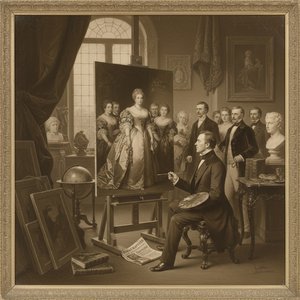
George W. Moore Henton – A Leicester Landscape Painter
George W. Moore Henton (1869-1924) stands as a significant figure in British landscape painting, particularly renowned for his meticulous depictions of Leicester and its Victorian surroundings. Born in Leicester, England, he possessed an unwavering dedication to capturing the beauty of everyday life through detailed pencil drawings and oil paintings—a technique that cemented his reputation as one of Leicester’s most celebrated artists.- Early Life & Artistic Training: Henton's formative years were spent absorbing artistic influences from prominent Victorian educators like George Daniell, who instilled in him a passion for observation and accurate representation. This grounding proved invaluable when he embarked on his artistic journey.
- The New Walk & Architectural Precision: His most enduring legacy resides in his masterful renderings of The New Walk, Leicester—a sprawling Victorian promenade lined with trees and ornamental gardens. Henton’s drawings meticulously documented the architectural details of buildings along the walkway, showcasing a remarkable sensitivity to form and texture. These works are considered cornerstones of Leicester's artistic heritage.
- Notable Achievements: Beyond “The New Walk,” Henton produced numerous landscapes capturing the serene beauty of Leicestershire countryside. His dedication to detail earned him recognition within the artistic community, establishing him as a respected chronicler of Victorian Britain.
Pytania i odpowiedzi
Gdzie można znaleźć dzieła Georg W. Henton pogrupowane według tematów?
Dzieła artysty Georg W. Henton można przeglądać według tematów na stronie Atlas tematów.
Jak mogę znaleźć dzieła artysty Georg W. Henton w konkretnej palecie barw?
Aby znaleźć prace artysty Georg W. Henton w konkretnej palecie barw, skorzystaj ze strony Według palet kolorystycznych poświęconej temu artyście.
Gdzie można znaleźć dzieła Georg W. Henton uporządkowane według kolorów?
Strona Indeks kolorystyczny pozwala przeglądać dzieła Georg W. Henton z podziałem na kolory.