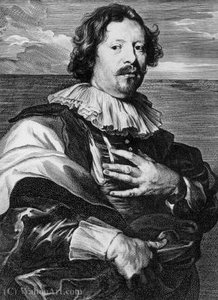
Portret Gaspar De Crayer

Obrazy: 86 najsłynniejszych dzieł artysty Gaspar De Crayer – spojrzenie galerii

Aktualizacja: Listopad 2026 · ranking według naszego wskaźnika popularności (liczba wyszukiwań, wizyt i zamówień dla każdego dzieła) · 90 dzieł Gaspar De Crayer w naszym katalogu

W skrócie

Według opinii kuratorów galerii, najsłynniejszym obrazem Gaspar De Crayer jest Saint Augustine (1655), którego oryginał znajduje się w Museo del Prado w Madryt. Portrait of Nicolas Triest, Count d'Auweghem (1620) i Anne of Austria, Consort of Emperor Mathias (1650) dopełniają trio, które zna każde oko. Z 90 dzieł Gaspar De Crayer w naszym katalogu, galeria prezentuje poniżej 86 najsłynniejszych prac – każda z nich jest oryginałem z podaniem roku powstania, muzeum oraz cech wyróżniających ją na tle innych.

1584 – 1669, Antwerpia Baroque painting Najwięcej dzieł: Museum of Fine Arts Ghent (MSK)

10 najlepszych obrazów artysty Gaspar De Crayer w galerii

1
Saint Augustine (1655) autorstwa Gaspar De Crayer

Saint Augustine

1655 · Oil · Museo del Prado, Madryt

A solemn figure in full episcopal regalia dominates the composition, positioned on a rugged shoreline under a twilight sky. The saint, draped in heavy liturgical vestments, gazes downward toward a small child playing with shells at the water's edge. This encounter, set against the muted blues and greys of a receding sea, creates a sense of quiet authority and contemplative grace. The lighting follows a chiaroscuro pattern, casting a soft…

3
Anne of Austria, Consort of Emperor Mathias (1650) autorstwa Gaspar De Crayer

Anne of Austria, Consort of Emperor Mathias

1650 · Oil On Canvas · Nationalmuseum, Stockholm

The portrait depicts Anne of Austria, Consort of Emperor Mathias, positioned in a full-length vertical composition. She stands slightly off-center, her posture upright and formal. The subject wears a voluminous black patterned gown that absorbs much of the light, creating a deep contrast against the surrounding elements. A large lace ruff encircles her neck, accompanied by delicate lace ruffles at the cuffs. Multiple rows of pearls drape across her chest,…

4
Lamentation (1650) autorstwa Gaspar De Crayer

Lamentation

1650 · Oil On Canvas · Kunsthistorisches Museum, Wiedeń

The artwork titled Lamentation, also referred to as The Lamentation of Christ, is an oil on canvas painting by the Flemish artist Gaspard De Crayer. Executed between 1649 and 1656, this large-scale figured Pietà depicts the aftermath of the crucifixion. The subject matter focuses on the physical presence of the deceased Christ and the surrounding figures of mourning.

5
Virgin with child and saints Maria Magdalen, Cecilia, Dorothea, Catharina and Augustine (1638) autorstwa Gaspar De Crayer

Virgin with child and saints Maria Magdalen, Cecilia, Dorothea, Catharina and Augustine

1638 · Oil On Canvas · Kunsthistorisches Museum, Wiedeń

The Virgin Mary sits at the heart of a pyramid, her presence anchoring a heavy, sacred gathering. Beside her, the Christ Child rests within the folds of her garments. Around this central pair, a group of saints forms a quiet circle of devotion. Maria Magdalen, Cecilia, Dorothea, Catharina, and Augustine occupy the space with a grounded, monumental weight. Their bodies are arranged in a way that directs the eye upward,…

6
Ecce Homo (1650) autorstwa Gaspar De Crayer

Ecce Homo

1650 · Oil On Canvas · Kunsthistorisches Museum, Wiedeń

The air feels heavy with the weight of a profound, quiet suffering. In this somber scene from 1650, Jesus Christ sits at the center of a dramatic tension that pulls the viewer toward his very wounds. He is presented to the world, a figure marked by the physical toll of his passion. A crown of thorns rests upon his brow, and the reed held in his hand serves as a…

9
St Theresa receiving a gold chain and a mantle embroidered with gold from the Virgin (1639) autorstwa Gaspar De Crayer

St Theresa receiving a gold chain and a mantle embroidered with gold from the Virgin

1639 · Oil On Canvas · Kunsthistorisches Museum, Wiedeń

In this 1639 oil on canvas, we find ourselves witnessing a moment of profound spiritual intersection. The composition is structured around a dramatic verticality, pulling the eye from the earthly presence of St. Theresa toward the luminous, cloud-filled heavens. There is a palpable sense of movement here, driven by the sweeping lines of drapery and the graceful, almost weightless gestures of the figures. The light does not merely illuminate the…

10
Saint John the Baptist (1655) autorstwa Gaspar De Crayer

Saint John the Baptist

1655 · Oil On Canvas · Museo del Prado, Madryt

A rugged landscape of ochre and sienna forms the stage for a solitary figure. Saint John the Baptist rises from the earth, his body draped in the coarse texture of animal skins. He is positioned slightly off-center, a vertical pillar of devotion against a backdrop of dark rocks and weathered bark. A long wooden staff cuts a sharp diagonal across his frame, guiding the eye upward toward a face illuminated…

Obrazy artysty Gaspar De Crayer, uszeregowane od 11 do 86 miejsca

11Saint Benedict receives Totila (1601) autorstwa Gaspar De CrayerSaint Benedict receives Totila1601 12Portrait of a Gentleman (1620) autorstwa Gaspar De CrayerPortrait of a Gentleman1620 · Gothenburg Museum of Art 13The Judgement of Salomon (1620) autorstwa Gaspar De CrayerThe Judgement of Salomon1620 · Museum of Fine Arts Ghent (MSK) 14Tobias and the Angel (1618) autorstwa Gaspar De CrayerTobias and the Angel1618 · Museum of Fine Arts Ghent (MSK) 15The ghost of Samuel appears to the witch of Endor; Saul falls prostrate to the ground (1 Samuel 28:3-20) (1619) autorstwa Gaspar De CrayerThe ghost of Samuel appears to the witch of Endor; Saul falls prostrate to the ground (1 Samuel 28:3-20)1619 · Groeningemuseum 16Veronica meets Christ (1622) autorstwa Gaspar De CrayerVeronica meets Christ1622 17Veil of Saint Veronica (1626) autorstwa Gaspar De CrayerVeil of Saint Veronica1626 · Bawarskie Państwowe Zbiory Malarstwa 18Christ and the Samaritan Woman (1626) autorstwa Gaspar De CrayerChrist and the Samaritan Woman1626 · Bawarskie Państwowe Zbiory Malarstwa 19King Philip IV of Spain (1626) autorstwa Gaspar De CrayerKing Philip IV of Spain1626 · Bawarskie Państwowe Zbiory Malarstwa 20Philip IV alongside two servants (1629) autorstwa Gaspar De CrayerPhilip IV alongside two servants1629 21Portrait of Peter Pecquius (1562-16265), chancellor of Brabant (1626) autorstwa Gaspar De CrayerPortrait of Peter Pecquius (1562-16265), chancellor of Brabant1626 · Bawarskie Państwowe Zbiory Malarstwa 22Portrait of Bishop Antonius Triest (1628) autorstwa Gaspar De CrayerPortrait of Bishop Antonius Triest1628 · Museum of Fine Arts Ghent (MSK) 23Elijah Fed by the Raven (1624) autorstwa Gaspar De CrayerElijah Fed by the Raven1624 · Królewskie Muzeum Sztuk Pięknych Antwerpia 24Cleopatra (1634) autorstwa Gaspar De CrayerCleopatra1634 · Statens Museum for Kunst 25The resurrection of Christ (1634) autorstwa Gaspar De CrayerThe resurrection of Christ1634 · Amsterdam Museum 26Christ in the Garden of Olives (fragment) (1633) autorstwa Gaspar De CrayerChrist in the Garden of Olives (fragment)1633 · Rubens House 27Male portrait with bust of Alexander ? (1634) autorstwa Gaspar De CrayerMale portrait with bust of Alexander ?1634 28Equestrian portrait of Gaspar de Guzmán, Count-Duke of Olivares, Grandee of Spain (1627) autorstwa Gaspar De CrayerEquestrian portrait of Gaspar de Guzmán, Count-Duke of Olivares, Grandee of Spain1627 29Thesis Painting (1646) autorstwa Gaspar De CrayerThesis Painting1646 · Bawarskie Państwowe Zbiory Malarstwa 30Adoration of Mary by Saints (1646) autorstwa Gaspar De CrayerAdoration of Mary by Saints1646 · Bawarskie Państwowe Zbiory Malarstwa 31The Virgin and Child with the Saints Dominic, Anthony, Augustine, Monica, Dorothea, and Barbara (1643) autorstwa Gaspar De CrayerThe Virgin and Child with the Saints Dominic, Anthony, Augustine, Monica, Dorothea, and Barbara1643 32The Martyrdom of Saint Lawrence (1640) autorstwa Gaspar De CrayerThe Martyrdom of Saint Lawrence1640 · Museum of Fine Arts Ghent (MSK) 33Rinaldo and Armida (1645) autorstwa Gaspar De CrayerRinaldo and Armida1645 34Saint Augustine in Ecstasy (1648) autorstwa Gaspar De CrayerSaint Augustine in Ecstasy1648 · Galeria Dulwich 35The Guardian Angel (1650) autorstwa Gaspar De CrayerThe Guardian Angel1650 36The Holy Virgin and the Child Jesus Venerated by Different Saints (1650) autorstwa Gaspar De CrayerThe Holy Virgin and the Child Jesus Venerated by Different Saints1650 · Musée de Grenoble 37Saint Apollonia (1650) autorstwa Gaspar De CrayerSaint Apollonia1650 38The Resurrection of Christ (1659) autorstwa Gaspar De CrayerThe Resurrection of Christ1659 · Museum of Fine Arts Ghent (MSK) 39Saint John Evangelist writes his Revelations on the Island of Patmos (1659) autorstwa Gaspar De CrayerSaint John Evangelist writes his Revelations on the Island of Patmos1659 · Museum of Fine Arts Ghent (MSK) 40The Assumption of the Virgin (1650) autorstwa Gaspar De CrayerThe Assumption of the Virgin1650 · Museum of Fine Arts Ghent (MSK) 41Lactatio of Saint Bernard of Clairvaux (1659) autorstwa Gaspar De CrayerLactatio of Saint Bernard of Clairvaux1659 · Królewskie Muzeum Sztuk Pięknych Antwerpia 42Portrait of Oliver Cromwell, Lord Protector of the Commonwealth of Britain (1650) autorstwa Gaspar De CrayerPortrait of Oliver Cromwell, Lord Protector of the Commonwealth of Britain1650 43Christ on the cross surrounded by a priest, possibly Jan Mijtens, and provosts of the Grote Begijnhof in Brussel (1654) autorstwa Gaspar De CrayerChrist on the cross surrounded by a priest, possibly Jan Mijtens, and provosts of the Grote Begijnhof in Brussel1654 44Saint Augustine in Ecstasy (1650) autorstwa Gaspar De CrayerSaint Augustine in Ecstasy1650 · Musée des Beaux-Arts de Valenciennes 45The resurrection of the saints Monulph and Gondulph from their graves (1650) autorstwa Gaspar De CrayerThe resurrection of the saints Monulph and Gondulph from their graves1650 · Bonnefanten Museum 46Penitent Magdalen (1650) autorstwa Gaspar De CrayerPenitent Magdalen1650 · Musée des Beaux-Arts de Valenciennes 47Portrait of Winand de la Margelle, abbot of the Sint-Gertrudisabdij (1664) autorstwa Gaspar De CrayerPortrait of Winand de la Margelle, abbot of the Sint-Gertrudisabdij1664 48The Martyrdom of Saint Blaise (1668) autorstwa Gaspar De CrayerThe Martyrdom of Saint Blaise1668 · Museum of Fine Arts Ghent (MSK) 49The Resurrection of Christ (verso: Christ on the Cross; grisaille by another hand) (1667) autorstwa Gaspar De CrayerThe Resurrection of Christ (verso: Christ on the Cross; grisaille by another hand)1667 · Museum of Fine Arts Ghent (MSK) 50St Bruno (1669) autorstwa Gaspar De CrayerSt Bruno1669 51Saint Dominic of Guzmán (1655) autorstwa Gaspar De CrayerSaint Dominic of Guzmán1655 · Museo del Prado 52Saint Anthony of Padua with the Infant Christ (1655) autorstwa Gaspar De CrayerSaint Anthony of Padua with the Infant Christ1655 · Museo del Prado 53The Annunciation (1620) autorstwa Gaspar De CrayerThe Annunciation1620 · Kunsthistorisches Museum 54Triumph of Scipio Africanus (1634) autorstwa Gaspar De CrayerTriumph of Scipio Africanus1634 · Courtauld Gallery 55Philip IV (1605 1665) in Parade Armor (1628) autorstwa Gaspar De CrayerPhilip IV (1605 1665) in Parade Armor1628 · Metropolitan Museum of Art 56The Ascension of Saint Catherine (1641) autorstwa Gaspar De CrayerThe Ascension of Saint Catherine1641 · Scottish National Gallery 57The Cardinal Infante (1639) autorstwa Gaspar De CrayerThe Cardinal Infante1639 · Museo del Prado 58Pieta with portraits of Henry van Dongelberghe and wife autorstwa Gaspar De CrayerPieta with portraits of Henry van Dongelberghe and wifeKrólewskie Muzea Sztuk Pięknych w Belgii 59LE CHRIST EN CROIX ENTRE SAINTE MADELEINE ET SAINT FRANCOIS autorstwa Gaspar De CrayerLE CHRIST EN CROIX ENTRE SAINTE MADELEINE ET SAINT FRANCOISLuwr 60Portrait of a young man autorstwa Gaspar De CrayerPortrait of a young manFitzwilliam Museum 61The Adoration of the Magi autorstwa Gaspar De CrayerThe Adoration of the MagiMuseum of Fine Arts Ghent (MSK) 62Last Judgment autorstwa Gaspar De CrayerLast JudgmentYekaterinburg Museum of Fine Arts 63Gaspar de Crayer autorstwa Gaspar De CrayerGaspar de Crayer 64TOBIE ET L'ANGE autorstwa Gaspar De CrayerTOBIE ET L'ANGE 65The Meeting of Alexander the Great and Diogenes autorstwa Gaspar De CrayerThe Meeting of Alexander the Great and DiogenesMetropolitan Museum of Art 66LA PECHE MIRACULEUSE autorstwa Gaspar De CrayerLA PECHE MIRACULEUSEPalais des Beaux-Arts de Lille 67L'ELEVATION EN CROIX autorstwa Gaspar De CrayerL'ELEVATION EN CROIX 68LE SAUVEUR DU MONDE autorstwa Gaspar De CrayerLE SAUVEUR DU MONDE 69Job sur le tas de fumier Job dans l'adversité autorstwa Gaspar De CrayerJob sur le tas de fumier Job dans l'adversitéMusée des Augustins 70The Virgin and Child with Saint John autorstwa Gaspar De CrayerThe Virgin and Child with Saint JohnMaidstone Museum - Bentlif Art Gallery 71The Martyrdom autorstwa Gaspar De CrayerThe Martyrdom 72The Coronation of St Rosalie autorstwa Gaspar De CrayerThe Coronation of St RosalieMuseum voor Schone Kunsten 73Van dyck de crayer. autorstwa Gaspar De CrayerVan dyck de crayer.Liechtenstein Museum 74Lille de crayer martyres. autorstwa Gaspar De CrayerLille de crayer martyres.Palais des Beaux-Arts de Lille 75LE MARTYRE DES QUATRE COURONNES (CLAUDIUS, NICOLASTRATUS, SYMPHORIANUS, CASTOR ET SIMPLICIUS) autorstwa Gaspar De CrayerLE MARTYRE DES QUATRE COURONNES (CLAUDIUS, NICOLASTRATUS, SYMPHORIANUS, CASTOR ET SIMPLICIUS) 76LE CALVAIRE AVEC SAINT FRANÇOIS D'ASSISE ET SAINT BERNARDIN DE SIENNE (ESQUISSE) autorstwa Gaspar De CrayerLE CALVAIRE AVEC SAINT FRANÇOIS D'ASSISE ET SAINT BERNARDIN DE SIENNE (ESQUISSE) 77Head Study of a Young Moor autorstwa Gaspar De CrayerHead Study of a Young MoorMuseum voor Schone Kunsten 78OLIVIER CROMWELL, LORD PROTECTEUR D'ANGLETERRE (1559 1658) , DIT AUTREFOIS LEOPOLD GUILLAUME, ARCHIDUC D'AUTRICHE, GOUVERNEUR DES PAYS BAS autorstwa Gaspar De CrayerOLIVIER CROMWELL, LORD PROTECTEUR D'ANGLETERRE (1559 1658) , DIT AUTREFOIS LEOPOLD GUILLAUME, ARCHIDUC D'AUTRICHE, GOUVERNEUR DES PAYS BAS 79Virgin and Child autorstwa Gaspar De CrayerVirgin and Child 80The Adoration of the Shepherds, Gaspar de Crayer, c. 1640 - c. 1650 (1650) autorstwa Gaspar De CrayerThe Adoration of the Shepherds, Gaspar de Crayer, c. 1640 - c. 16501650 · Rijksmuseum 81LA VIERGE ET L'ENFANT JESUS AVEC SAINT AUGUSTIN, SAINTE BARBE ET SAINT ANTOINE autorstwa Gaspar De CrayerLA VIERGE ET L'ENFANT JESUS AVEC SAINT AUGUSTIN, SAINTE BARBE ET SAINT ANTOINELuwr 82The Descent from the Cross, Gaspar de Crayer, c. 1640 - c. 1650 (1650) autorstwa Gaspar De CrayerThe Descent from the Cross, Gaspar de Crayer, c. 1640 - c. 16501650 · Rijksmuseum 83Spotkanie Aleksandra Wielkiego i Diogeneza autorstwa Gaspar De CrayerSpotkanie Aleksandra Wielkiego i DiogenezaWallraf-Richartz-Museum 84Roman Charity (1625) autorstwa Gaspar De CrayerRoman Charity1625 · Museo del Prado 85Caritas Romana (1645) autorstwa Gaspar De CrayerCaritas Romana1645 86Portrait of a Lady (1620) autorstwa Gaspar De CrayerPortrait of a Lady1620 · Academy of Fine Arts Vienna

Słynne obrazy Gaspar De Crayer epoka po epoce

Tematy, które przyciągnęły wzrok Gaspar De Crayer

Cztery motywy najczęściej powracające w tych oryginałach, z których każdy doczekał się swojego najdoskonalszego przykładu.

Muzea przechowujące oryginały Gaspar De Crayer

8 muzeów, w których znajduje się najwięcej obrazów z tej strony.

Muzea Miasto Dzieła artysty Gaspar De Crayer Obrazy z tej listy
Museum of Fine Arts Ghent (MSK), GandawaMuseum of Fine Arts Ghent (MSK) Gandawa 10 The Judgement of Salomon, Tobias and the Angel, Portrait of Bishop Antonius Triest
Museo del Prado, MadrytMuseo del Prado Madryt 6 Saint Augustine, Saint John the Baptist, Saint Dominic of Guzmán
Kunsthistorisches Museum, WiedeńKunsthistorisches Museum Wiedeń 6 Lamentation, Virgin with child and saints Maria Magdalen, Cecilia, Dorothea, Catharina and Augustine, Ecce Homo
Bawarskie Państwowe Zbiory Malarstwa, MonachiumBawarskie Państwowe Zbiory Malarstwa Monachium 6 Veil of Saint Veronica, Christ and the Samaritan Woman, King Philip IV of Spain
Królewskie Muzeum Sztuk Pięknych Antwerpia, AntwerpiaKrólewskie Muzeum Sztuk Pięknych Antwerpia Antwerpia 2 Elijah Fed by the Raven, Lactatio of Saint Bernard of Clairvaux
Musée des Beaux-Arts de Valenciennes, ValenciennesMusée des Beaux-Arts de Valenciennes Valenciennes 2 Saint Augustine in Ecstasy, Penitent Magdalen
Metropolitan Museum of Art, Nowy JorkMetropolitan Museum of Art Nowy Jork 2 Philip IV (1605 1665) in Parade Armor, The Meeting of Alexander the Great and Diogenes
Luwr, ParyżLuwr Paryż 2 LE CHRIST EN CROIX ENTRE SAINTE MADELEINE ET SAINT FRANCOIS, LA VIERGE ET L'ENFANT JESUS AVEC SAINT AUGUSTIN, SAINTE BARBE ET SAINT ANTOINE

Gaspar De Crayer, jedno kultowe dzieło na dekadę

Dzieła według dekad

Wybierz dekadę, aby zobaczyć dzieło, które ją definiuje.

Obrazy artysty Gaspar De Crayer: odpowiedzi galerii

Który obraz Gaspar De Crayer jest najsłynniejszy ze wszystkich?Odkryj odpowiedź

Saint Augustine (1655), Museo del Prado, Madryt. Następne są Portrait of Nicolas Triest, Count d'Auweghem (1620) oraz Anne of Austria, Consort of Emperor Mathias (1650).

Ile lat miał Gaspar De Crayer, gdy ukończył Saint Augustine?Odkryj odpowiedź

71 lat: Saint Augustine pochodzi z 1655, a Gaspar De Crayer urodził(a) się w 1584.

Które to 10 najlepszych obrazów Gaspar De Crayer?Odkryj odpowiedź

Saint Augustine, Portrait of Nicolas Triest, Count d'Auweghem, Anne of Austria, Consort of Emperor Mathias, Lamentation, Virgin with child and saints Maria Magdalen, Cecilia, Dorothea, Catharina and Augustine, Ecce Homo, The martyrdom of Saint Peter, Equestrian portrait of Don Diego Messia Felipe de Guzmán, Marquis of Leganés, St Theresa receiving a gold chain and a mantle embroidered with gold from the Virgin i Saint John the Baptist. Powyższy ranking zawiera rok powstania oraz muzeum dla każdego z nich.

Ile dzieł stworzył/a Gaspar De Crayer?Odkryj odpowiedź

Nasz katalog zawiera 90 dzieł artysty Gaspar De Crayer, datowanych od 1601 do 1669.

Gdzie można znaleźć najsłynniejsze oryginały autorstwa Gaspar De Crayer?Odkryj odpowiedź

W większości znajdują się w Museum of Fine Arts Ghent (MSK) (Gandawa), Museo del Prado (Madryt) i Kunsthistorisches Museum (Wiedeń). Powyższa tabela muzeów zawiera ich pełną listę.

Kiedy Gaspar De Crayer stworzył swoje najsłynniejsze obrazy?Odkryj odpowiedź

W 1650s: 21 z 86 dzieł na tej stronie powstało w tym czasie, w tym Saint Augustine.

Które z najsłynniejszych dzieł Gaspar De Crayer należą do jego najwcześniejszych i najpóźniejszych prac?Odkryj odpowiedź

Na tej stronie najwcześniejszy to Saint Benedict receives Totila (1601), a najpóźniejszy St Bruno (1669).

Do jakich tematów Gaspar De Crayer powracał najczęściej?Odkryj odpowiedź

Man (32), Woman (19) i Drapery (14), w ramach 86 dzieł na tej stronie.

W jakiej technice najczęściej tworzył Gaspar De Crayer?Odkryj odpowiedź

Oil On Canvas, dla 40 z 86 dzieł na tej stronie.

Z jakim nurtem związany jest Gaspar De Crayer?Odkryj odpowiedź

Baroque painting, sądząc po oryginałach na tej stronie.

Które oryginały artysty Gaspar De Crayer znajdują się w zbiorach Museum of Fine Arts Ghent (MSK)?Odkryj odpowiedź

The Judgement of Salomon, Tobias and the Angel i Portrait of Bishop Antonius Triest: Museum of Fine Arts Ghent (MSK), Gandawa posiada 10 dzieł widocznych na tej stronie.

Gaspar De Crayer: artysta

Gaspar de Crayer: Flamandzki Mistrz Blasku Kontrreformacji

Gaspar de Crayer, nazwisko być może mniej znane niż nazwiska jego współczesnych, Rubensa czy Van Dycka, stanowi jednak postać kluczową dla flamandzkiej sztuki XVII wieku. Urodzony w Antwerpii w 1584 roku i zmarły w Gandawie w 1669 roku, poruszał się po burzliwym krajobrazie politycznym Niderlandów Hiszpańskich, stając się malarzem dworskim, mistrzem cechu oraz płodnym twórcą zarówno portretów, jak i monumentalnych ołtarzy. Jego twórczość odzwierciedla nie tylko prądy artystyczne epoki, ale także głębokie przemiany religijne przyniesione przez Kontrreformację, co czyni go istotnym ogniwem łączącym manierystyczne tradycje przeszłości z rodzącym się stylem baroku.

Wczesne lata De Crayera były przesiąknięte sztuką. Był synem Gasparda de Crayera Starszego, szanowanego malarza dekoracyjnego, iluminatora i handlarza dziełami sztuki – to dziedzictwo zaszczepiło w nim szacunek do rzemiosła oraz głębokie zrozumienie materiałów artystycznych. Zamiast jednak pozostać w swoim rodzinnym mieście, Antwerpii, szukał szansy w Brukseli, która pod rządami hiszpańskich gubernatorów stawała się dynamicznym centrum mecenatu artystycznego. To właśnie tam, około 1607 roku, uzyskał status mistrza w cechu św. Łucjana, co było znaczącym osiągnięciem dowodzącym jego technicznego kunsztu i oddania profesji.

Początki jego kariery naznaczone były zleceniami od hiszpańskiego dworu oraz lokalnych dostojników. Szybko ugruntował swoją pozycję jako portrecista, utrwalając wizerunki królów, gubernatorów i członków brukselskiej rady miasta – dzieła te prezentowały zarówno jego zdolność do oddawcia realistycznych rysów twarzy, jak i rosnącą biegłość w kompozycji. Jeździecki portret Dona Diego Messia Felipe de Guzmán (obecnie znajdujący się w Kunsthistorisches Museum w Wiedniu) stanowi doskonały przykład tego okresu, demonstrując wyrafinowane zrozumienie perspektywy oraz niezwykłą dbałość o detal. Jednak to właśnie praca nad ołtarzami prawdziwie przypieczętowała jego sławę i uczyniła go jednym z czołowych artystów swojego pokolenia.

Kontrreformacja i sztuka religijna

Kariera De Crayera przypadła na czas rozkwitu Kontrreformacji, okresu intensywnych reform wewnątrz Kościoła katolickiego. Kościół aktywnie dążył do wykorzystania sztuki jako narzędzia propagandy i nauczania duchowego, zamawiając bogato zdobione ołtarze oraz obrazy dewocyjne, które miały budzić pobożność i wzmacniać doktrynę katolicką. De Crayer w pełni wykorzystał tę szansę, tworząc ogromną liczbę dzieł dla kościołów i klasztorów w całej Flandrii, Niemczech i Hiszpanii. Te ołtarze nie były jedynie dekoracją; stanowiły starannie skonstruowane narracje, zaprojektowane tak, by przekazywać religijne przesłania poprzez żywe obrazy i dramatyczną kompozycję.

Jego podejście było głęboko zainspirowane dominującymi wówczas trendami artystycznymi, w szczególności tymi promowanymi przez Petera Paula Rubensa. Podobnie jak Rubens, De Crayer preferował dynamiczne kompozycje, bogatą kolorystykę i poczucie ruchu – cechy, które nadawały jego pracom emocjonalną intensywność i teatralny rozmach. Po mistrzowsku łączył elementy manieryzmu z rodzącymi się zasadami baroku, tworząc unikalny styl charakteryzujący się elegancją, gracją i głębią duchową.

Malarz dworski i mecenat artystyczny

Wpływ De Crayera wykraczał poza sferę religijną. W 1635 roku kardynał-infant Ferdynand Austriacki, brat króla Filipa IV Hiszpańskiego, mianował go swoim malarzem dworskim – prestiżowa funkcja, która zapewniła mu znaczące bogactwo i dostęp do wpływowych patronów. Nominacja ta stanowiła przełom w jego karierze, zbliżając go do hiszpańskiej rodziny królewskiej i otwierając możliwości tworzenia wielkoskalowych dzieł dla budynków publicznych oraz instytucji religijnych.

Po odejściu Ferdynanda, arcyksiążę Leopold Wilhelm Austriacki osiadł w Brukseli, kontynuując mecenat nad De Crayerem. Zaangażował on również artystę w zlecenie dekoracji pałacu Huis ten Bosch w Hadze, co ukazało wszechstronność malarza i jego zdolność do adaptacji do różnorodnych stylów. W tym okresie jego warsztat rozkwitł, zatrudniając licznych asystentów, którzy pomagali mu realizować nieustanny strumień zamówień – od portretów znamienitych obywateli po misterne ołtarze dla kościołów w całej Europie.

Kluczowe dzieła i dziedzictwo

Wśród najsławniejszych dokonań De Crayera znajduje się „Śmierć Matki Bożej” (obecnie w Madrycie), potężne przedstawienie biblijnej sceny, oraz liczne ołtarze, w tym „Męczeństwo świętego Blasza” i „Caritas Romana”. Ten drugi, namalowany w 1645 roku, jest szczególnie godny uwagi ze względu na dramatyczną kompozycję i sugestywny sposób ukazania chrześcijańskiej miłości bliźniego. Jest to świadectwo jego niezwykłej zdolności do nasycania tematów religijnych emocjonalnym rezonansem.

Dziedzictwo De Crayera tkwi nie tylko w pięknie jego poszczególnych dzieł, ale także w roli, jaką odegrał jako pomost między tradycjami artystycznymi. Przyswoił on lekcje Rafaela Coxie i Rubensa, jednocześnie rozwijając własny, rozpoznawalny styl – cechujący się elegancją, dynamizmem i głębią duchową. Choć często pozostawał w cieniu swoich bardziej sławnych współczesnych, Gaspar de Crayer pozostaje istotną postacią w historii sztuki flamandzkiej, będąc dowodem na nieprzemijającą moc wiary, piękna i artystycznego kunsztu.

Swoje ostatnie lata spędził w Gandawie, gdzie kontynuował przyjmowanie zleceń aż do śmierci w 1669 roku. Jego warsztat funkcjonował jeszcze przez kilka lat po jego odejściu, dbając o to, by jego artystyczne dziedzictwo przetrwało próbę czasu.