Portret Gabriel Ferrier

25 najsłynniejszych obrazów artysty Gabriel Ferrier – wybór z galerii

Aktualizacja: Listopad 2026 · ranking według naszego wskaźnika popularności (liczba wyszukiwań, wizyt i zamówień dla każdego dzieła) · 25 dzieł Gabriel Ferrier w naszym katalogu

W skrócie

Z wszystkich oryginałów pozostawionych przez Gabriel Ferrier, najsłynniejszym jest English Moonlit Dreams (1874). Tuż za nimi znajdują się Judith oraz LE DUC D'AUMALE AU CABINET DES LIVRES AU CHATEAU DE CHANTILLY. Nasz katalog zawiera 25 dzieł autorstwa Gabriel Ferrier; galeria zachowała 25 najbardziej podziwianych na świecie prac, z których każda została przedstawiona wraz z datą powstania, informacją o muzeum oraz jej historią.
1847 – 1914, Nîmes Academic art Najwięcej dzieł: Petit Palais

10 najlepszych obrazów artysty Gabriel Ferrier: wybór galerii

1
English Moonlit Dreams (1874) autorstwa Gabriel Ferrier

English Moonlit Dreams

1874 · Oil

A woman hangs suspended in the midnight air, her arms outstretched as if grasping at the very essence of the breeze. She has left the solid world behind, perhaps rising from the dark hull of a boat resting below. The moon hangs heavy in the sky, casting a pale, silver light over the scene. Around her, the air is alive with the movement of birds, some darting close to her…

2
Judith autorstwa Gabriel Ferrier

Judith

Oil

In this large-scale portrait, we find ourselves in the presence of a woman whose very posture commands the space. She sits upon a simple crate, her form draped in a veil that catches the light, while a necklace adds a touch of elegance to her attire. There is a stillness here, yet it is a heavy, charged silence. In her hand, she holds a knife, a sharp contrast to the…

3
LE DUC D'AUMALE AU CABINET DES LIVRES AU CHATEAU DE CHANTILLY autorstwa Gabriel Ferrier

LE DUC D'AUMALE AU CABINET DES LIVRES AU CHATEAU DE CHANTILLY

Oil On Canvas · Musée Condé, Chantilly

In this oil on canvas, Gabriel Ferrier presents a quiet moment of intellectual companionship. Titled LE DUC D'AUMALE AU CABINET DES LIVRES AU CHATEAU DE CHANTILLY, the work captures the Duke of Aumale alongside his friend, Alfred-Auguste Cuvillier-Fleury. They are situated within the private confines of a study, a setting that suggests a life defined by scholarship and reflection. The scene, created about 1880, offers a glimpse into the personal…

4
Sketch for the painting of the war memorial of 1870 at Lycée Chaptal (1879) autorstwa Gabriel Ferrier

Sketch for the painting of the war memorial of 1870 at Lycée Chaptal

1879 · Oil · Musée Carnavalet, Paryż

This 1879 sketch, intended for a war memorial at Lycée Chaptal, presents a dynamic and allegorical composition organized around a central, white void. The work is executed with gestural lines that prioritize the movement of forms over fine detail. On the left, a figure draped in light-colored, flowing fabric reaches toward the center, while a darker, seated figure in a suit occupies the lower left foreground. To the right, the…

5
Portrait of Claudius Popelin (1881) autorstwa Gabriel Ferrier

Portrait of Claudius Popelin

1881 · Oil On Canvas · Musée des Arts Décoratifs, Paryż

The Portrait of Claudius Popelin is an oil on canvas work by the French artist Gabriel Ferrier. Painted about 1881, the portrait captures the likeness of Claudius Popelin, also known as Claudius Popelin-Ducarre. The subject sits within a scholarly environment, a setting that mirrors the intellectual weight of the man himself.

6
Sketch for the Salle des Fêtes of the Hôtel de Ville de Paris: Flowers (1889) autorstwa Gabriel Ferrier

Sketch for the Salle des Fêtes of the Hôtel de Ville de Paris: Flowers

1889 · Oil · Petit Palais, Paryż

In Sketch for the Salle des Fêtes of the Hôtel de Ville de Paris: Flowers, Gabriel Ferrier directs the eye through a diagonal and upwardly sweeping movement. The perspective is a low-angle view looking upward into a sky, creating a sense of vastness. Within this celestial space, several cherubic figures, known as putti, drift amidst swirling clouds and floral elements. The composition suggests a decorative and allegorical scene, likely intended…

7
Portrait of Charles Sedelmeyer (1837-1925), Art Dealer (1911) autorstwa Gabriel Ferrier

Portrait of Charles Sedelmeyer (1837-1925), Art Dealer

1911 · Oil On Canvas · Musée Carnavalet, Paryż

In this 1911 oil on canvas, an elderly man, Charles Sedelmeyer, is presented in a three-quarter length portrait. He is positioned slightly off-center, facing the viewer with a direct and serious gaze. The subject possesses a thick, white beard that extends down his chest, contrasting against the dark, heavy fabric of his coat. His expression is contemplative, characterized by deep-set eyes and a steady countenance. A magnifying glass is held…

8
Portrait of Paul Déroulède (1846-1914), Politician and Writer (1906) autorstwa Gabriel Ferrier

Portrait of Paul Déroulède (1846-1914), Politician and Writer

1906 · Oil · Musée Carnavalet, Paryż

In the "Portrait of Paul Déroulède (1846-1914), Politician and Writer" by Gabriel Ferrier, the subject is captured in a three-quarter length pose. He sits centrally, his torso angled slightly toward the viewer's left, though his gaze remains fixed directly forward. The palette is somber and muted, built from deep blacks, dark browns, and heavy earthy tones. A dramatic chiaroscuro effect directs the light, pulling the man's face, forehead, and hands…

9
Harry Elkins Widener (1885-1912) (1913) autorstwa Gabriel Ferrier

Harry Elkins Widener (1885-1912)

1913 · Oil On Canvas · Harvard Art Museums, Cambridge

A young man sits enveloped in the heavy, somber shadows of a dim interior, his presence commanding the space through a stillness that feels almost heavy. He is Harry Elkins Widener, and he rests within the deep, warm embrace of an ornate armchair, its red upholstery providing the only sudden pulse of color against the surrounding darkness. Light falls with deliberate intent, washing over his pale face and hands, catching…

10
Ganymede (1874) autorstwa Gabriel Ferrier

Ganymede

1874 · Oil On Canvas

Ganymede is an oil on canvas painting by the French artist Gabriel Ferrier. Created about 1874, the work originated during the artist's Roman period. This specific timeframe coincides with Ferrier's studies at the French Academy in Rome, where he focused on classical and mythological subjects.

Kontynuacja zestawienia Gabriel Ferrier, od 11 do 25

Słynne obrazy Gabriel Ferrier epoka po epoce

Tematy, które przyciągnęły wzrok Gabriel Ferrier

Cztery motywy najczęściej powracające w tych oryginałach, z których każdy doczekał się swojego najdoskonalszego przykładu.

Muzea przechowujące oryginały Gabriel Ferrier

6 muzeów, w których znajduje się najwięcej obrazów z tej strony.

Muzea Miasto Dzieła artysty Gabriel Ferrier Obrazy z tej listy
Petit Palais, ParyżPetit Palais Paryż 4 Sketch for the Salle des Fêtes of the Hôtel de Ville de Paris: Flowers, Sketch for the Salle des Fêtes of the Hôtel de Ville de Paris: The Perfumes, Sketch for the Salle des Fêtes of the Hôtel de Ville de Paris: The Perfumes
Musée Carnavalet, ParyżMusée Carnavalet Paryż 3 Sketch for the painting of the war memorial of 1870 at Lycée Chaptal, Portrait of Charles Sedelmeyer (1837-1925), Art Dealer, Portrait of Paul Déroulède (1846-1914), Politician and Writer
Musée Condé, ChantillyMusée Condé Chantilly 1 LE DUC D'AUMALE AU CABINET DES LIVRES AU CHATEAU DE CHANTILLY
Musée des Arts Décoratifs, ParyżMusée des Arts Décoratifs Paryż 1 Portrait of Claudius Popelin
Harvard Art Museums, CambridgeHarvard Art Museums Cambridge 1 Harry Elkins Widener (1885-1912)
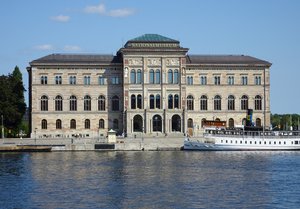
Nationalmuseum, StockholmNationalmuseum Stockholm 1 Portrait de Victor Laloux

Gabriel Ferrier dekada po dekadzie: oryginały definiujące każdy okres

Dzieła według dekad

Wybierz dekadę, aby zobaczyć dzieło, które ją definiuje.

Pytania kolekcjonerów o obrazy Gabriel Ferrier

Z jakiego dzieła najbardziej znany jest Gabriel Ferrier?Odkryj odpowiedź

English Moonlit Dreams (1874). Następne są Judith oraz LE DUC D'AUMALE AU CABINET DES LIVRES AU CHATEAU DE CHANTILLY.

W jakim wieku był Gabriel Ferrier, gdy powstało English Moonlit Dreams?Odkryj odpowiedź

27 lat: English Moonlit Dreams pochodzi z 1874, a Gabriel Ferrier urodził(a) się w 1847.

Jakie są dziesięć najsłynniejszych obrazów, których autorem jest Gabriel Ferrier?Odkryj odpowiedź

English Moonlit Dreams, Judith, LE DUC D'AUMALE AU CABINET DES LIVRES AU CHATEAU DE CHANTILLY, Sketch for the painting of the war memorial of 1870 at Lycée Chaptal, Portrait of Claudius Popelin, Sketch for the Salle des Fêtes of the Hôtel de Ville de Paris: Flowers, Portrait of Charles Sedelmeyer (1837-1925), Art Dealer, Portrait of Paul Déroulède (1846-1914), Politician and Writer, Harry Elkins Widener (1885-1912) i Ganymede. Powyższy ranking zawiera rok powstania oraz muzeum dla każdego z nich.

Ile obrazów pozostawił po sobie Gabriel Ferrier?Odkryj odpowiedź

Nasz katalog zawiera 25 dzieł artysty Gabriel Ferrier, datowanych od 1874 do 1913.

W których muzeach znajdują się arcydzieła Gabriel Ferrier?Odkryj odpowiedź

W większości znajdują się w Petit Palais (Paryż), Musée Carnavalet (Paryż) i Musée Condé (Chantilly). Powyższa tabela muzeów zawiera ich pełną listę.

W których latach Gabriel Ferrier namalował swoje najsłynniejsze dzieła?Odkryj odpowiedź

W 1870s: 4 z 25 dzieł na tej stronie powstało w tym czasie, w tym English Moonlit Dreams.

Jakie są pierwsze i ostatnie słynne oryginały Gabriel Ferrier?Odkryj odpowiedź

Na tej stronie najwcześniejszy to English Moonlit Dreams (1874), a najpóźniejszy Harry Elkins Widener (1885-1912) (1913).

Jakie tematy Gabriel Ferrier wybierał najczęściej?Odkryj odpowiedź

Woman (7), Man (7) i Clouds (5), w ramach 25 dzieł na tej stronie.

Której techniki Gabriel Ferrier używał najczęściej?Odkryj odpowiedź

Oil On Canvas, dla 14 z 25 dzieł na tej stronie.

Do jakiego nurtu artystycznego należy Gabriel Ferrier?Odkryj odpowiedź

Academic art, sądząc po oryginałach na tej stronie.

Które dzieła Gabriel Ferrier znajdują się w Petit Palais?Odkryj odpowiedź

Sketch for the Salle des Fêtes of the Hôtel de Ville de Paris: Flowers, Sketch for the Salle des Fêtes of the Hôtel de Ville de Paris: The Perfumes i Sketch for the Salle des Fêtes of the Hôtel de Ville de Paris: The Perfumes: Petit Palais, Paryż posiada 4 dzieł widocznych na tej stronie.

Gabriel Ferrier: życie i twórczość

Gabriel Ferrier: Pomost między tradycją wiktoriańską a orientalną wizją

Gabriel Ferrier (1847-1914) jawi się jako niezwykle fascynująca postać późnego XIX-wiecznego sztuki francuskiej, ucieleśniająca napięcia między akademickim konserwatyzmem a rodzącą się fascynacją egzotycznymi krajobrazami – ze szczególnym uwzględnieniem Algierii. Urodzony w Nîmes w rodzinie farmaceuty, Gabriel Ferrier rozpoczął swoją artystyczną podróż w murach École des Beaux-Arts w Paryżu. To właśnie tam, pod okiem takich luminarzy jak Ernest Hébert i Isidore Pils, szlifował swój warsztat, chłonąc zasady stylistyczne zakorzenione w impresjonizmie, lecz pozostając wiernym klasycznemu wykształceniu. Ta dualistyczna natura stała się znakiem rozpoznawczym jego dzieł, owocując obrazami, które jednocześnie celebrują skrupulatną obserwację i nasycają sceny przejmującą, ewokatywną atmosferą. Lata formacyjne artysty przypadły na czas triumfu impresjonizmu, któremu przewodzili Claude Monet oraz Pierre-Auguste Renoir. Ferrier wykazał się jednak oporem wobec bezkrytycznego przyjmowania ulotnych efektów świetlnych, stawiając na klarowność kompozycji i szczegółowość oddania formy – co stało się znakiem rozpoznawczym jego wczesnych portretów i pejzaży. Przełomowym momentem okazało się zdobycie w 1872 roku prestiżowej nagrody Prix de Rome, która otworzyła przed nim drzwi do bogatych tradycji artystycznych Rzymu. Dzięki temu stypendium mógł oddać się studiom nad rzeźbą i malarstwem, co zaszczepiło w nim głęboki szacunek do idealizowanych form i monumentalnej skali – elementów, które powracały w jego twórczości przez całą karierę. Prawdziwa transformacja nastąpiła jednak podczas długiej wyprawy do Algierii w latach 1883–1884. W przeciwieństwie do wielu współczesnych mu artystów, którzy szukali jedynie malowniczych widoków, Ferrier podjął głęboką próbę zgłębienia kultury i społeczeństwa Algierii. Jego płótna to nie tylko krajobrazy, ale przede wszystkim portrety Algierczyków – rolników, pasterzy i rzemieślników – ukazanych z niezwykłą wrażliwością i realizmem. To właśnie ten projekt ugruntował jego sławę jako wybitnego malarza orientalisty.

Styl i technika: Synteza obserwacji i wyobraźni

Styl artystyczny Gabriela Ferriera wyróżnia się rygorystyczną dbałością o detal połączoną z mistrzowską manipulacją kolorem i światłem – techniką, która zawdzięcza wiele zarówno impresjonizmowi, jak i malarstwu akademickiemu. Artysta stosował technikę laserunku, nakładając półprzezroczyste warstwy pigmentu na podmalówki, aby uzyskać świetliste efekty przy jednoczesnym zachowaniu precyzji tonalnej. Jego pejzaże zachwycają szczególnie dzięki zastosowaniu perspektywy powietrznej, która w subtelny sposób oddaje gradację barw i tonów, przenosząc widza w majestatyczną i pełną spokoju przestrzeń pustyni algierskiej. Podobnie jego portrety świadczą o głębokim zrozumieniu anatomii i ekspresji, łącząc psychologiczną głębię z formalną elegancją. Artystyczne dokonania Ferriera zostały uhonorowane licznymi nagrodami, w tym złotym medalem na Wystawie Światowej w Paryżu w 1889 roku, co stanowiło dowód jego statusu jako jednego z najzdolniejszych malarzy Francji. W 1906 roku został wybrany do Académie des Beaux-Arts, zajmując prestiżowe miejsce w kręgach francuskiej elity artystycznej. Jego wpływ wykraczał jednak daleko poza własne płótna; jako profesor rysunku w Maison d’éducation de la Légion d’honneur oraz wykładowca w École des Beaux-Arts, kształtował talenty przyszłych pokoleń. Wśród jego uczniów znaleźli się tacy artyści jak Paul Émile Bécat, Roger Bissière, André Fau, Luis Ricardo Falero oraz Albert Lynch, którzy wnieśli znaczący wkład w krajobraz artystyczny swoich czasów.

Trwałe znaczenie wizji Ferriera

Wkład Gabriela Ferriera w sztukę francuską polega na unikalnej zdolności do syntezy rozbieżnych wpływów w spójną, estetyczną wizję. Stał się on rzecznikiem humanistycznego podejścia do orientalizmu, przedstawiając algierskie tematy z godnością i szacunkiem, co stanowiło odważne odejście od dominujących wówczas stereotypów. Jego obrazy wciąż rezonują we współczesnym odbiorcy dzięki wyśmienitemu rzemiosłu, ewokatywnej atmosferze i głębokiemu zaangażowaniu w złożoność ludzkiego doświadczenia. Dziedzictwo Ferriera żyje nie tylko w jego dorobku malarskim, ale także w roli mentora, który ukształtował kariery wybitnych artystów niosących jego stylistyczne innowacje w wiek XX.