

1


Aktualizacja: Listopad 2026 · ranking według naszego wskaźnika popularności (liczba wyszukiwań, wizyt i zamówień dla każdego dzieła) · 3 dzieł Eugène Castelnau w naszym katalogu
W skrócie
Spośród wszystkich dzieł oryginalnych, które pozostawił Eugène Castelnau, najsłynniejszym jest The music lesson (1866), znajdujący się w kolekcji Musée Paul Valéry w Sète. Tuż za nimi znajdują się Les garrigues du pic Saint-Loup (1859) oraz Paysage, les bords du Vidourle (1880). Nasz katalog zawiera 3 dzieł autorstwa Eugène Castelnau; galeria zachowała 3 najbardziej podziwianych na świecie prac, z których każda została przedstawiona wraz z datą powstania, informacją o muzeum oraz jej historią.
2 muzeów, w których znajduje się najwięcej obrazów z tej strony.
| Muzea | Miasto | Dzieła artysty Eugène Castelnau | Obrazy z tej listy |
|---|---|---|---|
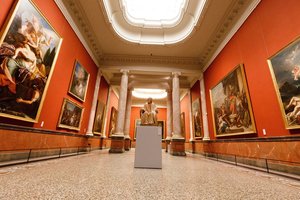 Musée Fabre |
Montpellier | 2 | Les garrigues du pic Saint-Loup, Paysage, les bords du Vidourle |
 Musée Paul Valéry |
Sète | 1 | The music lesson |
Wybierz dekadę, aby zobaczyć dzieło, które ją definiuje.


The music lesson (1866), Musée Paul Valéry, Sète. Następne są Les garrigues du pic Saint-Loup (1859) oraz Paysage, les bords du Vidourle (1880).
39 lat: The music lesson pochodzi z 1866, a Eugène Castelnau urodził(a) się w 1827.
Nasz katalog zawiera 3 dzieł artysty Eugène Castelnau, datowanych od 1859 do 1880.
W większości znajdują się w Musée Fabre (Montpellier) i Musée Paul Valéry (Sète). Powyższa tabela muzeów zawiera ich pełną listę.
Na tej stronie najwcześniejszy to Les garrigues du pic Saint-Loup (1859), a najpóźniejszy Paysage, les bords du Vidourle (1880).
Les garrigues du pic Saint-Loup i Paysage, les bords du Vidourle: Musée Fabre, Montpellier posiada 2 dzieł widocznych na tej stronie.
Born in Montpellier, France, Eugène Castelnau was a member of a prominent Protestant bourgeois family. He was the son of Émile Castelnau, a merchant and municipal councilor, and Anaïs Pomier. His familial connections to the art world were significant, as he was the cousin of the painter Frédéric Bazille. After beginning his drawing studies under Charles Matet at the École des beaux-arts de Montpellier, he moved to Switzerland for his secondary education before traveling to Paris to study in the studios of Alexandre Calame and Charles Gleyre.
In 1853, Castelnau traveled to Italy, where he spent four months exploring the Roman countryside and the Bay of Naples. During his time in Rome, he frequented the painter Ernest Hébert and visited various cultural landmarks, including the Borghese Gallery, the Doria Palace, and numerous churches to observe frescoes, mosaics, and sculptures. He eventually married Marie Stéphanie Blouquier in 1855, and the couple had four children.
Castelnau's professional career included participation in the 1855 Exposition universelle in Paris, where he presented his first painting, Les Marais pontins. His artistic legacy is preserved through works such as Les Bords du Vidourle and Les Garrigues du Pic Saint-Loup, both of which are held in the Musée Fabre in Montpellier.
Beyond his canvas, Castelnau was active in the civic and artistic life of Montpellier. He served as a deputy mayor and later became the president of the Société artistique de l'Hérault in 1873. His influence as a teacher extended to students such as: