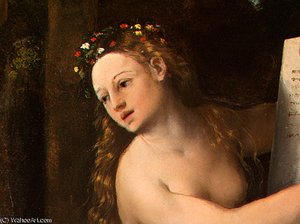
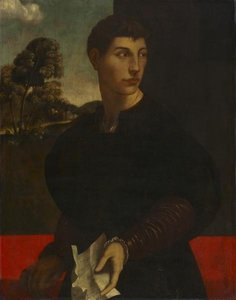
Portret Dosso Dossi

57 najsłynniejszych obrazów artysty Dosso Dossi – wybór z galerii

Aktualizacja: Listopad 2026 · ranking według naszego wskaźnika popularności (liczba wyszukiwań, wizyt i zamówień dla każdego dzieła) · 61 dzieł Dosso Dossi w naszym katalogu

W skrócie

Spośród wszystkich dzieł oryginalnych, które pozostawił Dosso Dossi, najsłynniejszym jest Saint George (1513), znajdujący się w kolekcji Muzeum J. Paula Getty'ego w Los Angeles. Tuż za nimi znajdują się Circe and Her Lovers in a Landscape, c. - (100.8(13) (1525) oraz Apollo and Daphne (1524). Nasz katalog zawiera 61 dzieł autorstwa Dosso Dossi; galeria zachowała 57 najbardziej podziwianych na świecie prac, z których każda została przedstawiona wraz z datą powstania, informacją o muzeum oraz jej historią.

1486 – 1542, San Giovanni del Dosso Renaissance Najwięcej dzieł: National Gallery of Art

10 najlepszych obrazów artysty Dosso Dossi: wybór galerii

1
Saint George (1513) autorstwa Dosso Dossi

Saint George

1513 · Oil On Panel · Muzeum J. Paula Getty'ego, Los Angeles

In the heart of the Italian Renaissance, where the courtly splendor of Ferrara met the atmospheric magic of Venice, Dosso Dossi breathed life into legends. His Saint George is not merely a depiction of a Christian icon; it is a window into a transformative era of human emotion and artistic innovation. As one of the cornerstones of the School of Ferrara, Dossi captures the saint in a moment that transcends…

2
Circe and Her Lovers in a Landscape, c. - (100.8(13) (1525) autorstwa Dosso Dossi

Circe and Her Lovers in a Landscape, c. - (100.8(13)

1525 · Oil On Canvas

In this oil on canvas, we find ourselves in a secluded landscape where the boundaries between the human and the animal seem to blur. A nude woman sits upon the earth, her legs crossed in a moment of repose, her attention fixed upon a book held before her. She is Circe, the mythological enchantress, yet she is presented here with a startlingly calm presence. Around her, the landscape breathes with…

3
Apollo and Daphne (1524) autorstwa Dosso Dossi

Apollo and Daphne

1524 · Oil On Canvas · Galleria Borghese, Rzym

In the heart of the Italian Renaissance, where the boundaries between myth and reality often blurred into a singular, poetic vision, Dosso Dossi captured a moment of profound transformation. His Apollo and Daphne is not merely a depiction of a Greek legend; it is an immersive experience that invites the viewer into a dreamlike realm of pursuit and metamorphosis. The scene vibrates with a palpable tension, as the god Apollo,…

4
Portrait of Alfonso I d'Este (1530) autorstwa Dosso Dossi

Portrait of Alfonso I d'Este

1530 · Oil On Panel

Portrait of Alfonso I d'Este by Dosso Dossi (Giovanni Di Niccolò De Luteri) presents the Duke of Ferrara in a stately manner. Created about 1530, the work captures the ruler in military attire against an expansive landscape. The subject is portrayed as a powerful ruler, utilizing a composition that balances his physical presence with a grand, theatrical setting.

5
Circe and Her Lovers in a Landscape - (1525) autorstwa Dosso Dossi

Circe and Her Lovers in a Landscape -

1525 · Oil On Canvas

The canvas titled Circe and Her Lovers in a Landscape - by Dosso Dossi (Giovanni Di Niccolò De Luteri) captures a moment of quietude within a dense forest. Dated 1525, the work presents a nude female figure seated amidst the thicket. She appears as a mythological representation of love and wisdom, or perhaps Venus, holding a large stone tablet inscribed with text. A deer rests near her, grounding the scene…

6
Circe (or Melissa) autorstwa Dosso Dossi

Circe (or Melissa)

Oil On Canvas

Circe (or Melissa) by Dosso Dossi (Giovanni Di Niccolò De Luteri) functions as a complex mythological allegory. Executed in oil on canvas about 1525, the work explores the transformative power of magic through the figure of the sorceress. The title suggests a dual identification, linking the classical Circe with the legendary Melissa, a figure often associated with enchantment and metamorphosis.

7
Saint Lucretia (1520) autorstwa Dosso Dossi

Saint Lucretia

1520 · Oil · National Gallery of Art, Waszyngton

Saint Lucretia is a work by Dosso Dossi (Giovanni Di Niccolò De Luteri), an Italian Renaissance painter associated with the School of Ferrara. Created about 1520, the piece reflects the artistic developments occurring within the Ferrarese court during the early sixteenth century.

8
The Trojans Building the Temple to Venus and Making Offerings at Anchises's Grave in Sicily (1520) autorstwa Dosso Dossi

The Trojans Building the Temple to Venus and Making Offerings at Anchises's Grave in Sicily

1520 · Oil On Canvas · National Gallery of Art, Waszyngton

The scene unfolds within the grand narrative of The Trojans Building the Temple to Venus and Making Offerings at Anchises's Grave in Sicily. This oil on canvas, dating to 1520, captures a moment of communal devotion and ancient ritual. The figures gather in a wide field, their presence anchored by a distant castle that rises against the horizon. Within this setting, the weight of myth meets the tangible reality of…

9
Circe and Her Lovers in a Landscape (11) - (1525) autorstwa Dosso Dossi

Circe and Her Lovers in a Landscape (11) -

1525 · Oil On Canvas

The oil on canvas work titled Circe and Her Lovers in a Landscape (11) - was executed by the artist Dosso Dossi (Giovanni Di Niccolò De Luteri). Dated 1525, this painting functions as a mythological allegory. The composition centers on the figure of the sorceress Circe, a subject that allows for the exploration of classical legends through a specific narrative lens.

10
Circe and Her Lovers in a Landscape, (1525) autorstwa Dosso Dossi

Circe and Her Lovers in a Landscape,

1525 · Oil On Canvas

In "Circe and Her Lovers in a Landscape," Dosso Dossi (Giovanni Di Niccolò De Luteri) captures a moment of quietude within a dense forest. Dated 1525, the work presents a nude female figure seated amidst the thicket. She appears as a mythological representation of love and wisdom, or perhaps Venus. The scene explores the transformative power of magic through the figure of the sorceress. A single deer watches from the…

Kontynuacja zestawienia Dosso Dossi, od 11 do 57

11Circe and Her Lovers in a Landscape (1525) autorstwa Dosso DossiCirce and Her Lovers in a Landscape1525 12Circe and Her Lovers in a Landscape (8) - (1525) autorstwa Dosso DossiCirce and Her Lovers in a Landscape (8) -1525 13Circe and Her Lovers in a Landscape (9) - (1525) autorstwa Dosso DossiCirce and Her Lovers in a Landscape (9) -1525 14Circe and Her Lovers in a Landscape - (1525) autorstwa Dosso DossiCirce and Her Lovers in a Landscape -1525 15Circe and Her Lovers in a Landscape - (1525) autorstwa Dosso DossiCirce and Her Lovers in a Landscape -1525 16Circe and Her Lovers in a Landscape (10) - (1525) autorstwa Dosso DossiCirce and Her Lovers in a Landscape (10) -1525 17Circe and Her Lovers in a Landscape - (1525) autorstwa Dosso DossiCirce and Her Lovers in a Landscape -1525 18Circe and Her Lovers in a Landscape, c. - (100.8x(9) (1525) autorstwa Dosso DossiCirce and Her Lovers in a Landscape, c. - (100.8x(9)1525 19Circe and Her Lovers in a Landscape - (1525) autorstwa Dosso DossiCirce and Her Lovers in a Landscape -1525 20Circe and Her Lovers in a Landscape (13) - (1525) autorstwa Dosso DossiCirce and Her Lovers in a Landscape (13) -1525 21Bacchus autorstwa Dosso DossiBacchus 22Sts John and Bartholomew with Donors autorstwa Dosso DossiSts John and Bartholomew with Donors 23Diana and Calisto autorstwa Dosso DossiDiana and Calisto 24A Man embracing a Woman autorstwa Dosso DossiA Man embracing a WomanNational Gallery 25Circe and her Lovers in a Landscape autorstwa Dosso DossiCirce and her Lovers in a Landscape 26Portrait of a Young Man autorstwa Dosso DossiPortrait of a Young ManCleveland Museum of Art 27Madonna and Child autorstwa Dosso DossiMadonna and Child 28portrait of a young man with a dog and a cat autorstwa Dosso Dossiportrait of a young man with a dog and a cat 29Aeneas and Achates on the Libyan Coast autorstwa Dosso DossiAeneas and Achates on the Libyan Coast 30St Sebastian autorstwa Dosso DossiSt Sebastian 31The Holy Family autorstwa Dosso DossiThe Holy Family 32Lady in green tourban autorstwa Dosso DossiLady in green tourban 33The Adoration of the Kings autorstwa Dosso DossiThe Adoration of the KingsNational Gallery 34Witchcraft (Allegory of Hercules) autorstwa Dosso DossiWitchcraft (Allegory of Hercules) 35Nymph and Satyr autorstwa Dosso DossiNymph and Satyr 36St Cosmas and St Damian autorstwa Dosso DossiSt Cosmas and St Damian 37Sibyl autorstwa Dosso DossiSibyl 38Francesco Maria della Rovere Leading His Troups autorstwa Dosso DossiFrancesco Maria della Rovere Leading His Troups 39untitled (7069) autorstwa Dosso Dossiuntitled (7069) 40Circe (detail) autorstwa Dosso DossiCirce (detail) 41untitled autorstwa Dosso Dossiuntitled 42A bacchanal autorstwa Dosso DossiA bacchanalNational Gallery 43Lamentation over the Body of Christ autorstwa Dosso DossiLamentation over the Body of ChristNational Gallery 44A female saint autorstwa Dosso DossiA female saint 45The Embrace autorstwa Dosso DossiThe Embrace 46Witchcraft (or Allegory of Hercules) (1535) autorstwa Dosso DossiWitchcraft (or Allegory of Hercules)1535 · Galleria degli Uffizi 47Circe and Her Lovers in a Landscape (1525) autorstwa Dosso DossiCirce and Her Lovers in a Landscape1525 · National Gallery of Art 48Allegory of Music autorstwa Dosso DossiAllegory of MusicMuseo Horne 49Jupiter, Mercury and the Virtue autorstwa Dosso DossiJupiter, Mercury and the VirtueZamek Królewski na Wawelu 50Anger or the Tussle autorstwa Dosso DossiAnger or the TussleCollezione Vittorio Cini 51untitled (9126) autorstwa Dosso Dossiuntitled (9126)Galleria Borghese 52'Luteri, Italian, dossi) (1479) autorstwa Dosso Dossi'Luteri, Italian, dossi)1479 53The Virgin Appearing to Sts John the Baptist and John the Evangelist autorstwa Dosso DossiThe Virgin Appearing to Sts John the Baptist and John the Evangelist 54Portrait of a Warrior autorstwa Dosso DossiPortrait of a Warrior 55The Trojans Repairing Their Ships in Sicily (1520) autorstwa Dosso DossiThe Trojans Repairing Their Ships in Sicily1520 · National Gallery of Art 56Sibyl (1525) autorstwa Dosso DossiSibyl1525 · Ermitaż 57The Three Ages of Man autorstwa Dosso DossiThe Three Ages of ManMetropolitan Museum of Art

Słynne obrazy Dosso Dossi epoka po epoce

Tematy, które przyciągnęły wzrok Dosso Dossi

Cztery motywy najczęściej powracające w tych oryginałach, z których każdy doczekał się swojego najdoskonalszego przykładu.

Muzea przechowujące oryginały Dosso Dossi

8 muzeów, w których znajduje się najwięcej obrazów z tej strony.

Muzea Miasto Dzieła artysty Dosso Dossi Obrazy z tej listy
National Gallery of Art, WaszyngtonNational Gallery of Art Waszyngton 4 Saint Lucretia, The Trojans Building the Temple to Venus and Making Offerings at Anchises's Grave in Sicily, Circe and Her Lovers in a Landscape
National Gallery, LondynNational Gallery Londyn 4 A Man embracing a Woman, The Adoration of the Kings, A bacchanal
Galleria Borghese, RzymGalleria Borghese Rzym 2 Apollo and Daphne, untitled (9126)
Muzeum J. Paula Getty'ego, Los AngelesMuzeum J. Paula Getty'ego Los Angeles 1 Saint George
Cleveland Museum of Art, ClevelandCleveland Museum of Art Cleveland 1 Portrait of a Young Man
Galleria degli Uffizi, FlorencjaGalleria degli Uffizi Florencja 1 Witchcraft (or Allegory of Hercules)
Museo Horne, FlorenceMuseo Horne Florence 1 Allegory of Music
Zamek Królewski na Wawelu, KrakówZamek Królewski na Wawelu Kraków 1 Jupiter, Mercury and the Virtue

Dosso Dossi dekada po dekadzie: oryginały definiujące każdy okres

Dzieła według dekad

Wybierz dekadę, aby zobaczyć dzieło, które ją definiuje.

Pytania kolekcjonerów o obrazy Dosso Dossi

Z jakiego dzieła najbardziej znany jest Dosso Dossi?Odkryj odpowiedź

Saint George (1513), Muzeum J. Paula Getty'ego, Los Angeles. Następne są Circe and Her Lovers in a Landscape, c. - (100.8(13) (1525) oraz Apollo and Daphne (1524).

W jakim wieku był Dosso Dossi, gdy powstało Saint George?Odkryj odpowiedź

27 lat: Saint George pochodzi z 1513, a Dosso Dossi urodził(a) się w 1486.

Jakie są dziesięć najsłynniejszych obrazów, których autorem jest Dosso Dossi?Odkryj odpowiedź

Saint George, Circe and Her Lovers in a Landscape, c. - (100.8(13), Apollo and Daphne, Portrait of Alfonso I d'Este, Circe and Her Lovers in a Landscape -, Circe (or Melissa), Saint Lucretia, The Trojans Building the Temple to Venus and Making Offerings at Anchises's Grave in Sicily, Circe and Her Lovers in a Landscape (11) - i Circe and Her Lovers in a Landscape,. Powyższy ranking zawiera rok powstania oraz muzeum dla każdego z nich.

Ile obrazów pozostawił po sobie Dosso Dossi?Odkryj odpowiedź

Nasz katalog zawiera 61 dzieł artysty Dosso Dossi, datowanych od 1513 do 1535.

W których muzeach znajdują się arcydzieła Dosso Dossi?Odkryj odpowiedź

W większości znajdują się w National Gallery of Art (Waszyngton), National Gallery (Londyn) i Galleria Borghese (Rzym). Powyższa tabela muzeów zawiera ich pełną listę.

W których latach Dosso Dossi namalował swoje najsłynniejsze dzieła?Odkryj odpowiedź

W 1520s: 20 z 57 dzieł na tej stronie powstało w tym czasie, w tym Circe and Her Lovers in a Landscape, c. - (100.8(13).

Jakie są pierwsze i ostatnie słynne oryginały Dosso Dossi?Odkryj odpowiedź

Na tej stronie najwcześniejszy to Saint George (1513), a najpóźniejszy Witchcraft (or Allegory of Hercules) (1535).

Jakie tematy Dosso Dossi wybierał najczęściej?Odkryj odpowiedź

Landscape (17), Woman (11) i Trees (9), w ramach 57 dzieł na tej stronie.

Której techniki Dosso Dossi używał najczęściej?Odkryj odpowiedź

Oil On Canvas, dla 20 z 57 dzieł na tej stronie.

Do jakiego nurtu artystycznego należy Dosso Dossi?Odkryj odpowiedź

Renaissance, sądząc po oryginałach na tej stronie.

Które dzieła Dosso Dossi znajdują się w National Gallery of Art?Odkryj odpowiedź

Saint Lucretia, The Trojans Building the Temple to Venus and Making Offerings at Anchises's Grave in Sicily i Circe and Her Lovers in a Landscape: National Gallery of Art, Waszyngton posiada 4 dzieł widocznych na tej stronie.

Dosso Dossi: życie i twórczość

Wizjoner z Ferrary: Życie i dziedzictwo Dosso Dossi

W złotym wieku włoskiego renesansu, pośród dworskiego przepychu Ferrary, pojawił się malarz, którego pędzel posiadał moc przeplatania snów z rzeczywistością. Giovanni di Niccolò de Luteri, znany historii pod sugestywnym przydomkiem Dosso Dossi, nie był jedynie kronikarzem mitów, lecz twórcą całych nastrojowych światów. Urodzony około 1489 roku w San Giovanni del Dosso, jego samo nazwisko niesie echa jego pochodzenia, jednak jego artystyczny duch wędrował daleko poza granice miejsca narodzin. Jako centralna postać Scuola di Ferrara, Dossi połączył surową precyzję wczesnego renesansu z emocjonalnymi, opartymi na kolorze innowacjami, które wkrótce miały zdefiniować szkołę wenecką.

Fundamenty mistrzostwa Dossi zostały położone podczas praktyki artystycznej, która połączyła go z gigantami poprzedniego pokolenia. Studiując pod okiem skrupulatnego Andrea Mantegna w Mantui, Dossi odziedziczył głęboki szacunek dla klasycznej struktury i złożonej geometrii perspektywu. Jednak tam, gdzie Mantegna dążył do klarowności i rzeźbiarskiej trwałości, Dossi poszukiwał czegoś znacznie bardziej nieuchwytnego. Zaczął nasycać swoje kompozycje miękką, świetlistą jakością, która sugerowała ruch i tajemnicę – był to rozwój, który ostatecznie postawił go ramię w ramię z legendami takimi jak Tycjan i Giorgione jako pioniera nowego, poetyckiego języka wizualnego.

Mitologiczny przepych i wenecki blask

Prawdziwy geniusz Dossi rozkwitł pod mecenatem dworu Este, szczególnie za panowania Alfonzo I d'Este. W tym wyrafinowanym środowisku odnalazł idealną tematykę: złożone, często erotyzowane i głęboko alegoryczne opowieści z mitologii klasycznej. Jego dzieła, takie jak urzekająca Kirce lub Melissa, nie tylko przedstawiają starożytne legendy; one w nich zamieszkują. Posiadał niezwykłą zdolność łączenia heroizmu z nadprzyrodzonością, tworząc sceny, w których bogowie i nimfy zdają się wyłaniać z półmroku. Ta charakterystyczna „oniryczna” jakość została osiągnięta dzięki mistrzowskiemu wykorzystaniu perspektywy powietrznej, gdzie odległe krajobrazy rozmywają się w miękkich błękitach i przygaszonych zieleniach, wciągając widza w stan cichej kontemplacji.

W dojrzałym stylu Dossi wpływ Wenecji jest nie do pomylenia. Odszedł on od ostrych konturów wypracowanych podczas mantuańskiej nauki na rzecz bardziej płynnego, malarskiego podejścia, charakteryzującego się bogatymi, nasyconymi pigmentami i fascynacją światłem. Ten wenecki wpływ pozwolił mu manipulować kolorem w celu wywołania nastroju, a nie tylko podkreślenia formy. W jego rękach światło nie tylko oświetla scenę; ono ją transformuje, rzucając cienie skrywające tajemnice i blaski sugerujące boskość. Jego zdolność do harmonizowania strukturalnej dyscypliny szkoły ferraryjskiej z chromatycznym ciepłem Wenecji sprawiła, że jego twórczość stała się wyjątkowo pociągająca i trudna do powtórzenia.

Trwały ślad na płótnie renesansu

Historyczne znaczenie Dosso Dossi tkwi w jego roli jako mistrza przejściowego, który pomógł skierować włoską sztukę ku ekspresyjnej wolności manieryzmu. Jego prace, rozciągające się od monumentalnych fresków, takich jak Francesco Maria della Rovere prowadzący swoje wojska, po intymne, enigmatyczne portrety i sybille, demonstrują wszechstronność, która rzuciła wyzwanie ówczesnym granicom malarstwa. Opanował sztukę alegorii, wykorzystując postacie mitologiczne do komunikowania złożonych idei politycznych i humanistycznych, tak cenionych przez elitę Ferrary.

Choć jego życie dobiegło końca w 1542 roku, pozostawiając po sobie dziedzictwo wyryte w samej tkance renesansu, wpływ Dossi pozostaje głęboki. Jego wkład można podsumować poprzez kilka kluczowych osiągnięć artystycznych:

  • Synteza stylów: Skuteczne połączenie strukturalnej precyzji Mantegni z nastrojowym liryzmem mistrzów weneckich.
  • Innowacja atmosferyczna: Pionierskie wykorzystanie krajobrazu i światła, które przedkładało rezonans emocjonalny i głębię psychologiczną nad ścisły realizm.
  • Alegoria narracyjna: Podniesienie malarstwa mitologicznego poprzez tworzenie złożonych, onirycznych opowieści, służących zarówno prestiżowi dworskiemu, jak i humanistycznym poszukiwaniom.
  • Tożsamość Ferrary: Ustanowienie szkoły ferraryjskiej jako odrębnej i żywotnej siły w krajobrazie włoskiego renesansu.

Dziś, gdy spoglądamy na wirujące cienie i świetliste tekstury arcydzieła Dossi, nie patrzymy jedynie na farbę na płótnie; jesteśmy świadkami trwałej potęgi wizjonera, który nauczył świat dostrzegać magię ukrytą w klasycznej przeszłości.