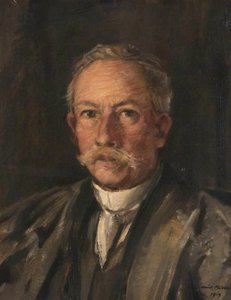
Portret David Muirhead

47 najsłynniejszych obrazów artysty David Muirhead – wybór z galerii

Aktualizacja: Listopad 2026 · ranking według naszego wskaźnika popularności (liczba wyszukiwań, wizyt i zamówień dla każdego dzieła) · 58 dzieł David Muirhead w naszym katalogu

W skrócie

Z wszystkich oryginałów pozostawionych przez David Muirhead, najsłynniejszym jest Girl at the Mirror (1928). Tuż za nimi znajdują się Portrait of a Girl (1922) oraz Blue and Silver (1929). Nasz katalog zawiera 58 dzieł autorstwa David Muirhead; galeria zachowała 47 najbardziej podziwianych na świecie prac, z których każda została przedstawiona wraz z datą powstania, informacją o muzeum oraz jej historią.

1867 – 1930, Edinburgh Impressionism Najwięcej dzieł: Muzea Uniwersytetu Cambridge

10 najlepszych obrazów artysty David Muirhead: wybór galerii

1
Girl at the Mirror (1928) autorstwa David Muirhead

Girl at the Mirror

1928 · Oil

A woman stands before a mirror, captured in a quiet moment of grooming. She wears a white top and a dress, her attention fixed on her reflection as she brushes her hair. The scene is set within an interior where a chair occupies the lower-left corner and a handbag rests near her feet, suggesting the transition between private preparation and public appearance. In the background, two figures remain partially visible,…

2
Portrait of a Girl (1922) autorstwa David Muirhead

Portrait of a Girl

1922 · Oil On Canvas

A young woman emerges from a dark, indistinct void, her presence defined by a soft, directional light. This light falls from the upper left, brushing against the curve of her cheek and the pale expanse of her chest. She is captured in a bust-length view, her form centered within an oval vignette that dissolves into deep umber and ochre. Her dark hair is rendered with thick, visible brushstrokes, providing a…

3
Blue and Silver (1929) autorstwa David Muirhead

Blue and Silver

1929 · Oil · Birmingham Museum and Art Gallery, Birmingham

A young woman is captured in a three-quarter pose, her gaze meeting the viewer with a steady, quiet intensity. She is positioned against a dark, indistinct background that recedes into shadow, isolating her figure and focusing all attention on her presence. The composition is intimate, emphasizing the subject's face and upper body through a shallow perspective. Her hair is styled in an elaborate updo, a detail that anchors her within…

4
Flatford Mill (1900) autorstwa David Muirhead

Flatford Mill

1900 · Painting · Dundee Art Gallery And Museum, Dundee

This painting presents a picturesque view of Flatford Mill in Suffolk, England. The composition centers on a bridge spanning across the water, beneath which a boat is seen passing. The scene is populated by several individuals scattered throughout the landscape, with some figures positioned in the foreground and others situated further in the distance.

5
The Avenue (1901) autorstwa David Muirhead

The Avenue

1901 · Oil

The painting, titled The Avenue, captures a tranquil scene of outdoor activity set within a picturesque park. The composition focuses on a tree-lined road where three bicyclists are depicted in motion. One cyclist is positioned on the left side of the frame, another is situated in the middle, and a third person is located further to the right.

6
A Lowland Landscape autorstwa David Muirhead

A Lowland Landscape

Oil · Amgueddfa Cymru, Cardiff

This oil painting presents a dramatic seascape dominated by an imposing storm cloud. The composition is structured so that the sky and its turbulent clouds occupy approximately two-thirds of the frame. Below the sky, a distant coastal landscape is visible, featuring buildings and what appears to be a road or path. The color palette is primarily composed of grays, browns, and blues, creating a somber and atmospheric effect.

7
The Thames at Battersea, London autorstwa David Muirhead

The Thames at Battersea, London

Oil On Canvas

The artwork presents a monochromatic cityscape scene dominated by reflections in water. It evokes a sense of quiet observation and perhaps melancholy due to the muted tones and slightly somber subject matter. Compositionally, the piece is divided into foreground, middle ground, and background, with a clear emphasis on the horizontal expanse of the river and buildings reflected within it. The perspective is somewhat flattened, suggesting a snapshot or a painted…

8
Landscape with Tree autorstwa David Muirhead

Landscape with Tree

Oil On Canvas

The artwork presents a muted and atmospheric landscape painting, depicting a rural scene dominated by a large, bare tree in the foreground. A figure is seen walking along a path that leads towards distant buildings under an overcast sky. The composition follows a classic landscape arrangement, with the prominent tree acting as a central focal point on the left side of the frame. A winding path leads the viewer's eye…

9
The End of Autumn autorstwa David Muirhead

The End of Autumn

Oil On Canvas

In this oil on canvas, we find ourselves standing before a rural landscape that seems to hold its breath. The scene is dominated by a vast, turbulent sky, where swirling brushstrokes suggest the movement of heavy clouds during an overcast day or perhaps the fading light of twilight. A few dark green trees are positioned slightly off-center, their forms defined by soft lines that blend into the surrounding atmosphere rather…

10
Standing Costumed Figure autorstwa David Muirhead

Standing Costumed Figure

Oil On Canvas

The artwork, titled Standing Costumed Figure, presents a portrait of a young woman positioned centrally within the frame. She is depicted in a theatrical costume, standing against a background that lacks sharp definition, rendered instead in broad washes of color including shades of blue, red, and orange. The figure occupies most of the vertical space, appearing to recede slightly into the distance through a subtle use of perspective.

Kontynuacja zestawienia David Muirhead, od 11 do 47

Słynne obrazy David Muirhead epoka po epoce

Tematy, które przyciągnęły wzrok David Muirhead

Cztery motywy najczęściej powracające w tych oryginałach, z których każdy doczekał się swojego najdoskonalszego przykładu.

Muzea przechowujące oryginały David Muirhead

8 muzeów, w których znajduje się najwięcej obrazów z tej strony.

Muzea Miasto Dzieła artysty David Muirhead Obrazy z tej listy
Muzea Uniwersytetu Cambridge, CambridgeMuzea Uniwersytetu Cambridge Cambridge 2 Leonard Doncaster, Hans Friedrich Gadow
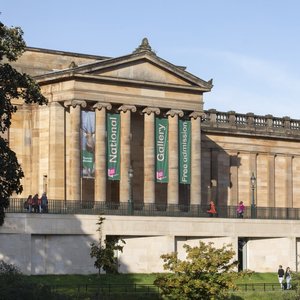
Scottish National Gallery, EdynburgScottish National Gallery Edynburg 2 Portrait of a Lady, Landscape with Figures
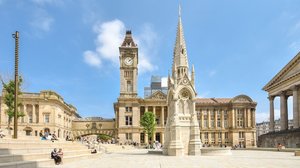
Birmingham Museum and Art Gallery, BirminghamBirmingham Museum and Art Gallery Birmingham 1 Blue and Silver
Dundee Art Gallery And Museum, DundeeDundee Art Gallery And Museum Dundee 1 Flatford Mill
Amgueddfa Cymru, CardiffAmgueddfa Cymru Cardiff 1 A Lowland Landscape
Reading Museum - Town Hall, ReadingReading Museum - Town Hall Reading 1 Landscape
Bolton Museum And Art Gallery, BoltonBolton Museum And Art Gallery Bolton 1 Portrait of a Girl
The Green Howards Regimental Museum, RichmondThe Green Howards Regimental Museum Richmond 1 Richmond Castle, Yorkshire

David Muirhead dekada po dekadzie: oryginały definiujące każdy okres

Dzieła według dekad

Wybierz dekadę, aby zobaczyć dzieło, które ją definiuje.

Pytania kolekcjonerów o obrazy David Muirhead

Z jakiego dzieła najbardziej znany jest David Muirhead?Odkryj odpowiedź

Girl at the Mirror (1928). Następne są Portrait of a Girl (1922) oraz Blue and Silver (1929).

W jakim wieku był David Muirhead, gdy powstało Girl at the Mirror?Odkryj odpowiedź

61 lat: Girl at the Mirror pochodzi z 1928, a David Muirhead urodził(a) się w 1867.

Jakie są dziesięć najsłynniejszych obrazów, których autorem jest David Muirhead?Odkryj odpowiedź

Girl at the Mirror, Portrait of a Girl, Blue and Silver, Flatford Mill, The Avenue, A Lowland Landscape, The Thames at Battersea, London, Landscape with Tree, The End of Autumn i Standing Costumed Figure. Powyższy ranking zawiera rok powstania oraz muzeum dla każdego z nich.

Ile obrazów pozostawił po sobie David Muirhead?Odkryj odpowiedź

Nasz katalog zawiera 58 dzieł artysty David Muirhead, datowanych od 1900 do 1929.

W których muzeach znajdują się arcydzieła David Muirhead?Odkryj odpowiedź

W większości znajdują się w Muzea Uniwersytetu Cambridge (Cambridge), Scottish National Gallery (Edynburg) i Birmingham Museum and Art Gallery (Birmingham). Powyższa tabela muzeów zawiera ich pełną listę.

W których latach David Muirhead namalował swoje najsłynniejsze dzieła?Odkryj odpowiedź

W 1920s: 13 z 47 dzieł na tej stronie powstało w tym czasie, w tym Girl at the Mirror.

Jakie są pierwsze i ostatnie słynne oryginały David Muirhead?Odkryj odpowiedź

Na tej stronie najwcześniejszy to Flatford Mill (1900), a najpóźniejszy Blue and Silver (1929).

Jakie tematy David Muirhead wybierał najczęściej?Odkryj odpowiedź

People (14), Sky (13) i Woman (11), w ramach 47 dzieł na tej stronie.

Której techniki David Muirhead używał najczęściej?Odkryj odpowiedź

Oil, dla 22 z 47 dzieł na tej stronie.

Do jakiego nurtu artystycznego należy David Muirhead?Odkryj odpowiedź

Impressionism, sądząc po oryginałach na tej stronie.

Które dzieła David Muirhead znajdują się w Muzea Uniwersytetu Cambridge?Odkryj odpowiedź

Leonard Doncaster i Hans Friedrich Gadow: Muzea Uniwersytetu Cambridge, Cambridge posiada 2 dzieł widocznych na tej stronie.

David Muirhead: życie i twórczość

David Muirhead: A Victorian Master of Historical Detail

David Muirhead (1867-1930) stands as a significant, yet often underappreciated, figure in late 19th and early 20th-century British art. His career spanned several decades, marked by an unwavering dedication to meticulously rendered historical scenes and portraits – works that offer a remarkably detailed glimpse into the fashions, customs, and social dynamics of Victorian England and its immediate aftermath. While he never achieved the widespread fame of his contemporaries like William Powell or John Atkinson Grimshaw, Muirhead’s consistent quality and profound understanding of his subject matter have secured him a respected place within the annals of British art history.

Born in Edinburgh, Scotland, Muirhead's artistic journey began with studies at the Edinburgh College of Art. However, it was his relocation to London in 1892 that proved pivotal, establishing him firmly within the bustling and competitive environment of the capital’s art scene. Initially, he experimented with landscape painting, influenced by the burgeoning Impressionist movement, but quickly recognized a greater passion for narrative subjects – particularly those rooted in historical accounts and literary sources. This shift led him to develop his signature style: a highly detailed, almost photographic realism combined with a subtle atmospheric quality that evoked the spirit of the era.

The Influence of Narrative and Literary Sources

Muirhead’s artistic vision was deeply informed by literature and historical research. He wasn't simply depicting events; he sought to recreate them with painstaking accuracy, drawing inspiration from novels, biographies, and contemporary accounts. This commitment to authenticity is evident in his numerous paintings based on works by Charles Dickens, Sir Walter Scott, and other prominent writers of the period. His ‘Chepstow Castle’ (1925), for example, isn't merely a landscape; it’s a meticulously rendered tableau vivant, capturing not just the physical appearance of the castle but also the atmosphere and social interactions implied by its setting.

Furthermore, Muirhead was a keen observer of Victorian society. His portraits frequently featured members of the aristocracy and upper-class, reflecting his own social standing and providing valuable insights into the manners and attire of the elite. He possessed an extraordinary eye for detail, meticulously recreating period costumes, hairstyles, and interior furnishings – elements that contribute significantly to the immersive quality of his paintings.

Technique and Style: Realism Elevated

Muirhead’s technical skill was exceptional. He employed a layered approach to painting, building up surfaces with numerous thin glazes of color to achieve remarkable luminosity and depth. His brushwork is generally smooth and controlled, yet subtly textured, creating a sense of tactile realism. He mastered the art of capturing light and shadow, using atmospheric perspective to convey distance and mood. Unlike some of his contemporaries who embraced looser, more expressive styles, Muirhead’s approach remained firmly rooted in academic tradition – though he elevated it through his meticulous observation and technical proficiency.

A key element of his style was his ability to imbue even the most seemingly mundane scenes with a sense of drama and narrative tension. He wasn't simply recording events; he was telling stories, inviting viewers to step back in time and witness the unfolding dramas of Victorian life. His compositions are carefully balanced, drawing the eye to key figures and details while maintaining a harmonious overall effect.
Major Works and Legacy

Among Muirhead’s most celebrated works are ‘Landscape with Figures,’ depicting a rural scene brimming with activity, and his numerous portraits of prominent figures from British society. His paintings frequently appear in collections at museums and private galleries across the United Kingdom, testament to their enduring appeal. His work is particularly valued for its historical accuracy and its ability to transport viewers to another time and place.

Despite not achieving widespread fame during his lifetime, David Muirhead’s legacy as a skilled and dedicated artist continues to grow. His meticulous attention to detail, combined with his deep understanding of Victorian society and literature, has secured him a respected position within the history of British art. His paintings offer a valuable window into a bygone era, providing insights into the fashions, customs, and social dynamics of late 19th-century England – a testament to the enduring power of historical realism.

A Note on Muirhead’s Place in Art History

Muirhead's work often gets categorized as part of the Academic tradition, but he transcends simple labels. He demonstrates a remarkable ability to synthesize meticulous observation with a subtle emotional resonance. While influenced by the Impressionists’ interest in light and atmosphere, he retains a commitment to realism that sets him apart. His paintings are not merely illustrations of historical events; they are carefully constructed narratives that invite contemplation and offer a unique perspective on Victorian life.