A Life Immersed in Animal Portraiture: The World of Conradijn Cunaeus
Conradijn Cunaeus, born on November 1st, 1828, in Dendermonde – a town then nestled within the United Kingdom of the Netherlands – dedicated his life to capturing the essence of the animal world, particularly the loyal companionship and spirited character of dogs. His journey as an artist began with formal training at the Koninklijke Academie van Beeldende Kunsten in Amsterdam from 1844 to 1849, a foundation upon which he built a career defined by
meticulous detail and a keen eye for
naturalism. Crucially, his studies weren’t confined to the academy; Cunaeus also benefited from the guidance of
Nicolaas Pieneman, a prominent figure in Dutch
Romantic painting, whose influence subtly shaped Cunaeus's approach to composition and narrative. His life unfolded across several picturesque locales – Koudekerk aan den Rijn (1854-1868), Amsterdam (1870-1888), and finally the tranquil outskirts of Amsterdam in Nieuwer-Amstel, where he passed away on September 5th, 1895. These moves likely mirrored a search for ideal settings to both work and find inspiration within the
Dutch landscape.
The Canine Canvas: Themes and Techniques
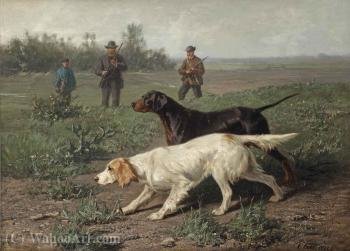
Cunaeus’s artistic output centered around animals, with dogs occupying a particularly prominent place in his oeuvre. However, to define him solely as an animal painter would be limiting. He skillfully broadened his scope to include landscapes populated with figures, lively hunting scenes brimming with action, intimate interiors, and charming genre paintings that offered glimpses into
everyday life. His mastery extended across various mediums – oils were his primary vehicle for larger, more detailed compositions, while watercolors allowed for a lighter, more spontaneous expression. Drawings and lithographs further expanded his reach, enabling wider dissemination of his work. What truly distinguishes Cunaeus is the
realism he brought to his subjects. His dogs aren’t merely representations; they possess personality, emotion, and a tangible presence that draws the viewer in. He wasn't interested in idealized depictions but rather in capturing the unique characteristics of each animal, from their playful energy to their
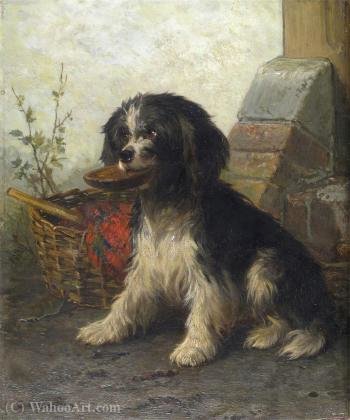
quiet contemplation. This dedication to authenticity is evident in works like “A
black & white terrier by a basket,” where the texture of the fur and the dog’s inquisitive gaze are rendered with remarkable precision.
Influences and Artistic Development
While Cunaeus established his own distinct style, acknowledging the influences that shaped his artistic path is crucial. The mentorship under
Nicolaas Pieneman undoubtedly played a role in developing his compositional skills and narrative sensibilities.
Pieneman’s Romantic leanings likely encouraged Cunaeus to imbue his scenes with a sense of atmosphere and
emotional depth. Beyond
Pieneman, the broader Dutch
landscape painting tradition – particularly the works of artists who focused on
rural life and animal studies – provided a fertile ground for inspiration. The
19th century witnessed a growing appreciation for genre paintings that celebrated domesticity and the beauty of nature, trends which Cunaeus skillfully incorporated into his work. His early pieces likely demonstrate a stronger adherence to academic conventions, gradually evolving towards a more impressionistic brushwork and a looser, more expressive style as he matured. This evolution is visible in comparing earlier, highly detailed works with later paintings that prioritize capturing the fleeting effects of light and atmosphere.
Major Achievements and Lasting Legacy
Although Cunaeus may not be a household name today, his contribution to Dutch
19th-century art remains significant. He successfully carved out a niche for himself as a specialist in animal portraiture, particularly dogs, earning recognition for the quality of his technique and the emotional resonance of his work. Paintings like “
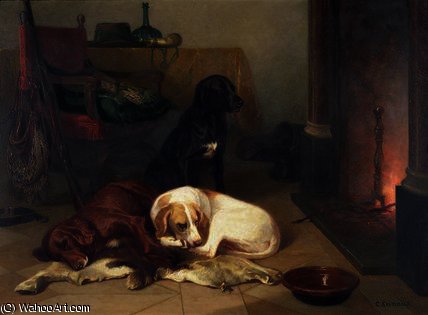
The Cheeky Dogs” and “
By the Fireside” exemplify his ability to capture both the playful spirit and quiet companionship that define our relationship with these animals. His works offer a valuable window into
19th-century domestic life, providing insights into the role of pets within Dutch society.
His paintings are not simply depictions of animals; they are reflections of human emotions and experiences. While he didn’t pursue grand historical or mythological themes, Cunaeus elevated everyday subjects to a level of artistic merit through his dedication to
realism, skillful composition, and sensitive portrayal of character. His legacy lies in the charming and evocative scenes he created – works that continue to delight collectors and offer a glimpse into a bygone era.
The enduring appeal of his paintings speaks to the universal connection between humans and animals.
Rediscovering Cunaeus: A Modern Appreciation
In recent years, there has been a renewed interest in artists like Conradijn Cunaeus, whose work often went overlooked amidst the more celebrated figures of their time. The accessibility of online art databases and resources has allowed for wider appreciation of his oeuvre, revealing the depth and quality of his artistic output.
- His paintings offer a refreshing alternative to grand historical narratives.
- Collectors are increasingly drawn to his charming depictions of dogs and domestic life.
- Scholars recognize his contribution to Dutch 19th-century animal painting.
The
meticulous detail,
emotional depth, and skillful technique that characterize Cunaeus’s work continue to resonate with audiences today. As we seek art that connects us to the natural world and celebrates the simple joys of life, Conradijn Cunaeus offers a compelling vision – one filled with loyal companions, picturesque landscapes, and a timeless appreciation for the beauty of animal portraiture.