A Life Dedicated to the Sun King
Adam Frans van der Meulen, a figure often overshadowed by the grander names of 17th-century art, nevertheless played a pivotal role in shaping the image of Louis XIV – the ‘Sun King’. Born in Brussels in 1632, his life wasn’t merely one of artistic creation; it was an active participation in the construction of royal propaganda. Van der Meulen rose from humble beginnings as a student under Peter Snayers, a master of battle scenes and courtly depictions, to become a central figure at the heart of Louis XIV's meticulously crafted image of power and divine right. His journey took him from the workshops of Flanders to the opulent courts of Paris, where he served as a key architect of the King’s visual legacy.From Workshop to Parisian Court: A Master in the Making
Van der Meulen’s artistic education began within the traditional framework of a master-apprentice relationship. He entered the workshop of Peter Snayers, an established Antwerp painter specializing in battle scenes, hunting expeditions, and depictions of courtly life – subjects that would profoundly influence his own early work. Mastering the intricacies of portraying cavalry skirmishes and the dynamic energy of military engagements formed the foundation of his artistic skillset. The meticulous detail with which he rendered armor, horses, and the expressions of soldiers demonstrated a deep understanding of both technical skill and dramatic composition. Becoming a master within the Brussels Guild of Saint Luke in 1651 signified his growing competence, but it was an invitation from Paris in 1664 that irrevocably altered the course of his career. Jean-Baptiste Colbert, Louis XIV’s formidable Superintendent of Buildings, Arts and Manufactures, recognized Van der Meulen's talent for capturing movement and detail – qualities essential for immortalizing the king’s military triumphs. Colbert tasked him with contributing to a series of tapestries – ambitious projects intended as potent symbols of royal authority and national pride. This marked his entry into the orbit of Charles Le Brun, the court painter and director of the newly established Gobelins Manufactory, where Van der Meulen would become an integral part of a team dedicated to visually constructing the myth of Louis XIV.The Art of Propaganda: Tapestries and Military Campaigns
Van der Meulen’s role at the Gobelins was multifaceted. He wasn't merely executing designs; he was actively involved in conceptualizing and realizing complex narrative cycles. The “History of the King” series, depicting Louis XIV’s military conquests, stands as a testament to his skill. He meticulously documented the king’s campaigns – accompanying Louis on expeditions to Flanders and Burgundy, sketching scenes of battles, sieges, and strategic maneuvers. These drawings served as the basis for paintings that were then translated into the intricate designs woven into the tapestries. Collaboration was key; Van der Meulen frequently worked alongside other Flemish artists like Adriaen Frans Boudewijns and Abraham Genoels, who contributed their expertise in landscape design and engraving. The “Maison Royales” series, showcasing the opulent palaces of Louis XIV, further demonstrated his versatility and ability to capture both the grandeur of architecture and the refined elegance of courtly life. His work wasn’t simply about depicting events; it was about constructing a carefully curated image of power, control, and divine right. The annual increases in his wages at the Gobelins reflect not only his artistic skill but also his growing importance to the propagandistic aims of the French monarchy.Style, Influence, and Lasting Legacy
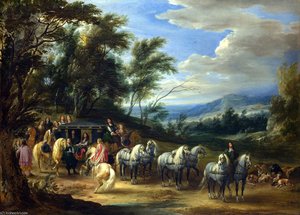
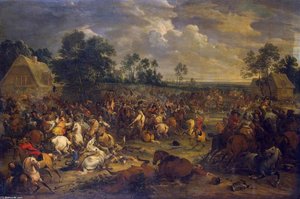
Van der Meulen’s artistic style is characterized by a dynamic energy and meticulous attention to detail. His battle scenes aren't static representations; they convey the chaos, drama, and sheer scale of warfare. He possessed an exceptional ability to portray horses with realism and grace – a skill that earned him considerable acclaim and was highly valued in the context of military painting. The figures are often rendered with a sense of movement and immediacy, capturing the fleeting moments of action and the intensity of combat. However, it’s crucial to remember that his work wasn’t solely about artistic merit. It served a clear propagandistic purpose, glorifying Louis XIV's reign and projecting an image of invincibility. This focus on realism, combined with a deliberate emphasis on spectacle, significantly impacted the development of military painting in France. He established a style that would be emulated by subsequent generations of artists. Beyond his paintings, his designs for tapestries contributed to the flourishing of tapestry production during Louis XIV’s reign, solidifying France's position as a leading center for this luxurious art form. Recognized for his contributions, Van der Meulen received numerous honors – a royal privilege allowing engravings of his works, appointment as “Ordinary Painter to the King” in 1673, and admission to the prestigious Royal Academy of Painting and Sculpture without having to submit a traditional reception piece – a testament to his established reputation. Adam Frans van der Meulen died in Paris in 1690, leaving behind a legacy not just as a skilled artist but as an instrumental figure in shaping the visual narrative of one of Europe’s most powerful monarchs. His detailed depictions of battles, landscapes, and courtly life continue to offer valuable insights into the era and stand as enduring examples of Baroque artistry serving a potent political purpose.Current Meta Description:
Adam Frans van der Meulen (1632-1690) was a Flemish Baroque painter renowned for his dynamic battle scenes & landscapes glorifying Louis XIV's triumphs, shaping the 'Sun King’s' image and influencing French military art.Current Meta Keywords:
Adam Frans van der Meulen, Adam-François van der Meulen, Flemish painter, Baroque art, Battle painting, Louis XIV, Military art, Tapestry design, 17th century painting, Horse paintingPytania i odpowiedzi
Gdzie mogę zobaczyć wszystkie dzieła Adam Frans van der Meulen?
Wszystkie dzieła Adam Frans van der Meulen dostępne w niniejsza strona można przeglądać na stronie Wszystkie dzieła artysty.
Ile dzieł Adam Frans van der Meulen można przejrzeć w katalogu?
Możesz przeglądać 94 dzieł sztuki dzieł autorstwa Adam Frans van der Meulen na stronie Wszystkie dzieła.
Jakie inne pseudonimy lub nazwy stosuje Adam Frans van der Meulen?
Adam Frans van der Meulen występuje również pod innymi nazwiskami: Adam-François van der Meulen.