

 Zobacz w skali 1:1
 Wyślij
 Udostępnij
 Szczegóły
 Przewodnik

 Pobierz plik obrazu
 Podobne obiekty
 RTG
RTG Pokaz slajdów
 Statystyki
La,la,la (RE50)


 Czytaj więcej
Dzieło sztuki prezentowane na tej stronie podlega ochronie prawem autorskim, co oznacza, że nie mamy prawa do tworzenia ani sprzedaży jego identycznej reprodukcji. Ochrona ta jest egzekwowana na mocy umów międzynarodowych, takich jak Konwencja berneńska oraz przez przepisy prawa krajowego, w tym te określone w Prawo autorskie USA – Tytuł 17.
Jako pełną szacunku i legalną alternatywę oferujemy personalizowane, malowane ręcznie dzieła sztuki inspirowane oryginałem. Nasi wykwalifikowani i profesjonalni artyści starannie analizują styl, nastrój oraz artystyczną esencję pierwowzoru, aby stworzyć nowe, unikalne dzieło, które przywołuje te same emocje – pozostając jednocześnie w pełni oryginalną kreacją.
Metoda ta jest w pełni zgodna z przepisami prawa autorskiego, ponieważ nie polega na kopiowaniu ani powielaniu chronionego dzieła. Stanowi ona kreatywną reinterpretację – nowy obraz, który czerpie inspirację z oryginału, ale nie jest z nim tożsamy.
Ręcznie malowana reprodukcja olejowa
Ręcznie malowany obraz olejny na płótnie, wykonany na zamówienie przez naszych artystów w wybranym przez Ciebie wymiarze i oprawie. ( Przełącz na wersję drukowaną Przełącz na wersję cyfrową)




P118B zł10

P118H zł10

P118W zł10

P438Z zł10

P508JH zł12

P508YH zł12

P805H zł10

P805Z zł10

P919BZ zł10

P919G zł10

P919XJ zł10

P959ZH zł10

P968JZ zł12

W106C zł8

W218G zł10

W218JH zł8

W218Y zł10

W307PJ zł10

W316G zł10

W316PJ zł8

W316Y zł10

W398PJ zł8

W4111J zł10

W500HY zł15

W500JH zł15

W692G zł12

W849H zł8

W940BG zł15

W953PJ zł8




Wybierz spośród naszych standardowych rozmiarów, które zachowują oryginalne proporcje dzieła sztuki.

Wpisz wymaganą szerokość i wysokość, aby obraz pasował do Twojej ramy lub ściany. Ponieważ jest to dzieło malowane ręcznie, w przypadku rozmiaru o innym proporcji artysta może domalować nieco więcej wokół obrazu lub przyciąć fragmenty — wybór należy do Ciebie. Przed rozpoczęciem pracy prześlemy Ci cyfrową wizualizację do zatwierdzenia. Obraz widoczny na tej stronie nie przedstawia rzeczywistego efektu — jedynie wizualizacja oddaje realny rezultat.
Po złożeniu zamówienia zespół OriginalUniqueArt.com skontaktuje się z klientem drogą mailową w celu uzyskania instrukcji i prześle wizualizację projektu
Dostawa na całym świecie () w ciągu 3–4 tygodni zamiast standardowych 5 tygodni. (25 Październik). Bez kompromisów w kwestii jakości.

Bezpłatna ekspresowa wysyłka na cały świat

Wysokiej jakości płótno lniane

Pełne ubezpieczenie transportowe

Gwarancja zwrotu należności celnych i podatków importowych

Gwarancja idealnego odwzorowania barw

100-dniowy okres na zwrot dzieła w przypadku wykrycia wad produkcyjnych

Gwarancja 100% zwrotu pieniędzy

Oferta przy zakupie wielu sztuk
 Opcja ze szkłem jest dostępna wyłącznie w rozmiarach poniżej 110 cm

La,la,la (RE50)
Technika wykonania
Rozmiar reprodukcji
-


Suma do zapłaty
zł 1151
The Infinite Embrace of Blue: Exploring Yves Klein's Luminous Depths
To stand before an immersion into Yves Klein’s world is not merely to view a painting; it is to step across a threshold into the very essence of immateriality. This piece, echoing the profound explorations found in works like La,la,la (RE50), captures the artist's lifelong obsession with the void and the sublime power of color. Klein, a pivotal figure in the Nouveau Réalisme movement, did not simply paint blue; he seemed to distill the concept of blue itself—the boundless expanse of the sky, the mystery of the deep ocean, and the infinite reaches of the cosmos.
The surface itself invites close contemplation. It is a tapestry woven from texture and pigment, suggesting geological formations or perhaps the very lunar landscape Klein was fascinated by. The application of paint here transcends mere decoration; it becomes an archaeological record of artistic intent. One can almost feel the sponged material, the deliberate placement of textured elements that give the blue field a palpable, almost tactile reality.
The Alchemy of International Klein Blue
Central to understanding this work is the mythos surrounding International Klein Blue (IKB). This signature pigment was more than just a color; it was an ideological statement. When Klein patented this unique blue ink, he imbued it with a spiritual weight, transforming paint into a medium for pure concept. The deep, saturated quality visible in reproductions of his work speaks to this chemical and philosophical breakthrough. It is a blue that absorbs light while simultaneously radiating an otherworldly glow, demanding the viewer’s full attention.
The historical context of 1958 places this piece within Klein's most active period of defining modern art—a time when he was solidifying his reputation as a visionary who sought to paint what could not be seen. His exhibitions were often immersive experiences, turning gallery spaces into environments that challenged the very definition of pictorial space.
Symbolism and Spiritual Resonance
The symbolism embedded within this blue field is deeply spiritual. The description notes how the board feels "filled with deep spirituality as if to invite viewers to the infinite universe." This resonance suggests a dialogue between the finite object—the canvas—and the limitless concept it represents. For the collector or designer, owning such a piece means acquiring not just wall art, but a philosophical anchor. It is an invitation to pause, to breathe deeply, and to contemplate the vastness that exists beyond the immediate frame.
The contrast between the intense blue field and any surrounding white space—a common motif in Klein’s work—serves to heighten this sense of suspension, making the color feel both grounded and utterly weightless.
Integrating Art into Living Space
For interior design, a reproduction of this magnitude offers unparalleled dramatic impact. It functions as a monumental focal point, capable of transforming a room from merely decorated to deeply atmospheric. Whether placed in a modern gallery setting or within a space seeking an infusion of profound color theory, the blue acts as a sophisticated counterpoint to neutral tones. Its texture ensures that even at a distance, its complexity remains visible, rewarding prolonged viewing.
Acquiring this piece is partnering with a legacy of boundary-pushing art. It speaks to a collector who appreciates not only aesthetic beauty but also the intellectual rigor and revolutionary spirit behind modern masters like Yves Klein.
Pytania i odpowiedzi
Jaką harmonię kolorów prezentuje „La,la,la (RE50)” autorstwa Yves Klein?
„La,la,la (RE50)” autorstwa Yves Klein prezentuje Unified Palette harmonię kolorystyczną.
Do jakiego stylu należy "La,la,la (RE50)"?
Nurt związany z „La,la,la (RE50)” autorstwa Yves Klein to Nouveau Réalisme. Ta klasyfikacja sytuuje dzieło wśród pokrewnych artystów i dzieł sztuki.
Jakie kolory dominują w „La,la,la (RE50)” autorstwa Yves Klein?
Kolorystyka dzieła „La,la,la (RE50)” autorstwa Yves Klein: paleta Dark, w której dominuje Midnight Blue (#293180).
Biografia artysty
A Pioneer of Immateriality: The Life and Art of Yves Klein
Yves Klein, a name synonymous with the vibrant intensity of International Klein Blue (IKB), remains one of the most compelling and innovative figures to emerge from the post-war European art scene. Born in Nice, France, on April 28, 1928, into a family steeped in artistic tradition – his father, Fred Klein, was a figurative painter, while his mother, Marie Raymond, practiced Art Informel – Klein’s early life was one of immersion in creative expression. However, rather than following a conventional path of formal training, Klein embarked on a unique journey that intertwined artistic exploration with the rigorous discipline of Judo. Achieving the rank of yodan (4th-degree black belt) from the Kodokan in Japan instilled within him a profound sense of focus and control, qualities that would later become integral to his groundbreaking artistic process. This dedication to physical and mental discipline wasn’t merely a parallel pursuit; it fundamentally shaped Klein's approach to art, emphasizing intention, energy, and the transcendence of limitations.The Birth of IKB and the Monochrome Revolution
Klein’s artistic quest centered on capturing the immaterial, the infinite—a realm beyond representation. He believed that traditional painting, bound by form and subject matter, was insufficient to express these profound concepts. This conviction led him towards monochrome paintings as early as 1949, a radical departure from prevailing artistic norms. These weren’t simply exercises in reduction; they were attempts to distill color to its purest essence, to evoke emotion directly through hue alone. The culmination of this exploration was the creation of International Klein Blue (IKB) in collaboration with Parisian paint supplier Edouard Adam. IKB wasn't merely a pigment; it was a carefully guarded formula designed to achieve an unparalleled depth and luminosity – a blue so intense that it seemed to radiate from within, embodying the void itself. The first public presentation of his monochrome vision came with the publication of *Yves Peintures* in 1954, a self-published artist’s book featuring intensely colored monochromes linked to various cities he had visited. Exhibitions followed, initially met with skepticism but gradually gaining recognition as Klein relentlessly pursued his artistic vision, establishing IKB as the defining element of his identity and challenging conventional notions of what painting could be. He famously stated that blue was “the most perfect expression of the blue color.”Anthropometries: The Body as a Living Brush
Klein’s relentless pursuit of immateriality led him to increasingly radical forms of expression. He moved beyond the canvas itself, seeking to incorporate the human body directly into the creative process. This culminated in his groundbreaking “Anthropometries” series, beginning in 1958. These performances were not simply acts of spectacle; they were carefully choreographed explorations of gesture, energy, and chance. Nude female models, covered in IKB paint, became "living brushes," their movements across large sheets of paper or canvas creating abstract impressions that captured the dynamism of the human form. These weren’t about depicting the body but utilizing it as a tool to manifest pure color and movement. The resulting works blurred the boundaries between painting and performance, challenging traditional notions of authorship and artistic control. Klein saw these performances as a way to liberate art from the constraints of the artist's hand, allowing for a more direct expression of primal energy and emotion. The process involved meticulously preparing the models with IKB paint, then instructing them to move in seemingly random ways across the surface – capturing the ephemeral quality of their actions.Beyond Painting: Air Architecture and Spiritual Resonance
Klein’s ambition extended far beyond the confines of traditional painting and performance. He envisioned art as an all-encompassing experience, capable of transforming perception and connecting with the spiritual realm. This led to projects like “Air Architecture” (Architecture de l'air), a series of cyanotypes created by exposing sensitized paper to sunlight through sculpted armatures. These ethereal images evoked futuristic visions of architecture and technology, imbued with a sense of lightness and immateriality. He also explored sound with his *Monotone Symphony*, a single sustained chord intended to induce a meditative state in the listener. Throughout his career, Klein sought to create art that transcended the material world, inviting viewers to contemplate the infinite and experience a deeper connection to their own inner selves. His work was deeply influenced by Rosicrucianism, a philosophical and mystical tradition that emphasized spiritual enlightenment and the pursuit of hidden knowledge. He believed in a “spiritual architecture,” aiming to create spaces where the boundaries between reality and imagination dissolved.A Lasting Legacy: Influence and Enduring Impact
Yves Klein’s tragically short life – he died in 1962 at the age of 34 – belies the profound and lasting impact of his work. He anticipated many of the key developments in post-war art, paving the way for Minimalism with his reductive aesthetic, influencing Conceptual Art through his emphasis on ideas over execution, and foreshadowing aspects of Pop Art with his bold use of color and embrace of popular culture. His innovative use of performance art expanded the definition of artistic practice, challenging traditional boundaries and inspiring generations of artists to explore new forms of expression. IKB remains a powerful symbol of artistic innovation, continuing to resonate with contemporary audiences as a testament to Klein’s visionary spirit. His legacy is not merely one of aesthetic achievement but also of intellectual provocation—a constant reminder that art can be a vehicle for exploring the deepest questions about existence and our place in the universe. Yves Klein's work continues to inspire, challenge, and captivate, solidifying his position as a pivotal figure in the history of modern art.
Yves Klein
1928 - 1962 , Francja
Najważniejsze informacje
- Artistic Movement Or Style: Nouveau Réalisme
- Artists Or Movements Influenced By This Artist:
- Minimalizm
- Pop art
- Date Of Birth: 28 kwietnia 1928
- Full Name: Yves Klein
- Nationality: Francuz
- Notable Artworks:
- IKB
- Architektura powietrza
- Drzewo niebieska gąbka
- Place Of Birth: Nice, Francja
Zobacz także powiązane artykuły
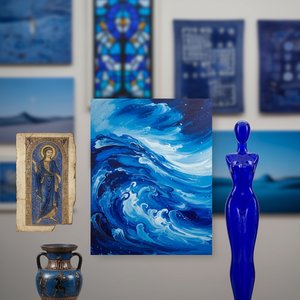
Błękit w Sztuce: Symbolika, Historia i Psychologiczne Oddziaływanie Koloru
Odkryj fascynującą historię błękitu w sztuce! Poznaj symbolikę, psychologię i wpływ tego koloru na arcydzieła renesansu i współczesne trendy. Ekspercka analiza dla miłośników sztuki.

Top 10 arcydzieł ekspresjonizmu abstrakcyjnego – inspiracje dla Twojego wnętrza | OriginalUniqueArt.com
Odkryj 10 arcydzieł ekspresjonizmu abstrakcyjnego – Pollock, Rothko, de Kooning i inni. Poznaj historie artystów, techniki i inspiracje dla Twojego wnętrza. Reprodukcje najwyższej jakości na OriginalUniqueArt.com!

Geometria Sztuki: 10 Arcydzieł Abstrakcji Geometrycznej | OriginalUniqueArt.com
Odkryj 10 arcydzieł abstrakcji geometrycznej! Poznaj historię Mondriana, Kandinskiego i Maleвича. Inspiracje wnętrzarskie z malarstwem abstrakcyjnym – reprodukcje najwyższej jakości na OriginalUniqueArt.com. Eksploruj kolekcję online!

25 Arcydzieł Kandinskiego: Kolor, Duchowość i Abstrakcja w Twoim Domu | OriginalUniqueArt.com
Odkryj 25 arcydzieł Wassily Kandinskiego – pioniera abstrakcji i ekspresjonizmu! Poznaj historie, techniki i emocje kryjące się za jego kolorowymi kompozycjami. Reprodukcje obrazów najwyższej jakości na OriginalUniqueArt.com. Eksploruj pełną kolekcję online!

Top 10 Sławnych Obrazów w Odcieniach Szaroniebieskiego – Inspiracje dla Wnętrz | OriginalUniqueArt.com
Odkryj 10 najsłynniejszych obrazów w odcieniach szaroniebieskiego! Poznaj historie Claude Moneta, Degasa i Van Gogha. Inspiracje wnętrzarskie i reprodukcje najwyższej jakości na OriginalUniqueArt.com – sztuka dla Twojego domu.
