

 Zobacz w skali 1:1
 Wyślij
 Udostępnij
 Szczegóły
 Przewodnik

 Pobierz plik obrazu
 Podobne obiekty
 RTG
RTG Pokaz slajdów
 Statystyki
Elżysz
 Akryl na płótnie
- Sztuka ścienna
- Bezalel School Style
 1916
1916 90.0 x 91.0 cm
 Muzeum Izraela
 Czytaj więcej
Dzieło sztuki prezentowane na tej stronie podlega ochronie prawem autorskim, co oznacza, że nie mamy prawa do tworzenia ani sprzedaży jego identycznej reprodukcji. Ochrona ta jest egzekwowana na mocy umów międzynarodowych, takich jak Konwencja berneńska oraz przez przepisy prawa krajowego, w tym te określone w Prawo autorskie USA – Tytuł 17.
Metoda ta jest w pełni zgodna z przepisami prawa autorskiego, ponieważ nie polega na kopiowaniu ani powielaniu chronionego dzieła. Stanowi ona kreatywną reinterpretację – nowy obraz, który czerpie inspirację z oryginału, ale nie jest z nim tożsamy.
Giclée / Wydruk artystyczny
Wydruki giclée lub płótna o jakości muzealnej, szybka realizacja i szeroki wybór opcji wykończenia. ( Kup ręcznie malowany obraz Przełącz na wersję cyfrową)




P118B zł10

P118H zł10

P118W zł10

P438Z zł10

P508JH zł12

P508YH zł12

P805H zł10

P805Z zł10

P919BZ zł10

P919G zł10

P919XJ zł10

P959ZH zł10

P968JZ zł12

W106C zł8

W218G zł10

W218JH zł8

W218Y zł10

W307PJ zł10

W316G zł10

W316PJ zł8

W316Y zł10

W398PJ zł8

W4111J zł10

W500HY zł15

W500JH zł15

W692G zł12

W849H zł8

W940BG zł15

W953PJ zł8




Wybierz spośród naszych standardowych rozmiarów, które zachowują oryginalne proporcje dzieła sztuki.

Wpisz wymaganą szerokość i wysokość, aby dopasować grafikę do ramy lub ściany. Wydruk można jedynie przyciąć, nigdy nie powiększając go poza oryginalny obraz, dlatego format o innym proporcji spowoduje utratę części kompozycji. Przed rozpoczęciem druku prześlemy Ci cyfrowy podgląd do zatwierdzenia. Obraz wyświetlany na tej stronie nie pokazuje rzeczywistego przycięcia — jedynie podgląd oddaje ten efekt.
Dostawa na cały świat () w ciągu 2 tygodni zamiast standardowych 4/5 tygodni. (22 Październik)

Bezpłatna ekspresowa wysyłka na cały świat

Wysokiej jakości płótno lniane

Pełne ubezpieczenie transportowe

Gwarancja zwrotu należności celnych i podatków importowych

Gwarancja idealnego odwzorowania barw

100-dniowy okres na zwrot dzieła w przypadku wykrycia wad produkcyjnych

Gwarancja 100% zwrotu pieniędzy

Oferta przy zakupie wielu sztuk
 Opcja ze szkłem jest dostępna wyłącznie w rozmiarach poniżej 110 cm

Elżysz
Giclée / Wydruk artystyczny
Rozmiar reprodukcji
-


Suma do zapłaty
zł 304
Elijah – A Testament to Faith and Zionist Spirit
“Elijah’s Chair,” crafted by the Bezalel School in Jerusalem in 1916, stands as an emblem of Jewish heritage and artistic ambition during the formative years of Zionism. This monumental artwork, measuring 90 x 91 cm, embodies a profound connection to biblical tradition while simultaneously reflecting the burgeoning national identity of early 20th-century Israel. The piece’s creation involved collaboration between artisans from across the school's workshops, driven by a singular vision: to forge an artistic language that would resonate with Jewish history as both sacred scripture and enduring cultural legacy.- Artist: Wolf Rawicki (Ze’ev Raban) – A pivotal figure in establishing Israeli art, Rawicki was renowned for his mastery of decorative arts and industrial design, firmly rooted within the distinctive Bezalel School style.
- Born: 1890, Kaunas, Russia – Rawicki's origins lay in Kovno (now Kaunas), Lithuania, reflecting a significant diaspora presence within Jewish artistic circles.
- Died: 1970 – His prolific career spanned decades, cementing his place as one of the most influential artists of his time.
A Celebration of Biblical Narrative and Symbolism
The artwork’s central motif is a meticulously carved wooden chair—specifically “Elijah’s Chair,” traditionally associated with the godfather presiding over circumcision ceremonies. This symbolic gesture underscores the enduring covenant between God and Judaism, highlighting the importance of ritual observance within Jewish tradition. The chair's decoration isn’t merely ornamental; it’s laden with biblical imagery – scenes depicting pivotal moments from scripture—and emblems representing the twelve tribes of Israel. These elements powerfully communicate a narrative rooted in Jewish history, emphasizing continuity across generations. Furthermore, cherubs sculpted in classic Bezalel School style contribute to the artwork's grandeur and spiritual resonance.The Bezalel School’s Artistic Vision
Founded in Jerusalem in 1906, the Bezalel School championed a bold artistic approach—one that sought to instill national spirit through engagement with Jewish biblical themes. This stylistic choice deliberately mirrored the Zionist movement's aspiration to reconnect with its ancestral roots, recognizing Judaism as both a religious faith and a vibrant cultural heritage. The chair’s opulent design serves as tangible evidence of this ambition, demonstrating the school’s commitment to elevating craftsmanship alongside artistic expression.Technique and Material Considerations
The chair itself was crafted with painstaking attention to detail using hardwood—likely chosen for its durability and ability to withstand the demands of ceremonial use. Intricate carving techniques were employed, complemented by inlaying – possibly incorporating gold or brass – to enrich the visual tapestry. The smooth surfaces of the inlaid elements contrast beautifully with the textured grain of the carved wood, creating a sensory experience that reflects the artistry of the period. Diffusion lighting was utilized during photography to ensure optimal visibility of the chair’s intricate ornamentation and textural nuances.A Legacy of Faith and Artistic Excellence
“Elijah’s Chair” transcends its physical dimensions; it embodies the spirit of a movement determined to forge an artistic identity rooted in Jewish tradition and national aspiration. Its enduring appeal lies not only in its exquisite craftsmanship but also in its profound symbolic significance—a testament to faith, heritage, and the transformative power of art to communicate cultural values across time. This remarkable piece remains a cornerstone of Israeli art history and continues to inspire admiration for its artistic vision and technical mastery.Pytania i odpowiedzi
Jak intensywne są kolory w „Elżysz” autorstwa Wolf Rawicki (Ravitzki)?
Nasycenie barw w dziele „Elżysz” wynosi Monochromatyczność. Intensywność określa, jak mocne wydają się kolory.
Jak postrzegana jasność prezentuje „Elżysz” autorstwa Wolf Rawicki (Ravitzki)?
Pod względem postrzeganej jasności, „Elżysz” autorstwa Wolf Rawicki (Ravitzki) jest świetlisty.
Ile światła zdają się odbijać kolory dzieła "Elżysz"?
„Elżysz” autorstwa Wolf Rawicki (Ravitzki) ma luminancję na poziomie Jasny. Luminancja określa, jak dużą ilość światła zdają się odbijać kolory.
Biografia artysty
The Pioneering Vision of Ze’ev Raban: From Rawicki to the Soul of Israeli Art
Ze’ev Raban, born Wolf Rawicki in Kaunas, Russia, in 1890, stands as a monumental figure in the genesis of Israeli art. His journey wasn't merely that of an artist finding his voice; it was the forging of a new aesthetic identity for a nation yearning to express itself. Rawicki’s early life, steeped in the cultural currents of Eastern Europe, laid the foundation for a career dedicated to synthesizing tradition and modernity, culminating in works that became iconic symbols of a burgeoning national consciousness. He wasn't simply *a* painter; he was an architect of visual culture, deeply involved in shaping the artistic landscape of the nascent State of Israel.
Early Formation & The Bezalel School
Rawicki’s formal training took him across Europe – Munich, Paris, and Brussels – exposing him to the prevailing styles of the early 20th century. He absorbed the lessons of Jugendstil, Symbolism, and Art Nouveau, but these influences were never adopted wholesale. A crucial turning point came with his arrival at Bezalel Academy in Jerusalem in 1906. Bezalel, founded by Boris Schatz, was more than an art school; it was a crucible for creating a distinctly “Hebrew style.” This wasn’t about replicating historical forms but rather excavating the spirit of Jewish culture and translating it into contemporary artistic expression. Raban quickly became a central figure in this endeavor, embracing the challenge of defining what that aesthetic might look like.
A Synthesis of Tradition & Modernity
Raban's work is characterized by a remarkable ability to blend diverse influences. He sought inspiration not only from European art movements but also from traditional Jewish crafts, Islamic motifs, and the archaeological discoveries unfolding in Palestine. This fusion manifested in his decorative arts – silver Hanukkah lamps, ceremonial objects, furniture—where intricate carvings and stylized forms evoked ancient patterns while remaining firmly rooted in a modern sensibility. He believed that true Hebrew art wasn’t about imitation but about *interpretation* – distilling the essence of Jewish heritage into new artistic languages. His designs weren't merely beautiful; they were imbued with symbolic meaning, reflecting a deep connection to history and faith.
Major Achievements & The Capitoline Wolf
While Raban excelled in numerous mediums, his impact extended beyond individual artworks. He was instrumental in establishing the aesthetic principles of early Israeli design, influencing everything from typography to public monuments. Perhaps his most enduring legacy is the “Capitoline Wolf,” a silver menorah created for the Hebrew University on Mount Scopus in 1926. This piece, inspired by the Roman wolf that suckled Romulus and Remus, became a powerful symbol of Jewish resilience and national aspiration. It wasn’t simply a religious object; it was a statement about reclaiming heritage and forging a new future. The menorah's design, incorporating stylized Hebrew letters and motifs, resonated deeply with the Zionist movement and solidified Raban’s position as a leading artistic voice.
Historical Significance & Lasting Influence
Ze’ev Raban died in 1970, leaving behind a body of work that continues to inspire. He wasn't just an artist; he was a cultural pioneer who helped define the visual identity of Israel. His commitment to synthesizing tradition and modernity, his dedication to creating a distinctly Hebrew aesthetic, and his ability to imbue objects with profound symbolic meaning cemented his place as one of the most important figures in Israeli art history. His influence can be seen in the work of subsequent generations of artists and designers, who continue to grapple with the challenges of balancing cultural heritage with contemporary expression. Raban’s legacy is a testament to the power of art to shape national identity and inspire a sense of belonging.
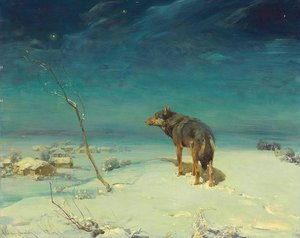
Wolf Rawicki (Ravitzki)
1890 - 1970 , Russia
Najważniejsze informacje
- Full Name: Ze'ev Raban
- Nationality: Israeli
- Date Of Birth: 1890
- Date Of Death: 1970
- Place Of Birth: Kaunas, Russia
- Notable Artworks:
- Elijah
- Standing Hanukkah Lamp
- Capitoline Wolf
- Artistic Movement Or Style: Bezalel School Style
Zobacz także powiązane artykuły
The Barbizon School: A Professional Guide to Naturalism and Landscape Mastery for Interior Designers
Explore the Barbizon School's mastery of naturalism. An expert guide for hotel designers and procurement managers on sourcing high-quality landscape reproductions to elevate hospitality and corporate interiors with authentic, large-scale fine art solutions.
Elizabeth Adela Forbes: A Pioneering Impressionist of the Newlyn School
Explore the life & art of Elizabeth Adela Forbes, a pioneering Impressionist of the Newlyn School. Discover her captivating paintings, unique style, and lasting legacy with OriginalUniqueArt.

Szkoła Haska: Realizm, Atmosfera i Świt Holenderskiego Impresjonizmu – Przewodnik dla Koneserów Sztuki
Poznaj fascynującą historię Szkoły Haskiej – przełomowego ruchu artystycznego łączącego realizm z impresjonizmem. Analiza kluczowych artystów, atmosfery i wpływu na holenderską sztukę. Ekskluzywny przewodnik dla koneserów.

Sublime Krajobrazy: Narodziny Amerykańskiej Tożsamości Artystycznej i Rola Szkoły Hudson River
Odkryj fascynującą historię Szkoły Hudson River i narodziny amerykańskiej tożsamości artystycznej. Poznaj kluczowych artystów, techniki malarskie i inspiracje. Reprodukcje najwyższej jakości na OriginalUniqueArt.com!

Szkoła Rzeki Hudson: 10 arcydzieł, które ukształtowały pejzaż amerykańskiej sztuki | OriginalUniqueArt
Odkryj 10 arcydzieł Szkoły Rzeki Hudson – malarstwo krajobrazowe Cole'a, Churcha i Bierstadta. Poznaj historię artystów i inspiracje romantyzmu amerykańskiego. Reprodukcje obrazów najwyższej jakości na OriginalUniqueArt.com! Eksploruj kolekcję online.
