American Realism · 1878
The Pumpkin Patch (Winslow Homer, 1878)
Winslow Homer (1836–1910) stworzył The Pumpkin Patch. Dzieło pochodzi z 1878. Należy do nurtu American Realism. Wykonano w technice Akwarela.
- 1878
- Akwarela

 Podgląd w skali 1:1

 Ręcznie malowany obraz olejny
 Wyślij jako kartkę
 Udostępnij
 Karta informacyjna


 Pobierz obraz
 Podobne obiekty
 RTG
 Pokaz slajdów
 Pytania i odpowiedzi

 Statystyki
The Pumpkin Patch w skrócie
- Tytuł
- The Pumpkin Patch
- Artysta
- Winslow Homer (1836–1910)
- Miejsce urodzenia artysty
- Boston, Stany Zjednoczone
- Data powstania
- 1878
- Technika wykonania
- Akwarela
- Ruch
- American Realism
- Epoka
- – Wiek XIX
Co przedstawia The Pumpkin Patch?
A Moment Frozen in Time: The Significance of Winslow Homer’s “The Pumpkin Patch”
Winslow Homer's "The Pumpkin Patch," painted in 1878, isn’t merely a depiction of autumnal labor; it’s a poignant snapshot of rural America at the cusp of profound change. This watercolor masterpiece, currently residing within the Canajoharie Library and Art Gallery, invites us into a scene brimming with quiet industry, community spirit, and a subtle undercurrent of nostalgia for a disappearing way of life. Homer, a master of capturing the essence of everyday American experience, skillfully employs his signature technique—a delicate balance between observation and expressive brushwork—to create an atmosphere both warm and deeply resonant.
The painting immediately draws the eye to the group of figures engaged in the harvest – men and women working together with a shared purpose. Their postures, rendered with remarkable sensitivity, suggest not just physical exertion but also a sense of camaraderie and mutual respect. Homer’s use of earthy tones—russets, ochres, and deep greens—dominates the palette, mirroring the landscape itself and grounding the scene in the tangible realities of rural life. The soft, diffused light, characteristic of his watercolor style, lends an almost dreamlike quality to the composition, softening the edges and creating a sense of intimacy.
The Artist’s Approach: Watercolor as a Vehicle for Emotion
Homer's choice of watercolor is crucial to understanding the painting’s impact. Unlike the bolder strokes of oil paint, watercolor allows for a remarkable degree of transparency and luminosity. This technique perfectly suits Homer’s aim—to capture not just the appearance of the scene but also its emotional atmosphere. The subtle gradations of color, achieved through layering washes and delicate brushstrokes, evoke a sense of warmth and comfort, while simultaneously hinting at the hard work involved in the harvest.
Furthermore, Homer’s meticulous attention to detail—the individual pumpkins scattered across the field, the worn clothing of the workers, the subtle expressions on their faces—adds layers of complexity to the scene. He doesn't shy away from depicting the realities of rural labor, yet he does so with a remarkable degree of empathy and respect for his subjects.
A Window into 19th-Century America
"The Pumpkin Patch" offers a valuable glimpse into American life during the late 19th century. It reflects a period of rapid industrialization and urbanization, which were fundamentally altering the social fabric of the nation. The painting celebrates the enduring values of community, hard work, and self-sufficiency—qualities that were increasingly threatened by these changes. The scene speaks to a time when agriculture remained central to American identity, and families relied on each other for support and sustenance.
Beyond its immediate depiction of rural labor, the painting also carries symbolic weight. The abundance of pumpkins – a symbol of harvest, prosperity, and gratitude – suggests a celebration of the bounty of the land. The collective effort of the workers underscores the importance of community and shared responsibility. It’s a quiet testament to the dignity of honest work and the beauty of simple living.
Bringing Homer's Vision Home: High-Quality Reproductions
OriginalUniqueArt offers meticulously crafted, handmade oil paintings reproductions of “The Pumpkin Patch,” allowing art lovers to experience the artistry and emotional depth of this iconic American painting in their own homes. Our skilled artists utilize only the finest materials—traditional oils on canvas—to faithfully recreate every detail of Homer’s original work. We strive to preserve not just the visual appearance but also the spirit and atmosphere of the painting, ensuring that it remains a timeless treasure for generations to come.
Explore the full beauty of “The Pumpkin Patch” – and discover other exceptional reproductions by Winslow Homer – at OriginalUniqueArt.com. Let this evocative image transport you back to a simpler time, reminding us of the enduring values that shaped American culture.
Zdjęcia w wysokiej rozdzielczości dzieła The Pumpkin Patch

Domena publiczna: artysta zmarł w 1910.
Inne rozmiary, kadrowanie i cytowanie →Winslow Homer, The Pumpkin Patch (1878). Domena publiczna
Odpowiedzi na pytania dotyczące The Pumpkin Patch
W którym roku powstało dzieło „The Pumpkin Patch” – Winslow Homer?
"The Pumpkin Patch" powstało w 1878 roku. Data ta pozwala umiejscowić dzieło w kontekście twórczości Winslow Homer oraz epoki, w której powstało.
Z jakiej techniki wykorzystano "The Pumpkin Patch"?
„The Pumpkin Patch” wykonano w technice Akwarela.
Czy dzieło "The Pumpkin Patch" znajduje się w domenie publicznej?
Jeśli chodzi o prawa autorskie, "The Pumpkin Patch" znajduje się w należy do domeny publicznej – autorskie prawa majątkowe wygasły.
Któremu artyście przypisuje się "The Pumpkin Patch"?
Autorstwo dzieła "The Pumpkin Patch" przypisuje się Winslow Homer.
Do jakiego nurtu artystycznego należy „The Pumpkin Patch” – Winslow Homer?
Nurt związany z „The Pumpkin Patch” – Winslow Homer to American Realism. Ta klasyfikacja sytuuje dzieło wśród pokrewnych artystów i dzieł sztuki.
Do którego etapu twórczości Winslow Homer należy dzieło „The Pumpkin Patch”?
"The Pumpkin Patch" reprezentuje Mature Period twórczości Winslow Homer.
Ile lat miał(a) Winslow Homer, tworząc "The Pumpkin Patch" w 1878 roku?
Winslow Homer miał 42 lat w momencie powstania „The Pumpkin Patch” w 1878. Wiek ten obliczono na podstawie roku urodzenia artysty, 1836.
Czy dzieło „The Pumpkin Patch” autorstwa Winslow Homer znajduje się w domenie publicznej i dlaczego?
Status praw autorskich do dzieła „The Pumpkin Patch” – należy do domeny publicznej – autorskie prawa majątkowe wygasły – wynika z faktu, że artysta zmarł w 1910.
O artyście: Winslow Homer
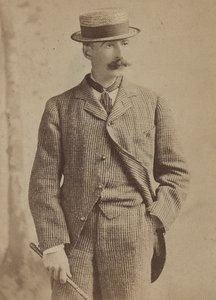
1836–1910, Stany Zjednoczone
Winslow Homer
Życie i korzenie Winslow Homera Winslow Homer przybył na świat w Bostonie, w stanie Massachusetts, 24 lutego 1836 roku. Był drugim z trzech synów urodzonych przez Charlesa Savage'a Homera i Henryettę Marię Benson. Jego ojciec, kupiec, ostatecznie opuścił rodzinę, by szukać fortuny podczas gorączki złota w Kalifornii. Ta rozłąka sprawiła, że dom kształtowany był głównie przez obecność jego matki, Henryetty Marii Benson Homer.
Inne prace Winslow Homer
 Ostrzeżenie przed mgłą1885
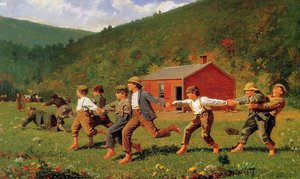 Snap the Whip1872
 Łodzi rybackie, Key West1903
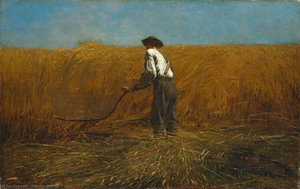 Weteran w Nowym Polu1865

Eseje o The Pumpkin Patch
 American artworks of the 1890s1890s American art by Mary Cassatt, Winslow Homer, and William Merritt Chase. Find museum-quality reproductions on OriginalUniqueArt.com.
 American artworks of the 1870sIconic 1870s American works by Whistler, Eakins, and Homer. Explore museum-quality reproductions on OriginalUniqueArt.com.
 Winslow Homer: 25 Arcydzieł Malarstwa Amerykańskiego | OriginalUniqueArt.comPoznaj 25 arcydzieł Winslowa Homera – amerykańskiego mistrza realizmu i malarstwa morskiego. Odkryj historie, techniki i inspiracje z jego …