Neoclassicism
Beniah (William Etty)
William Etty (1787–1849) stworzył Beniah. Należy do nurtu Neoclassicism. Wykonano w technice Oil On Canvas. Przechowywane jest w York Art Gallery w York, Zjednoczone Królestwo.
- Oil On Canvas
- York Art Gallery

 Podgląd w skali 1:1

 Ręcznie malowany obraz olejny
 Wyślij jako kartkę
 Udostępnij
 Karta informacyjna


 Pobierz obraz
 Podobne obiekty
 RTG
 Pokaz slajdów
 Pytania i odpowiedzi

 Statystyki
Beniah w skrócie
- Tytuł
- Beniah
- Artysta
- William Etty (1787–1849)
- Miejsce urodzenia artysty
- York, Wielka Brytania
- Technika wykonania
- Oil On Canvas
- Gdzie można je zobaczyć
- York Art Gallery, York, Zjednoczone Królestwo
- Ruch
- Neoclassicism
- Epoka
- 19th Century
- Temat
- battle scene, classical figure, roman attire, warrior, mythology, action painting
Co przedstawia Beniah?
The Drama of Victory: An Encounter with Classical Might
This arresting depiction plunges the viewer directly into the crucible of ancient conflict. One is immediately confronted by the central figure, a vision of martial prowess rendered with breathtaking anatomical accuracy. Clad in what evokes the grandeur of Roman or Greek soldiery—the crimson cloak draped dramatically over one shoulder, the imposing helmet crowning his brow—he stands as the embodiment of decisive action. His raised sword is not merely an object; it is a gesture frozen in time, radiating the energy of a moment just concluded. The intensity etched upon his face speaks volumes, suggesting a mind utterly focused amidst the chaos of battle.
Technique and Compositional Power
The mastery displayed in this work lies in its palpable sense of drama, achieved through meticulous attention to light and shadow. The artist has employed classical techniques that give the musculature beneath the drapery a startling three-dimensionality. Observe how the light catches the folds of fabric and defines every sinew on the victorious warrior’s arm. In the foreground, the fallen figures serve not merely as casualties, but as compositional anchors, their inert forms contrasting sharply with the vibrant life force emanating from the central hero. The background deepens this narrative scope; rolling hills meet a placid body of water beneath a dramatically clouded sky, suggesting that even in moments of ultimate violence, nature’s cycle continues undisturbed.
Symbolism and Mythic Resonance
Beyond the immediate spectacle of combat, the painting resonates with profound symbolic weight. It speaks to themes eternal: the cost of glory, the inevitability of conflict, and the singular moment where heroism triumphs over adversity. The defeated bodies suggest a narrative arc—a struggle overcome. For the collector or decorator, this piece offers more than mere decoration; it is an artifact of elevated storytelling. It invites contemplation on virtue, sacrifice, and the enduring human capacity for valor.
A Timeless Statement for Any Interior
Whether adorning a grand hall meant to evoke historical gravitas or lending dramatic depth to a sophisticated study, this artwork commands attention. Its rich palette, dominated by deep reds, earthy tones, and dramatic contrasts of light and shadow, ensures it will anchor any space with an air of cultivated drama. Reproducing such a powerful scene allows one to bring the epic sweep of classical mythology into the intimate setting of modern life, transforming a room into a gallery worthy of legend.
W którym muzeum znajduje się Beniah?
York Art Gallery
York, Zjednoczone Królestwo
Zaklęty Świat York Art Gallery: Spotkanie Czasu i Twórczości W samym sercu York, gdzie średniowieczne mury przeplatają się ze sztuką współczesną, jaśnieje York Art Gallery – przestrzeń emanująca spokojem i inspiracją. To nie jest zwykłe muzeum; to podróż przez stulecia, dialog między różnymi epokami i, przede wszystkim, uroczyste święto ludzkiej kreatywności. Wzniesiony w 1879 roku na potrzeby Yorkshire Fine Art and Industry Exhibition, budynek zachował swój niepowtarzalny urok neogotyckiego renesansu.


Zdjęcia w wysokiej rozdzielczości dzieła Beniah

Domena publiczna: artysta zmarł w 1849.
Inne rozmiary, kadrowanie i cytowanie →William Etty, Beniah, York Art Gallery. Domena publiczna
Odpowiedzi na pytania dotyczące Beniah
W którym muzeum znajduje się oryginał "Beniah"?
„Beniah” – William Etty znajduje się w zbiorach York Art Gallery, York, Zjednoczone Królestwo. Informacja o muzeum dotyczy oryginału, a nie reprodukcji.
W jakiej technice wykonano „Beniah” – William Etty?
Technika wykonania dzieła „Beniah” – William Etty to Oil On Canvas. Reprodukcje mają na celu wierne oddanie wyglądu tej techniki.
Co przedstawia "Beniah"?
„Beniah” – William Etty przedstawia: battle scene, classical figure, roman attire, warrior, mythology, action painting, landscape background.
Czy obraz „Beniah” – William Etty można swobodnie reprodukować?
Status praw autorskich dla „Beniah” – William Etty: dzieło znajduje się w należy do domeny publicznej – autorskie prawa majątkowe wygasły. Określa to, czy reprodukcje obrazu mogą być sporządzane swobodnie.
Kto jest autorem dzieła "Beniah"?
Autorem dzieła „Beniah” jest William Etty. Praca ta figuruje w katalogu pod nazwiskiem William Etty.
Do jakiego nurtu należy "Beniah"?
„Beniah” – William Etty należy do nurtu Neoclassicism. Nurt ten stanowi stylistyczny kontekst dzieła.
Do którego etapu twórczości William Etty należy dzieło „Beniah”?
W dorobku artystycznym William Etty dzieło „Beniah” przypada na Mature Period. Ten etap pozwala zestawić je z innymi pracami twórcy.
Co wyjaśnia sytuację prawną dotyczącą praw autorskich do „Beniah” – William Etty?
Status praw autorskich do dzieła „Beniah” – należy do domeny publicznej – autorskie prawa majątkowe wygasły – wynika z faktu, że artysta zmarł w 1849.
Czy dzieło "Beniah" znajduje się w kraju swojego twórcy?
Nie – dzieło znajduje się poza granicami kraju artysty. William Etty urodził(a) się w Wielka Brytania, natomiast muzeum przechowujące oryginał dzieła „Beniah” znajduje się w Zjednoczone Królestwo.
O artyście: William Etty

1787–1849, Wielka Brytania
William Etty
Wczesne lata i kształcenie William Etty Aby w pełni zrozumieć techniczną precyzję, którą cechowało się dzieło, jakim posługiwał się William Etty, należy spojrzeć poza kontrowersje wokół jego późniejszych tematów i zwrócić się ku jego zdyscyplinowanym, niemal rzemieślniczym początkom. Urodzony 10 marca 1787 roku w York w Wielkiej Brytanii, był siódmym dzieckiem Matthew i Esther Etty. Jego droga ku sztuce pięknej nie była oczywista ani intuicyjna; została ona wykuta w surowych ramach rzemiosła. W wieku 11 lat, 8 października 1798 roku, został oddany w ręce mistrza jako uczeń drukarza w Hull.
Inne prace William Etty
 Syreny i Ulixes
 Kandaulez, król Lidy, potajemnie pokazuje swoją żonę Gygesowi, jednemu ze swoich ministrów, gdy ta kładzie się spać1830
 A Polish Translation: Kbida Greckiej Niewolnicy1812
 Wenus i Kupej

Eseje o Beniah
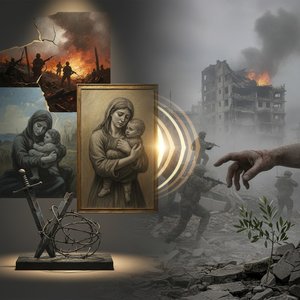 Echoes of Conflict: A Curated Exploration of Art Capturing the Intensity of War and Human ResilienceExplore a profound collection of historical war art. From visceral realism to poignant depictions of human resilience, discover museum-qual…
 The Drama of Motion: Capturing the Power and Theatricality of Baroque DynamismExplore the breathtaking drama of Baroque art. From Caravaggio's chiaroscuro to Rubens' kinetic energy, discover how masters captured motio…
 Trzy płótna, trzy emocje: Rola wyboru w kształtowaniu odbioru dzieła sztukiOdkryj fascynujący świat sztuki! Poznaj neuroestetyczne podstawy odbioru dzieł, wpływ kontekstu i techniki malarskiej na emocje. Analiza ob…