Podgląd w skali
 Wyślij jako kartkę
 Udostępnij
 Szczegóły dzieła

 Pobierz
 Podobne obiekty
 RTG
RTG Pokaz slajdów
Dante and Virgil
 Oil On Canvas
- WallArt
- Academic Realism
 1850
1850 2250.0 x 2810.0 cm
 Muzeum d’Orsay
 Rozwiń treść
Ręcznie malowana reprodukcja olejowa
Ręcznie malowany obraz olejny na płótnie, wykonany na zamówienie przez naszych artystów w wybranym przez Ciebie wymiarze i oprawie. ( Zamów wydruk Kup obraz wysokiej rozdzielczości)




P118B $10

P118H $10

P118W $10

P438Z $10

P508JH $12

P508YH $12

P805H $10

P805Z $10

P919BZ $10

P919G $10

P919XJ $10

P959ZH $10

P968JZ $12

W106C $8

W218G $10

W218JH $8

W218Y $10

W307PJ $10

W316G $10

W316PJ $8

W316Y $10

W398PJ $8

W4111J $10

W500HY $15

W500JH $15

W692G $12

W849H $8

W940BG $15

W953PJ $8




Wybierz spośród naszych standardowych rozmiarów, które zachowują oryginalne proporcje dzieła sztuki.

Możesz wprowadzić własne wymiary, aby dopasować obraz do konkretnej ramy lub przestrzeni. Jeśli wybrany rozmiar nie będzie odpowiadał proporcjom oryginału, przytniecie dzieło sztuki lub rozszerzymy je o dodatkowe elementy, ręcznie domalowane przez artystę. Przed rozpoczęciem produkcji wyślemy projekt cyfrowy do Twojej akceptacji.
Należy pamiętać, że podgląd na ekranie nie odzwierciedla rzeczywistego przycinania ani rozszerzania obrazu. Tylko projekt dokładnie pokaże ostateczną kompozycję.
Choć oferujemy możliwość zamówienia niestandardowych rozmiarów, zalecamy wybór wymiaru z gotowej listy, aby zachować oryginalne proporcje dzieła.
Po złożeniu zamówienia zespół OriginalUniqueArt.com skontaktuje się z klientem drogą mailową w celu uzyskania instrukcji i prześle wizualizację projektu
Dostawa na całym świecie () w ciągu 3–4 tygodni zamiast standardowych 5 tygodni. (21 Sierpień). Bez kompromisów w kwestii jakości.

Bezpłatna ekspresowa wysyłka na cały świat

Wysokiej jakości płótno lniane

Pełne ubezpieczenie przesyłki

Gwarancja zwrotu należności celnych i podatków importowych

Gwarancja wiernego odwzorowania kolorów

Polityka 60-dniowego zwrotu (tylko w przypadku wad)

Gwarancja 100% zwrotu kosztów

Zniżka przy zamówieniu wielu produktów
 Opcja ze szkłem jest dostępna wyłącznie w rozmiarach poniżej 110 cm

Dante and Virgil
Technika reprodukcji
Wymiary reprodukcji
-


Cena całkowita
$ 300
Opis dzieła
A Descent Into Beauty: Bouguereau’s “Dante and Virgil”
William-Adolphe Bouguereau's "Dante and Virgil," painted in 1850, isn’t merely a depiction of a scene from Dante Alighieri’s *Inferno*; it’s an immersive experience—a carefully constructed tableau designed to evoke both terror and profound beauty. This monumental work, now housed within the Musée d'Orsay in Paris, stands as a testament to Bouguereau’s unique ability to fuse classical ideals with a strikingly modern sensibility, capturing the raw emotional power of Dante’s journey through Hell. The painting immediately commands attention, not just for its scale – a commanding 2250 x 2810 cm – but for the sheer drama and intensity radiating from the canvas.
At the heart of the composition are Dante and Virgil, rendered with an almost sculptural quality. Bouguereau masterfully exaggerates their musculature, pushing the forms to a point where they border on the theatrical, yet never sacrificing anatomical accuracy. This deliberate distortion isn’t simply stylistic; it serves to amplify the violence and struggle unfolding before them. The figures are bathed in a carefully orchestrated interplay of light and shadow – a technique heavily influenced by Romantic artists like Blake and Füssli – creating a *terribilita*, a sense of awe mixed with horror, that permeates the entire scene. Notice how the crimson hues dominate, not just in the swirling vortexes of Hell but also in the very flesh of the combatants, hinting at the inescapable consequences of sin.
The Inferno’s Spectacle: Composition and Symbolism
Bouguereau meticulously recreates a specific episode from Dante's eighth circle – the torment of Capocchio and Gianni Schicchi. These two figures, representing an alchemist and a fraudulent claimant to inheritance respectively, are locked in a brutal struggle, their faces contorted with rage and despair. The surrounding figures, shadowy masses of damned souls, contribute to the overwhelming sense of chaos and punishment. The inclusion of these monstrous forms isn’t gratuitous; it's integral to conveying the thematic core of *Inferno* – the inescapable nature of sin and its eternal repercussions. Beyond the immediate narrative, the painting operates on a symbolic level. The laurel wreath adorning Dante’s head is a clear reference to his status as a poet, linking him directly to the tradition of epic storytelling and moral judgment.
A Masterclass in Technique – Color, Light, and Detail
Bouguereau's technical prowess is undeniable. He employed a meticulous layering technique, building up color and detail with astonishing precision. The smooth, polished surfaces characteristic of his style create an almost luminous effect, particularly noticeable in the rendering of skin tones and fabrics. The artist’s use of color isn’t merely descriptive; it’s emotionally charged. The deep reds and browns evoke heat, fire, and blood, while subtle variations in tone suggest depth and volume. Furthermore, Bouguereau's ability to capture fleeting expressions—the anguish on Dante’s face, the fury in Capocchio’s eyes—adds a layer of psychological complexity to the scene. The attention to detail extends to every element, from the folds of their garments to the texture of the ground beneath them, creating an incredibly immersive and believable depiction of Hell.
Echoes of the Past, Visions for the Future
"Dante and Virgil" represents a pivotal moment in Bouguereau’s artistic development. Initially conceived as a submission for the prestigious Prix de Rome, it garnered both praise and criticism. Théophile Gautier recognized its “bitterness and strength,” but the painting ultimately failed to secure the coveted award. Despite this setback, it solidified Bouguereau's reputation as a leading figure in the French art world and cemented his commitment to portraying idealized beauty with an unflinching gaze. Today, reproductions of this powerful work offer a unique opportunity to experience the drama and emotional resonance of Dante’s *Inferno* within the comfort of one’s own space. At OriginalUniqueArt.com, we meticulously recreate every nuance of Bouguereau's original masterpiece, ensuring that art lovers can appreciate the enduring beauty and profound symbolism of “Dante and Virgil.”
O artyście
William-Adolphe Bouguereau: A Life Dedicated to the Pursuit of Beauty
William-Adolphe Bouguereau, a name synonymous with academic realism and idealized beauty, was born in La Rochelle, France, on November 30th, 1825. His early life amidst the vineyards and olive groves of this coastal city instilled within him a deep appreciation for nature’s elegance – a sentiment that would profoundly shape his artistic vision. From a young age, Bouguereau demonstrated an exceptional talent for drawing and painting, nurtured by his uncle Eugène, a Catholic priest who recognized and encouraged his burgeoning abilities. This foundation laid the groundwork for a career dedicated to capturing what he perceived as the inherent beauty of the world around him – a pursuit that would define his artistic legacy.Early Training and Parisian Influence
At the age of twelve, Bouguereau moved to Mortagne-sur-Gironde to reside with his family, where he began formal training under Charles Marionneau, a local artist. This early exposure to practical techniques proved invaluable, but it was his relocation to Paris in 1846 that truly propelled his artistic development. He enrolled at the École des Beaux-Arts, the prestigious art school of France, and quickly distinguished himself under the guidance of François-Edouard Picquenot. Crucially, Bouguereau’s studies were deeply influenced by the masterpieces of the Old Masters – particularly Raphael and Titian. These artists weren't simply subjects for imitation; they became the bedrock upon which Bouguereau constructed his unique style: a meticulous attention to detail, luminous color palettes, and an unwavering commitment to portraying beauty in its most idealized form. He wasn’t merely painting what he *saw*, but rather what he believed to be inherently beautiful, striving for a perfection that resonated with the aesthetic sensibilities of his time.The Master of Mythological and Genre Scenes
Bouguereau's artistic style is often described as academic realism, and rightly so. He possessed an unparalleled mastery of anatomy, light, and composition. His canvases are populated by figures rendered with astonishing precision – the delicate curve of a shoulder, the subtle flush of skin, the expressive depth of an eye. However, his work transcends mere technical skill; it’s infused with emotion and narrative power. He frequently depicted mythological scenes, transforming ancient tales into vibrant, emotionally resonant moments. *The Birth of Venus*, for example, isn't just a depiction of a goddess emerging from the sea; it’s a celebration of feminine grace and ethereal beauty. Similarly, works like *Zenobia Found by Shepherds on the Banks of the Araxes* capture vulnerability and pathos with remarkable sensitivity. Beyond mythology, Bouguereau found inspiration in everyday life – shepherdesses tending their flocks, young girls at play, mothers cradling their children. These genre scenes, while seemingly simple, are imbued with a sense of dignity and tenderness that elevates them to the realm of art. *Faneuse (1869)* exemplifies this approach, portraying a young woman in a tranquil landscape with an exquisite attention to detail and atmosphere. His dedication to capturing innocence is particularly evident in paintings like *Child at Bath*, where the delicate rendering of skin and light creates a truly captivating image.Recognition and Legacy
Throughout his career, Bouguereau garnered significant acclaim within France and internationally. He was awarded the prestigious Prix de Rome in 1850, granting him access to study in Rome for four years – an experience that profoundly shaped his artistic sensibilities. Upon his return, he quickly established himself as a leading salon painter, consistently exhibiting at the Salon and receiving numerous honors. Despite this success, Bouguereau’s style was often met with resistance from the avant-garde movements of the late 19th century, particularly Impressionism. His meticulous technique and adherence to traditional academic standards were seen as outdated and conservative. However, in the decades following his death in 1905, a reassessment of his work began to take place. Art historians recognized the exceptional skill and emotional depth of his paintings, leading to a resurgence of interest in Bouguereau’s art. Today, his works are celebrated for their beauty, technical mastery, and enduring appeal – securing his position as one of the most important figures in 19th-century French painting. His influence can be seen in contemporary figurative painting, where artists continue to draw inspiration from his ability to capture light, form, and emotion with unparalleled precision.Key Works
Here are some of Bouguereau’s most celebrated works:- The Nymphaeum (1862)
- Bergère 1886 (1886)
- Child at Bath (1875-1883)
- Song of the Angels (1881)
- The Birth of Venus (1894-1898)
A Lasting Influence
William-Adolphe Bouguereau’s legacy extends far beyond his individual paintings. He was a dedicated teacher, imparting his knowledge and techniques to generations of aspiring artists. His commitment to traditional artistic values – meticulous draftsmanship, anatomical accuracy, and emotional expression – continues to resonate with artists today. His works are now housed in prestigious museums across the globe, ensuring that his vision of beauty will continue to inspire and captivate audiences for years to come.
William-Adolphe Bouguereau
1825 - 1905 , Francja
Krótka nota
- Artistic Movement Or Style: Akademizm
- Artists Or Movements Influenced By This Artist: ['Impressionizm']
- Artists Who Influenced This Artist:
- Raphael
- Titian
- Date Of Birth: 30 listopada 1825
- Date Of Death: 19 sierpnia 1905
- Full Name: William-Adolphe Bouguereau
- Nationality: Francuz
- Notable Artworks:
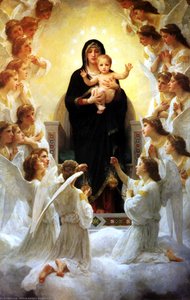
- Matka Boska
- Pierwszy pocałunek
- Narodziny Wenus
- Place Of Birth: La Rochelle, Francja
Powiązane artykuły
Dante Gabriel Rossetti: 25 Arcydzieł Pełnych Pasji i Symboliki | OriginalUniqueArt
Odkryj 25 najpiękniejszych obrazów Dante Gabriela Rossettiego! Poznaj historię, symbolikę i techniki prerafaelitów. Reprodukcje najwyższej jakości do Twojego wnętrza – OriginalUniqueArt.
Sandro Botticelli: 25 Arcydzieł Pełnych Gracji i Symboliki | OriginalUniqueArt.com
Odkryj 25 arcydzieł Sandro Botticellego! Poznaj historię 'Narodzin Wenus', 'Primavery' i innych ikonicznych obrazów renesansu włoskiego. Reprodukcje najwyższej jakości, inspiracje do wnętrz – OriginalUniqueArt.com
Ucieleśniona Boskość: Łaska i Duchowa Reprezentacja w Zachodniej Sztuce
Odkryj fascynującą historię reprezentacji boskości w sztuce zachodniej! Analizujemy teologię wizualną, wpływ filozofii i ewolucję duchowości od średniowiecza po współczesność. Ekspercka analiza dla miłośników sztuki.
Divine Visions: Exploring the Power of Spiritual Themes and Sacred Symbolism in Fine Art History
Explore the profound impact of spiritual themes in fine art. From Renaissance iconography to Baroque drama, discover how sacred symbolism and divine visions have shaped art history through a scholarly and reflective lens.
Divine Judgment in Art: Capturing the Sublime, Eternal Truths, and the Weight of the Infinite
Explore the profound beauty of divine judgment in art history. From sacred iconography to the sublime light of Impressionism, discover how masters capture the eternal. Expert insights for the discerning collector seeking depth and spiritual resonance in fine art.