
 Przełącz na wydania drukowane
 Rozwiń treść







































 W przypadku dzieł sztuki lub reprodukcji, których którykolwiek z boków przekracza 105 cm (około 41 cali), rama zostanie wysłana w formie zestawu do samodzielnego montażu. Metoda ta zapewnia bezpieczną dostawę i zapobiega uszkodzeniom podczas transportu.


The Visceral Energy of Form: Exploring De Kooning's "Woman"
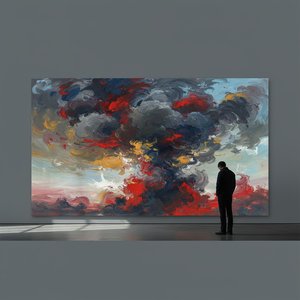
To stand before Willem de Kooning’s monumental depiction, "Woman," is not merely to observe paint on canvas; it is to confront raw, untamed energy made visible. This painting, steeped in the volatile spirit of Abstract Expressionism, pulls the viewer into a vortex of color and gesture. The subject—a figure rendered with startling immediacy—is both monumentally present and ethereally fragmented. De Kooning does not offer a polished portrait; rather, he presents an encounter. His technique is characterized by vigorous brushstrokes that seem to have been applied in moments of intense emotional outpouring. Shades of pink, vibrant red, warm yellow, and cool blue collide across the canvas, building a visual symphony that vibrates with life and struggle.
Technique and The Abstraction of the Figure
De Kooning’s handling of paint is legendary for its physicality. One can almost hear the scrape and drag of the palette knife or the forceful sweep of the brush as one contemplates the surface. In "Woman," this technique elevates the depiction beyond mere representation. The form itself—particularly the prominent rendering of the figure's torso—is built up through layers of paint that overlap, obscure, and reveal simultaneously. This masterful layering is central to understanding the work; it suggests a subject undergoing transformation or perhaps resisting definition. It is an art of process as much as it is an art of final image, inviting the collector to trace the artist's hand across decades of accumulated feeling.
Historical Echoes and Emotional Resonance
Emerging from the crucible of mid-20th century New York art, this piece stands as a powerful testament to Abstract Expressionism’s commitment to emotional truth over academic polish. The work carries the weight of its time—a period marked by profound cultural upheaval—and channels that restlessness into the figure. Symbolically, the "Woman" archetype in de Kooning's oeuvre has always been charged with ambiguity: embodying both primal femininity and a kind of beautiful, necessary struggle. It speaks to the enduring tension between vulnerability and strength, making it deeply resonant for contemporary viewers seeking depth in their décor.
Bringing the Masterpiece Home
For those considering bringing this electrifying spirit into your own space, understanding the power of its reproduction is key. A high-quality hand-painted rendition allows you to connect with the sheer force and texture of de Kooning’s original vision without the monumental scale or provenance requirements of an original masterwork. Imagine the dynamic interplay of color—the way the blues meet the reds in a controlled chaos—illuminating a room, serving not just as decoration, but as a focal point for contemplation. It is art that demands to be seen up close, allowing you to appreciate every energetic mark that tells the story of its creation.
Pytania i odpowiedzi
Czy „Woman” – Willem de Kooning to znane dzieło sztuki?
"Woman" jest klasyfikowane jako Iconic.
Jak można wykorzystać „Woman” – Willem de Kooning w dekoracji wnętrz?
Dzieło „Woman” – Willem de Kooning jest polecane do Statement, najlepiej w Living Room. Zastosowanie oraz przestrzeń pomagają zdecydować, gdzie najlepiej umieścić reprodukcję.
W jaki sposób nurt i epoka przenikają się w „Woman” – Willem de Kooning?
"Woman" należy do nurtu Abstract Expressionism, a jego twórca tworzył w epoce Modernizm.





 Podgląd w skali 1:1
 Wyślij jako kartkę
 Udostępnij
 Szczegóły dzieła
 Przewodnik

 Pobierz obraz
 Podobne obiekty
 RTG
RTG Pokaz slajdów
 Q&A
Q&A Statystyki


