Rozmiar tekstu

() ·

Obraz stworzony dla Ciebie, własnoręcznie

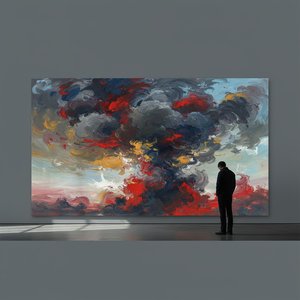
Śpiewające kobiety II

Ręcznie malowana reprodukcja olejowa

Ręcznie malowany obraz olejny na płótnie, wykonany na zamówienie przez naszych artystów w wybranym przez Ciebie wymiarze i oprawie. ( Przełącz na wydania drukowane Przejdź do wersji cyfrowej)

Opis obiektu

Śpiewające kobiety II - ikoniczny obraz Willema de Kooninga z kolekcji Tate Gallery. Dynamiczna abstrakcja ekspresjonistyczna, pełna energii i emocji. Odkryj dzieło artysty!

Biografia artysty

Willem de Kooning (1904-1997) – amerykański malarz, pionier abstrakcjonizmu i ekspresjonizmu. Znany z dynamicznych obrazów, w tym serii "Kobiety", oraz wpływ na ruch nowojorski.

od ·

Rozdział 1

Jak duży powinien być ten format?

Przesuń suwak, aby zmienić rozmiar; obraz po lewej stronie przedstawia ramę w jej rzeczywistej szerokości. Zachowano proporcje oryginału.

Standardowy format
personalizowane
CM
INCH

Wybierz spośród naszych standardowych rozmiarów, które zachowują oryginalne proporcje dzieła sztuki.

szerokość
wysokość

Wpisz wymaganą szerokość i wysokość, aby obraz pasował do Twojej ramy lub ściany. Ponieważ jest to dzieło malowane ręcznie, w przypadku rozmiaru o innych proporcjach artysta może domalować nieco więcej wokół obrazu lub przyciąć jego fragmenty — wybór należy do Ciebie. Przed rozpoczęciem pracy prześlemy Ci cyfrową wizualizację do zatwierdzenia. Obraz widoczny na tej stronie nie przedstawia rzeczywistego efektu — jedynie wizualizacja oddaje realny rezultat.

Rozdział 2

W jaki sposób ma zostać dostarczone?

Wybierz krawędzie płótna naciągniętego na ramę

Wybierz ramę

Corner sample of the WhiteWrap canvas edge finish, stretched on lite drewno bars
Białe krawędzie zł1
Corner sample of the BlurSideWrap canvas edge finish, stretched on lite drewno bars
rozmyte krawędzie zł1
Corner sample of the ExtendedWrap canvas edge finish, stretched on lite drewno bars
Przedłużony zł1
Corner sample of the P118B picture frame: polistyren formowany, 5 cm wide and 3 cm thick
P118B zł10
Corner sample of the P118H picture frame: polistyren formowany, 5 cm wide and 3 cm thick
P118H zł10
Corner sample of the P118W picture frame: polistyren formowany, 5 cm wide and 3 cm thick
P118W zł10
Corner sample of the P438Z picture frame: polistyren formowany, 5.5 cm wide and 3.5 cm thick
P438Z zł10
Corner sample of the P508JH picture frame: polistyren formowany, 7 cm wide and 3.5 cm thick
P508JH zł12
Corner sample of the P508YH picture frame: polistyren formowany, 7 cm wide and 3.5 cm thick
P508YH zł12
Corner sample of the P805H picture frame: polistyren formowany, 5 cm wide and 3.5 cm thick
P805H zł10
Corner sample of the P805Z picture frame: polistyren formowany, 5 cm wide and 3.5 cm thick
P805Z zł10
Corner sample of the P919BZ picture frame: polistyren formowany, 7 cm wide and 3.5 cm thick
P919BZ zł10
Corner sample of the P919G picture frame: polistyren formowany, 7 cm wide and 3.5 cm thick
P919G zł10
Corner sample of the P919XJ picture frame: polistyren formowany, 7 cm wide and 3.5 cm thick
P919XJ zł10
Corner sample of the P959ZH picture frame: polistyren formowany, 5 cm wide and 3 cm thick
P959ZH zł10
Corner sample of the P968JZ picture frame: polistyren formowany, 6 cm wide and 4 cm thick
P968JZ zł12
Corner sample of the W106C picture frame: lite drewno, 5 cm wide and 3 cm thick
W106C zł8
Corner sample of the W218G picture frame: lite drewno, 5 cm wide and 3 cm thick
W218G zł10
Corner sample of the W218JH picture frame: lite drewno, 5 cm wide and 3 cm thick
W218JH zł8
Corner sample of the W218Y picture frame: lite drewno, 5 cm wide and 3 cm thick
W218Y zł10
Corner sample of the W307PJ picture frame: lite drewno, 6 cm wide and 3 cm thick
W307PJ zł10
Corner sample of the W316G picture frame: lite drewno, 6 cm wide and 3 cm thick
W316G zł10
Corner sample of the W316PJ picture frame: lite drewno, 6 cm wide and 3 cm thick
W316PJ zł8
Corner sample of the W316Y picture frame: lite drewno, 6 cm wide and 3 cm thick
W316Y zł10
Corner sample of the W398PJ picture frame: lite drewno, 5 cm wide and 3 cm thick
W398PJ zł8
Corner sample of the W4111J picture frame: lite drewno, 6.5 cm wide and 3.5 cm thick
W4111J zł10
Corner sample of the W500HY picture frame: lite drewno, 7 cm wide and 5 cm thick
W500HY zł15
Corner sample of the W500JH picture frame: lite drewno, 7 cm wide and 5 cm thick
W500JH zł15
Corner sample of the W692G picture frame: lite drewno, 8 cm wide and 4 cm thick
W692G zł12
Corner sample of the W849H picture frame: lite drewno, 5 cm wide and 3 cm thick
W849H zł8
Corner sample of the W940BG picture frame: lite drewno, 7.5 cm wide and 4.5 cm thick
W940BG zł15
Corner sample of the W953PJ picture frame: lite drewno, 6 cm wide and 3.5 cm thick
W953PJ zł8
Corner sample of the H24-GOLD picture frame: rzeźbione drewno pokryte gipsem, 10 cm wide and 6 cm thick
H24-GOLD zł30
Corner sample of the H24-SILVER picture frame: rzeźbione drewno pokryte gipsem, 10 cm wide and 6 cm thick
H24-SILVER zł30
Corner sample of the H36-GOLD picture frame: rzeźbione drewno pokryte gipsem, 15 cm wide and 6.5 cm thick
H36-GOLD zł45
Corner sample of the H36-SILVER picture frame: rzeźbione drewno pokryte gipsem, 15 cm wide and 6.5 cm thick
H36-SILVER zł45

Profil: . Wymiar całkowity w ramie: .

Rozdział 3

Kto go maluje i czy coś powinno ulec zmianie?

Przykłady możliwych zmian: Zastąpienie twarzy zdjęciem klienta; Dodanie zwierzęcia (np. zamiana kota na psa); Ukrycie wiadomości w tle; Zmiana krajobrazu lub elementów tła.
Po złożeniu zamówienia zespół OriginalUniqueArt.com skontaktuje się z klientem drogą mailową w celu uzyskania instrukcji i prześle podgląd projektu

Dostawa na całym świecie () w ciągu 3–4 tygodni zamiast standardowych 5 tygodni. (3 Listopad). Bez kompromisów w kwestii jakości.

Rozdział 4

Ostatnie szlify

Tabliczka informacyjna, jak w muzeum?

Szczegóły grawerowanej brązowej tabliczki

This elegant plaque features the artist's name and the title of the artwork, finely engraved for a timeless presentation.

It is made from bronze with a refined, elegant finish. The text is precisely laser-engraved for a sharp and permanent result. Measuring 9x2 cm, the plaque is compact yet easy to read. It's built to be durable and scratch-resistant, offering a professional, museum-quality look. Mounting is simple thanks to the included adhesive backing.

Szczegóły przezroczystej tabliczki akrylowej

The plaque includes essential engraved details such as the artist's name, the title of the artwork, the date it was created, the type of media used-like oil on canvas or watercolor-a brief description of the piece, and a QR code that links to the complete artwork information.

It is crafted from clear acrylic, offering a sleek, modern appearance. The text is UV-engraved in black to ensure strong visual contrast. With a size of 10x15 cm, it ensures optimal readability. It comes equipped with two metal hooks for secure wall mounting. The plaque is designed to be weather-resistant, making it suitable for various environments, and it includes interactive features that work seamlessly with smartphone scanning.

Szczegóły czarnej tabliczki akrylowej

This elegant plaque includes engraved information such as the artist's name, the title of the artwork, the date it was created, the type of media used (like oil on canvas or watercolor), a short description of the artwork, and a QR code for quick access to more information.

The plaque itself is made from refined black acrylic with a premium finish. The text is laser-engraved in white for high contrast and readability. Its size is 10x15 cm, designed to be easy to read. It comes with two metal hooks for professional mounting. The design is sleek and fits any interior style. It is also weather-resistant and durable, with built-in digital integration for mobile compatibility.

Werniks ochronny?

Kiedy potrzebujesz dostawy?

Rozdział 5

Twoje dzieło, dokładnie tak, jak zamówiłeś

Śpiewające kobiety II

Technika reprodukcji

Wymiary reprodukcji

-

Wybitny mistrz artystyczny

Większa szczegółowość, finezja i dodatkowy czas na realizację

-

Opcje oprawy reprodukcji

-

-

W przypadku dzieł sztuki lub reprodukcji, których którykolwiek z boków przekracza 105 cm (około 41 cali), rama zostanie wysłana w formie zestawu do samodzielnego montażu. Metoda ta zapewnia bezpieczną dostawę i zapobiega uszkodzeniom podczas transportu.

Wymagany profesjonalny montaż – nie jest to produkt typu DIY.
Zestaw musi zostać złożony, a płótno naciągnięte przez doświadczonego profesjonalnego ramiarza, przy użyciu kleju do drewna (brak w zestawie), kleszczy do naciągania płótna oraz ścisków, które utrzymają krosna w równej pozycji podczas schnięcia kleju. Nieprawidłowy montaż lub nierównomierne napięcie płótna może trwale uszkodzić dzieło sztuki i nie podlega naszej gwarancji.

  • W zestawie znajdują się wszystkie listwy z litego drewna, precyzyjnie docięte do wymiarów.

  • Montaż odbywa się przy użyciu dołączonych wkrętów oraz kleju do drewna do łączenia narożników, którego zestaw nie zawiera i który musi zostać dostarczony przez ramiarza.

  • Wymagane są profesjonalne narzędzia, których nie ma w zestawie: kleszcze do naciągania płótna (napinacz) oraz zaciski, które pozwolą utrzymać listwy w równej pozycji podczas schnięcia kleju.

Ważne:
Do połączenia narożników niezbędny jest klej do drewna, listwy należy unieruchomić za pomocą ścisków do momentu całkowitego wyschnięcia kleju, a naciągnięcie płótna na złożoną ramę wymaga użycia kleszczy do naciągania płótna. Żaden z tych elementów nie jest dołączony do zestawu. Przed zamówieniem tego rozmiaru zalecamy konsultację z doświadczonym ramiarzem.

Etykieta obiektu

-

-

Lakier ochronny

Lakier z połyskiem (pogłębia kolory, chroni przed światłem i wilgocią)

-

Personalizacja dzieła

Przykłady możliwości personalizacji: zastąp twarz zdjęciem klienta; dodaj zwierzę domowe (np. zamień kota na psa); umieść ukrytą wiadomość w tle; zmień krajobraz lub elementy tła.

-

Ekspresowa

Dostawa na cały świat () w ciągu 3–4 tygodni zamiast standardowych 5 tygodni. (3 Listopad). Bez kompromisów w kwestii jakości.

-

Przesyłka ekspresowa

Dostawa na cały świat () w ciągu 5 tygodni. (10 Listopad).

W cenie

Cena całkowita

zł 1173

Suma całkowita zł 1173

Opcja ze szkłem jest dostępna wyłącznie w rozmiarach poniżej 110 cm

W każdym zamówieniu

  • Bezpłatna ekspresowa wysyłka na cały świat
  • Wysokiej jakości płótno lniane
  • Pełne ubezpieczenie przesyłki
  • Gwarancja zwrotu należności celnych i podatków importowych
  • Gwarancja wiernego odwzorowania kolorów
  • 100-dniowa polityka zwrotów (tylko w przypadku wad)
  • Gwarancja 100% zwrotu pieniędzy
  • Zniżka przy zakupie wielu sztuk

“Women Singing II” – A Vibrant Echo of Expressionism

“Women Singing II”, painted in 1966 by Willem de Kooning, stands as a cornerstone of Abstract Expressionism, embodying the movement’s core tenets: spontaneity, emotional intensity, and a rejection of representational conventions. This monumental canvas—its dimensions currently unknown—captures a moment of communal joy amidst a swirling landscape of color and gesture, inviting viewers into a realm where form transcends literal depiction to convey profound feeling. The artwork resides within the Tate Collection, offering scholars and enthusiasts alike access to its rich visual heritage.

The Artist’s Vision: De Kooning's Bold Approach

Willem de Kooning (1904-1997), born in Rotterdam, Netherlands, was a sculptor and painter who fundamentally reshaped the artistic landscape of the mid-20th century. Initially trained as a sculptor, he transitioned to painting in the 1930s, developing his signature style—characterized by aggressive brushstrokes, fragmented forms, and an unsettling blend of abstraction and figuration—particularly evident in his “Woman” series. De Kooning’s artistic philosophy revolved around capturing raw emotion rather than striving for photographic accuracy; he famously stated that he wanted to "make a painting like a man," prioritizing instinctual expression over intellectual calculation. This ethos is powerfully realized in “Women Singing II,” where the artist abandons meticulous detail, opting instead for dynamic brushwork and bold color palettes to convey an overwhelming sense of vitality.

A Symphony of Color and Gesture

The painting’s palette explodes with hues ranging from fiery reds and oranges to cool blues and greens—a deliberate choice designed to heighten emotional impact. Thick impasto technique dominates the surface, layering paint onto canvas in energetic swirls and ridges that seem to pulsate with movement. These gestural marks aren't merely decorative; they represent the artist’s physical engagement with the material, channeling his inner turmoil into visible form. The composition itself is deliberately asymmetrical, emphasizing the dynamism of the scene and disrupting any expectation of harmonious balance. The central figures—three women engaged in song—are rendered as amorphous shapes, their bodies merging seamlessly with the surrounding color field, blurring boundaries between figure and ground.

Historical Context: Expressionism's Response to Trauma

“Women Singing II” emerged during a period marked by significant social upheaval – the aftermath of World War II and the burgeoning Cold War era. Abstract Expressionism arose as a reaction against the prevailing artistic conventions of Surrealism and Cubism, rejecting illusionistic representation in favor of subjective experience. Artists like de Kooning sought to grapple with anxieties surrounding nuclear annihilation and societal instability through emotionally charged imagery. The painting’s depiction of women singing—a seemingly simple act—can be interpreted as an assertion of resilience and communal solidarity amidst uncertainty. It speaks to the human desire for connection and joy in the face of adversity, resonating powerfully with viewers today.

Symbolism Beyond Representation

While devoid of recognizable imagery, “Women Singing II” is laden with symbolic significance. The repetition of figures—three women united in song—suggests harmony and interconnectedness, countering the fragmentation inherent in the painting’s style. Color itself carries emotional weight; reds and oranges evoke passion and energy, while blues and greens convey tranquility and contemplation. Ultimately, De Kooning's masterpiece invites viewers to contemplate not what is seen but how it feels – a testament to the enduring power of abstract art to communicate profound truths about the human condition.

Pytania i odpowiedzi

W którym roku powstało dzieło „Śpiewające kobiety II” – Willem de Kooning?

"Śpiewające kobiety II" powstało w 1966 roku. Data ta pozwala umiejscowić dzieło w kontekście twórczości Willem de Kooning oraz epoki, w której powstało.

Jaka technika i styl charakteryzują „Śpiewające kobiety II” – Willem de Kooning?

W "Śpiewające kobiety II" technika Akryl na płótnie łączy się z nurtem Abstract Expressionism.

Z jakiego kraju pochodzi dzieło Abstract Expressionism pt. "Śpiewające kobiety II"?

"Śpiewające kobiety II" powstało dzięki Willem de Kooning, urodzonemu w Holandia, w ramach nurtu Abstract Expressionism. Pochodzenie artysty wiąże to dzieło z Abstract Expressionism w wydaniu twórców z Holandia.

Więcej o tym obrazie

Podgląd w skali 1:1 Podgląd AR Przełącz na wydania drukowane Przejdź do wersji cyfrowej Wyślij jako kartkę
Szczegóły dzieła Przewodnik Dodaj do ulubionych Pobierz obraz Podobne obiekty RTG Pokaz slajdów Pytania i odpowiedzi Statystyki

W liczbach

  • 1966rok powstania dzieła
  • 29dostępne ramy do wyboru
  • standardowe formaty, w ich własnych proporcjach
  • 5tygodni na namalowanie i dostarczenie dzieła

O oryginale

Willem de Kooning

Willem de Kooning

1904 - 1997, Holandia

Krótkie informacje o Willem de Kooning

  • Artistic Movement Or Style: Abstrakcyjny ekspresjonizm
  • Artists Or Movements Influenced By This Artist: ['Nowy Jork']
  • Artists Who Influenced This Artist:
    • Arshile Gorky
    • Stuart Davis
    • John Graham
  • Date Of Birth: 24 kwietnia 1904
  • Date Of Death: 19 marca 1997
  • Full Name: Willem de Kooning
  • Nationality: Holenderski-Amerykanin
  • Notable Artworks:
    • Kobieta I
    • Marilyn Monroe
    • Rzeźbiarz
    • Wygrzewanie
  • Place Of Birth: Rotterdam, Holandia

Biografia artysty

A Life Forged in Abstraction

Willem de Kooning, a name synonymous with the raw energy and emotional depth of Abstract Expressionism, was born in Rotterdam, Netherlands, in 1904. His early life was marked by a familial split – his parents divorced when he was young – which perhaps instilled within him a sense of restless searching that would permeate his artistic journey. Leaving formal schooling at twelve, de Kooning apprenticed with a commercial art firm, laying the groundwork for his technical skill while simultaneously fueling a desire to break free from conventional constraints. Evening classes at the Academie van Beeldende Kunsten en Technische Wetenschappen in Rotterdam provided further foundational training, but it was a yearning for something more – a bolder, more expressive language – that ultimately propelled him towards America in 1926. His arrival wasn’t straightforward; he famously stowed away on a ship, embodying the spirit of an outsider seeking new horizons. New York City became his adopted home, and its vibrant, often gritty energy profoundly shaped his evolving style. He navigated various jobs – house painter, carpenter – all while relentlessly pursuing his artistic vision, absorbing the city’s pulse into his work.

From Urban Scenes to Abstract Fury

De Kooning's early paintings reflected his immediate surroundings: urban landscapes and portraits that captured the dynamism of New York life. These works, often rendered in muted tones and characterized by a sense of movement, demonstrated an acute observation of the city’s energy. However, these were merely stepping stones towards a more profound exploration of form and emotion. A pivotal moment came with his connection to Arshile Gorky, whose influence proved transformative. Gorky encouraged de Kooning’s experimentation with abstraction, fostering a willingness to dismantle traditional representation in pursuit of something deeper. De Kooning began to incorporate fragmented forms and distorted perspectives, moving away from realistic depiction towards a more subjective and expressive approach. The 1930s saw de Kooning engage with social realism and mural projects through the Works Progress Administration (WPA), a period that honed his skills but also highlighted the limitations of purely representational art. He found himself drawn to the work of Stuart Davis and John Graham, artists who were pushing boundaries in their own right, exploring themes of urban life and modern experience. This confluence of influences gradually steered him away from literal depiction and toward an increasingly abstract vocabulary. It wasn’t a sudden shift, but rather a slow burn – a deliberate dismantling of established norms fueled by intellectual curiosity and a relentless pursuit of artistic truth.

The Woman Series: A Landmark Achievement

Following World War II, de Kooning emerged as a central figure in the burgeoning Abstract Expressionist movement. This period marked a turning point, culminating in his iconic “Woman” series (1950-1953). These paintings – including the monumental *Woman I* – are not merely depictions of female figures; they are visceral explorations of femininity, sexuality, and the complexities of human emotion. Characterized by aggressive brushstrokes, fragmented forms, and a jarring juxtaposition of colors, the “Woman” series challenged conventional notions of beauty and representation. They were controversial, even shocking to some, but their power lay precisely in their refusal to conform. De Kooning wasn’t interested in creating idealized images; he sought to capture the raw, untamed essence of his subjects. The series is a complex meditation on identity, desire, and the anxieties of modern life. Beyond the "Woman" series, works like *The Glazier* and *Excavation* further demonstrated his dynamic approach to painting, showcasing a masterful command of texture, color, and composition. He didn't shy away from chaos or ambiguity; instead, he embraced them as integral components of his artistic language.

Evolving Landscapes and Enduring Legacy

In the 1960s, de Kooning’s style underwent another significant evolution. While abstraction remained central to his work, landscape elements began to play a more prominent role, often rendered with a brighter palette and a looser, more fluid brushstroke. He continued to experiment relentlessly throughout his life, exploring different techniques and materials, never content to rest on his laurels. He moved towards larger canvases and incorporated elements of Surrealism into his compositions. His later works demonstrate a remarkable ability to reinvent himself while remaining true to his core artistic principles. Willem de Kooning’s historical significance is undeniable. He helped establish New York City as a global center for art, challenging the dominance of European traditions and paving the way for future generations of artists. His work continues to inspire awe and provoke debate, reminding us of the power of abstraction to convey profound emotional truths. De Kooning passed away in 1997, leaving behind a vast and influential body of work that stands as a testament to his unwavering commitment to artistic innovation and his enduring legacy as one of the most important American artists of the 20th century. His impact resonates still.

Key Influences

De Kooning’s artistic development was shaped by a diverse range of influences, both formal and personal. Early exposure to commercial art instilled in him a strong technical foundation, while his studies at the Rotterdam Academy provided a grounding in traditional techniques. The arrival in New York City exposed him to the vibrant energy of modern urban life, which profoundly influenced his early landscape paintings. However, it was his encounter with Arshile Gorky that proved transformative, encouraging him to embrace abstraction and explore new ways of representing form and emotion. Furthermore, he drew inspiration from the works of Pablo Picasso, Joan Miró, and other avant-garde artists who were challenging conventional notions of art. The influence of Stuart Davis’s urban scenes and John Graham's explorations of psychological states also played a significant role in shaping his artistic vision.

Notable Works

Among de Kooning’s most celebrated works are *Woman I* (1950-1953), a monumental painting that embodies the intensity and complexity of the “Woman” series; *Painting II* (1948), a dynamic and chaotic composition that exemplifies his approach to abstract expressionism; *Orange, Red, Yellow* (1961), a vibrant landscape painting that showcases his later stylistic developments; and *Excavation* (1950), a complex and layered work that reflects his fascination with the relationship between figure and ground. His paintings are characterized by bold brushwork, fragmented forms, and a masterful use of color to evoke powerful emotions.

Najważniejsze informacje

  • Year: 1966
  • Artistic style: Dynamic and energetic
  • Movement: Abstract Expressionism
  • Subject or theme: Musical performance
  • Notable elements or techniques: Bold brushwork, expressive gesture

Quiz o sztuce

Do każdego pytania dotyczy tylko jedna poprawna odpowiedź.

Pytanie 1:
Jak nazywa się obraz?
Pytanie 2:
Czy obraz przedstawia scenę morską?
Pytanie 3:
Kto jest twórcą tego dzieła?
Pytanie 4:
Czy obraz wykorzystuje technikę olejną na papierze?
Pytanie 5:
W którym okresie sztuki powstał ten obraz?