

 Zobacz w skali 1:1
 Wyślij
 Udostępnij
 Szczegóły
 Przewodnik

 Pobierz plik obrazu
 Podobne obiekty
 RTG
RTG Pokaz slajdów
 Statystyki
Secretary
 Oil On Paper
- WallArt
- Abstract Expressionism
 1948
1948- Modern
 62.0 x 92.0 cm
 Czytaj więcej
Dzieło sztuki prezentowane na tej stronie podlega ochronie prawem autorskim, co oznacza, że nie mamy prawa do tworzenia ani sprzedaży jego identycznej reprodukcji. Ochrona ta jest egzekwowana na mocy umów międzynarodowych, takich jak Konwencja berneńska oraz przez przepisy prawa krajowego, w tym te określone w Prawo autorskie USA – Tytuł 17.
Metoda ta jest w pełni zgodna z przepisami prawa autorskiego, ponieważ nie polega na kopiowaniu ani powielaniu chronionego dzieła. Stanowi ona kreatywną reinterpretację – nowy obraz, który czerpie inspirację z oryginału, ale nie jest z nim tożsamy.
Giclée / Wydruk artystyczny
Wydruki giclée lub płótna o jakości muzealnej, szybka realizacja i szeroki wybór opcji wykończenia. ( Kup ręcznie malowany obraz Przełącz na wersję cyfrową)




P118B zł10

P118H zł10

P118W zł10

P438Z zł10

P508JH zł12

P508YH zł12

P805H zł10

P805Z zł10

P919BZ zł10

P919G zł10

P919XJ zł10

P959ZH zł10

P968JZ zł12

W106C zł8

W218G zł10

W218JH zł8

W218Y zł10

W307PJ zł10

W316G zł10

W316PJ zł8

W316Y zł10

W398PJ zł8

W4111J zł10

W500HY zł15

W500JH zł15

W692G zł12

W849H zł8

W940BG zł15

W953PJ zł8




Wybierz spośród naszych standardowych rozmiarów, które zachowują oryginalne proporcje dzieła sztuki.

Wpisz wymaganą szerokość i wysokość, aby dopasować grafikę do ramy lub ściany. Wydruk można jedynie przyciąć, nigdy nie powiększając go poza oryginalny obraz, dlatego format o innym proporcji spowoduje utratę części kompozycji. Przed rozpoczęciem druku prześlemy Ci cyfrowy podgląd do zatwierdzenia. Obraz wyświetlany na tej stronie nie pokazuje rzeczywistego przycięcia — jedynie podgląd oddaje ten efekt.
Dostawa na cały świat () w ciągu 2 tygodni zamiast standardowych 4/5 tygodni. (21 Październik)

Bezpłatna ekspresowa wysyłka na cały świat

Wysokiej jakości płótno lniane

Pełne ubezpieczenie transportowe

Gwarancja zwrotu należności celnych i podatków importowych

Gwarancja idealnego odwzorowania barw

100-dniowy okres na zwrot dzieła w przypadku wykrycia wad produkcyjnych

Gwarancja 100% zwrotu pieniędzy

Oferta przy zakupie wielu sztuk
 Opcja ze szkłem jest dostępna wyłącznie w rozmiarach poniżej 110 cm

Secretary
Giclée / Wydruk artystyczny
Rozmiar reprodukcji
-


Suma do zapłaty
zł 304
A Study in Tension: The Visceral World of Willem de Kooning’s ‘Secretary’
In the pantheon of Abstract Expressionism, few works capture the raw, fractured energy of the postwar era quite like Willem de Kooning’s Secretary. Executed in 1948, this masterpiece is far more than a mere portrait of a woman at her desk; it is a profound psychological landscape rendered in oil and charcoal. As one gazes upon the canvas, the viewer is immediately thrust into a world where form and emotion collide. De Kooning, a titan of the New York School, utilizes aggressive brushstrokes and fragmented shapes to dismantle the boundaries between the subject and her environment. The painting serves as a cornerstone of an era that sought to liberate art from academic rigidity, favoring instead the spontaneous, the improvisational, and the deeply personal.
The technical execution of Secretary is a testament to De Kooning’s mastery of texture and movement. By applying oil and charcoal onto paper mounted on fiberboard, the artist achieved a tactile richness that breathes life into the composition. There is an unmistakable sense of action painting here—a technique where the very act of creation becomes visible through thick, gestural marks and layered pigments. The way the colors bleed and intersect suggests a restless energy, mirroring the internal turbulence of the subject. For the discerning collector or interior designer, this piece offers a commanding presence, bringing a sophisticated edge of mid-century modernism and intellectual depth to any curated space.
Symbolism and the Subconscious Mind
Beyond its striking visual impact, Secretary is steeped in the intellectual ferment of its time, drawing heavily from the currents of Surrealism and Jungian psychology. The composition is a delicate dance of contrasts; the stark, unsettling yellow background acts as a jarring counterpoint to the muted, somber reds of the woman’s dress. This chromatic tension creates a sense of unease, reflecting the societal anxieties regarding identity and gender roles in the wake of World War II. The figure herself, though seated in a seemingly mundane position, appears caught in a moment of profound internal conflict. Her face remains obscured, inviting the viewer to project their own emotions onto her silent, downward gaze.
Every element within the frame contributes to this atmosphere of psychological complexity. The presence of clocks on the wall introduces a subtle layer of temporal pressure, suggesting the relentless march of time and the weight of duty. Even the fragmented furniture and scattered shapes contribute to a sense of disintegration, as if the physical world is dissolving into the subconscious. To possess a reproduction of such a work is to invite a conversation about the human condition into one's home—a piece that does not merely decorate a wall but challenges the spirit and inspires deep contemplation.
An Essential Acquisition for the Modern Collector
For those seeking to infuse their interiors with art that possesses both historical gravity and contemporary relevance, Secretary stands as an unparalleled choice. It embodies the transition from figurative representation to pure abstraction, making it a pivotal piece of art history. Whether placed in a minimalist gallery setting or a richly textured study, the painting’s dynamic energy and sophisticated palette command attention. A high-quality hand-painted reproduction allows the nuances of De Kooning’s brushwork and the subtle interplay of light and shadow to shine, offering an opportunity to live alongside one of the most influential movements in American art history.
Pytania i odpowiedzi
Czy mogę obejrzeć podgląd „Secretary” autorstwa Willem de Kooning przed złożeniem zamówienia?
Aby podglądnąć reprodukcję dzieła „Secretary” autorstwa Willem de Kooning, otwórz stronę Podgląd danego utworu.
Czy dzieło „Secretary” autorstwa Willem de Kooning znajduje się w domenie publicznej i dlaczego?
Status praw autorskich do dzieła „Secretary” – nadal chronione prawem autorskim – wynika z daty śmierci artysty, która przypada na 1997.
Jak nasycona jest paleta kolorystyczna dzieła "Secretary"?
Kolory dzieła „Secretary” autorstwa Willem de Kooning charakteryzują się Balanced Soft nasyceniem. Nasycenie określa, jak żywe lub stonowane są barwy.
Biografia artysty
A Life Forged in Abstraction
Willem de Kooning, a name synonymous with the raw energy and emotional depth of Abstract Expressionism, was born in Rotterdam, Netherlands, in 1904. His early life was marked by a familial split – his parents divorced when he was young – which perhaps instilled within him a sense of restless searching that would permeate his artistic journey. Leaving formal schooling at twelve, de Kooning apprenticed with a commercial art firm, laying the groundwork for his technical skill while simultaneously fueling a desire to break free from conventional constraints. Evening classes at the Academie van Beeldende Kunsten en Technische Wetenschappen in Rotterdam provided further foundational training, but it was a yearning for something more – a bolder, more expressive language – that ultimately propelled him towards America in 1926. His arrival wasn’t straightforward; he famously stowed away on a ship, embodying the spirit of an outsider seeking new horizons. New York City became his adopted home, and its vibrant, often gritty energy profoundly shaped his evolving style. He navigated various jobs – house painter, carpenter – all while relentlessly pursuing his artistic vision, absorbing the city’s pulse into his work.From Urban Scenes to Abstract Fury
De Kooning's early paintings reflected his immediate surroundings: urban landscapes and portraits that captured the dynamism of New York life. These works, often rendered in muted tones and characterized by a sense of movement, demonstrated an acute observation of the city’s energy. However, these were merely stepping stones towards a more profound exploration of form and emotion. A pivotal moment came with his connection to Arshile Gorky, whose influence proved transformative. Gorky encouraged de Kooning’s experimentation with abstraction, fostering a willingness to dismantle traditional representation in pursuit of something deeper. De Kooning began to incorporate fragmented forms and distorted perspectives, moving away from realistic depiction towards a more subjective and expressive approach. The 1930s saw de Kooning engage with social realism and mural projects through the Works Progress Administration (WPA), a period that honed his skills but also highlighted the limitations of purely representational art. He found himself drawn to the work of Stuart Davis and John Graham, artists who were pushing boundaries in their own right, exploring themes of urban life and modern experience. This confluence of influences gradually steered him away from literal depiction and toward an increasingly abstract vocabulary. It wasn’t a sudden shift, but rather a slow burn – a deliberate dismantling of established norms fueled by intellectual curiosity and a relentless pursuit of artistic truth.The Woman Series: A Landmark Achievement
Following World War II, de Kooning emerged as a central figure in the burgeoning Abstract Expressionist movement. This period marked a turning point, culminating in his iconic “Woman” series (1950-1953). These paintings – including the monumental *Woman I* – are not merely depictions of female figures; they are visceral explorations of femininity, sexuality, and the complexities of human emotion. Characterized by aggressive brushstrokes, fragmented forms, and a jarring juxtaposition of colors, the “Woman” series challenged conventional notions of beauty and representation. They were controversial, even shocking to some, but their power lay precisely in their refusal to conform. De Kooning wasn’t interested in creating idealized images; he sought to capture the raw, untamed essence of his subjects. The series is a complex meditation on identity, desire, and the anxieties of modern life. Beyond the "Woman" series, works like *The Glazier* and *Excavation* further demonstrated his dynamic approach to painting, showcasing a masterful command of texture, color, and composition. He didn't shy away from chaos or ambiguity; instead, he embraced them as integral components of his artistic language.Evolving Landscapes and Enduring Legacy
In the 1960s, de Kooning’s style underwent another significant evolution. While abstraction remained central to his work, landscape elements began to play a more prominent role, often rendered with a brighter palette and a looser, more fluid brushstroke. He continued to experiment relentlessly throughout his life, exploring different techniques and materials, never content to rest on his laurels. He moved towards larger canvases and incorporated elements of Surrealism into his compositions. His later works demonstrate a remarkable ability to reinvent himself while remaining true to his core artistic principles. Willem de Kooning’s historical significance is undeniable. He helped establish New York City as a global center for art, challenging the dominance of European traditions and paving the way for future generations of artists. His work continues to inspire awe and provoke debate, reminding us of the power of abstraction to convey profound emotional truths. De Kooning passed away in 1997, leaving behind a vast and influential body of work that stands as a testament to his unwavering commitment to artistic innovation and his enduring legacy as one of the most important American artists of the 20th century. His impact resonates still.Key Influences
De Kooning’s artistic development was shaped by a diverse range of influences, both formal and personal. Early exposure to commercial art instilled in him a strong technical foundation, while his studies at the Rotterdam Academy provided a grounding in traditional techniques. The arrival in New York City exposed him to the vibrant energy of modern urban life, which profoundly influenced his early landscape paintings. However, it was his encounter with Arshile Gorky that proved transformative, encouraging him to embrace abstraction and explore new ways of representing form and emotion. Furthermore, he drew inspiration from the works of Pablo Picasso, Joan Miró, and other avant-garde artists who were challenging conventional notions of art. The influence of Stuart Davis’s urban scenes and John Graham's explorations of psychological states also played a significant role in shaping his artistic vision.Notable Works
Among de Kooning’s most celebrated works are *Woman I* (1950-1953), a monumental painting that embodies the intensity and complexity of the “Woman” series; *Painting II* (1948), a dynamic and chaotic composition that exemplifies his approach to abstract expressionism; *Orange, Red, Yellow* (1961), a vibrant landscape painting that showcases his later stylistic developments; and *Excavation* (1950), a complex and layered work that reflects his fascination with the relationship between figure and ground. His paintings are characterized by bold brushwork, fragmented forms, and a masterful use of color to evoke powerful emotions.
Willem de Kooning
1904 - 1997 , Holandia
Najważniejsze informacje
- Artistic Movement Or Style: Abstrakcyjny ekspresjonizm
- Artists Or Movements Influenced By This Artist: ['Nowy Jork']
- Artists Who Influenced This Artist:
- Arshile Gorky
- Stuart Davis
- John Graham
- Date Of Birth: 24 kwietnia 1904
- Date Of Death: 19 marca 1997
- Full Name: Willem de Kooning
- Nationality: Holenderski-Amerykanin
- Notable Artworks:
- Kobieta I
- Marilyn Monroe
- Rzeźbiarz
- Wygrzewanie
- Place Of Birth: Rotterdam, Holandia
Zobacz także powiązane artykuły

Top 10 arcydzieł ekspresjonizmu abstrakcyjnego – inspiracje dla Twojego wnętrza | OriginalUniqueArt.com
Odkryj 10 arcydzieł ekspresjonizmu abstrakcyjnego – Pollock, Rothko, de Kooning i inni. Poznaj historie artystów, techniki i inspiracje dla Twojego wnętrza. Reprodukcje najwyższej jakości na OriginalUniqueArt.com!

25 Masterpieces of Giorgio de Chirico: Exploring the Magic of Metaphysical Art
Step into the haunting dreamscapes of Giorgio de Chirico. Explore 25 iconic Metaphysical art masterpieces, from enigmatic shadows to surrealist wonders. Find inspiration for your collection with museum-quality reproductions at OriginalUniqueArt.com. Discover all masterpieces online.

25 Masterpieces of Giorgio de Chirico: Exploring Metaphysical Art
Step into the haunting dreamscapes of Giorgio de Chirico. Explore 25 iconic Metaphysical paintings that defined Surrealism. From enigmatic shadows to timeless architecture, find inspiration and museum-quality art reproductions. Discover all masterpieces on OriginalUniqueArt.com.

Willem de Kooning: Abstraction, Gesture & the Evolution of Post-War American Painting
Explore the evolution of Willem de Kooning's iconic Abstract Expressionist paintings. Discover his signature style, key themes & investment potential with expert insights for discerning art collectors.
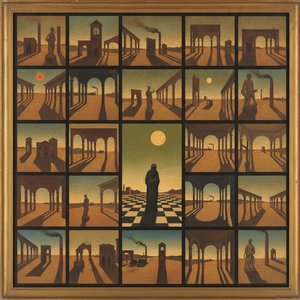
25 Masterpieces of Giorgio de Chirico: The King of Metaphysical Art
Step into the haunting dreamscapes of Giorgio de Chirico. Explore 25 iconic Metaphysical art masterpieces, from enigmatic shadows to surrealist wonders. Find museum-quality reproductions and timeless decor inspiration. Discover all masterpieces on OriginalUniqueArt.com.


