

 Zobacz w skali 1:1
 Wyślij
 Udostępnij
 Szczegóły
 Przewodnik

 Pobierz plik obrazu
 Podobne obiekty
 RTG
RTG Pokaz slajdów
 Statystyki
Nie nazwany


 Czytaj więcej
Dzieło sztuki prezentowane na tej stronie podlega ochronie prawem autorskim, co oznacza, że nie mamy prawa do tworzenia ani sprzedaży jego identycznej reprodukcji. Ochrona ta jest egzekwowana na mocy umów międzynarodowych, takich jak Konwencja berneńska oraz przez przepisy prawa krajowego, w tym te określone w Prawo autorskie USA – Tytuł 17.
Jako pełną szacunku i legalną alternatywę oferujemy personalizowane, malowane ręcznie dzieła sztuki inspirowane oryginałem. Nasi wykwalifikowani i profesjonalni artyści starannie analizują styl, nastrój oraz artystyczną esencję pierwowzoru, aby stworzyć nowe, unikalne dzieło, które przywołuje te same emocje – pozostając jednocześnie w pełni oryginalną kreacją.
Metoda ta jest w pełni zgodna z przepisami prawa autorskiego, ponieważ nie polega na kopiowaniu ani powielaniu chronionego dzieła. Stanowi ona kreatywną reinterpretację – nowy obraz, który czerpie inspirację z oryginału, ale nie jest z nim tożsamy.
Ręcznie malowana reprodukcja olejowa
Ręcznie malowany obraz olejny na płótnie, wykonany na zamówienie przez naszych artystów w wybranym przez Ciebie wymiarze i oprawie. ( Przełącz na wersję drukowaną Przełącz na wersję cyfrową)




P118B zł10

P118H zł10

P118W zł10

P438Z zł10

P508JH zł12

P508YH zł12

P805H zł10

P805Z zł10

P919BZ zł10

P919G zł10

P919XJ zł10

P959ZH zł10

P968JZ zł12

W106C zł8

W218G zł10

W218JH zł8

W218Y zł10

W307PJ zł10

W316G zł10

W316PJ zł8

W316Y zł10

W398PJ zł8

W4111J zł10

W500HY zł15

W500JH zł15

W692G zł12

W849H zł8

W940BG zł15

W953PJ zł8




Wybierz spośród naszych standardowych rozmiarów, które zachowują oryginalne proporcje dzieła sztuki.

Wpisz wymaganą szerokość i wysokość, aby obraz pasował do Twojej ramy lub ściany. Ponieważ jest to dzieło malowane ręcznie, w przypadku rozmiaru o innym proporcji artysta może domalować nieco więcej wokół obrazu lub przyciąć fragmenty — wybór należy do Ciebie. Przed rozpoczęciem pracy prześlemy Ci cyfrową wizualizację do zatwierdzenia. Obraz widoczny na tej stronie nie przedstawia rzeczywistego efektu — jedynie wizualizacja oddaje realny rezultat.
Po złożeniu zamówienia zespół OriginalUniqueArt.com skontaktuje się z klientem drogą mailową w celu uzyskania instrukcji i prześle wizualizację projektu
Dostawa na całym świecie () w ciągu 3–4 tygodni zamiast standardowych 5 tygodni. (23 Październik). Bez kompromisów w kwestii jakości.

Bezpłatna ekspresowa wysyłka na cały świat

Wysokiej jakości płótno lniane

Pełne ubezpieczenie transportowe

Gwarancja zwrotu należności celnych i podatków importowych

Gwarancja idealnego odwzorowania barw

100-dniowy okres na zwrot dzieła w przypadku wykrycia wad produkcyjnych

Gwarancja 100% zwrotu pieniędzy

Oferta przy zakupie wielu sztuk
 Opcja ze szkłem jest dostępna wyłącznie w rozmiarach poniżej 110 cm

Nie nazwany
Technika wykonania
Rozmiar reprodukcji
-


Suma do zapłaty
zł 1151
A Fragment of Myth and Modernity: Examining Wifredo Lam’s “Untitled” Drawing
This charcoal and pastel drawing, created in 1965, represents a pivotal moment in Wifredo Lam's artistic trajectory – a deliberate exploration of hybrid imagery that encapsulates the core tenets of his distinctive vision. Lam, born in Sagua La Grande, Cuba, in 1902, inherited a heritage profoundly shaped by cultural crossroads: his father’s lineage traced back to Chinese immigrants and his mother’s roots extended deep into Spanish colonial history intertwined with African traditions. This multifaceted ancestry wasn't merely biographical detail; it became the bedrock upon which Lam built his artistic language, resulting in a style that brilliantly juxtaposes European modernist influences – particularly Surrealism – with the vibrant spirit and symbolic vocabulary of Afro-Cuban culture.- Subject Matter: The drawing depicts a singular creature—a winged animal adorned with horns—positioned atop the head of a human figure reminiscent of Lam’s earlier portraits featuring similar hybrid forms. This central motif immediately speaks to Lam's preoccupation with blending disparate cultural traditions, mirroring the broader context of Cuban identity during his lifetime.
- Style and Technique: Lam’s masterful execution utilizes charcoal for tonal depth and pastel hues for luminous accents, creating a textural interplay that enhances the drawing’s expressive quality. The artist employs loose brushstrokes and gestural marks characteristic of Surrealist painting, prioritizing emotion and intuition over precise representation.
Historical Context: Lam's Engagement with Surrealism and Afro-Cuban Symbolism
Lam’s artistic journey coincided with the burgeoning Surrealist movement in Europe, spearheaded by artists like Picasso and Matisse. However, unlike many of his contemporaries who embraced purely abstract forms, Lam remained firmly rooted in figurative art while simultaneously incorporating elements of Afro-Cuban mythology and symbolism. This deliberate fusion reflects Lam's desire to reclaim Cuban cultural heritage—specifically Yoruba cosmology—and confront the legacy of colonialism with a rebellious spirit. The creature depicted isn’t simply an animal; it embodies ancestral wisdom and represents a powerful assertion against Western dominance.- Symbolism: The horns on the winged animal likely symbolize power, divinity, and connection to ancient traditions – concepts central to Yoruba beliefs. Simultaneously, the human figure suggests vulnerability and contemplation, highlighting the tension between tradition and modernity that defines Lam’s artistic worldview.
- Composition: The creature dominates the frame, stretching across most of the canvas, emphasizing its importance as a focal point. Smaller figures scattered throughout contribute to a broader narrative, hinting at interconnectedness and suggesting that this singular image is part of a larger symbolic tapestry.
Exploring Lam’s Unique Artistic Vision
Lam's distinctive style distinguishes him from many other artists of his era. He skillfully blends Cubist fragmentation with Surrealist dreamlike imagery—a technique that compels viewers to confront unsettling realities while simultaneously inviting contemplation on universal themes of identity and spirituality. The artist’s meticulous attention to detail, combined with a palpable sense of movement and emotion, elevates “Untitled” beyond mere visual representation; it becomes an embodiment of Lam's profound engagement with the complexities of cultural heritage and artistic innovation. Consider how Lam’s biographical background—his father’s Chinese influence and his mother’s Spanish ancestry—shaped his artistic sensibility.The Drawing as a Reflection of Cuban Identity
“Untitled” serves as a poignant emblem of Cuba's multifaceted history – the collision between Eastern and Western cultures, the enduring presence of indigenous traditions alongside colonial legacies. Lam’s masterful rendering captures this dynamic interplay, prompting viewers to ponder questions about heritage, resilience, and the transformative power of artistic expression. The drawing’s subdued palette—primarily blacks and whites punctuated by pastel shades—creates an atmosphere of solemn contemplation, inviting introspection on themes of cultural continuity and artistic legacy.Pytania i odpowiedzi
W jakim pomieszczeniu najlepiej wyeksponować "Nie nazwany", biorąc pod uwagę jego paletę barw?
Biorąc pod uwagę jego Barwy neutralne kolorystykę, dzieło "Nie nazwany" idealnie pasuje do Salon lub strefa dzienna.
Czy mogę zamówić olejną reprodukcję "Nie nazwany"?
Ręcznie malowaną reprodukcję dzieła „Nie nazwany” autorstwa Wifredo Lam można zamówić bezpośrednio na stronie Ręcznie malowana reprodukcja: ręcznie malowana reprodukcja olejowa na płótnie lnianym, tworzoną na specjalne zamówienie.
Do którego etapu kariery Wifredo Lam należy dzieło „Nie nazwany” (1965)?
Biorąc pod uwagę datę powstania (1965), dzieło „Nie nazwany” wpisuje się w Mature Surrealism twórczości Wifredo Lam.
Biografia artysty
Wifredo Lam - A Crossroads of Cultures: The Life and Art of Wifredo Lam
Wifredo Óscar de la Concepción Lam y Castilla, known simply as Wifredo Lam, was a painter who embodied the complexities of cultural identity in the 20th century. Born in Sagua La Grande, Cuba, in 1902, his very lineage spoke to the island’s layered history – a father descended from Chinese immigrants and a mother tracing her roots back to Spanish conquistadors and enslaved Africans. This multicultural heritage wasn't merely biographical detail; it became the wellspring of his artistic vision, fueling a unique style that fused European modernism with Afro-Cuban spirituality and symbolism. Lam’s early life was marked by an initial pursuit of law in Havana, but even amidst legal studies, he found himself drawn to the natural world, spending time at the botanical gardens – a foreshadowing of the organic forms that would later dominate his canvases. Formal artistic training followed at the Escuela de Bellas Artes in Havana and then in Madrid under Fernando Álvarez de Sotomayor y Zaragoza, where he absorbed traditional techniques while simultaneously beginning to question their limitations.Early Life and Influences
Wifredo Lam’s formative years were shaped by a profound encounter with his family’s heritage. His father, Enrique Lam-Yam, was a Chinese immigrant from Canton (Guangdong province) who arrived in Cuba as part of the late-19th-century wave of Chinese laborers and merchants. Enrique instilled in Wifredo a fascination for Eastern aesthetics and philosophy—a connection that would resonate throughout his artistic career. Simultaneously, Ana Serafina Catilla, Lam’s mother, descended from Spanish conquistadors and enslaved Africans, embodying the enduring legacy of colonialism. Growing up amidst Sagua La Grande's vibrant Afro-Cuban culture exposed him to rituals and traditions rooted in Santería—a religion blending Yoruba cosmology with Catholicism—influencing his artistic symbolism and worldview. Early exposure to the Prado Museum’s masterpieces ignited a passion for Surrealism and Pieter Bruegel the Elder’s unsettling visions, fostering an appreciation for allegory and psychological depth. These influences would coalesce into Lam’s distinctive style: a synthesis of European modernism and Afro-Cuban spirituality.European Encounters and Artistic Transformation
Lam’s time in Spain proved transformative. Studying under Fernando Álvarez de Sotomayor y Zaragoza at the Academy of Fine Arts in Madrid, he honed his skills in traditional painting techniques while simultaneously challenging their conventions. He was particularly captivated by Velázquez’s masterful realism and Goya’s unflinching portrayal of social injustice—artists who served as models for Lam's own artistic explorations. The Museo Nacional Centro de Arte Reina Sofía housed many paintings that inspired him, especially Picasso’s innovative Cubist approach. His encounter with Pablo Picasso was decisive, fostering a lifelong friendship and introducing him to fellow artists like Joan Miró and André Breton—figures who championed Surrealism as a means of accessing the unconscious mind. Lam embraced Surrealist techniques—automatic drawing and collage—experimenting with dreamlike imagery and disrupting conventional perspectives. This period solidified his commitment to artistic innovation and fueled his desire to express complex psychological states through visual language.The Surrealist Vision and Artistic Output
Lam’s involvement in the Surrealist movement resulted in a prolific output of paintings, drawings, and sculptures—each reflecting his preoccupation with themes of identity, spirituality, and social critique. His early works showcased a masterful command of traditional realism, capturing landscapes and still lifes with meticulous detail. However, as he matured, Lam increasingly sought to transcend representational conventions, embracing abstraction and exploring the expressive potential of color and form. The *Fata Morgana Suite*, created between 1940 and 1941 during his exile in Paris—influenced by Breton’s poetic explorations—demonstrates his ability to translate literary concepts into compelling visual narratives. Lam's exploration of Surrealist imagery—particularly masks, fragmented figures, and dreamlike landscapes—became a hallmark of his artistic style. He skillfully blended Cubist techniques with Surrealist sensibilities, creating canvases that challenged viewers’ perceptions and provoked contemplation about the human condition.Legacy and Recognition
Wifredo Lam died in Paris on September 11, 1982, leaving behind an unparalleled artistic legacy—one celebrated globally for its boldness, originality, and profound engagement with cultural heritage. His monumental painting *La Jungla* (1943), considered his masterpiece, exemplifies this distinctive aesthetic vision. Created during his exile in Martinique and Cuba, the canvas depicts a dense tropical landscape populated by fantastical hybrid figures—a synthesis of human, animal, and vegetal forms—infused with symbolism drawn from Afro-Cuban religious rituals and traditions. Lam’s work continues to inspire artists and scholars alike, recognized as a pivotal contribution to modern art history and a testament to the transformative power of intercultural dialogue. His paintings stand as enduring emblems of cultural identity and artistic innovation—a legacy that secures his place among the most influential figures of the 20th century.
Wifredo Lam
1902 - 1982 , Cuba
Najważniejsze informacje
- Artistic Movement Or Style: Surrealism, Cubism
- Artists Or Movements Influenced By This Artist: ['Afro-Caribbean artists']
- Artists Who Influenced This Artist:
- Pablo Picasso
- Henri Matisse
- Bosch
- Bruegel the Elder
- Date Of Birth: December 8, 1902
- Full Name: Wifredo Óscar de la Concepción Lam y Castilla
- Nationality: Cuban
- Notable Artworks:
- The Jungle
- Two Heads
- Place Of Birth: Sagua La Grande, Cuba
Zobacz także powiązane artykuły
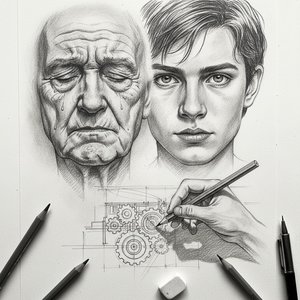
The Nuances of Graphite: Exploring Emotional Depth & Technical Mastery in Pencil Drawing
Explore the captivating world of graphite drawing! Discover its rich history, master essential techniques like chiaroscuro, and learn how artists evoke emotion through this timeless medium. Expert insights for art enthusiasts.

Mastering the Line: A Comprehensive Expert Guide to Technical Precision and Expressive Depth in Drawing
Elevate your artistic practice with this expert guide to mastering the line. Discover advanced techniques in graphite, charcoal, and contour drawing designed for art students seeking technical precision and expressive depth in their fine art studies.
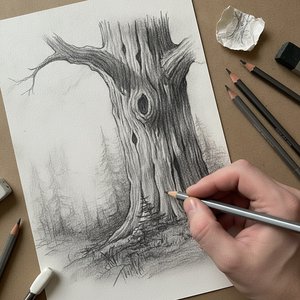
The Power of Graphite: Mastering Depth, Texture, and Detail in the Art of Pencil Drawing
Explore the profound artistry of graphite drawing. Discover professional techniques for mastering depth, texture, and detail through a lens of art history, from classical sketches to modern masterpieces. Elevate your understanding of the pencil medium with our expert guide.

The Art of the Line: A Masterclass in Drawing Techniques and the Evolution of Graphic Expression
Explore the profound history of drawing techniques, from Dürer's precision to the alchemy of graphite. Discover how masters use line, weight, and contour to capture the human spirit in this expert guide to art history and technical mastery.
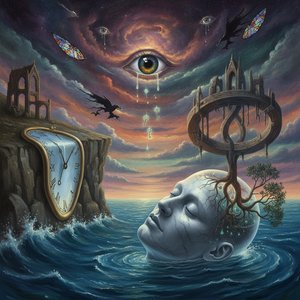
Surrealist Expression: Unlocking the Power of Dreams and the Subconscious through Art History
Explore the profound depths of Surrealism. From Dalí’s dreamscapes to Magritte’s enigmas, master the history of the subconscious mind through our expert art guide and discover museum-quality oil reproductions of the world's most iconic surrealist masterpieces.
