Podgląd w skali 1:1
 Wyślij jako kartkę
 Udostępnij
 Szczegóły dzieła
 Przewodnik

 Pobierz obraz
 Podobne obiekty
 RTG
RTG Pokaz slajdów
 Statystyki
List do Arnolda Schönberga


 Rozwiń treść
Ręcznie malowana reprodukcja olejowa
Ręcznie malowany obraz olejny na płótnie, wykonany na zamówienie przez naszych artystów w wybranym przez Ciebie wymiarze i oprawie. ( Przełącz na wydania drukowane Przejdź do wersji cyfrowej)




P118B zł10

P118H zł10

P118W zł10

P438Z zł10

P508JH zł12

P508YH zł12

P805H zł10

P805Z zł10

P919BZ zł10

P919G zł10

P919XJ zł10

P959ZH zł10

P968JZ zł12

W106C zł8

W218G zł10

W218JH zł8

W218Y zł10

W307PJ zł10

W316G zł10

W316PJ zł8

W316Y zł10

W398PJ zł8

W4111J zł10

W500HY zł15

W500JH zł15

W692G zł12

W849H zł8

W940BG zł15

W953PJ zł8




Wybierz spośród naszych standardowych rozmiarów, które zachowują oryginalne proporcje dzieła sztuki.

Wpisz wymaganą szerokość i wysokość, aby obraz pasował do Twojej ramy lub ściany. Ponieważ jest to dzieło malowane ręcznie, w przypadku rozmiaru o innych proporcjach artysta może domalować nieco więcej wokół obrazu lub przyciąć jego fragmenty — wybór należy do Ciebie. Przed rozpoczęciem pracy prześlemy Ci cyfrową wizualizację do zatwierdzenia. Obraz widoczny na tej stronie nie przedstawia rzeczywistego efektu — jedynie wizualizacja oddaje realny rezultat.
Po złożeniu zamówienia zespół OriginalUniqueArt.com skontaktuje się z klientem drogą mailową w celu uzyskania instrukcji i prześle wizualizację projektu
Dostawa na całym świecie () w ciągu 3–4 tygodni zamiast standardowych 5 tygodni. (25 Październik). Bez kompromisów w kwestii jakości.

Bezpłatna ekspresowa wysyłka na cały świat

Wysokiej jakości płótno lniane

Pełne ubezpieczenie przesyłki

Gwarancja zwrotu należności celnych i podatków importowych

Gwarancja wiernego odwzorowania kolorów

100-dniowa polityka zwrotów (tylko w przypadku wad)

Gwarancja 100% zwrotu pieniędzy

Zniżka przy zakupie wielu sztuk
 Opcja ze szkłem jest dostępna wyłącznie w rozmiarach poniżej 110 cm

List do Arnolda Schönberga
Technika reprodukcji
Wymiary reprodukcji
-


Cena całkowita
zł 1151
A Symphony of Ink and Intimacy
In the quiet, swirling currents of art history, few artifacts capture the profound intersection of two creative titans as poignantly as this 1914 letter from Wassily Kandinsky to Arnold Schönberg. This is not merely a piece of correspondence; it is a tactile window into the very moment when the boundaries of visual representation began to dissolve into the pure, emotive essence of abstraction. The handwritten German script, flowing across the aged paper in delicate yet purposeful cursive, serves as a physical manifestation of a shared intellectual revolution. To hold a reproduction of this letter is to touch the pulse of the early twentieth-century avant-garde, where the ink on the page mirrors the rhythmic, experimental compositions emerging from Schönberg’s musical genius.
The visual character of the document is defined by its organic, historical texture. The paper, bearing the subtle patina of over a century, carries the weight of time, while the meticulous handwriting reveals the artist's hand in a state of active thought. One can observe the traces of revision—slight crossings-out and edits—that transform the letter into a living performance. This technique of "writing as thinking" creates a sense of immediacy that is deeply captivating for collectors of historical ephemera. For the interior designer, this piece offers an unparalleled layer of intellectual depth, providing a sophisticated focal point that evokes a sense of scholarly elegance and a reverence for the creative process itself.
The Resonance of Atonality and Color
To understand the emotional gravity of this letter, one must look to the transformative encounter between Kandinsky and Schönberg in 1911. Just as Schönberg was pioneering atonality—breaking free from the predictable structures of traditional musical harmony—Kandinsky was seeking a way to liberate color from the constraints of literal subject matter. This letter represents the dialogue between these two radical shifts. The symbolism inherent in the correspondence lies in its role as a bridge; it is the connective tissue between the auditory experience of music and the visual experience of painting. Kandinsky famously believed that music was the ultimate teacher for the painter, and this document stands as a testament to that spiritual pursuit.
The piece radiates an aura of profound intellectual intimacy. It invites the viewer to contemplate the "inner necessity" that drove both men to abandon the familiar in favor of the unknown. For those seeking to curate a space that inspires deep reflection or celebrates the history of modernism, this reproduction brings a soulful, contemplative energy. It is more than a decorative element; it is an invitation to participate in the grand narrative of human expression, where every stroke of the pen and every note of the score works toward the same goal: the revelation of a hidden, spiritual reality through the power of pure form.
Pytania i odpowiedzi
Jakie miejsce w dorobku twórczym Wassily Wassilyevich Kandinsky zajmuje dzieło "List do Arnolda Schönberga"?
"List do Arnolda Schönberga" wpisuje się w nurt Ekspresjonizm abstrakcyjny w twórczości Wassily Wassilyevich Kandinsky, której charakterystyczne motywy obejmują badanie teorii koloru, symboliczna obrazowość krajobrazu, źródło inspiracji muzycznej, przyjaźń, dialog artystyczny, pionier wczesnej abstrakcji.
Jaka paleta barw została wykorzystana w „List do Arnolda Schönberga” – Wassily Wassilyevich Kandinsky?
Paleta dzieła „List do Arnolda Schönberga” – Wassily Wassilyevich Kandinsky jest opisywana jako Monochromatyczne. Stanowi ona zwięzłe zestawienie barw użytych w pracy.
W jakim wieku Wassily Wassilyevich Kandinsky stworzył(a) "List do Arnolda Schönberga"?
Wassily Wassilyevich Kandinsky stworzył/a "List do Arnolda Schönberga" w wieku 48 lat. Artysta urodził/a się w 1866, a datowanie dzieła to 1914.
Biografia artysty
A Life Immersed in Color and Spirit
Wassily Wassilyevich Kandinsky, born in Moscow in 1866, was a revolutionary figure who irrevocably altered the course of modern art. His journey wasn’t one of immediate artistic calling; initially destined for a career in law and economics at the University of Moscow, it was a profound encounter with Impressionist painting – specifically Claude Monet's “Haystacks” – and a deeply moving experience witnessing Wagner’s opera "Lohengrin" that ignited within him an irrepressible desire to pursue art. This pivotal moment, occurring around age thirty, marked not merely a career change but a complete transformation of perspective, setting him on a path toward pioneering abstraction. He soon relocated to Munich, enrolling at the prestigious Academy of Fine Arts and studying under Franz von Stuck, though even within formal training, Kandinsky’s spirit yearned for exploration beyond conventional boundaries. Early influences included Russian folk art, gleaned from an ethnographic expedition to the Vologda region in 1889, which instilled a fascination with vibrant color palettes and symbolic imagery. This foundation would prove crucial as he began to develop his unique artistic language. These early explorations weren’t simply about aesthetic preference; they were rooted in a deep cultural connection and a burgeoning understanding of how art could communicate beyond the literal.The Dawn of Abstraction: From Expressionism to Inner Necessity
Kandinsky’s early works reveal a strong expressionistic bent, characterized by bold colors and emotional intensity – pieces like “Papeln (Poplars)” from 1902 exemplify this period. However, he wasn't content with merely representing the external world; he sought to express inner realities, spiritual truths that transcended mere visual depiction. This quest led him gradually away from representational art and toward a revolutionary exploration of color, form, and their emotional resonance. He began to believe that colors possessed inherent psychological effects, capable of evoking specific feelings and sensations in the viewer. This conviction was deeply intertwined with his burgeoning interest in Theosophy, a spiritual movement emphasizing esoteric knowledge and universal brotherhood. As he delved deeper into these ideas, Kandinsky’s paintings became increasingly non-objective, shedding recognizable forms in favor of abstract compositions driven by an “inner necessity.” This wasn't simply about abandoning representation; it was about discovering a new visual language capable of expressing the intangible realms of emotion and spirituality. He sought to create a visual equivalent of music, where color and form harmonized to evoke profound emotional responses.Geometric Harmony and Spiritual Resonance
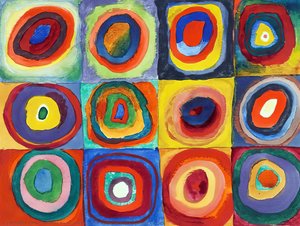
The period following his involvement with the influential artist group Der Blaue Reiter (The Blue Rider), which he co-founded in Munich in 1911, saw a further evolution in Kandinsky’s style. While earlier works often featured fluid, organic shapes, he began to explore geometric abstraction, focusing on the interplay of circles, triangles, and squares. “Several Circles” (140 x 140 cm) stands as a prime example of this phase – a dynamic composition where color and form interact in a harmonious yet energetic dance. This wasn't cold or sterile geometry; rather, it was imbued with spiritual significance. Kandinsky believed that geometric shapes possessed inherent symbolic meaning, and their arrangement within the canvas could evoke specific emotional responses. His theoretical writings, most notably “Concerning the Spiritual in Art” (1911), articulated these beliefs, laying the groundwork for a new understanding of abstract art as a vehicle for expressing profound spiritual truths. He argued that art should not aim to imitate nature but rather to reveal the artist’s inner world and connect with the viewer on a deeper, more intuitive level.Bauhaus Influence and Lasting Legacy
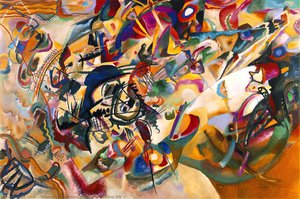
The outbreak of World War I forced Kandinsky's return to Russia in 1914, but following the Russian Revolution, he found himself increasingly at odds with the prevailing artistic climate. In 1920, he accepted a teaching position at the Bauhaus school in Germany, where he profoundly influenced generations of artists with his theories on color, form, and abstraction. The Bauhaus provided an ideal environment for Kandinsky to further develop his ideas and explore new creative avenues. He continued to experiment with geometric forms and vibrant colors, often incorporating layered impasto techniques to create textured surfaces that added depth and complexity to his compositions – as seen in later works like “An Intimate Party” (1942). After the closure of the Bauhaus by the Nazi regime in 1933, Kandinsky moved to France, where he remained for the rest of his life, becoming a French citizen in 1939. His impact on modern art is immeasurable; he is widely recognized as a pioneer of abstract expressionism and a key figure in the development of non-representational painting. His works are held in major museums worldwide, including the Tretyakov Gallery in Moscow, which houses his monumental “Composition VII,” a testament to his artistic vision and enduring legacy. Kandinsky’s exploration of color, form, and spirituality continues to inspire artists today, solidifying his place as one of the most important figures in 20th-century art history. He didn't just paint pictures; he painted emotions, ideas, and the very essence of the human spirit.
Wassily Wassilyevich Kandinsky
1866 - 1944 , Rosja
Krótka nota
- Artistic Movement Or Style: Abstrakcjonizm, Ekspresjonizm
- Artists Or Movements Influenced By This Artist:
- Ekspresjonizm
- Abstrakcjonizm
- Artists Who Influenced This Artist:
- Monet
- Wagner
- Date Of Birth: 1866
- Date Of Death: 1944
- Full Name: Wassily Wassilyevich Kandinsky
- Nationality: Rosyjski, Francuski
- Notable Artworks:
- Kompozycja VII
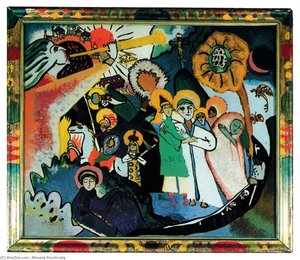
- Wszystkich Świętych II
- Place Of Birth: Moskwa, Rosja
Powiązane artykuły

Top 10 arcydzieł ekspresjonizmu abstrakcyjnego – inspiracje dla Twojego wnętrza | OriginalUniqueArt.com
Odkryj 10 arcydzieł ekspresjonizmu abstrakcyjnego – Pollock, Rothko, de Kooning i inni. Poznaj historie artystów, techniki i inspiracje dla Twojego wnętrza. Reprodukcje najwyższej jakości na OriginalUniqueArt.com!

25 Arcydzieł Kandinskiego: Kolor, Duchowość i Abstrakcja w Twoim Domu | OriginalUniqueArt.com
Odkryj 25 arcydzieł Wassily Kandinskiego – pioniera abstrakcji i ekspresjonizmu! Poznaj historie, techniki i emocje kryjące się za jego kolorowymi kompozycjami. Reprodukcje obrazów najwyższej jakości na OriginalUniqueArt.com. Eksploruj pełną kolekcję online!

Geometria Sztuki: 10 Arcydzieł Abstrakcji Geometrycznej | OriginalUniqueArt.com
Odkryj 10 arcydzieł abstrakcji geometrycznej! Poznaj historię Mondriana, Kandinskiego i Maleвича. Inspiracje wnętrzarskie z malarstwem abstrakcyjnym – reprodukcje najwyższej jakości na OriginalUniqueArt.com. Eksploruj kolekcję online!
Beyond the Lines: Mastering the High-Impact World of Contemporary Abstraction
Master the high-impact world of contemporary abstraction. Discover how bold colors, textures, and modern movements like Abstract Expressionism can transform your space with premium, high-energy art curated for the design-conscious professional.
The Soul of Color: A Journey into the Emotional Resonance of Lyrical Abstraction
Embark on a cultural journey through Lyrical Abstraction. Explore how masters like Kandinsky used color and motion to translate emotion into visual poetry. Discover the profound beauty of abstract expressionism and learn to curate emotional resonance in your own art collection.