

 Zobacz w skali 1:1
 Wyślij
 Udostępnij
 Szczegóły
 Przewodnik

 Pobierz plik obrazu
 Podobne obiekty
 RTG
RTG Pokaz slajdów
 Statystyki
Let Us Now Praise Famous Men


 Czytaj więcej
Dzieło sztuki prezentowane na tej stronie podlega ochronie prawem autorskim, co oznacza, że nie mamy prawa do tworzenia ani sprzedaży jego identycznej reprodukcji. Ochrona ta jest egzekwowana na mocy umów międzynarodowych, takich jak Konwencja berneńska oraz przez przepisy prawa krajowego, w tym te określone w Prawo autorskie USA – Tytuł 17.
Metoda ta jest w pełni zgodna z przepisami prawa autorskiego, ponieważ nie polega na kopiowaniu ani powielaniu chronionego dzieła. Stanowi ona kreatywną reinterpretację – nowy obraz, który czerpie inspirację z oryginału, ale nie jest z nim tożsamy.
Giclée / Wydruk artystyczny
Wydruki giclée lub płótna o jakości muzealnej, szybka realizacja i szeroki wybór opcji wykończenia. ( Kup ręcznie malowany obraz Przełącz na wersję cyfrową)




P118B zł10

P118H zł10

P118W zł10

P438Z zł10

P508JH zł12

P508YH zł12

P805H zł10

P805Z zł10

P919BZ zł10

P919G zł10

P919XJ zł10

P959ZH zł10

P968JZ zł12

W106C zł8

W218G zł10

W218JH zł8

W218Y zł10

W307PJ zł10

W316G zł10

W316PJ zł8

W316Y zł10

W398PJ zł8

W4111J zł10

W500HY zł15

W500JH zł15

W692G zł12

W849H zł8

W940BG zł15

W953PJ zł8




Wybierz spośród naszych standardowych rozmiarów, które zachowują oryginalne proporcje dzieła sztuki.

Wpisz wymaganą szerokość i wysokość, aby dopasować grafikę do ramy lub ściany. Wydruk można jedynie przyciąć, nigdy nie powiększając go poza oryginalny obraz, dlatego format o innym proporcji spowoduje utratę części kompozycji. Przed rozpoczęciem druku prześlemy Ci cyfrowy podgląd do zatwierdzenia. Obraz wyświetlany na tej stronie nie pokazuje rzeczywistego przycięcia — jedynie podgląd oddaje ten efekt.
Dostawa na cały świat () w ciągu 2 tygodni zamiast standardowych 4/5 tygodni. (23 Październik)

Bezpłatna ekspresowa wysyłka na cały świat

Wysokiej jakości płótno lniane

Pełne ubezpieczenie transportowe

Gwarancja zwrotu należności celnych i podatków importowych

Gwarancja idealnego odwzorowania barw

100-dniowy okres na zwrot dzieła w przypadku wykrycia wad produkcyjnych

Gwarancja 100% zwrotu pieniędzy

Oferta przy zakupie wielu sztuk
 Opcja ze szkłem jest dostępna wyłącznie w rozmiarach poniżej 110 cm

Let Us Now Praise Famous Men
Giclée / Wydruk artystyczny
Rozmiar reprodukcji
-


Suma do zapłaty
zł 308
Let Us Now Praise Famous Men: A Portrait of Resilience Amidst Desolation
Walker Evans’s “Let Us Now Praise Famous Men,” published in 1941, stands as an unparalleled achievement in documentary photography and a cornerstone of American literature. More than just capturing the bleak realities of the Great Depression—specifically the plight of tenant farmers in Hale County, Alabama—Evans’s magnum opus delves into the profound dignity inherent within human experience even amidst crushing hardship.
- Historical Context: The book emerged from a collaborative effort between novelist James Agee and photographer Walker Evans, spurred by an assignment for *Fortune* magazine in 1936. This coincided with Franklin D. Roosevelt’s New Deal initiatives aimed at alleviating poverty during the economic collapse of the era.
- Stylistic Innovation: Evans eschewed conventional journalistic techniques, prioritizing a subtle yet powerful aesthetic rooted in modernist principles. His approach favored direct observation combined with meticulous framing and tonal manipulation—a deliberate rejection of sentimentalism that sought to convey truth without embellishment.
- Technique: Evans utilized the large format view camera, meticulously adjusting it for optimal exposure and capturing images with remarkable detail and nuance. He employed a technique known as “platinum printing,” which produced stunningly rich blacks and whites—a process favored by artists like Ansel Adams—that emphasized texture and tonal gradation.
- Symbolism: The photographs themselves serve as potent symbols of resilience, perseverance, and the enduring spirit of humanity. Evans’s portraits depict individuals facing adversity with quiet dignity, conveying a message of hope amidst despair.
- Emotional Impact: “Let Us Now Praise Famous Men” transcends mere documentation; it evokes profound empathy for those marginalized by circumstance. The book compels readers to confront uncomfortable truths about social inequality and celebrates the beauty found within ordinary lives—a testament to Evans’s artistic vision and Agee's masterful storytelling.
The FSA Collaboration: Shaping a Vision of American Reality
Evans’s partnership with Dorothea Lange and others at the Farm Security Administration (FSA) profoundly influenced his creative process. The FSA’s mandate to document rural poverty fueled Evans’s determination to portray the realities of Depression-era America without resorting to melodrama. This collaborative spirit fostered a shared commitment to capturing authentic human emotion—a crucial element in conveying the book's core message.
Evans' Photographic Approach: Precision and Sensitivity
Evans’s meticulous attention to detail—evident in his careful framing, tonal adjustments, and compositional choices—reflects his unwavering belief that photography could illuminate truth without sentimentality. He prioritized capturing the essence of human experience through understated imagery—a stylistic hallmark that distinguishes “Let Us Now Praise Famous Men” from more conventional documentary works.
Legacy and Influence: Inspiring Generations of Artists
"Let Us Now Praise Famous Men" continues to inspire artists today, demonstrating the transformative power of combining visual storytelling with literary prose. Its enduring relevance stems from Evans’s ability to convey profound empathy for marginalized communities—a timeless achievement that secures its place as a landmark in both photographic history and American literature.
Pytania i odpowiedzi
Do jakiego nurtu artystycznego należy „Let Us Now Praise Famous Men” autorstwa Waldek Evans?
„Let Us Now Praise Famous Men” to dzieło należące do nurtu Contemporary Realism. Nurt ten określa tradycję artystyczną, w której osadzone jest dzieło.
Czy kolory dzieła „Let Us Now Praise Famous Men” autorstwa Waldek Evans są żywe czy stonowane?
Dzieło „Let Us Now Praise Famous Men” autorstwa Waldek Evans zostało utrwalone z nasyceniem na poziomie Muted oraz intensywnością Monochromatic.
Kiedy powstało dzieło "Let Us Now Praise Famous Men" i do jakiego nurtu należy?
"Let Us Now Praise Famous Men" powstało w 1936 roku jako dzieło należące do nurtu Contemporary Realism. Data oraz przynależność do tego kierunku osadzają dzieło w historii sztuki.
Biografia artysty
A Witness to America: The Life and Legacy of Walker Evans
Walker Evans, born in St. Louis in 1903, emerged as a pivotal figure in American photography, his name inextricably linked with the visual record of the Great Depression. Yet to define him solely by this period would be to diminish the breadth of his artistic vision and enduring influence. His journey was one of constant exploration, evolving from literary aspirations to a uniquely observant photographic style that captured not just *what* America was, but *how* it felt – its quiet dignity, its stark realities, and its often-overlooked beauty. Evans’s upbringing, marked by frequent moves between cities like Toledo, Chicago, and New York, instilled in him an early awareness of the diverse facets of American life. Though educated at prestigious institutions like Phillips Academy Andover and briefly at Williams College, his true education unfolded through self-directed study and immersion in the cultural currents of the time. A year spent in Paris in 1926 exposed him to European artistic trends, but it was upon his return to New York that he discovered his calling, initially as a writer before turning decisively towards photography around 1928.Forging a Documentary Vision
The early influences on Evans’s photographic approach were profound. He admired the meticulous documentation of Eugène Atget, whose images of Parisian streets felt both timeless and immediate, and August Sander, whose portraits aimed for an objective cataloging of German society. Equally important were literary figures like T.S. Eliot, D.H. Lawrence, James Joyce, and e.e. cummings – writers who valued precision of language and a keen observation of the human condition. These influences coalesced in Evans’s developing aesthetic: a commitment to clarity, directness, and an avoidance of sentimentality. This approach found its most powerful expression during his tenure with the Farm Security Administration (FSA) beginning in 1935. Tasked with documenting the effects of the Depression on rural communities in the Southern United States, Evans traveled extensively, capturing images that became iconic representations of hardship and resilience. His collaboration with writer James Agee on *Let Us Now Praise Famous Men* (1941), a groundbreaking work combining stark photographs with lyrical prose depicting three tenant farming families in Alabama, remains a cornerstone of documentary literature and photography. Though initially rejected by *Fortune* magazine for its length and unconventional style, the project stands as a testament to their shared commitment to portraying the lives of ordinary people with honesty and empathy. Evans’s use of an 8x10 view camera contributed significantly to his distinctive style; the large format yielded images of exceptional detail and formal clarity, lending a sense of timelessness to his subjects.Beyond the FSA: Portraits and Shifting Perspectives
Following his work with the FSA, Evans’s artistic trajectory continued to evolve. The landmark exhibition “Walker Evans: American Photographs” at the Museum of Modern Art in 1938 solidified his reputation as a major force in photography, marking the first solo show dedicated to a photographer at the museum. However, he resisted being pigeonholed as simply a documentary photographer. He increasingly turned his attention towards portraits and street photography, capturing candid moments of urban life in New York City with an understated elegance. These later works reveal a subtle shift in focus – less concerned with social commentary and more interested in exploring the aesthetic qualities of everyday scenes. In the 1960s, Evans embraced color photography, producing vibrant images of interiors, architecture, and commonplace objects. This experimentation demonstrated a willingness to challenge conventional notions of photographic representation and explore new avenues for artistic expression. The playful and decorative quality of these later works often surprises those familiar only with his black-and-white FSA photographs, revealing a previously unseen facet of his creative personality.The Influence of Literature and the Pursuit of Truth
Evans’s approach to photography was deeply informed by his literary sensibilities. He admired writers like T.S. Eliot, D.H. Lawrence, James Joyce, and e.e. cummings—writers who valued precision of language and a keen observation of the human condition. This influence is evident in his photographs' careful composition, their stark clarity, and their avoidance of sentimentality. He sought to capture not just what he saw, but also *how* it felt – the quiet dignity of ordinary people, the harsh realities of poverty, and the beauty that could be found even in the most difficult circumstances. Evans’s work is often described as “lyrical realism,” a term coined by critic John Szarkowski to describe his ability to imbue documentary photographs with a sense of poetry and emotion. He believed that photography could be more than just a record of events; it could also be a means of exploring the human experience, revealing truths about ourselves and our society.A Lasting Impact on Photographic History
Walker Evans’s legacy extends far beyond the iconic images he created during the Great Depression. He is widely considered one of the most important figures in the history of documentary photography, having established a new standard for realism and objectivity in photographic representation. His work profoundly influenced generations of photographers, inspiring them to look at the world with fresh eyes and to find beauty and meaning in the ordinary. His impact on social realism is undeniable, as his FSA photographs became powerful symbols of hardship and resilience during a pivotal moment in American history. But perhaps his greatest contribution lies in demonstrating how photography could serve not only as a tool for social commentary but also as a medium for aesthetic exploration. He proved that even the most seemingly mundane subjects could be transformed into works of art through careful observation, precise composition, and a commitment to visual truth. Evans’s work continues to resonate today, reminding us of the power of photography to document our world, challenge our perceptions, and connect us to the shared human experience.
Waldek Evans
1903 - 1975 , Stany Zjednoczone
Najważniejsze informacje
- Artistic Movement Or Style: Fotografia dokumentalna
- Artists Or Movements Influenced By This Artist:
- Sherrie Levine
- Realizm społeczny
- Artists Who Influenced This Artist:
- Eugène Atget
- August Sander
- Date Of Birth: 1903
- Date Of Death: 1975
- Full Name: Walker Evans
- Nationality: Amerykański
- Notable Artworks:
- Let Us Now Praise Famous Men
- Srebrniki
- Scholars
- Place Of Birth: St. Louis, USA
Zobacz także powiązane artykuły
Witnessing History Through Lens & Light: Documentary Photography's Enduring Legacy
Explore the powerful history of documentary photography – from its origins to contemporary masters like Gordon Parks & W. Eugene Smith. Discover how this art form shapes our understanding of society and witness pivotal moments in time.
Świadectwo Historii: Dokumentalna Fotografia jako Ruch Artystyczny i Świadek Epoki
Poznaj historię fotografii dokumentalnej – od realizmu i socrealizmu po współczesne formy ekspresji. Analiza ikon Walker Evansa, FSA i roli fotografa jako świadka epoki. Ekspercka wiedza o sztuce i ideologii w obiektywie.
The Lens of Truth: A Comprehensive History and Legacy of Documentary Photography
Explore the profound history of documentary photography. From early daguerreotypes to social reform movements, discover how the lens captures truth, preserves vanishing cultures, and shapes our global visual narrative through an expert art-historical lens.
Gordon Parks: A Poetic Lens on American Life – Photography, Social Justice & Storytelling
Explore the profound work of Gordon Parks, a groundbreaking photographer who documented American life with unparalleled empathy and artistry. Discover his iconic images & lasting impact on social justice through Life magazine & beyond.
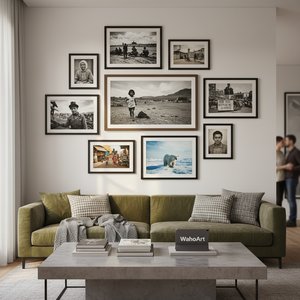
Top 10 arcydzieł fotografii dokumentalnej – inspiracje do wnętrz od OriginalUniqueArt.com
Poznaj 10 arcydzieł fotografii dokumentalnej, które zmieniły świat! Odkryj historie wybitnych fotografów i ich wpływ na sztukę współczesną. Reprodukcje obrazów najwyższej jakości – OriginalUniqueArt.com. Eksploruj kolekcję online!