Przełącz na wydania drukowane
 Rozwiń treść







































 W przypadku dzieł sztuki lub reprodukcji, których którykolwiek z boków przekracza 105 cm (około 41 cali), rama zostanie wysłana w formie zestawu do samodzielnego montażu. Metoda ta zapewnia bezpieczną dostawę i zapobiega uszkodzeniom podczas transportu.


The Flight into Egypt: A Venetian Masterpiece of Narrative and Light
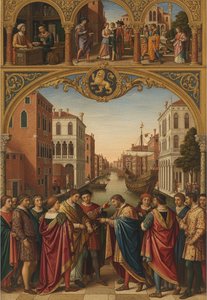
Vittore Carpaccio’s “The Flight into Egypt,” painted around 1500, is more than just a biblical scene; it's a meticulously crafted tableau brimming with narrative complexity, subtle symbolism, and an extraordinary command of late-Quattrocento Venetian painting. This monumental work, measuring 73 x 111 cm, housed within the National Gallery of Art in Washington D.C., offers a captivating glimpse into the world of Renaissance Venice – a city renowned for its artistic innovation and its deep engagement with both classical tradition and emerging humanist thought.
Carpaccio’s style is immediately recognizable: a deliberate conservatism that sets him apart from the more flamboyant figures of his time, like Bellini. He eschewed the radical experimentation of the High Renaissance, instead favoring a grounded approach rooted in meticulous observation and a profound understanding of narrative structure. His work isn't about dramatic gestures or idealized beauty; it’s about conveying a story with clarity and precision. This is evident in the careful positioning of figures, the detailed rendering of clothing and landscape, and the restrained use of color – predominantly earthy tones punctuated by vibrant reds and blues that draw the eye to key elements within the composition.
The scene itself—Mary, Joseph, and the infant Jesus fleeing Bethlehem for Egypt—is a cornerstone of Christian iconography. However, Carpaccio elevates this familiar narrative through his masterful execution. He doesn’t simply depict the event; he constructs a carefully orchestrated drama. Note the deliberate arrangement of the figures – Mary is centrally positioned, radiating maternal concern as she guides her family along the dusty road. Joseph, depicted with a weary but resolute expression, leads the way, while the infant Jesus, remarkably lifelike in his depiction, appears calm and trusting. The inclusion of several other individuals—a man carrying a staff, a group of travelers—adds layers to the story, suggesting a broader community responding to the unfolding events.
The Influence of Early Netherlandish Art
A key element contributing to Carpaccio’s distinctive style is his debt to early Netherlandish painting. Like Jan van Eyck and Rogier van der Weyden, he employed a painstaking attention to detail, rendering textures with incredible realism. The folds of Mary's cloak, the rough surface of the donkey’s hide, the intricate patterns on the travelers’ garments—all are rendered with meticulous precision. This commitment to naturalism is further emphasized by Carpaccio’s use of *sfumato*, a subtle blurring technique that softens outlines and creates an atmospheric effect, particularly noticeable in the distant landscape.
Furthermore, Carpaccio's compositional choices mirror those found in Netherlandish works. The figures are arranged within a shallow space, creating a sense of immediacy and drawing the viewer into the scene. The use of perspective, though not entirely innovative for Venice at the time, is carefully considered to create depth and spatial coherence. This influence is particularly evident in the depiction of the road leading towards the horizon—a recurring motif in Netherlandish landscapes.
Symbolism and Venetian Context
Beyond its narrative function, “The Flight into Egypt” is rich in symbolic meaning. The donkey itself represents humility and service – a deliberate choice that underscores Mary’s role as a humble servant of God. The landscape—a barren, sun-baked terrain—symbolizes the hardships faced by the Holy Family during their flight. The inclusion of the staff-carrying figure has been interpreted as representing Joseph's lineage or perhaps even a divine messenger guiding them on their journey.
Painted in Venice around 1500, this work reflects the city’s burgeoning artistic and economic power. Venice was a major center for trade and cultural exchange, attracting artists from across Europe. Carpaccio’s style—a synthesis of Venetian tradition and Northern European influences—embodied this cosmopolitan spirit. The painting's acquisition by the Medici family in Florence further underscores its significance as a masterpiece of the Renaissance.
A Timeless Masterpiece: Reproduction and Beyond
“The Flight into Egypt” remains a profoundly moving work, offering viewers a glimpse into the heart of Christian faith and the artistic genius of Vittore Carpaccio. Reproductions capture much of the original’s power, allowing this iconic image to be enjoyed by a wider audience. When selecting a reproduction, consider the quality of materials and printing techniques – aiming for a faithful representation of Carpaccio's masterful use of light, color, and detail. This painting is not merely a depiction of a biblical story; it’s an invitation to contemplate themes of faith, family, and the enduring power of art.
Pytania i odpowiedzi
Z jakiej techniki wykorzystano "The Flight into Egypt"?
Vittore Carpaccio wykorzystał/a technikę Oil On Canvas w pracy „The Flight into Egypt”. Technika ta definiuje materię oryginalnego dzieła.
Jaki jest format oraz wymiary dzieła „The Flight into Egypt” – Vittore Carpaccio?
Format dzieła "The Flight into Egypt" to Landscape, a wymiary oryginału wynoszą 73 x 111 cm. Obie te informacje są przydatne przy planowaniu reprodukcji.
W jakim wieku Vittore Carpaccio stworzył(a) "The Flight into Egypt"?
Vittore Carpaccio miał 35 lat w momencie powstania „The Flight into Egypt” w 1500. Wiek ten obliczono na podstawie roku urodzenia artysty, 1465.
 Podgląd w skali 1:1
 Wyślij jako kartkę
 Udostępnij
 Szczegóły dzieła
 Przewodnik

 Pobierz obraz
 Podobne obiekty
 RTG
RTG Pokaz slajdów
 Pytania i odpowiedzi
 Statystyki