Przełącz na wydania drukowane
 Rozwiń treść







































 W przypadku dzieł sztuki lub reprodukcji, których którykolwiek z boków przekracza 105 cm (około 41 cali), rama zostanie wysłana w formie zestawu do samodzielnego montażu. Metoda ta zapewnia bezpieczną dostawę i zapobiega uszkodzeniom podczas transportu.


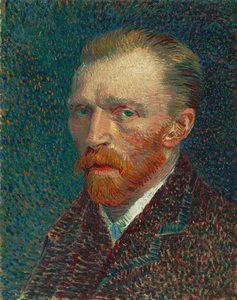
Vincent van Gogh: A Window Into An Artist’s Soul – Exploring “Self Portrait (10)”
“Self Portrait (10),” painted in 1888, isn't merely an image; it’s a distillation of Vincent van Gogh’s artistic vision during his formative years in Paris. Examining this iconic piece reveals not just the artist himself but also the burgeoning influence of Impressionism and the genesis of his distinctive expressive style – a style that would ultimately define him as one of the most recognizable figures in modern art.
The Vibrant Canvas: Technique and Color Palette
Van Gogh’s masterful technique immediately captivates the viewer. He employs thick impasto—a method of applying paint thickly onto the canvas—creating palpable texture that vibrates with energy. The dominant hue is a striking emerald green, chosen not for its literal representation but rather to heighten the emotional intensity of the scene. Scattered dots of brilliant blue and yellow – characteristic of Pointillism, a technique championed by Georges Seurat – punctuate the background, adding visual complexity and subtly mirroring the artist’s turbulent inner state.
A Portrait of Emotion: Symbolism and Psychological Depth
More than just a likeness, “Self Portrait (10)” delves into Van Gogh's psyche. The gaze directed outwards is unwavering, conveying both vulnerability and determination – qualities that resonate deeply with viewers contemplating the artist’s struggle for artistic identity. The blue jacket symbolizes introspection and contemplation, while the necklace serves as a poignant reminder of human connection—a desire to transcend isolation amidst creative upheaval.
Parisian Context: Challenging Tradition
Painted during Van Gogh's early Parisian period, this artwork represents a decisive break from academic conventions prevalent at the time. Artists like Renoir and Monet were experimenting with capturing fleeting moments of light and atmosphere—a radical departure from the meticulous realism favored by the École des Beaux-Arts. Van Gogh’s bold color choices and expressive brushstrokes exemplify this spirit of innovation, establishing him as a pioneer in forging new paths for artistic expression.
Legacy: An Enduring Reflection
"Self Portrait (10)" continues to inspire artists and collectors alike. Its enduring power lies in its ability to convey the profound emotional depth that characterizes Van Gogh’s oeuvre—a testament to his unwavering commitment to capturing the human experience with honesty and passion. It stands as a cornerstone of Impressionism, demonstrating how art can transcend mere visual representation to illuminate the complexities of the human soul.
Pytania i odpowiedzi
Jaki format i orientacja druku są sugerowane dla „Portrét” – Vincent Van Gogh?
Zalecany rozmiar wydruku dzieła „Portrét” – Vincent Van Gogh to Standardowy format w orientacji Orientacja pionowa.
Jakie miejsce w historii sztuki zajmuje "Portrét"?
Pod względem historycznym „Portrét” to dzieło z nurtu Post-Impressionizm, powstałe w szerszej epoce – Wiek XIX.
Kto stworzył "Portrét" i w jakim roku?
Autorem dzieła "Portrét" jest Vincent Van Gogh, a datowanie pracy pochodzi z 1888 roku.
 Podgląd w skali 1:1
 Wyślij jako kartkę
 Udostępnij
 Szczegóły dzieła
 Przewodnik

 Pobierz obraz
 Podobne obiekty
 RTG
RTG Pokaz slajdów
 Pytania i odpowiedzi
 Statystyki