Podgląd w skali 1:1
 Wyślij jako kartkę
 Udostępnij
 Szczegóły dzieła
 Przewodnik

 Pobierz obraz
 Podobne obiekty
 RTG
RTG Pokaz slajdów
 Pytania i odpowiedzi
 Statystyki
Vega-Sakk


 Rozwiń treść
Dzieło sztuki prezentowane na tej stronie podlega ochronie prawem autorskim, co oznacza, że nie mamy prawa do tworzenia ani sprzedaży jego identycznej reprodukcji. Ochrona ta jest egzekwowana na mocy umów międzynarodowych, takich jak Konwencja berneńska oraz przez przepisy prawa krajowego, w tym te określone w Prawo autorskie USA – Tytuł 17.
Metoda ta jest w pełni zgodna z przepisami prawa autorskiego, ponieważ nie polega na kopiowaniu ani powielaniu chronionego dzieła. Stanowi ona kreatywną reinterpretację – nowy obraz, który czerpie inspirację z oryginału, ale nie jest z nim tożsamy.
Giclée / Wydruk artystyczny
Wydruki giclée lub płótna o jakości muzealnej, szybka realizacja i szeroki wybór opcji wykończenia. ( Zamów ręcznie malowaną reprodukcję Przejdź do wersji cyfrowej)




P118B zł10

P118H zł10

P118W zł10

P438Z zł10

P508JH zł12

P508YH zł12

P805H zł10

P805Z zł10

P919BZ zł10

P919G zł10

P919XJ zł10

P959ZH zł10

P968JZ zł12

W106C zł8

W218G zł10

W218JH zł8

W218Y zł10

W307PJ zł10

W316G zł10

W316PJ zł8

W316Y zł10

W398PJ zł8

W4111J zł10

W500HY zł15

W500JH zł15

W692G zł12

W849H zł8

W940BG zł15

W953PJ zł8




Wybierz spośród naszych standardowych rozmiarów, które zachowują oryginalne proporcje dzieła sztuki.

Wpisz wymaganą szerokość i wysokość, aby dopasować grafikę do ramy lub ściany. Wydruk można jedynie przyciąć, nigdy nie powiększając go poza oryginalny obraz, dlatego format o innych proporcjach spowoduje utratę części kompozycji. Przed rozpoczęciem druku prześlemy Ci cyfrowy podgląd do zatwierdzenia. Obraz wyświetlany na tej stronie nie pokazuje rzeczywistego przycięcia — jedynie podgląd oddaje ten efekt.
Dostawa na cały świat () w ciągu 2 tygodni zamiast standardowych 4/5 tygodni. (12 Listopad)

Bezpłatna ekspresowa wysyłka na cały świat

Wysokiej jakości płótno lniane

Pełne ubezpieczenie przesyłki

Gwarancja zwrotu należności celnych i podatków importowych

Gwarancja wiernego odwzorowania kolorów

100-dniowa polityka zwrotów (tylko w przypadku wad)

Gwarancja 100% zwrotu pieniędzy

Zniżka przy zakupie wielu sztuk
 Opcja ze szkłem jest dostępna wyłącznie w rozmiarach poniżej 110 cm

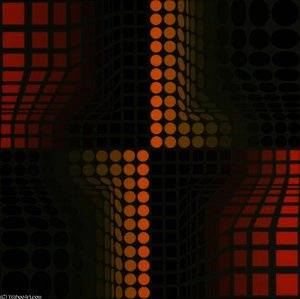
Vega-Sakk
Giclée / Wydruk artystyczny
Wymiary reprodukcji
-


Cena całkowita
zł 316
Victor Vasarely's "Vega-Sakk": A Symphony of Geometric Illusion
Victor Vasarely’s “Vega-Sakk,” a captivating circular composition, stands as a testament to the revolutionary impact of Op Art – Optical Art. Created by this Hungarian artist during his pivotal exploration into geometric abstraction, the work embodies a profound engagement with perception and the very nature of visual experience. Born in 1906 in Pécs, Croatia, Vasarely’s artistic trajectory began unexpectedly, initially driven by an interest in medicine before he ultimately succumbed to the compelling force of visual expression. His journey, shaped by influences from the Bauhaus movement and his time within Bortnyik's “Műhely” workshop, led him to develop a unique style characterized by meticulously crafted geometric patterns designed to manipulate the viewer’s perception.
Deconstructing Depth: A Masterclass in Optical Illusion
"Vega-Sakk" immediately draws the eye with its symmetrical arrangement of repeating circles and diamonds, layered within concentric rings. This isn't merely a decorative piece; it’s an intricate experiment in creating depth and perspective through purely visual means. The artist skillfully employs overlapping shapes that scale in size as they move outward from a central point, mimicking the way our eyes naturally perceive distance. The warm palette – dominated by golds, yellows, blacks, and grays – subtly shifts to cooler tones of purple and blue at the periphery, further enhancing the illusion of space. The smooth texture achieved through layered acrylic paint contributes significantly to this effect, creating a surface that seems to shimmer with movement.
The Legacy of Op Art and Kinetic Perception
Vasarely’s work aligns perfectly with the broader movement of Op Art, which emerged in the 1960s as a reaction against representational art. Artists like Vasarely sought to challenge traditional notions of reality by creating artworks that actively engaged the viewer's visual system. “Vega-Sakk” exemplifies this approach, prompting a dynamic interaction between the artwork and the observer’s eye. The piece evokes a sense of infinite space and order, reflecting a fascination with mathematical principles and their application in art. It’s a powerful demonstration of how carefully constructed geometric forms can profoundly alter our perception of depth and dimension.
Symbolism and Emotional Resonance: Beyond the Geometry
While “Vega-Sakk” is fundamentally abstract, devoid of recognizable imagery, it doesn't lack emotional resonance. The precise, ordered composition speaks to a desire for control, stability, and perhaps even a yearning for the infinite. The repetition inherent in the design can be interpreted as a meditation on rhythm, harmony, and the underlying patterns that govern the universe. The artwork’s impact is not about conveying a specific narrative but rather about stimulating a visceral response – a feeling of wonder, curiosity, and a heightened awareness of visual perception.
Technical Execution & Reproduction
This artwork showcases Vasarely's mastery of acrylic paint layering. The meticulous application creates a rich surface texture that enhances the optical illusion. OriginalUniqueArt offers high-quality hand-painted reproductions meticulously crafted to capture the essence of this iconic piece, ensuring an authentic and captivating display for your home or office.
Pytania i odpowiedzi
Czy można pobrać obraz "Vega-Sakk"?
Obraz „Vega-Sakk” – Victor Vasarely można pobrać na stronie Pobierz plik cyfrowy dzieła: wysokiej rozdzielczości cyfrowe zdjęcie do pobrania.
Jak bardzo znane jest dzieło "Vega-Sakk" autorstwa Victor Vasarely?
"Vega-Sakk" jest klasyfikowane jako Recognized.
Jaki nastrój emocjonalny budzi „Vega-Sakk” – Victor Vasarely?
Emocjonalny ton przypisany do „Vega-Sakk” – Victor Vasarely to Calm. Oddaje on emocje, jakie wyraża to dzieło.
Biografia artysty
Wczesne lata i edukacja Victora Vasarely'ego
Urodzony 9 kwietnia 1906 roku w węgierskim Pécs jako Károly Vaszary, człowiek, który miał stać się znany jako Victor Vasarely, rozpoczął swoją drogę w zupełnie innej dziedzinie. W 1925 roku przeniósł się w progi Uniwersytetu im. Eötvösa Loránda w Budapeszcie, aby studiować medycynę. Przez dwa lata logika ludzkiego ciała i nauka zajmowały jego czas, lecz ostatecznie to magnetyzm ekspresji wizualnej wziął górę. Do 1927 roku porzucił studia medyczne, by oddać się nauce tradycyjnego malarstwa akademickiego w Akademii Podolini-Volkmann.
Jego szkolenie trwało nadal, gdy trafił do pracowni Sándora Bortnyika, znanej jako műhely. To właśnie w tym warsztacie zakorzeniły się zasady ruchu Bauhaus, koncentrujące się na przecięciu funkcjonalnego designu z abstrakcją geometryczną. Tutaj uwaga artysty przesunęła się w stronę tego, co strukturalne i systematyczne. Lekcje odebrane w tych studiach stały się fundamentem dla jego późniejszych poszukiwań nad tym, w jaki sposób kształty i kolory wchodzą w interakcję z ludzkim okiem.
Rozwój unikalnego języka wizualnego
W latach między 1929 a 1944 rokiem Vasarely skoncentrował swoją twórczość na pracy graficznej. Te lata upłynęły mu na fascynujących eksperymentach nad tym, w jaki sposób światło i cień wchodzą w interakcję z prostymi formami. Jego wczesny okres graficzny zaowocował takimi dziełami jak Chess Board (1935) oraz Girl-power (1934). W 1937 roku artysta pracował również nad Zebras. Prace te ukazują rodzące się zainteresowanie tym, w jaki sposób widz postrzega płaską powierzchnię, co skłoniło go do odejścia od tradycyjnego malarstwa na rzecz bardziej ustrukturyzowanego, graficznego podejścia.
Między 1944 a 1947 rokiem nastąpił zwrot w jego artystycznej drodze. Vasarely przesuwał się przez różne estetyki, eksplorując podejścia kubistyczne, futurystyczne, ekspresjonistyczne, symbolistyczne, aż po surrealistyczne. Ostatecznie jednak wyprzedził te eksperymenty, poszukując bardziej precyzyjnego sposobu na organizację przestrzeni. Ta żmudna wędrówka ku nowej logice doprowadziła go do opublikowania jego Żółtego Manifestu. Jego twórczość przestała skupiać się na indywidualnej ekspresji, a zaczęła dotyczyć mechaniki wzroku. To właśnie ta systematyczna metoda ostatecznie ugruntowała jego pozycję jako lidera ruchu Op art.
Technika i mistrzostwo iluzji optycznej
Podejście, jakie przyjął Victor Vasarely, opiera się na systematycznym wykorzystaniu geometrii w celu wywołania fizycznej reakcji u widza. Artysta nie polegał na tradycyjnych źródłach światła ani klasycznym chiaroscuro, aby budować formę. Zamiast tego, posłużył się wyrafinowaną grą wysokokontrastowych pigmentów, aby zasymulować głębię i ruch. Poprzez manipulowanie gęstością koloru, potrafił oszukać oko, zmuszając je do postrzegania wklęsłości i wypukłości na płaskiej płaszczyźnie. Ta metoda sprawia, że statyczna powierzchnia zmienia się w przestrzeń, która zdaje się pulsować, pęcznieć lub cofać.
Jego metoda, którą określał mianem kinetyki wizualnej lub plastique cinétique, opiera się na precyzyjnym układzie kształtów. Wykorzystywał efekty teksturalne, perspektywę, cień oraz światło, aby budować te niezwykłe iluzje. Prace te często bazują na sposobie, w jaki oko interpretuje rytmiczny, wewnętrzny blask, a nie na zewnętrznym oświetleniu. Dzięki zastosowaniu siatek i zasad matematycznych, tworzył wrażenie wizualnych wibracji oraz wirujących efektów. Rezultatem jest poczucie ruchu, które istnieje całkowicie wewnątrz percepcji odbiorcy.
Precyzja jego techniki jest aż nadto widoczna w sposobie, w jaki operuje kolorem i linią, tworząc architektoniczną głębię. W dziełach takich jak Torony-Nagy, przecięcie ostrych, białych linii z głębokimi błękitami i szmaragdową zielenią tworzy rytmiczną wibrację optyczną. Te elementy współgrają ze sobą, wywołując wrażenie pulsującego światła. Vasarely używał tych narzędzi, aby wyjść poza ramy prostej reprezentacji, skupiając się zamiast tego na samej mechanice tego, jak widzimy.
Kluczowe dzieła i osiągnięcia
Rok 1937 przyniósł przełom w twórczości artysty, gdy powstanie Zebra wyznaczyło zwrot ku temu, co wielu uznaje za najwcześniejsze przykłady Op Artu. Dzieło to odeszło od tradycyjnej reprezentacji, skupiając się zamiast tego na tym, w jaki sposób ludzkie oko interpretuje proste formy. Eksperymenty z rytmem i światłem osiągnęły swój szczyt w latach 60. XX wieku, czego najdoskonalszym przykładem jest powstałe w 1969 roku dzieło Torony-Nagy. Kompozycja ta, wykorzystująca cztery stylizowane wieże oraz wysokokontrastową paletę błękitów, zieleni i pomarańczy, tworzy niezwykłe wrażenie wewnętrznego blasku. Całość opiera się na przecięciu białych linii i manipulacji gęstością barw, co sprawia, że płaska powierzchnia zdaje się pulsować i cofać w nieokreśloną przestrzeń.
Pasja artysty do badania ruchu wykraczała daleko poza ramy płótna, przenikając w przestrzeń trójwymiarową oraz do przedmiotów codziennego użytku. Zaprojektował on Georges Pompidou – monumentalny obiekt kinetyczny, który zintegrował jego wizualne teorie z fizyczną, poruszającą się formą. To zainteresowanie praktycznym zastosowaniem geometrii zaowocowało również współpracą ze studiem Rosenthal Studio Linie. Efektem tego partnerstwa stała się seria zastawy stołowej Suomi – limitowany nakład 500 elementów, który wprowadził jego hipnotyzujące, geometryczne wzory prosto do domowego zacisza.
- Zebra (1937)
- Torony-Nagy (1969)
- Seria zastawy stołowej Suomi
Powstanie Fondation Vasarely
W 1966 roku Victor Vasarely rozpoczął proces powoływania do życia Fondation Vasarely. Projekt ten wyrastał z jego unikalnych idei dotyczących koncepcji „sztuki dla wszystkich” oraz wizji „miasta jutra”. Artysta pragnął stworzyć przestrzeń, która wykraczałaby poza tradycyjne doświadczenie galerii, stając się żywym odzwierciedleniem tych postulatów. Fizyczna budowa gmachu rozpoczęła się w 1973 roku.
Fundacja została oficjalnie uroczyście zainaugurowana 14 lutego 1976 roku w Aix-en-Provence we Francji. Miejsce to zaprojektowano tak, aby mogło pomieścić jego dzieła oraz promować teorie na temat wzajemnych relacji między sztuką a projektowaniem urbanistycznym. Sama architektura przestrzeni stała się integralną częścią tej wizji, a układ budynku miał wspierać specyficzny sposób, w jaki jego geometryczne formy miały być doświadczane przez publiczność.
Trwałe dziedzictwo i światowa sława
Zasięg jego wizualnego języka wykraczał daleko poza mury galerii sztuki. Jego wzory i geometryczne struktury przeniknęły do tekstur codziennego życia, wpływając na linie mody, układy projektowania wnętrz oraz logikę grafiki użytkowej. Nawet wczesny rozwój grafiki komputerowej nosi w sobie piętno jego systematycznego podejścia do formy i percepcji. Jego idee nie ograniczały się jedynie do płótna; przeniknęły do funkcjonalnego świata przedmiotów oraz do struktur cyfrowych, które nadeszły później.
W 1982 roku jego twórczość wyruszyła w podróż w przestrzeń kosmiczną, kiedy to serigrafie zostały umieszczone na pokładzie francusko-radzieckiego statku kosmicznego Salut 7. Ten moment podkreślił głęboką więź między jego matematyczną precyzją a szerszym, ludzkim dążeniem do eksploracji nieznanego. Victor Vasarely pozostał centralną postacią w historii sztuki nowoczesnej aż do swojej śmierci w Paryżu, we Francji, 15 marca 1997 roku.
Gdzie dziś można podziwiać jego dzieła
Śledzenie fizycznej obecności twórczości, którą pozostawił po sobie Victor Vasarely, wymaga podróży przez wiele malowniczych zakątków Francji i Węgier. W Aix-en-Provence we Francji znajduje się Fondation Vasarely, która przechowuje znaczną część jego dorobku. Muzeum to zostało założone przez samego artystę, aby szerzyć jego wizję sztuki dostępnej dla każdego. Przestrzeń ta została podzielona na siedem sześciokątnych komór, z których każda ma 14 metrów szerokości i 11 metrów wysokości, co pozwala na ekspozycję czterdziestu dwóch monumentalnych dzieł o wymiarach 6 na 8 metrów.
Jego obecność na Węgrzech jest równie silna i wyrażona poprzez dedykowane przestrzenie wystawiennicze. Muzeum Vasarely mieści się w Pécs, mieście jego narodzin, a także w Pałacu Zichy w Óbudzie w Budapeszcie. Te miejsca oferują możliwość bezpośredniego spotkania z geometrycznymi formami i efektami optycznymi, które definiowały jego artystyczną praktykę. We Francji kolejnym ważnym punktem na mapie jego dziedzictwa jest Muzeum Vasarely w Pałacu Saint-Firmin w Gordes.
Poza tymi konkretnymi muzeami, wpływ artysty odnajdujemy w licznych kolekcjach instytucjonalnych. Niektóre z jego dzieł znajdują się w Bilbao Fine Arts Museum, podczas gdy inne tworzą zbiory Inter-American Development Bank w Waszyngtonie oraz Bechtler Museum of Modern Art w Charlotte. Te rozproszone lokalizacje sprawiają, że jego wizualne eksperymenty pozostają żywe i dostępne dla zróżnicowanych odbiorców na całym świecie.

Victor Vasarely
1906 - 1997 , Chorwacja
Krótka nota
- Artistic Movement Or Style: Op Art, Sztuka kinetyczna, Abstrakcja geometryczna
- Artists Or Movements Influenced By This Artist:
- Projektowanie graficzne
- Moda
- Projektowanie wnętrz
- Grafika komputerowa
- Artists Who Influenced This Artist:
- Piet Mondrian
- Kazimir Malewicz
- Date Of Birth: 1906
- Date Of Death: 1997
- Full Name: Károly Vaszary
- Nationality: Węgiersko-francuska
- Notable Artworks:
- Terek
- Torony-Nagy
- Pal-Ket
- Kaglo II
- Zebra
- Place Of Birth: Pécs, Chorwacja
Powiązane artykuły

Op Art Unveiled: The Science of Optical Illusion and Kinetic Movement in Geometric Abstraction
Explore the science of Op Art through the lens of masters like Victor Vasarely. Discover how geometric abstraction uses optical illusions to create movement and delve into the neuroaesthetics of perception with our expert art history guide.

Victor Vasarely: Pioneering Op Art & Democratizing Visual Experience
Explore the revolutionary world of Victor Vasarely, father of Op Art. Discover his geometric masterpieces, artistic system, & lasting impact on modern design. A guide for discerning art collectors.

Geometria Sztuki: 10 Arcydzieł Abstrakcji Geometrycznej | OriginalUniqueArt.com
Odkryj 10 arcydzieł abstrakcji geometrycznej! Poznaj historię Mondriana, Kandinskiego i Maleвича. Inspiracje wnętrzarskie z malarstwem abstrakcyjnym – reprodukcje najwyższej jakości na OriginalUniqueArt.com. Eksploruj kolekcję online!
Mastering Illusion: The Vibrant World of Victor Vasarely's Op Art and the Geometry of Perception
Explore the mesmerizing world of Victor Vasarely. Discover how his Bauhaus-inspired Op Art masters the science of perception through geometric abstraction and vibrant color. A sophisticated guide for discerning art collectors seeking to understand the legacy of optical illusion.

Neo-Abstract Art: The High-Impact Evolution of Modern Visual Energy and Geometric Sophistication
Discover the power of Neo-Abstract art. Explore how bold geometric forms and high-impact visual energy are redefining modern design. Learn to curate sophisticated, high-energy spaces with the latest trends in contemporary abstraction and structural color.