
 Podgląd w skali 1:1
 Wyślij jako kartkę
 Udostępnij
 Szczegóły dzieła
 Przewodnik

 Pobierz obraz
 Podobne obiekty
 RTG
RTG Pokaz slajdów
 Pytania i odpowiedzi
 Statystyki
Self-Educating Caretaker

- 30.0 x 25.0 cm


 Rozwiń treść
Otrzymaj plik gotowy do druku, którego jakość znacznie przewyższa podgląd internetowy. Każdy sprzedawany przez nas obraz cyfrowy pochodzi z wysokorozdzielczego pliku wzorcowego w naszej bazie — zazwyczaj o szerokości od 5 000 do 15 000 pikseli — dzięki czemu możesz drukować w dużym formacie, mocno kadrować lub z pełnym przekonaniem odwzorowywać najdrobniejsze detale.
Żaden plik nie opuszcza naszego studia bez odpowiedniej obróbki. Ekspert ds. cyfrowej edycji sprawdza zgodność kolorów z oryginałem i w razie potrzeby je koryguje, a następnie za pomocą profesjonalnych narzędzi do retuszu poprawia ostrość oraz szczegółowość — zawsze zachowując wierność pociągnięciom pędzla i stylowi artysty. Rezultatem jest obraz, który wygląda jak prawdziwe dzieło, a nie jak przefiltrowany skan.
Zatwierdzasz przed finalizacją zamówienia: nasz ekspert prześle obraz drogą mailową w ciągu 72 godzin do Twojego wglądu. Nie jesteś zadowolony? Poproś o poprawki lub korektę, bądź o zwrot kosztów, jeśli jakość nie spełnia oczekiwań.
To jakość, na której polegają wydawcy, studia projektowe, galerie oraz drukarnie.
Obraz cyfrowy
Pobierz plik o wysokiej rozdzielczości do osobistego użytku, druku oraz projektów kreatywnych. ( Przełącz na wydania drukowane Zamów ręcznie malowaną reprodukcję)
W każdym zamówieniu na obraz cyfrowy znajduje się
Profesjonalna dostawa cyfrowa z gwarancją
Wybierając OriginalUniqueArt.com, nie otrzymujesz jedynie obrazu – otrzymujesz profesjonalnie udoskonalone cyfrowe dzieło sztuki, stworzone z najwyższą precyzją i objęte gwarancją satysfakcji. Oto wszystko, co automatycznie dołączane jest do Twojego zamówienia:

Błyskawiczna wysyłka e-mailowa
Plik z obrazem cyfrowym w wysokiej rozdzielczości zostanie przesłany na Twój adres e-mail w ciągu 72 godzin od złożenia zamówienia – gotowy do natychmiastowego użycia.

Plik cyfrowy wzbogacony przez AI
Twoja grafika została profesjonalnie zoptymalizowana przy użyciu zaawansowanych narzędzi AI oraz ręcznej edycji, co zapewnia maksymalną szczegółowość, klarowność i wierność kolorów.

Darmowe ponowne przesyłki dożywotnio
Przypadkowo usunąłeś lub zgubiłeś swój plik? Bez obaw – prześlemy go Tobie ponownie w dowolnym momencie, bez żadnych opłat.

Bez opłat importowych – zawsze
Ciesz się swoją sztuką natychmiast, bez żadnych opłat celnych, należności ani kosztów dostawy – pliki cyfrowe są zawsze wolne od podatku.

Gwarancja wierności kolorów
Dzięki zastosowaniu profesjonalnych narzędzi i procesów zarządzania barwą zapewniamy, że Twoje cyfrowe zdjęcie odzwierciedla oryginalne kolory tak wiernie, jak to tylko możliwe.

Gwarancja satysfakcji przez 100 dni
Jeśli nie będziesz zadowolony ze swojego cyfrowego obrazu, dokonamy jego poprawki lub zwrócimy 100% kosztów w ciągu 100 dni – bez zbędnych pytań.

100% Gwarancja zwrotu pieniędzy
Nie jesteś zadowolony? Otrzymaj pełny zwrot kosztów w ciągu 100 dni od otrzymania pliku cyfrowego – bez zbędnych pytań.

Rabaty przy zamówieniach hurtowych
Kup 3 obrazy, oszczędź 10% - Kup 5, oszczędź 15% - Kup 10+, oszczędź 20%. Idealne do projektów kreatywnych, galerii i agencji.
A Quiet Revolution in Realism
In the intimate landscape of nineteenth-century Russian art, few works capture the profound dignity of the human spirit quite like Vasily Grigoryevich Perov’s Self-Educating Caretaker. Painted in 1868, this evocative masterpiece serves as a window into a world where education and enlightenment were not merely academic pursuits, but acts of quiet rebellion against social stagnation. The scene unfolds with a tender, grounded realism, presenting a woman seated upon the earth alongside a young girl. As they sit together, the woman is deeply immersed in a book held within her lap, her focus suggesting a shared journey of discovery. This is not a grand historical tableau, but a deeply personal moment of intellectual nourishment that transcends the humble setting.
Perov, a founding member of the influential Peredvizhniki (The Wanderers) movement, was a master at finding the extraordinary within the ordinary. Through his meticulous technique, he breathes life into the textures of cloth, the soft light of the afternoon, and the subtle expressions of his subjects. The composition is layered with a sense of community; while the central figures anchor our emotional attention, the presence of other figures in the periphery—a person standing near the edge and another glimpsed to the right—creates a lived-in, breathing environment. This spatial depth invites the viewer to step into the scene, making the painting feel less like a static image and more like a captured fragment of a continuous, unfolding life.
Symbolism and the Soul of the Canvas
Beyond its surface beauty, Self-Educating Caretaker is rich with the social commentary that defined Perov’s career. The act of reading in such a setting symbolizes the flickering flame of literacy and self-improvement amidst the hardships of peasant life. There is a profound symbolism in the physical closeness of the woman and the child; it represents the intergenerational transmission of knowledge and the hope for a future unburdened by ignorance. The book itself acts as a talisman of progress, a bridge between the rugged reality of their surroundings and the vast worlds contained within printed pages.
For the discerning collector or interior designer, this piece offers more than just aesthetic value; it provides an emotional anchor for a room. The muted, earthy palette and the soft, naturalistic lighting create a sense of tranquility and timelessness. Whether placed in a study, a library, or a sophisticated living space, the painting radiates a contemplative warmth. It is a work that rewards repeated viewing, offering new layers of psychological depth with every glance. Owning a high-quality reproduction of this work means bringing into one's home a piece of history that celebrates resilience, the pursuit of truth, and the enduring beauty of the human connection.
Pytania i odpowiedzi
Jaki kształt i wymiary ma „Self-Educating Caretaker” – Wasilij Perow?
„Self-Educating Caretaker” – Wasilij Perow to kompozycja w formacie Portrait, której oryginalne wymiary to 30 x 25 cm.
Jakie emocje budzi „Self-Educating Caretaker” – Wasilij Perow?
Nastrój utrwalony w „Self-Educating Caretaker” – Wasilij Perow to Nostalgic, a jego ton emocjonalny to Reflective.
Któremu artyście przypisuje się "Self-Educating Caretaker"?
Autorstwo dzieła "Self-Educating Caretaker" przypisuje się Wasilij Perow.
Biografia artysty
A Life Etched in Realism: Vasily Perov and the Soul of Russia
Vasily Grigoryevich Perov, born Vasily Vasiliev on January 2nd, 1834 (December 21st, 1833 Old Style) in the remote Siberian town of Tobolsk, was not merely a painter; he was a chronicler of his time, a social observer who wielded his brush to expose the realities—both beautiful and brutal—of 19th-century Russia. His life story is inextricably linked to his art, shaped by an unconventional upbringing that instilled within him a profound sensitivity to societal inequalities and a deep empathy for the marginalized. Born out of wedlock to Baron Grigory Kridener and Akulina Ivanova, Perov’s early years were marked not by privilege but by a sense of displacement and a keen awareness of the world beyond the confines of aristocratic society. This formative experience would profoundly influence his artistic vision, driving him to depict the lives of ordinary people with unflinching honesty and a remarkable ability to capture their dignity amidst hardship. The adoption of the surname “Perov,” derived from the Russian word for ‘feather,’ a reference to his early skill in calligraphy – a talent he honed before turning to painting – foreshadowed his meticulous attention to detail, his dedication to rendering the world around him with painstaking accuracy. His formal artistic journey began at the Alexander Stupin Art School in Arzamas, where he received his initial training and developed fundamental skills, laying the groundwork for his later achievements. Subsequently, he enrolled at the Moscow School of Painting, Sculpture and Architecture in 1853, immersing himself in the traditions of academic art while simultaneously absorbing the influences of a broader artistic landscape.Early Recognition and Artistic Development
Perov’s early career was marked by both critical acclaim and personal struggles. He quickly demonstrated exceptional talent, earning silver and gold medals from the Imperial Academy of Arts for works such as “Commissary of Rural Police Investigating” (1857) and, most notably, "Sermon in a Village" (1861). The latter painting, depicting a disengaged congregation during a church service, became an instant sensation, catapulting him into the national spotlight and securing his place among Russia’s leading artists. It was this work, with its subtle yet powerful critique of religious hypocrisy, that established Perov's reputation as a painter capable of capturing not just appearances but also the underlying truths of human experience. The opportunity to study abroad in 1862—a scholarship awarded for his achievements—provided him with invaluable exposure to European art and culture, particularly in Paris and throughout Germany. These experiences broadened his artistic horizons, allowing him to refine his technique and develop a more nuanced understanding of the world. However, this period was also marked by personal hardship; Perov struggled with poverty and loneliness, exacerbated by his unconventional family background and the challenges of navigating a society that often viewed him with suspicion. Despite these difficulties, he persevered in his artistic pursuits, driven by an unwavering commitment to his vision.The Voice of the Voiceless: Themes and Techniques
Perov’s artistic vision was fundamentally rooted in a profound sense of social justice and a desire to give voice to those who were often ignored or marginalized. He deliberately rejected the idealized depictions favored by many of his contemporaries, choosing instead to focus on the lives of ordinary people—peasants, laborers, widows, and the forgotten – portraying them with dignity and empathy. His paintings are not mere representations of reality; they are powerful social commentaries that expose the hardships, injustices, and spiritual emptiness prevalent in 19th-century Russia. Works like “The Queue at the Fountain” (1865) vividly illustrate the daily struggles of rural life, while "Troika: Apprentice Workmen Carrying Water" (1866) captures the physical exertion and camaraderie of working men. Perov’s technique was characterized by meticulous detail, somber color palettes—often dominated by muted browns, grays, and blues—and a masterful use of light and shadow to create dramatic effect. He avoided romanticizing poverty or suffering; instead, he sought to present it with honesty and a profound sense of human connection. His portraits were particularly notable for their psychological depth, capturing not just physical likeness but also the inner lives of his subjects. He wasn’t interested in creating beautiful images; he was driven by a desire to reveal uncomfortable truths about Russian society.Founding a Movement: The Peredvizhniki
Perov's commitment to realism aligned perfectly with the burgeoning spirit of artistic rebellion that led to the formation of the Peredvizhniki (Wanderers) in 1870. This collective of Russian realist painters, disillusioned with the constraints of the Imperial Academy of Arts, established an independent society dedicated to exhibiting art throughout Russia—reaching audiences beyond the confines of St. Petersburg and Moscow. The Peredvizhniki aimed to bring art directly to the people, to address social issues through their work, and to promote a uniquely Russian artistic identity. Perov was not merely a member; he was a founding force, instrumental in shaping the movement’s ideals and advocating for its principles. His dedication to portraying the lives of ordinary Russians resonated deeply with the Peredvizhniki's mission, solidifying his position as a leading figure within the group. The Wanderers’ exhibitions became immensely popular, attracting large crowds and sparking important conversations about art, society, and national identity.Legacy and Enduring Influence
Vasily Perov’s untimely death from tuberculosis in 1882 at the age of 48 marked a significant loss for Russian art. Despite his short life, he left behind a substantial body of work that continues to resonate with audiences today. His influence can be seen in the works of Ilya Repin and Vasily Surikov, both masters of realist painting who further developed the tradition he helped establish. Perov’s paintings remain relevant not only for their artistic merit but also for their enduring social commentary—a poignant reminder of the hardships faced by ordinary people throughout history and a testament to the power of art to expose injustice and promote empathy. His works are now housed in prominent collections, including the Tropinin Gallery and the Moscow Museum of Contemporary Art, ensuring that his vision continues to inspire and challenge viewers for generations to come. Perov’s contribution extends beyond mere artistic skill; he was a social conscience etched onto canvas, a voice for the voiceless, and a pioneer of Russian realism.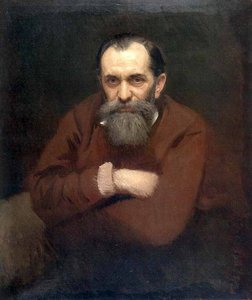
Wasilij Perow
1833 - 1882 , Rosja
Krótka nota
- Artistic Movement Or Style: Realizm krytyczny
- Artists Or Movements Influenced By This Artist:
- Repin
- Surikov
- Artists Who Influenced This Artist: ['Stupin']
- Date Of Birth: 2 stycznia 1834
- Date Of Death: 29 maja 1882
- Full Name: Vasily Grigoryevich Perov
- Nationality: Rosjanin
- Notable Artworks:
- Sermon w wsi
- Częstotliwość w fontannie
- Ostatnia podróż
- Troika
- Place Of Birth: Tobolsk, Rosja