
 Podgląd w skali 1:1
 Wyślij jako kartkę
 Udostępnij
 Szczegóły dzieła
 Przewodnik

 Pobierz obraz
 Podobne obiekty
 RTG
RTG Pokaz slajdów
 Pytania i odpowiedzi
 Statystyki
Last Journey

- 43.0 x 57.0 cm


 Rozwiń treść
Giclée / Wydruk artystyczny
Wydruki giclée lub płótna o jakości muzealnej, szybka realizacja i szeroki wybór opcji wykończenia. ( Zamów ręcznie malowaną reprodukcję Przejdź do wersji cyfrowej)




P118B zł10

P118H zł10

P118W zł10

P438Z zł10

P508JH zł12

P508YH zł12

P805H zł10

P805Z zł10

P919BZ zł10

P919G zł10

P919XJ zł10

P959ZH zł10

P968JZ zł12

W106C zł8

W218G zł10

W218JH zł8

W218Y zł10

W307PJ zł10

W316G zł10

W316PJ zł8

W316Y zł10

W398PJ zł8

W4111J zł10

W500HY zł15

W500JH zł15

W692G zł12

W849H zł8

W940BG zł15

W953PJ zł8




Wybierz spośród naszych standardowych rozmiarów, które zachowują oryginalne proporcje dzieła sztuki.

Wpisz wymaganą szerokość i wysokość, aby dopasować grafikę do ramy lub ściany. Wydruk można jedynie przyciąć, nigdy nie powiększając go poza oryginalny obraz, dlatego format o innych proporcjach spowoduje utratę części kompozycji. Przed rozpoczęciem druku prześlemy Ci cyfrowy podgląd do zatwierdzenia. Obraz wyświetlany na tej stronie nie pokazuje rzeczywistego przycięcia — jedynie podgląd oddaje ten efekt.
Dostawa na cały świat () w ciągu 2 tygodni zamiast standardowych 4/5 tygodni. (8 Listopad)

Bezpłatna ekspresowa wysyłka na cały świat

Wysokiej jakości płótno lniane

Pełne ubezpieczenie przesyłki

Gwarancja zwrotu należności celnych i podatków importowych

Gwarancja wiernego odwzorowania kolorów

100-dniowa polityka zwrotów (tylko w przypadku wad)

Gwarancja 100% zwrotu pieniędzy

Zniżka przy zakupie wielu sztuk
 Opcja ze szkłem jest dostępna wyłącznie w rozmiarach poniżej 110 cm

Last Journey
Giclée / Wydruk artystyczny
Wymiary reprodukcji
-


Cena całkowita
zł 317
Last Journey by Vasily Grigoryevich Perov: A Glimpse into Rural Russian Hardship
Vasily Grigoryevich Perov's "Last Journey," painted in 1865, is a poignant masterpiece of Realism that offers a stark and unflinching portrayal of life for the peasantry in 19th-century Russia. Measuring 43 x 57 cm, this oil on canvas work transcends mere depiction; it serves as a social commentary and an emotional exploration of loss, resilience, and the burdens of rural existence.
Composition and Symbolism
The painting depicts a somber scene: three figures – a woman, a young boy, and a girl – accompanied by a dog, are pulling a sled across a snow-covered field. The sled itself carries what is implied to be the body of a deceased individual, shrouded in white fabric. The muted color palette, dominated by earth tones and shades of grey and brown, contributes significantly to the overall atmosphere of melancholy and resignation. The vastness of the snowy landscape emphasizes the isolation and hardship faced by these individuals.
Several symbolic elements enhance the painting's narrative depth:
- The Sled: Represents not only the physical transportation of the deceased but also the heavy burdens – both literal and metaphorical – carried by the family.
- The Snowscape: Symbolizes the harshness and unforgiving nature of their environment, reflecting the challenges they face daily.
- The Figures' Posture: Their bowed heads and weary expressions convey a sense of profound grief and exhaustion. The woman’s posture in particular speaks volumes about her sorrow and responsibility.
- The Dog: A loyal companion, the dog adds another layer of emotional depth to the scene, representing faithfulness amidst adversity.
Artistic Style and Technique
Perov's style is firmly rooted in Realism, a movement that sought to depict everyday life with accuracy and honesty, often highlighting social issues. Influenced by his studies at the Imperial Academy of Arts in St. Petersburg, Perov rejected idealized representations prevalent in academic art, opting instead for a raw and unvarnished portrayal of reality.
The painting's technical execution is characterized by:
- Detailed Observation: Perov’s meticulous attention to detail – the texture of the snow, the worn fabric of their clothing, the expressions on their faces – creates a sense of immediacy and authenticity.
- Subdued Lighting: The diffused lighting enhances the somber mood, casting long shadows and emphasizing the bleakness of the scene.
- Visible Brushstrokes: While blended to create form, Perov’s brushstrokes are visible, adding texture and a sense of movement to the composition.
Historical Context and Emotional Impact
“Last Journey” was created during a period of significant social and political change in Russia. The painting reflects the plight of the peasantry, who constituted the vast majority of the population but lived under harsh conditions with limited opportunities. Perov's work, along with that of other members of the Peredvizhniki movement (Wanderers), aimed to raise awareness about these issues and challenge the status quo.
The painting’s emotional impact is profound. It evokes feelings of sadness, empathy, and a sense of shared humanity. "Last Journey" isn't just a depiction of death; it's a testament to the resilience of the human spirit in the face of adversity, offering a poignant glimpse into the lives of ordinary people struggling to survive in a challenging world.
Pytania i odpowiedzi
Jaki nastrój wprowadzi Last Journey do wnętrza?
Nostalgic atmosfera dzieła „Last Journey” – Wasilij Perow idealnie współgra z polecaną przestrzenią: jest nią Living Room.
Dlaczego „Last Journey” – Wasilij Perow jest polecane jako prezent?
"Last Journey" emanuje Melancholic nastrojem, a zarekomendowanym pomysłem na prezent jest Anniversary.
Gdzie najlepiej powiesić reprodukcję „Last Journey” – Wasilij Perow?
Format Landscape dzieła „Last Journey” – Wasilij Perow jest rekomendowany do Living Room. Format oraz przestrzeń wspólnie pomagają w odpowiednim rozmieszczeniu reprodukcji.
Biografia artysty
A Life Etched in Realism: Vasily Perov and the Soul of Russia
Vasily Grigoryevich Perov, born Vasily Vasiliev on January 2nd, 1834 (December 21st, 1833 Old Style) in the remote Siberian town of Tobolsk, was not merely a painter; he was a chronicler of his time, a social observer who wielded his brush to expose the realities—both beautiful and brutal—of 19th-century Russia. His life story is inextricably linked to his art, shaped by an unconventional upbringing that instilled within him a profound sensitivity to societal inequalities and a deep empathy for the marginalized. Born out of wedlock to Baron Grigory Kridener and Akulina Ivanova, Perov’s early years were marked not by privilege but by a sense of displacement and a keen awareness of the world beyond the confines of aristocratic society. This formative experience would profoundly influence his artistic vision, driving him to depict the lives of ordinary people with unflinching honesty and a remarkable ability to capture their dignity amidst hardship. The adoption of the surname “Perov,” derived from the Russian word for ‘feather,’ a reference to his early skill in calligraphy – a talent he honed before turning to painting – foreshadowed his meticulous attention to detail, his dedication to rendering the world around him with painstaking accuracy. His formal artistic journey began at the Alexander Stupin Art School in Arzamas, where he received his initial training and developed fundamental skills, laying the groundwork for his later achievements. Subsequently, he enrolled at the Moscow School of Painting, Sculpture and Architecture in 1853, immersing himself in the traditions of academic art while simultaneously absorbing the influences of a broader artistic landscape.Early Recognition and Artistic Development
Perov’s early career was marked by both critical acclaim and personal struggles. He quickly demonstrated exceptional talent, earning silver and gold medals from the Imperial Academy of Arts for works such as “Commissary of Rural Police Investigating” (1857) and, most notably, "Sermon in a Village" (1861). The latter painting, depicting a disengaged congregation during a church service, became an instant sensation, catapulting him into the national spotlight and securing his place among Russia’s leading artists. It was this work, with its subtle yet powerful critique of religious hypocrisy, that established Perov's reputation as a painter capable of capturing not just appearances but also the underlying truths of human experience. The opportunity to study abroad in 1862—a scholarship awarded for his achievements—provided him with invaluable exposure to European art and culture, particularly in Paris and throughout Germany. These experiences broadened his artistic horizons, allowing him to refine his technique and develop a more nuanced understanding of the world. However, this period was also marked by personal hardship; Perov struggled with poverty and loneliness, exacerbated by his unconventional family background and the challenges of navigating a society that often viewed him with suspicion. Despite these difficulties, he persevered in his artistic pursuits, driven by an unwavering commitment to his vision.The Voice of the Voiceless: Themes and Techniques
Perov’s artistic vision was fundamentally rooted in a profound sense of social justice and a desire to give voice to those who were often ignored or marginalized. He deliberately rejected the idealized depictions favored by many of his contemporaries, choosing instead to focus on the lives of ordinary people—peasants, laborers, widows, and the forgotten – portraying them with dignity and empathy. His paintings are not mere representations of reality; they are powerful social commentaries that expose the hardships, injustices, and spiritual emptiness prevalent in 19th-century Russia. Works like “The Queue at the Fountain” (1865) vividly illustrate the daily struggles of rural life, while "Troika: Apprentice Workmen Carrying Water" (1866) captures the physical exertion and camaraderie of working men. Perov’s technique was characterized by meticulous detail, somber color palettes—often dominated by muted browns, grays, and blues—and a masterful use of light and shadow to create dramatic effect. He avoided romanticizing poverty or suffering; instead, he sought to present it with honesty and a profound sense of human connection. His portraits were particularly notable for their psychological depth, capturing not just physical likeness but also the inner lives of his subjects. He wasn’t interested in creating beautiful images; he was driven by a desire to reveal uncomfortable truths about Russian society.Founding a Movement: The Peredvizhniki
Perov's commitment to realism aligned perfectly with the burgeoning spirit of artistic rebellion that led to the formation of the Peredvizhniki (Wanderers) in 1870. This collective of Russian realist painters, disillusioned with the constraints of the Imperial Academy of Arts, established an independent society dedicated to exhibiting art throughout Russia—reaching audiences beyond the confines of St. Petersburg and Moscow. The Peredvizhniki aimed to bring art directly to the people, to address social issues through their work, and to promote a uniquely Russian artistic identity. Perov was not merely a member; he was a founding force, instrumental in shaping the movement’s ideals and advocating for its principles. His dedication to portraying the lives of ordinary Russians resonated deeply with the Peredvizhniki's mission, solidifying his position as a leading figure within the group. The Wanderers’ exhibitions became immensely popular, attracting large crowds and sparking important conversations about art, society, and national identity.Legacy and Enduring Influence
Vasily Perov’s untimely death from tuberculosis in 1882 at the age of 48 marked a significant loss for Russian art. Despite his short life, he left behind a substantial body of work that continues to resonate with audiences today. His influence can be seen in the works of Ilya Repin and Vasily Surikov, both masters of realist painting who further developed the tradition he helped establish. Perov’s paintings remain relevant not only for their artistic merit but also for their enduring social commentary—a poignant reminder of the hardships faced by ordinary people throughout history and a testament to the power of art to expose injustice and promote empathy. His works are now housed in prominent collections, including the Tropinin Gallery and the Moscow Museum of Contemporary Art, ensuring that his vision continues to inspire and challenge viewers for generations to come. Perov’s contribution extends beyond mere artistic skill; he was a social conscience etched onto canvas, a voice for the voiceless, and a pioneer of Russian realism.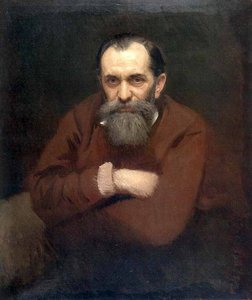
Wasilij Perow
1833 - 1882 , Rosja
Krótka nota
- Artistic Movement Or Style: Realizm krytyczny
- Artists Or Movements Influenced By This Artist:
- Repin
- Surikov
- Artists Who Influenced This Artist: ['Stupin']
- Date Of Birth: 2 stycznia 1834
- Date Of Death: 29 maja 1882
- Full Name: Vasily Grigoryevich Perov
- Nationality: Rosjanin
- Notable Artworks:
- Sermon w wsi
- Częstotliwość w fontannie
- Ostatnia podróż
- Troika
- Place Of Birth: Tobolsk, Rosja
Powiązane artykuły

Vasily Surikov: Historical Epic & Psychological Realism in 19th-Century Russian Painting
Explore the powerful historical paintings of Vasily Surikov, a leading figure of Russian Realism. Discover his dramatic compositions, psychological depth & lasting influence on 19th-century art. Learn about collecting Surikov's masterpieces.

Russian Realism: The Soulful Power of Truth and the Unyielding Spirit of the Peredvizhniki
Explore the profound depth of Russian Realism. From the social truths of the Peredvizhniki to epic folklore, discover the soulful power of masters like Perov and Yaroshenko through our expert art history insights and museum-quality reproductions.

Vasily Vereshchagin: Realism, War & Subversion in 19th-Century Russian Painting
Explore the powerful realism of Vasily Vereshchagin's war paintings & Central Asian scenes. Discover how this Russian master challenged artistic conventions and offered a brutal, honest depiction of 19th-century conflict. Learn about his legacy for discerning collectors.

Vladimir Makovsky: Realism, Social Commentary & Russian Life in Late 19th-Century Painting
Explore the captivating world of Vladimir Makovsky, a leading Russian realist painter. Discover his insightful depictions of 19th-century life, social commentary & legacy with OriginalUniqueArt.

Romantic Realism's Finest: 10 Masterpieces for Your Home | OriginalUniqueArt
Explore 10 defining masterpieces of Romantic Realism! Discover Courbet, Millet & Daumier's powerful paintings—capturing emotion and social realities. Find museum-quality reproductions for your home at OriginalUniqueArt.com.