

 Podgląd w skali
 Wyślij jako kartkę
 Udostępnij
 Szczegóły dzieła

 Pobierz
 Podobne obiekty
 RTG
RTG Pokaz slajdów
John Boydell
 Rozwiń treść
Kup wysokiej rozdzielczości, ulepszony obraz cyfrowy o znacznie wyższej jakości niż podgląd online.
Każdy plik jest starannie przygotowywany przez naszych specjalistów przy użyciu zaawansowanych narzędzi oraz profesjonalnej, ręcznej retuszy. Dbamy o to, aby każdy obraz cechował się wyjątkową ostrością, precyzyjnym odwzorowaniem kolorów i subtelnymi detalami.
Ostateczny plik dostarczany jest drogą mailową w ciągu 72 godzin, zoptymalizowany do natychmiastowego wykorzystania w profesjonalnych zastosowaniach redakcyjnych i poligraficznych. To ta sama jakość, której ufają czołowe studia projektowe, wydawnictwa oraz galerie sztuki.
Obraz cyfrowy
Pobierz plik o wysokiej rozdzielczości do osobistego wyświetlania, druku oraz projektów kreatywnych. ( Zamów wydruk Zamów ręcznie malowaną reprodukcję)
W każdym zamówieniu na obraz cyfrowy znajduje się
Profesjonalna dostawa cyfrowa z gwarancją
Wybierając OriginalUniqueArt.com, nie otrzymujesz jedynie obrazu – otrzymujesz profesjonalnie udoskonalone cyfrowe dzieło sztuki, stworzone z najwyższą precyzją i objęte gwarancją satysfakcji. Oto wszystko, co automatycznie dołączane jest do Twojego zamówienia:

Błyskawiczna wysyłka e-mailowa
Plik z obrazem cyfrowym w wysokiej rozdzielczości zostanie przesłany na Twój adres e-mail w ciągu 72 godzin od złożenia zamówienia – gotowy do natychmiastowego użycia.

Plik cyfrowy wzbogacony przez AI
Twoja grafika została profesjonalnie zoptymalizowana przy użyciu zaawansowanych narzędzi AI oraz ręcznej edycji, co zapewnia maksymalną szczegółowość, klarowność i wierność kolorów.

Dożywotnia darmowa ponowna dostawa
Przypadkowo usunąłeś lub zgubiłeś swój plik? Bez obaw – prześlemy go Tobie ponownie w dowolnym momencie, bez żadnych opłat.

Bez opłat importowych – zawsze
Ciesz się swoją sztuką natychmiast, bez żadnych opłat celnych, należności ani kosztów dostawy – pliki cyfrowe są zawsze wolne od podatku.

Gwarancja wierności kolorów
Dzięki zastosowaniu profesjonalnych narzędzi i procesów zarządzania barwą zapewniamy, że Twoje cyfrowe zdjęcie odzwierciedla oryginalne kolory tak wiernie, jak to tylko możliwe.

60-dniowa gwarancja satysfakcji
Jeśli nie będziesz zadowolony ze swojego cyfrowego obrazu, dokonamy jego poprawki lub zwrócimy 100% kosztów w ciągu 60 dni – bez żadnych pytań.

100% Gwarancja zwrotu pieniędzy
Nie jesteś zadowolony? Otrzymaj pełny zwrot kosztów w ciągu 60 dni od otrzymania pliku cyfrowego – bez zbędnych pytań.

Rabaty przy zamówieniach hurtowych
Kup 3 obrazy, oszczędź 10% - Kup 5, oszczędź 15% - Kup 10+, oszczędź 20%. Idealne do projektów kreatywnych, galerii i agencji.
Biografia artysty
Valentine Green: A Master of Mezzotint’s Rich Embrace
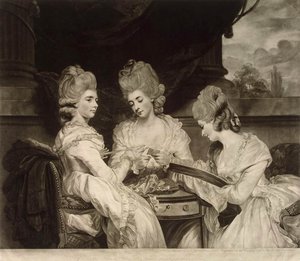
Valentine Green, born in Salford, England, in 1739, stands as a pivotal figure in the history of British engraving during the late 18th and early 19th centuries. His life story is one interwoven with artistic ambition, financial hardship, and ultimately, a quiet dedication to preserving the legacy of art. Green’s career unfolded against the backdrop of burgeoning London's vibrant artistic scene, a period marked by experimentation in printmaking techniques and a growing appreciation for portraiture and historical subjects. He wasn’t simply an engraver; he was a craftsman who meticulously coaxed tonal depth and nuanced detail from the seemingly simple medium of mezzotint.
Green's early training began under Robert Hancock, a Worcester engraver, providing him with a foundational understanding of the craft. However, it was his relocation to London in 1765 that truly ignited his career. He quickly mastered the intricacies of mezzotint, a process demanding both technical skill and artistic sensitivity. This technique, utilizing a roughened metal plate and ink distribution, allowed for incredibly rich blacks and subtle gradations – qualities that Green exploited with remarkable effect. Initially, he collaborated with Francis Jukes, another prominent aquatint engraver, establishing a partnership that produced some of the era’s most celebrated prints. Their combined efforts showcased a dynamic interplay between light and shadow, capturing the essence of their subjects with astonishing realism.
The Rise to Prominence and Royal Recognition
By 1766, Green had joined the Incorporated Society of Artists, marking his formal entry into London’s artistic circles. His talent quickly garnered recognition, culminating in his election as an Associate Engraver with the Royal Academy in 1775 – a prestigious honor signifying his acceptance by the highest echelons of British art. This period witnessed a flourishing of his work, largely focused on portraiture and engravings based on paintings from the Düsseldorf Gallery, a collection that offered unparalleled access to Old Master works. The Duke of Bavaria granted Green exclusive rights to reproduce these images, a lucrative arrangement that fueled his success for nearly a decade.
Green’s ability to faithfully replicate the details and atmospheric qualities of Reynolds, Romney, and other masters was remarkable. He wasn't merely copying; he was translating the spirit of the original paintings onto paper. His portraits possessed an immediacy and psychological depth rarely seen in contemporary engravings. He understood how to capture not just a likeness but also the character and emotion of his subjects – a skill that cemented his reputation as one of Britain’s foremost engravers.
Financial Ruin and a New Purpose
The 1790s proved to be a devastating period for Green. A series of international speculations, including ventures related to the Düsseldorf Gallery plates, ultimately failed spectacularly. The French siege of Düsseldorf in 1793 effectively halted his lucrative engraving business, plunging him into financial ruin. Despite his diminished circumstances, Green remained dedicated to his craft, continuing to work diligently until 1805. In this year, he accepted a position as Keeper of the British Institution, a role that provided a modest income and allowed him to focus on cataloging and preserving the institution’s collection.
This shift in responsibility marked a significant turning point in Green's life. It represented a move away from commercial success towards a more contemplative pursuit – safeguarding artistic heritage for future generations. While his financial woes were considerable, he never abandoned his passion for engraving, continuing to produce works of exceptional quality until his death in 1813. His later years were characterized by a quiet dignity and a profound appreciation for the enduring power of art.
Legacy and Enduring Influence
Valentine Green’s contribution to British printmaking is undeniable. He elevated mezzotint engraving to an art form, demonstrating its capacity for nuanced tonal expression and capturing the subtleties of human character. His meticulous attention to detail, combined with his deep understanding of painting techniques, resulted in engravings that remain highly valued today. His work serves as a testament to the enduring appeal of traditional printmaking methods and the skill of a craftsman dedicated to his art. The influence of Green’s approach can be seen in subsequent generations of engravers who followed, solidifying his place as a true master of the mezzotint.
Valentine Green
1739 - 1813 , United Kingdom
Krótka nota
- Artistic Movement Or Style: Mezzotint engraving
- Artists Who Influenced This Artist: ['Robert Hancock']
- Date Of Birth: 1739
- Date Of Death: 1813
- Full Name: Valentine Green
- Nationality: British
- Notable Artworks:
- Reynolds portraits
- Romney engravings
- Old Masters prints
- Place Of Birth: Salford, United Kingdom

