

 Podgląd w skali 1:1
 Wyślij jako kartkę
 Udostępnij
 Szczegóły dzieła
 Przewodnik

 Pobierz obraz
 Podobne obiekty
 RTG
RTG Pokaz slajdów
 Statystyki
Trzy kobiety
 Olej na płótnie
- Sztuka ścienna
- Futurist Divisionism
 1910
1910- Modernizm
 180.0 x 132.0 cm
 Rozwiń treść
Get a print-ready file that goes far beyond the web preview. Every digital image we sell comes from a high-resolution master in our stock database — usually 5,000 to 15,000 pixels wide — so you can print large, crop tightly, or reproduce fine detail with confidence.
No file leaves our studio untouched. A digital expert checks the colors against the original painting and corrects them if needed, then improves clarity and detail with professional retouching tools — always staying faithful to the artist's brushwork and style. The result is an image that looks like the painting, not like a filtered scan.
You approve before you're done: our expert sends the image by e-mail within 72 hours for your review. Not satisfied? Ask for improvements or corrections, or request a refund if the quality falls short.
This is the quality relied on by publishers, design studios, galleries and print shops.
Obraz cyfrowy
Pobierz plik o wysokiej rozdzielczości do osobistego użytku, druku oraz projektów kreatywnych. ( Przełącz na wydania drukowane Zamów ręcznie malowaną reprodukcję)
W każdym zamówieniu na obraz cyfrowy znajduje się
Profesjonalna dostawa cyfrowa z gwarancją
Wybierając OriginalUniqueArt.com, nie otrzymujesz jedynie obrazu – otrzymujesz profesjonalnie udoskonalone cyfrowe dzieło sztuki, stworzone z najwyższą precyzją i objęte gwarancją satysfakcji. Oto wszystko, co automatycznie dołączane jest do Twojego zamówienia:

Błyskawiczna wysyłka e-mailowa
Plik z obrazem cyfrowym w wysokiej rozdzielczości zostanie przesłany na Twój adres e-mail w ciągu 72 godzin od złożenia zamówienia – gotowy do natychmiastowego użycia.

Plik cyfrowy wzbogacony przez AI
Twoja grafika została profesjonalnie zoptymalizowana przy użyciu zaawansowanych narzędzi AI oraz ręcznej edycji, co zapewnia maksymalną szczegółowość, klarowność i wierność kolorów.

Darmowe ponowne przesyłki dożywotnio
Przypadkowo usunąłeś lub zgubiłeś swój plik? Bez obaw – prześlemy go Tobie ponownie w dowolnym momencie, bez żadnych opłat.

Bez opłat importowych – zawsze
Ciesz się swoją sztuką natychmiast, bez żadnych opłat celnych, należności ani kosztów dostawy – pliki cyfrowe są zawsze wolne od podatku.

Gwarancja wierności kolorów
Dzięki zastosowaniu profesjonalnych narzędzi i procesów zarządzania barwą zapewniamy, że Twoje cyfrowe zdjęcie odzwierciedla oryginalne kolory tak wiernie, jak to tylko możliwe.

Gwarancja satysfakcji przez 100 dni
Jeśli nie będziesz zadowolony ze swojego cyfrowego obrazu, dokonamy jego poprawki lub zwrócimy 100% kosztów w ciągu 100 dni – bez zbędnych pytań.

100% Gwarancja zwrotu pieniędzy
Nie jesteś zadowolony? Otrzymaj pełny zwrot kosztów w ciągu 100 dni od otrzymania pliku cyfrowego – bez zbędnych pytań.

Rabaty przy zamówieniach hurtowych
Kup 3 obrazy, oszczędź 10% - Kup 5, oszczędź 15% - Kup 10+, oszczędź 20%. Idealne do projektów kreatywnych, galerii i agencji.
Three Women by Umberto Boccioni – A Symphony of Divisionist Light
This captivating artwork, “Three Women,” created by the visionary Italian artist Umberto Boccioni in 1910, transcends mere representation; it’s an invitation to contemplate intimacy and a masterful demonstration of Futurism's innovative approach to artistic expression. Held privately, this oil on canvas piece embodies the spirit of Divisionist painting—a technique championed by Boccioni himself—where fragmented brushstrokes coalesce into luminous color palettes that capture the essence of fleeting moments.- Subject Matter: The composition centers around three women – Cecilia, Amelia and Ines – portraying a serene tableau of familial connection and quiet reflection. Each figure is rendered with remarkable sensitivity to posture and expression, conveying a palpable sense of melancholy yet profound peace.
- Style: Boccioni’s stylistic evolution culminates in Divisionism, blending it seamlessly with the dynamism inherent in Futurism. Visible brushstrokes disrupt traditional forms, mirroring the artist's desire to capture movement and energy—a core tenet of the burgeoning Futurist movement.
Technique – Mastering Light and Color Through Divisionist Illusion
Boccioni’s mastery shines through in his meticulous application of color and light. The divisionist technique isn’t merely about applying pigment; it's about creating an illusion of depth and luminosity by fracturing color into discrete strokes. These strokes overlap subtly, generating a shimmering effect that mimics the way natural light interacts with surfaces—a deliberate choice reflecting Boccioni’s fascination with technological advancements and their impact on perception. The diffused lighting illuminates the women’s faces, enhancing their warmth and inviting viewers to immerse themselves in the artwork's tranquil atmosphere.- Materials: Oil paints were skillfully layered onto canvas, resulting in a textured surface that subtly captures the nuances of light and shadow.
- Composition: The triangular arrangement symbolizes unity and connection between the figures, guiding the viewer’s gaze across the canvas with graceful precision.
Historical Context – A Bridge to Futurism's Bold Vision
“Three Women” marks a pivotal juncture in Boccioni’s artistic journey—a decisive step away from Divisionist conventions toward embracing the radical aesthetic principles of Futurism. Influenced by the groundbreaking writings of Filippo Tommaso Marinetti, the movement’s founder, Boccioni sought to translate his pre-Futurist subjects into a new visual language that mirrored the speed and dynamism of the industrial age. This stylistic shift represents an ambitious attempt to reconcile traditional artistic sensibilities with the revolutionary fervor of the era. Note: The artwork's ethereal quality speaks volumes about Boccioni’s desire to capture not just appearances but also emotional resonance—a hallmark of Symbolist art and a testament to his profound understanding of human psychology.Symbolism – Reflections of Time and Remembrance
The hazy atmosphere surrounding the figures serves as a poignant reminder of the passage of time and the elusive nature of memory. It encourages contemplation on themes of familial bonds, inner peace, and the beauty found in quiet solitude—elements that resonate deeply with viewers seeking artistic inspiration. The subtle tonal variations contribute to an overall mood of nostalgia and serenity, elevating “Three Women” beyond a mere portrait into a meditation on human experience.Concluding Impression – An Artistic Legacy Illuminated
“Three Women” stands as a beacon of Italian Futurism’s innovative spirit—a testament to Umberto Boccioni's unwavering belief in progress and his ability to translate complex ideas into breathtaking visual artistry. Its enduring appeal lies not only in its technical brilliance but also in its capacity to evoke profound emotions and invite viewers on a journey of contemplation.Pytania i odpowiedzi
Jakie inne pseudonimy lub nazwy stosuje Umberto Boccioni?
Umberto Boccioni występuje również pod innymi nazwiskami: Umberto Boccionio.
Do którego okresu twórczości Umberto Boccioni należy dzieło "Trzy kobiety"?
„Trzy kobiety” pochodzi z okresu Futurist Transition w twórczości Umberto Boccioni. Klasyfikacja ta wiąże dzieło z rozwojem artysty.
Jak mogę odkryć dzieła podobne do „Trzy kobiety” – Umberto Boccioni?
Dzieła podobne do „Trzy kobiety” można znaleźć na stronie Podobne dzieła danego dzieła.
Biografia artysty
A Life Forged in Motion: The Revolutionary Vision of Umberto Boccioni
Umberto Boccioni, born in Reggio Calabria in 1882, was a figurehead of the Italian Futurist movement—a force that sought to shatter artistic conventions and embrace the dynamism of the modern world. His life, though tragically cut short at just thirty-three, became a testament to this fervent belief in progress, speed, and the intoxicating energy of the machine age. Boccioni’s early years were marked by constant relocation due to his father's civil service position, an upbringing that exposed him to diverse landscapes and instilled within him a restless spirit. This nomadic existence eventually led him to Rome, where he initially pursued studies in decorative arts before gravitating towards painting, absorbing influences from the Liberty style poster artists of the time. However, it was his encounter with Futurism, ignited by the writings of Filippo Tommaso Marinetti, that truly set his artistic trajectory ablaze.Embracing the Whirlwind: The Rise of a Futurist
The year 1910 proved pivotal for Boccioni. He signed the *Manifesto dei Pittori Futuristi*, solidifying his commitment to a movement that celebrated technology, velocity, and even violence as emblems of modernity. This wasn’t merely an aesthetic choice; it was a philosophical rebellion against the weight of tradition, a desire to capture the very essence of a world hurtling towards an uncertain future. Boccioni quickly became one of Futurism's most articulate theorists, expanding upon Marinetti’s initial pronouncements and applying them to the visual arts. He argued for a complete break from representational accuracy, advocating instead for paintings that conveyed not just *what* things looked like, but *how* they felt in motion—the sensation of speed, the fragmentation of form, the overwhelming energy of urban life. His early works, while still hinting at Impressionist and Divisionist influences, began to demonstrate this burgeoning obsession with dynamism. Paintings such as *The City Rises* (1910-1911) are monumental in scale and ambition, depicting the chaotic construction of a modern metropolis—a swirling vortex of human figures, buildings, and machinery that embodies the Futurist ideal. The painting’s composition is deliberately unsettling, conveying a sense of overwhelming movement and transformation.Deconstructing Reality: Technique and Themes
Boccioni’s artistic development was characterized by an increasingly radical approach to form. He moved away from traditional notions of perspective and composition, embracing fragmentation as a means of conveying movement and energy. Objects were broken down into their constituent parts, lines of force radiated outwards, and colors blended in swirling patterns—all designed to create a sense of visual vibration. This deconstruction wasn’t merely stylistic; it was rooted in Boccioni's belief that reality itself was fluid and constantly changing. He sought to represent not the static appearance of things, but their dynamic essence. Key themes emerged throughout his oeuvre: dynamism, the celebration of modernity, and a fascination with the human body as a vehicle for expressing energy and motion. This is powerfully illustrated in works like *Dynamism of a Human Body* (1913), where a figure is depicted not as a solid form but as a series of fragmented shapes suggesting movement through space. The painting captures the sensation of a runner in full stride, conveying both power and vulnerability simultaneously. His sculpture *Unique Forms of Continuity in Space* (1913) further exemplifies this approach—a bronze figure that appears to be caught mid-stride, its limbs and torso elongated and distorted, conveying a sense of unstoppable momentum. The work’s innovative use of materials and techniques pushed the boundaries of sculptural representation.Influences and Artistic Connections
Boccioni's artistic journey was shaped by a diverse range of influences. Early exposure to the landscapes of Southern Italy instilled in him a deep appreciation for nature, which he later sought to capture through dynamic compositions. His studies with Giacomo Balla at the Roman art academy introduced him to techniques like pointillism and divisionism, providing a foundation for his exploration of color and light. However, it was his encounter with Filippo Marinetti and the Futurist movement that truly transformed his artistic vision. He collaborated closely with Marinetti on theoretical works, contributing significantly to the development of Futurism’s core principles. Furthermore, Boccioni maintained friendships with other prominent artists of the era, including Gino Severini and Carlo Carrà, exchanging ideas and influencing each other's work. The shared ambition to break free from traditional artistic conventions fostered a vibrant creative environment within the Futurist circle.Legacy and Lasting Impact
Boccioni’s untimely death in 1916, during World War I, tragically cut short a brilliant career. Despite his brief life, his ideas and artworks had a profound impact on the development of modern art. He profoundly influenced not only subsequent Futurist artists but also movements like Constructivism and Abstract Expressionism. His exploration of motion, dynamism, and the representation of modern life paved the way for new forms of artistic expression, challenging traditional notions of beauty and representation. His work continues to be exhibited in major museums around the world, serving as a testament to his revolutionary vision and enduring legacy. His paintings are not merely depictions of reality; they are embodiments of its relentless energy.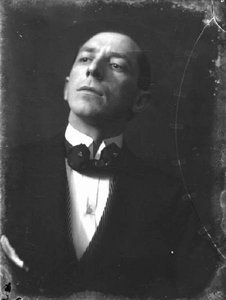
Umberto Boccioni
1882 - 1916 , Włochy
Krótka nota
- Artistic Movement Or Style: Futurismo
- Artists Or Movements Influenced By This Artist:
- Konstrukcjonizm
- Ekspresionizm abstrakcyjny
- Artists Who Influenced This Artist:
- Giacomo Balla
- Cubismo
- Date Of Birth: 1882-10-19
- Date Of Death: 1916-08-17
- Full Name: Umberto Boccioni
- Nationality: Włoski
- Notable Artworks:
- Dynamizm ciała ludzkiego
- Formy ciągłości w przestrzeni
- Miasto rośnie
- Place Of Birth: Reggio Calabria, Italia