

 Zobacz w skali 1:1
 Wyślij
 Udostępnij
 Szczegóły
 Przewodnik

 Pobierz plik obrazu
 Podobne obiekty
 RTG
RTG Pokaz slajdów
 Statystyki
Klasztor S. Onofrio


 Czytaj więcej
Ręcznie malowana reprodukcja olejowa
Ręcznie malowany obraz olejny na płótnie, wykonany na zamówienie przez naszych artystów w wybranym przez Ciebie wymiarze i oprawie. ( Przełącz na wersję drukowaną Przełącz na wersję cyfrową)




P118B $10

P118H $10

P118W $10

P438Z $10

P508JH $12

P508YH $12

P805H $10

P805Z $10

P919BZ $10

P919G $10

P919XJ $10

P959ZH $10

P968JZ $12

W106C $8

W218G $10

W218JH $8

W218Y $10

W307PJ $10

W316G $10

W316PJ $8

W316Y $10

W398PJ $8

W4111J $10

W500HY $15

W500JH $15

W692G $12

W849H $8

W940BG $15

W953PJ $8




Wybierz spośród naszych standardowych rozmiarów, które zachowują oryginalne proporcje dzieła sztuki.

Możesz wprowadzić własne wymiary, aby dopasować obraz do konkretnej ramy lub przestrzeni. Jeśli wybrany rozmiar nie będzie odpowiadał proporcjom oryginału, przytniecie dzieło sztuki lub rozszerzymy je o dodatkowe elementy, ręcznie domalowane przez artystę. Przed rozpoczęciem produkcji wyślemy projekt cyfrowy do Twojej akceptacji.
Należy pamiętać, że podgląd na ekranie nie odzwierciedla rzeczywistego przycinania ani rozszerzania obrazu. Tylko projekt dokładnie pokaże ostateczną kompozycję.
Choć oferujemy możliwość zamówienia niestandardowych rozmiarów, zalecamy wybór wymiaru z gotowej listy, aby zachować oryginalne proporcje dzieła.
Po złożeniu zamówienia zespół OriginalUniqueArt.com skontaktuje się z klientem drogą mailową w celu uzyskania instrukcji i prześle wizualizację projektu
Dostawa na całym świecie () w ciągu 3–4 tygodni zamiast standardowych 5 tygodni. (25 Wrzesień). Bez kompromisów w kwestii jakości.

Bezpłatna ekspresowa wysyłka na cały świat

Wysokiej jakości płótno lniane

Pełne ubezpieczenie transportowe

Gwarancja zwrotu należności celnych i podatków importowych

Gwarancja idealnego odwzorowania barw

100-dniowy okres na zwrot dzieła w przypadku wykrycia wad produkcyjnych

Gwarancja 100% zwrotu pieniędzy

Oferta przy zakupie wielu sztuk
 Opcja ze szkłem jest dostępna wyłącznie w rozmiarach poniżej 110 cm

Klasztor S. Onofrio
Technika wykonania
Rozmiar reprodukcji
-


Suma do zapłaty
$ 300
Cloister of S. Onofrio – A Symphony of Motion and Light
Umberto Boccioni’s “Cloister of S. Onofrio,” painted in 1904, transcends mere representation; it embodies the very spirit of Futurism—a movement determined to liberate art from academic constraints and embrace the dynamism inherent in modern life. This cityscape scene isn't simply a depiction of Rome’s historic cloister; it’s an assertion of speed, energy, and fragmented perception – concepts central to Boccioni’s artistic vision. The painting captures a courtyard bathed in diffused sunlight, framed by arched walls adorned with a vibrant red roof—a visual echo of the fervor that characterized the era. Two horses graze peacefully within the space, adding an element of pastoral tranquility juxtaposed against the overarching movement of the composition.Divisionism: Fractured Light and Color
Boccioni’s masterful technique exemplifies Divisionism, also known as Simultaneity. Unlike Impressionists who sought to capture fleeting moments of light, Divisionists like Boccioni aimed to portray multiple perspectives simultaneously—a deliberate disruption of traditional artistic conventions. He achieved this effect by applying pigment in small, independent strokes that overlap and blend subtly on the canvas surface. This technique creates a shimmering illusion of depth and luminosity, mirroring the fragmented experience of urban life as perceived by Futurists. The artist meticulously layered colors – predominantly reds, yellows, and blues – to convey not just visual accuracy but also emotional resonance. Each brushstroke contributes to an overall impression of movement and vibration, reflecting Boccioni’s fascination with industrial machinery and its transformative influence on human consciousness.Historical Context: Embracing the Machine Age
The painting emerged during a pivotal moment in Italian art history—the burgeoning Futurism movement spearheaded by Filippo Tommaso Marinetti. Marinetti declared that “painting must be like a flash of lightning, capable of arresting the passing glance.” This manifesto encapsulated the Futurist ethos: rejecting nostalgia for the past and embracing innovation, speed, and the overwhelming power of technology. Boccioni’s artistic explorations mirrored this broader cultural preoccupation with modernity—a desire to capture the dynamism of industrial progress and its impact on human experience. The cloister itself serves as a counterpoint to this frenetic energy, representing stability and tradition amidst the turbulent currents of change.Symbolism Beyond Representation
Beyond its technical brilliance, “Cloister of S. Onofrio” resonates with symbolic significance. The horses symbolize serenity and pastoral beauty—a deliberate contrast to the perceived chaos of the city. However, their presence isn’t merely decorative; it subtly underscores the Futurist preoccupation with reconciling tradition and progress. Similarly, the courtyard walls represent containment and structure, yet they are illuminated by radiant light – symbolizing enlightenment and transcendence. Boccioni skillfully utilizes color and composition to convey not just what is seen but also what is felt—a profound engagement with the emotional landscape of the modern world.A Legacy of Dynamic Impression
“Cloister of S. Onofrio” stands as a cornerstone of Futurist art, demonstrating Boccioni’s unwavering commitment to artistic experimentation and his ability to translate complex philosophical ideas into visually arresting imagery. Its enduring appeal lies in its masterful execution—the Divisionist technique capturing the elusive beauty of light—and its evocative portrayal of urban life infused with movement and emotion. Reproductions offer a remarkable opportunity to experience this seminal artwork, transporting viewers back to the dawn of the 20th century and celebrating the transformative power of artistic vision.Biografia artysty
A Life Forged in Motion: The Revolutionary Vision of Umberto Boccioni
Umberto Boccioni, born in Reggio Calabria in 1882, was a figurehead of the Italian Futurist movement—a force that sought to shatter artistic conventions and embrace the dynamism of the modern world. His life, though tragically cut short at just thirty-three, became a testament to this fervent belief in progress, speed, and the intoxicating energy of the machine age. Boccioni’s early years were marked by constant relocation due to his father's civil service position, an upbringing that exposed him to diverse landscapes and instilled within him a restless spirit. This nomadic existence eventually led him to Rome, where he initially pursued studies in decorative arts before gravitating towards painting, absorbing influences from the Liberty style poster artists of the time. However, it was his encounter with Futurism, ignited by the writings of Filippo Tommaso Marinetti, that truly set his artistic trajectory ablaze.Embracing the Whirlwind: The Rise of a Futurist
The year 1910 proved pivotal for Boccioni. He signed the *Manifesto dei Pittori Futuristi*, solidifying his commitment to a movement that celebrated technology, velocity, and even violence as emblems of modernity. This wasn’t merely an aesthetic choice; it was a philosophical rebellion against the weight of tradition, a desire to capture the very essence of a world hurtling towards an uncertain future. Boccioni quickly became one of Futurism's most articulate theorists, expanding upon Marinetti’s initial pronouncements and applying them to the visual arts. He argued for a complete break from representational accuracy, advocating instead for paintings that conveyed not just *what* things looked like, but *how* they felt in motion—the sensation of speed, the fragmentation of form, the overwhelming energy of urban life. His early works, while still hinting at Impressionist and Divisionist influences, began to demonstrate this burgeoning obsession with dynamism. Paintings such as *The City Rises* (1910-1911) are monumental in scale and ambition, depicting the chaotic construction of a modern metropolis—a swirling vortex of human figures, buildings, and machinery that embodies the Futurist ideal. The painting’s composition is deliberately unsettling, conveying a sense of overwhelming movement and transformation.Deconstructing Reality: Technique and Themes
Boccioni’s artistic development was characterized by an increasingly radical approach to form. He moved away from traditional notions of perspective and composition, embracing fragmentation as a means of conveying movement and energy. Objects were broken down into their constituent parts, lines of force radiated outwards, and colors blended in swirling patterns—all designed to create a sense of visual vibration. This deconstruction wasn’t merely stylistic; it was rooted in Boccioni's belief that reality itself was fluid and constantly changing. He sought to represent not the static appearance of things, but their dynamic essence. Key themes emerged throughout his oeuvre: dynamism, the celebration of modernity, and a fascination with the human body as a vehicle for expressing energy and motion. This is powerfully illustrated in works like *Dynamism of a Human Body* (1913), where a figure is depicted not as a solid form but as a series of fragmented shapes suggesting movement through space. The painting captures the sensation of a runner in full stride, conveying both power and vulnerability simultaneously. His sculpture *Unique Forms of Continuity in Space* (1913) further exemplifies this approach—a bronze figure that appears to be caught mid-stride, its limbs and torso elongated and distorted, conveying a sense of unstoppable momentum. The work’s innovative use of materials and techniques pushed the boundaries of sculptural representation.Influences and Artistic Connections
Boccioni's artistic journey was shaped by a diverse range of influences. Early exposure to the landscapes of Southern Italy instilled in him a deep appreciation for nature, which he later sought to capture through dynamic compositions. His studies with Giacomo Balla at the Roman art academy introduced him to techniques like pointillism and divisionism, providing a foundation for his exploration of color and light. However, it was his encounter with Filippo Marinetti and the Futurist movement that truly transformed his artistic vision. He collaborated closely with Marinetti on theoretical works, contributing significantly to the development of Futurism’s core principles. Furthermore, Boccioni maintained friendships with other prominent artists of the era, including Gino Severini and Carlo Carrà, exchanging ideas and influencing each other's work. The shared ambition to break free from traditional artistic conventions fostered a vibrant creative environment within the Futurist circle.Legacy and Lasting Impact
Boccioni’s untimely death in 1916, during World War I, tragically cut short a brilliant career. Despite his brief life, his ideas and artworks had a profound impact on the development of modern art. He profoundly influenced not only subsequent Futurist artists but also movements like Constructivism and Abstract Expressionism. His exploration of motion, dynamism, and the representation of modern life paved the way for new forms of artistic expression, challenging traditional notions of beauty and representation. His work continues to be exhibited in major museums around the world, serving as a testament to his revolutionary vision and enduring legacy. His paintings are not merely depictions of reality; they are embodiments of its relentless energy.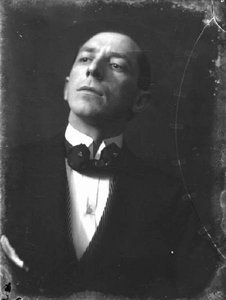
Umberto Boccioni
1882 - 1916 , Włochy
Najważniejsze informacje
- Artistic Movement Or Style: Futurismo
- Artists Or Movements Influenced By This Artist:
- Konstrukcjonizm
- Ekspresionizm abstrakcyjny
- Artists Who Influenced This Artist:
- Giacomo Balla
- Cubismo
- Date Of Birth: 1882-10-19
- Date Of Death: 1916-08-17
- Full Name: Umberto Boccioni
- Nationality: Włoski
- Notable Artworks:
- Dynamizm ciała ludzkiego
- Formy ciągłości w przestrzeni
- Miasto rośnie
- Place Of Birth: Reggio Calabria, Italia
Zobacz także powiązane artykuły

Blask i geometria pragnień: Wpływ Art Deco na współczesną kulturę wizualną
Odkryj fascynujący świat Art Deco! Poznaj historię tego ikonicznego stylu, jego wpływ na architekturę i design oraz dziedzictwo we współczesnej kulturze wizualnej. Ekspercka analiza i inspiracje dla miłośników sztuki.

Złota Era Stylu: Estetyczne Zasady i Trwałe Dziedzictwo Art Deco
Poznaj fascynującą historię Art Deco – od narodzin stylu po współczesne inspiracje. Ekspercka analiza cech, wpływ na architekturę i wzornictwo oraz ikoniczne dzieła tego glamour okresu. Odkryj dziedzictwo Art Deco!
Art Deco Unveiled: The Glamour and Geometry of a Timeless Era
Discover the breathtaking allure of Art Deco. Explore the era's iconic geometry, legendary designers like Erté, and timeless glamour. Perfect for discerning collectors seeking to infuse their spaces with sophisticated modernist elegance and historical prestige.
Prestiż w Reprodukcji: Strategiczne Wykorzystanie Wysokiej Jakości Kopii w Elitarnych Galeriach Sztuki
Odkryj strategiczne wykorzystanie wysokiej jakości reprodukcji sztuki w budowaniu prestiżu galerii i kolekcji. Analiza technologii, prawa autorskiego i trendów inwestycyjnych. Ekspercka wiedza dla kolekcjonerów.

Carlo Carrà: Futurist Visions & Metaphysical Transformations in Early 20th-Century Italian Painting
Explore the artistic journey of Carlo Carrà, a pivotal figure in Italian Futurism & Metaphysical painting. Discover his dynamic compositions, collaborations with de Chirico, and lasting influence on modern art history.


