

 Podgląd w skali
 Wyślij jako kartkę
 Udostępnij
 Szczegóły dzieła

 Pobierz
 Podobne obiekty
 RTG
RTG Pokaz slajdów
Carlo Carrá

 Rozwiń treść
Kup wysokiej rozdzielczości, ulepszony obraz cyfrowy o znacznie wyższej jakości niż podgląd online.
Każdy plik jest starannie przygotowywany przez naszych specjalistów przy użyciu zaawansowanych narzędzi oraz profesjonalnej, ręcznej retuszy. Dbamy o to, aby każdy obraz cechował się wyjątkową ostrością, precyzyjnym odwzorowaniem kolorów i subtelnymi detalami.
Ostateczny plik dostarczany jest drogą mailową w ciągu 72 godzin, zoptymalizowany do natychmiastowego wykorzystania w profesjonalnych zastosowaniach redakcyjnych i poligraficznych. To ta sama jakość, której ufają czołowe studia projektowe, wydawnictwa oraz galerie sztuki.
Obraz cyfrowy
Pobierz plik o wysokiej rozdzielczości do osobistego wyświetlania, druku oraz projektów kreatywnych. ( Zamów wydruk Zamów ręcznie malowaną reprodukcję)
W każdym zamówieniu na obraz cyfrowy znajduje się
Profesjonalna dostawa cyfrowa z gwarancją
Wybierając OriginalUniqueArt.com, nie otrzymujesz jedynie obrazu – otrzymujesz profesjonalnie udoskonalone cyfrowe dzieło sztuki, stworzone z najwyższą precyzją i objęte gwarancją satysfakcji. Oto wszystko, co automatycznie dołączane jest do Twojego zamówienia:

Błyskawiczna wysyłka e-mailowa
Plik z obrazem cyfrowym w wysokiej rozdzielczości zostanie przesłany na Twój adres e-mail w ciągu 72 godzin od złożenia zamówienia – gotowy do natychmiastowego użycia.

Plik cyfrowy wzbogacony przez AI
Twoja grafika została profesjonalnie zoptymalizowana przy użyciu zaawansowanych narzędzi AI oraz ręcznej edycji, co zapewnia maksymalną szczegółowość, klarowność i wierność kolorów.

Dożywotnia darmowa ponowna dostawa
Przypadkowo usunąłeś lub zgubiłeś swój plik? Bez obaw – prześlemy go Tobie ponownie w dowolnym momencie, bez żadnych opłat.

Bez opłat importowych – zawsze
Ciesz się swoją sztuką natychmiast, bez żadnych opłat celnych, należności ani kosztów dostawy – pliki cyfrowe są zawsze wolne od podatku.

Gwarancja wierności kolorów
Dzięki zastosowaniu profesjonalnych narzędzi i procesów zarządzania barwą zapewniamy, że Twoje cyfrowe zdjęcie odzwierciedla oryginalne kolory tak wiernie, jak to tylko możliwe.

60-dniowa gwarancja satysfakcji
Jeśli nie będziesz zadowolony ze swojego cyfrowego obrazu, dokonamy jego poprawki lub zwrócimy 100% kosztów w ciągu 60 dni – bez żadnych pytań.

100% Gwarancja zwrotu pieniędzy
Nie jesteś zadowolony? Otrzymaj pełny zwrot kosztów w ciągu 60 dni od otrzymania pliku cyfrowego – bez zbędnych pytań.

Rabaty przy zamówieniach hurtowych
Kup 3 obrazy, oszczędź 10% - Kup 5, oszczędź 15% - Kup 10+, oszczędź 20%. Idealne do projektów kreatywnych, galerii i agencji.
Opis kolekcjonerski
Carlo Carrà: A Pioneer of Expressionism’s Quiet Revolution
Umberto Boccioni's charcoal sketch of Carlo Carrá stands as a testament to the understated brilliance of Expressionist art—a movement that sought to convey emotion and psychological depth rather than merely replicating visual reality. Unlike the frenetic dynamism championed by Futurists like Marinetti, Boccioni’s approach here prioritizes capturing the essence of Carrà's presence through meticulous linework and tonal modulation. The drawing embodies a profound sensitivity to form and texture, reflecting the influence of Giotto and foreshadowing the groundbreaking explorations of Giorgio de Chirico that would soon follow.- Subject Matter: The portrait focuses intently on Carrá’s head and shoulders, presenting him with unwavering gaze—a deliberate choice that underscores the artist's commitment to portraying inner states alongside external appearances.
- Style & Technique: Boccioni employs a charcoal pencil on paper, utilizing hatching and cross-hatching techniques to build up subtle gradations of tone and create an illusion of palpable surface texture. This method lends itself beautifully to capturing the nuances of Carrá’s facial features and hair—a masterful demonstration of expressive drawing.
- Composition: The cropped framing emphasizes the figure's centrality, creating a sense of intimacy and immediacy. The placement of handwritten text beneath the image adds another layer of complexity, hinting at personal reflection or perhaps an attempt to contextualize Carrá’s artistic legacy.
Echoes of Giotto: An Archaic Resonance
Boccioni's stylistic choices reveal a deliberate harkening back to the frescoes of Giotto di Bondone—a Florentine painter who revolutionized art by prioritizing emotional truth over idealized representation. Just as Giotto sought to convey spiritual significance through simplified forms and expressive gestures, Boccioni similarly strives to distill Carrá’s character into its most fundamental elements. This stylistic affinity speaks to a broader artistic impulse toward reclaiming the purity of early Renaissance aesthetics—a reaction against the perceived excesses of academic art and a celebration of timeless beauty.- Influence: The artist's fascination with Giotto’s work is palpable in his meticulous attention to detail and his preference for organic shapes—characteristics that resonate deeply with Giotto’s groundbreaking approach to portraying human figures.
- Emotional Impact: Boccioni’s drawing succeeds in conveying a sense of quiet contemplation and understated dignity—qualities that align perfectly with the spiritual ethos of Giotto’s frescoes.
Metaphysical Hints: Exploring Depth Beyond Surface Appearance
The influence of Giorgio de Chirico, whom Boccioni encountered during his travels to Paris in 1912, further expands the artistic horizons of this portrait. Like De Chirico, Boccioni investigates psychological states through unsettling juxtapositions and dreamlike imagery—a technique that anticipates the emergence of “metaphysical painting.” The subtle inclusion of mannequin figures—a recurring motif in De Chirico’s oeuvre—suggests a preoccupation with themes of alienation and existential uncertainty—ideas that find their expression in Carrá's solemn gaze.- Symbolism: The use of mannequins serves as a visual metaphor for the artist’s exploration of psychological landscapes—a deliberate departure from traditional portraiture conventions.
- Historical Context: This stylistic convergence reflects the broader artistic currents of the early 20th century—a period marked by experimentation and intellectual ferment—and underscores Boccioni's commitment to pushing the boundaries of artistic expression.
A Legacy of Quiet Intensity
Ultimately, Umberto Boccioni’s charcoal sketch of Carlo Carrá embodies a profound appreciation for both Giotto’s spiritual vision and De Chirico’s unsettling explorations of psychological depth—a synthesis that secures Carrá's portrait as an enduring masterpiece of Expressionist art. Its understated elegance and masterful technique invite viewers to contemplate the complexities of human experience—a testament to Boccioni’s unwavering belief in the transformative power of art.Biografia artysty
A Life Forged in Motion: The Revolutionary Vision of Umberto Boccioni
Umberto Boccioni, born in Reggio Calabria in 1882, was a figurehead of the Italian Futurist movement—a force that sought to shatter artistic conventions and embrace the dynamism of the modern world. His life, though tragically cut short at just thirty-three, became a testament to this fervent belief in progress, speed, and the intoxicating energy of the machine age. Boccioni’s early years were marked by constant relocation due to his father's civil service position, an upbringing that exposed him to diverse landscapes and instilled within him a restless spirit. This nomadic existence eventually led him to Rome, where he initially pursued studies in decorative arts before gravitating towards painting, absorbing influences from the Liberty style poster artists of the time. However, it was his encounter with Futurism, ignited by the writings of Filippo Tommaso Marinetti, that truly set his artistic trajectory ablaze.Embracing the Whirlwind: The Rise of a Futurist
The year 1910 proved pivotal for Boccioni. He signed the *Manifesto dei Pittori Futuristi*, solidifying his commitment to a movement that celebrated technology, velocity, and even violence as emblems of modernity. This wasn’t merely an aesthetic choice; it was a philosophical rebellion against the weight of tradition, a desire to capture the very essence of a world hurtling towards an uncertain future. Boccioni quickly became one of Futurism's most articulate theorists, expanding upon Marinetti’s initial pronouncements and applying them to the visual arts. He argued for a complete break from representational accuracy, advocating instead for paintings that conveyed not just *what* things looked like, but *how* they felt in motion—the sensation of speed, the fragmentation of form, the overwhelming energy of urban life. His early works, while still hinting at Impressionist and Divisionist influences, began to demonstrate this burgeoning obsession with dynamism. Paintings such as *The City Rises* (1910-1911) are monumental in scale and ambition, depicting the chaotic construction of a modern metropolis—a swirling vortex of human figures, buildings, and machinery that embodies the Futurist ideal. The painting’s composition is deliberately unsettling, conveying a sense of overwhelming movement and transformation.Deconstructing Reality: Technique and Themes
Boccioni’s artistic development was characterized by an increasingly radical approach to form. He moved away from traditional notions of perspective and composition, embracing fragmentation as a means of conveying movement and energy. Objects were broken down into their constituent parts, lines of force radiated outwards, and colors blended in swirling patterns—all designed to create a sense of visual vibration. This deconstruction wasn’t merely stylistic; it was rooted in Boccioni's belief that reality itself was fluid and constantly changing. He sought to represent not the static appearance of things, but their dynamic essence. Key themes emerged throughout his oeuvre: dynamism, the celebration of modernity, and a fascination with the human body as a vehicle for expressing energy and motion. This is powerfully illustrated in works like *Dynamism of a Human Body* (1913), where a figure is depicted not as a solid form but as a series of fragmented shapes suggesting movement through space. The painting captures the sensation of a runner in full stride, conveying both power and vulnerability simultaneously. His sculpture *Unique Forms of Continuity in Space* (1913) further exemplifies this approach—a bronze figure that appears to be caught mid-stride, its limbs and torso elongated and distorted, conveying a sense of unstoppable momentum. The work’s innovative use of materials and techniques pushed the boundaries of sculptural representation.Influences and Artistic Connections
Boccioni's artistic journey was shaped by a diverse range of influences. Early exposure to the landscapes of Southern Italy instilled in him a deep appreciation for nature, which he later sought to capture through dynamic compositions. His studies with Giacomo Balla at the Roman art academy introduced him to techniques like pointillism and divisionism, providing a foundation for his exploration of color and light. However, it was his encounter with Filippo Marinetti and the Futurist movement that truly transformed his artistic vision. He collaborated closely with Marinetti on theoretical works, contributing significantly to the development of Futurism’s core principles. Furthermore, Boccioni maintained friendships with other prominent artists of the era, including Gino Severini and Carlo Carrà, exchanging ideas and influencing each other's work. The shared ambition to break free from traditional artistic conventions fostered a vibrant creative environment within the Futurist circle.Legacy and Lasting Impact
Boccioni’s untimely death in 1916, during World War I, tragically cut short a brilliant career. Despite his brief life, his ideas and artworks had a profound impact on the development of modern art. He profoundly influenced not only subsequent Futurist artists but also movements like Constructivism and Abstract Expressionism. His exploration of motion, dynamism, and the representation of modern life paved the way for new forms of artistic expression, challenging traditional notions of beauty and representation. His work continues to be exhibited in major museums around the world, serving as a testament to his revolutionary vision and enduring legacy. His paintings are not merely depictions of reality; they are embodiments of its relentless energy.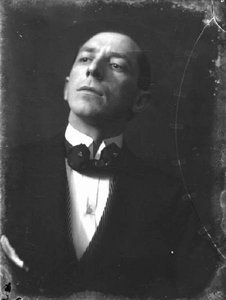
Umberto Boccioni
1882 - 1916 , Włochy
Krótka nota
- Artistic Movement Or Style: Futurismo
- Artists Or Movements Influenced By This Artist:
- Konstrukcjonizm
- Ekspresionizm abstrakcyjny
- Artists Who Influenced This Artist:
- Giacomo Balla
- Cubismo
- Date Of Birth: 1882-10-19
- Date Of Death: 1916-08-17
- Full Name: Umberto Boccioni
- Nationality: Włoski
- Notable Artworks:
- Dynamizm ciała ludzkiego
- Formy ciągłości w przestrzeni
- Miasto rośnie
- Place Of Birth: Reggio Calabria, Italia

