 Przełącz na wydania drukowane
 Rozwiń treść







































 W przypadku dzieł sztuki lub reprodukcji, których którykolwiek z boków przekracza 105 cm (około 41 cali), rama zostanie wysłana w formie zestawu do samodzielnego montażu. Metoda ta zapewnia bezpieczną dostawę i zapobiega uszkodzeniom podczas transportu.


A Vision of Japan's Founding Myth
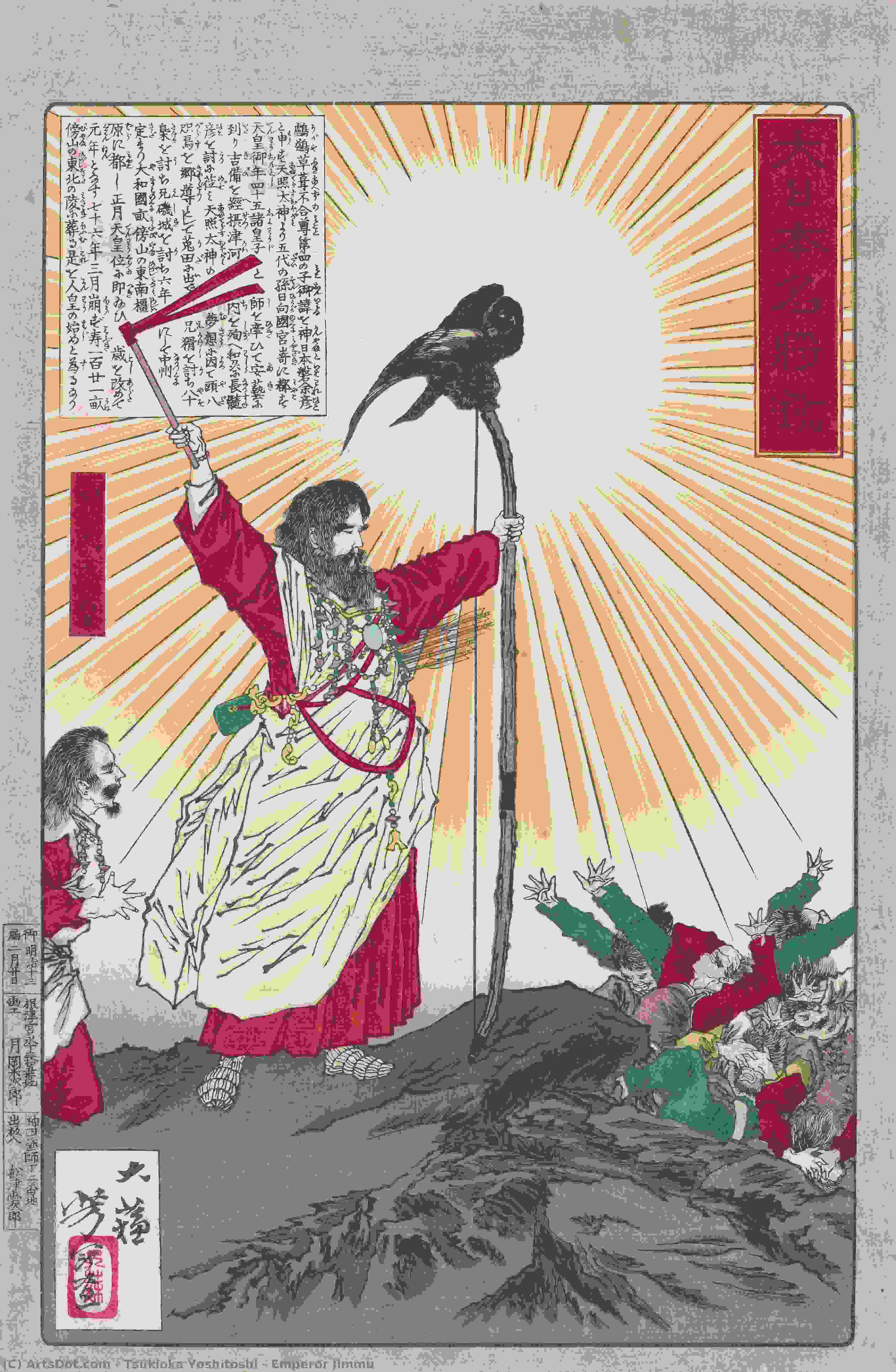
Tsukioka Yoshitoshi, a luminary of Japan’s Edo period (1603-1868), transcends mere artistic representation; he crafts narratives that breathe life into history. “Emperor Jimmu,” showcased as a meticulously crafted oil reproduction on OriginalUniqueArt.com, isn’t simply a depiction of legend—it's an embodiment of Japan’s enduring spirit and Yoshitoshi’s unparalleled artistic vision.
The Ukiyo-e Legacy: Innovation Within Tradition
Yoshitoshi stands as the final bastion of *ukiyo-e*, a movement that revolutionized Japanese art between the 17th and 19th centuries. Unlike its predecessors, which often adhered to strict conventions, *ukiyo-e* embraced dynamism and experimentation—traits vividly captured in prints like “One Hundred Aspects of the Moon” and “The Great Wave Off Kanagawa.” Yoshitoshi’s approach mirrored this ethos; he skillfully blended traditional woodblock printing techniques with groundbreaking stylistic elements, resulting in images that pulsed with energy and emotion.
A Portrait of Mythic Leadership
"Emperor Jimmu" portrays the revered first emperor of Japan—a figure steeped in folklore and considered to be divine. Yoshitoshi’s masterful composition depicts Jimmu standing atop a hill, accompanied by a bird symbolizing wisdom and guidance. The scene is rich with symbolism: Jimmu's posture exudes authority, mirroring the regal bearing of Buddhist saints; his hand firmly grasps a bow adorned with a golden crow—a creature revered for its association with imperial power and divine protection.
Technique and Artistic Influence
Yoshitoshi’s artistic prowess shone through in his meticulous attention to detail. He employed vibrant colors, achieved through layering pigments onto woodblocks, creating textures that convey depth and realism. Furthermore, he skillfully manipulated perspective—a technique rarely explored in earlier *ukiyo-e*—to heighten the dramatic impact of the scene. This innovative approach profoundly influenced subsequent artists, establishing Yoshitoshi as a pivotal figure in Japanese art history.
Beyond Reproduction: Capturing Essence
While this oil reproduction offers a tangible connection to Yoshitoshi’s masterpiece, it's crucial to recognize that true appreciation lies in understanding the artwork’s underlying narrative and emotional resonance. “Emperor Jimmu” transcends mere visual beauty; it encapsulates Japan’s foundational myth—a tale of courage, divine intervention, and the establishment of a glorious kingdom. Like Yoshitoshi’s other celebrated works – including "First Law Enforcer Torii Sun" – this painting invites contemplation on themes of leadership, spirituality, and the enduring power of storytelling.
Pytania i odpowiedzi
Jak bardzo znane jest dzieło "Emperor Jimmu" autorstwa Tsukioka Yoshitoshi?
Poziom popularności dzieła „Emperor Jimmu” – Tsukioka Yoshitoshi określany jest jako Ikoniczne. Klasyfikacja ta odzwierciedla stopień rozpoznawalności tego dzieła.
Czy „Emperor Jimmu” – Tsukioka Yoshitoshi należy do najbardziej pożądanych dzieł w nurcie Ukiyo-e Art Movement?
„Emperor Jimmu” figuruje w katalogu jako dzieło o Ikoniczne wśród prac należących do nurtu Ukiyo-e Art Movement.
Gdzie mogę obejrzeć „Emperor Jimmu” – Tsukioka Yoshitoshi w formie pokazu slajdów?
Dzieło „Emperor Jimmu” – Tsukioka Yoshitoshi można obejrzeć w formie pokazu slajdów na stronie Prezentacja slajdów danego dzieła.
 Podgląd w skali 1:1
 Wyślij jako kartkę
 Udostępnij
 Szczegóły dzieła
 Przewodnik

 Pobierz obraz
 Podobne obiekty
 RTG
RTG Pokaz slajdów
 Q&A
Q&A Statystyki