
 Podgląd w skali 1:1
 Wyślij jako kartkę
 Udostępnij
 Szczegóły dzieła
 Przewodnik

 Pobierz obraz
 Podobne obiekty
 RTG
RTG Pokaz slajdów
 Q&A
Q&A Statystyki
The Birch Grove, Autumn


 Rozwiń treść
Giclée / Wydruk artystyczny
Wydruki giclée lub płótna o jakości muzealnej, szybka realizacja i szeroki wybór opcji wykończenia. ( Zamów ręcznie malowaną reprodukcję Przejdź do wersji cyfrowej)




P118B zł10

P118H zł10

P118W zł10

P438Z zł10

P508JH zł12

P508YH zł12

P805H zł10

P805Z zł10

P919BZ zł10

P919G zł10

P919XJ zł10

P959ZH zł10

P968JZ zł12

W106C zł8

W218G zł10

W218JH zł8

W218Y zł10

W307PJ zł10

W316G zł10

W316PJ zł8

W316Y zł10

W398PJ zł8

W4111J zł10

W500HY zł15

W500JH zł15

W692G zł12

W849H zł8

W940BG zł15

W953PJ zł8




Wybierz spośród naszych standardowych rozmiarów, które zachowują oryginalne proporcje dzieła sztuki.

Wpisz wymaganą szerokość i wysokość, aby dopasować grafikę do ramy lub ściany. Wydruk można jedynie przyciąć, nigdy nie powiększając go poza oryginalny obraz, dlatego format o innych proporcjach spowoduje utratę części kompozycji. Przed rozpoczęciem druku prześlemy Ci cyfrowy podgląd do zatwierdzenia. Obraz wyświetlany na tej stronie nie pokazuje rzeczywistego przycięcia — jedynie podgląd oddaje ten efekt.
Dostawa na cały świat () w ciągu 2 tygodni zamiast standardowych 4/5 tygodni. (1 Listopad)

Bezpłatna ekspresowa wysyłka na cały świat

Wysokiej jakości płótno lniane

Pełne ubezpieczenie przesyłki

Gwarancja zwrotu należności celnych i podatków importowych

Gwarancja wiernego odwzorowania kolorów

100-dniowa polityka zwrotów (tylko w przypadku wad)

Gwarancja 100% zwrotu pieniędzy

Zniżka przy zakupie wielu sztuk
 Opcja ze szkłem jest dostępna wyłącznie w rozmiarach poniżej 110 cm

The Birch Grove, Autumn
Giclée / Wydruk artystyczny
Wymiary reprodukcji
-


Cena całkowita
zł 311
A Symphony of Autumnal Resilience
In the quiet, transformative moments of the Canadian wilderness, few works capture the ephemeral beauty of the changing seasons as poignantly as Tom Thomson’s “The Birch Grove, Autumn.” Created in 1916, this masterpiece serves as a breathtaking window into the soul of Ontario's boreal forests. The painting presents a quintessential autumnal landscape, where a grove of birch trees stands bathed in a soft, diffused light against the backdrop of a rolling, textured hillside. Thomson masterfully employs diagonal lines—formed by the gentle slope of the earth and the rhythmic arrangement of the trunks—to guide the viewer’s gaze deep into the heart of the scene, establishing a dynamic visual movement that feels both grounded and alive.
The technique employed in this work is nothing short of visceral. Thomson, a precursor to the legendary Group of Seven, utilized thick impasto strokes to build a tactile, sculptural surface upon the canvas. This heavy application of oil paint does more than merely depict texture; it conveys a palpable sense of vitality and motion. The artist’s hand is visible in every energetic sweep of the brush, where bold patches of warm orange and burnt sienna on the hillside clash beautifully against the cool, muted blues of an overcast sky. This interplay of temperature and light creates a sophisticated color harmony that breathes life into the simplified, almost primitive forms of the birch branches.
Symbolism and the Spirit of the North
Beyond its surface-level beauty, “The Birch Grove, Autumn” is steeped in profound symbolism. The stark, white trunks of the birch trees act as a visual metaphor for resilience and endurance, standing firm amidst the inevitable decay of the falling leaves. As the seasons transition, so too does the emotional weight of the painting; the warm, golden hues evoke a sense of nostalgic contemplation, while the bare branches hint at the approaching dormancy of winter. Thomson’s ability to translate the psychological impact of nature into pigment allows the viewer to experience the landscape not just as a physical place, but as an emotional state.
For the discerning collector or interior designer, this artwork offers a unique opportunity to introduce a sense of tranquil drama into a living space. The painting’s ability to balance heavy texture with a serene subject matter makes it a versatile centerpiece for high-end decor. Whether placed in a sunlit gallery or a sophisticated study, a high-quality reproduction of this work brings with it the rugged, romantic spirit of the Canadian North. It is an invitation to pause, to reflect on the cycles of nature, and to find beauty in the strength found within transition.
Pytania i odpowiedzi
W jaki sposób tematyka dzieła "The Birch Grove, Autumn" odnosi się do typowych motywów twórczości Tom Thomson?
Wśród motywów charakterystycznych dla twórczości Tom Thomson – takich jak group of seven influence, canadian wilderness beauty, early 20th-century landscape, thomson's signature style, nature's resilience & change, ontario's autumnal spirit, key work in artist corpus, precursor to abstract art – dzieło „The Birch Grove, Autumn” wprowadza własne skupienie na autumn landscape, birch trees, canadian art, group of seven, nature painting, impasto texture, seasonal colors, ontario forest.
W którym roku powstało dzieło "The Birch Grove, Autumn"?
Powstanie „The Birch Grove, Autumn” – Tom Thomson datuje się na 1916.
Czy „The Birch Grove, Autumn” – Tom Thomson znajduje się w domenie publicznej?
„The Birch Grove, Autumn” – Tom Thomson znajduje się w domenie publicznej (należy do domeny publicznej – autorskie prawa majątkowe wygasły). Status ten określa zasady reprodukcji obrazu tego dzieła.
Biografia artysty
A Pioneer of the Canadian Wilderness
Thomas John Thomson, affectionately known simply as Tom Thomson to generations of Canadians, remains a pivotal and somewhat enigmatic figure in the nation’s artistic heritage. Though his active career spanned only a handful of years – tragically cut short at the age of thirty-nine – he indelibly shaped the course of Canadian art, acting as a crucial precursor to the renowned Group of Seven and leaving behind a legacy of evocative landscapes that continue to resonate deeply with audiences today. His story is one of late blossoming, of a restless spirit finding its voice in the untamed beauty of Ontario’s wilderness, and of an enduring mystery surrounding his untimely death.From Rural Beginnings to Artistic Awakening
Born August 5, 1877, in Claremont, Ontario, Thomson's early life was deeply rooted in the rhythms of rural existence. He grew up as one of ten children within a farming family – an upbringing that instilled within him a profound and enduring connection to the natural world. This wasn’t initially expressed through artistic pursuits; his formal education was intermittent, punctuated by periods of illness and practical necessity. Before dedicating himself fully to art, Thomson explored various trades: he worked at an iron foundry, briefly attended business college, and even ventured west to Seattle where he honed his skills as a commercial artist – working for firms like Maring & Ladd. This period proved formative; it wasn’t merely about acquiring technical proficiency in penmanship and design – essential skills for the time – but also about encountering individuals who would later become central figures in the burgeoning Canadian art scene – J.E.H. MacDonald and Lawren Harris among them. These connections provided a crucial intellectual and artistic environment that nurtured his latent talent, exposing him to new ideas and approaches to landscape painting. However, it was the discovery of Algonquin Park in 1912 that truly ignited Thomson’s artistic passion. Guided by MacDonald's encouragement – who recognized Thomson’s potential and urged him to focus on capturing the park’s breathtaking vistas – he began to sketch the park’s majestic landscapes, embarking on a journey of self-discovery through landscape painting.The Evolution of a Distinctive Style
Thomson’s early paintings reveal a promising but unrefined talent. While demonstrating an understanding of composition and color—elements learned during his time as a commercial artist – they lacked the distinctive voice that would come to define his mature work. He initially employed techniques more aligned with traditional landscape painting, often striving for meticulous detail and realistic representation. However, over time, his style underwent a dramatic transformation. This wasn’t a sudden shift, but rather a gradual evolution driven by observation and experimentation. He moved away from conventional academic approaches, embracing a bolder, more expressive approach characterized by vivid colors – often intensely saturated blues and greens – thickly applied paint (*impasto*), and dynamic brushstrokes. These weren't merely representations of the landscape; they were visceral interpretations, conveying the energy, atmosphere, and emotional intensity of the Canadian wilderness. He wasn’t simply painting what he *saw*; he was capturing how it *felt* to be immersed in that environment – the cool dampness of a forest floor, the vastness of an open sky, the shimmering light on a lake. His subject matter remained almost exclusively landscapes: towering pines and birches, expansive skies filled with clouds, shimmering lakes reflecting the sunlight, winding rivers carving their way through the terrain, and the subtle nuances of light and shadow across the landscape at different times of day. He captured not just the visual elements but also the *mood* and *feeling* associated with each scene. This ability to infuse his paintings with a sense of immediacy and emotional resonance – a feeling of being present in the moment – set him apart from his contemporaries.Influences and Artistic Connections
Thomson’s artistic development was profoundly shaped by several key influences. J.E.H. MacDonald, a seasoned landscape painter and mentor, played a crucial role in guiding Thomson towards a more expressive style. MacDonald encouraged Thomson to focus on capturing the *spirit* of the Canadian wilderness rather than simply replicating its appearance. The influence of European Impressionists – particularly Monet and Pissarro – is also evident in Thomson’s use of color and light. He adopted their techniques for depicting atmospheric effects, such as the dappled sunlight filtering through trees or the hazy quality of a distant landscape. Furthermore, Thomson's time working alongside Lawren Harris—another key member of the Group of Seven—provided him with valuable insights into Canadian wilderness art. Harris’s emphasis on capturing the rugged beauty and solitude of the northern landscapes undoubtedly influenced Thomson’s own artistic vision. It is important to note that while Thomson was a significant influence on the Group of Seven, he never formally joined the group, which formed after his death.Legacy and Lasting Influence
Paintings like The Jack Pine (1916), *The West Wind* (1917), *Moonlight Sail* (1916), and *Birch Grove, Autumn* (1917) have become iconic representations of Canadian identity and the nation’s natural beauty. These works are not merely landscapes; they are powerful symbols of Canada's wilderness and national character. They were among his most celebrated pieces, capturing the essence of the Canadian landscape with a unique blend of realism and emotional intensity. Though he died in July 1917 under mysterious circumstances – drowning in Canoe Lake – his legacy continues to grow. His works are primarily held in major Canadian institutions such as the Art Gallery of Ontario, the National Gallery of Canada, the McMichael Canadian Art Collection, and the Tom Thomson Art Gallery, ensuring that his vision continues to inspire and captivate audiences for generations to come. He stands as a testament to the power of artistic expression to capture the essence of a nation’s soul – a true icon of Canadian art history.A Lasting Symbol
Thomson is rightfully recognized as a pioneer of Canadian modern art, breaking away from European traditions and forging a uniquely Canadian aesthetic. His paintings are more than just landscapes; they are powerful symbols of Canada's wilderness and national identity. The enduring popularity of his work speaks to its timeless quality and universal appeal. He didn’t simply paint what he *saw*; he painted how it *felt* to be Canadian, to be connected to the vastness and beauty of the northern landscape. His story – a blend of rural upbringing, artistic awakening, and tragic death – continues to fascinate and inspire, solidifying his position as one of Canada’s most beloved and important artists.
Tom Thomson
1877 - 1917 , Kanada
Krótka nota
- Artistic Movement Or Style: Kanadyjska nowoczesność
- Artists Or Movements Influenced By This Artist: ['Grupa Siedmiu']
- Artists Who Influenced This Artist:
- J.E.H. MacDonald
- Lawren Harris
- Date Of Birth: 5 sierpnia 1877
- Date Of Death: 8 lipca 1917
- Full Name: Thomas John Thomson
- Nationality: Kanadyjski
- Notable Artworks:
- Sosna Banksa
- Wiatr Zachodni
- Żyglowiec Księżycowy
- Place Of Birth: Claremont, Kanada
Powiązane artykuły
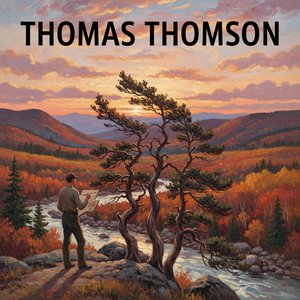
Thomas Thomson: Pioneering Canadian Landscape & the Pursuit of National Identity
Explore the evocative landscapes of Tom Thomson, a pivotal figure in Canadian art & precursor to the Group of Seven. Discover his bold style, lasting legacy, and profound impact on shaping a national artistic identity.

Romantyczny Krajobraz w Malarstwie: 10 Arcydzieł, Które Zdefiniowały Epokę | OriginalUniqueArt.com
Odkryj 10 arcydzieł romantyzmu w malarstwie! Poznaj historie Caspara Davida Friedricha, Turnera i innych mistrzów. Inspiracje wnętrzarskie & reprodukcje obrazów najwyższej jakości na OriginalUniqueArt.com. Eksploruj kolekcję online!

Arthur Lismer: A Pioneer of Canadian Modernism & the Group of Seven's Visionary Spirit
Explore the life & art of Arthur Lismer, a pivotal figure in Canadian Modernism and founding member of the Group of Seven. Discover his landscapes, teaching legacy & lasting influence on Canadian art history.

Evocations of Place: A Historical Journey Through Landscape Art
Explore the rich history of landscape art with OriginalUniqueArt. Discover renowned artists, movements like Impressionism & Romanticism, and expert guidance for collecting timeless pieces. Find your perfect serene escape today!

John Constable: 25 Najlepszych Obrazów Mistrza Angielskiego Krajobrazu | OriginalUniqueArt
Odkryj 25 arcydzieł Johna Constable'a – mistrza angielskiego krajobrazu! Poznaj romantyczne pejzaże, technikę malarską i inspiracje z Dedham Vale. Reprodukcje obrazów najwyższej jakości na OriginalUniqueArt.com. Eksploruj pełną kolekcję online!