

 Podgląd w skali 1:1
 Wyślij jako kartkę
 Udostępnij
 Szczegóły dzieła
 Przewodnik

 Pobierz obraz
 Podobne obiekty
 RTG
RTG Pokaz slajdów
 Q&A
Q&A Statystyki
The Way They Live


 Rozwiń treść
Giclée / Wydruk artystyczny
Wydruki giclée lub płótna o jakości muzealnej, szybka realizacja i szeroki wybór opcji wykończenia. ( Zamów ręcznie malowaną reprodukcję Przejdź do wersji cyfrowej)




P118B zł10

P118H zł10

P118W zł10

P438Z zł10

P508JH zł12

P508YH zł12

P805H zł10

P805Z zł10

P919BZ zł10

P919G zł10

P919XJ zł10

P959ZH zł10

P968JZ zł12

W106C zł8

W218G zł10

W218JH zł8

W218Y zł10

W307PJ zł10

W316G zł10

W316PJ zł8

W316Y zł10

W398PJ zł8

W4111J zł10

W500HY zł15

W500JH zł15

W692G zł12

W849H zł8

W940BG zł15

W953PJ zł8




Wybierz spośród naszych standardowych rozmiarów, które zachowują oryginalne proporcje dzieła sztuki.

Wpisz wymaganą szerokość i wysokość, aby dopasować grafikę do ramy lub ściany. Wydruk można jedynie przyciąć, nigdy nie powiększając go poza oryginalny obraz, dlatego format o innych proporcjach spowoduje utratę części kompozycji. Przed rozpoczęciem druku prześlemy Ci cyfrowy podgląd do zatwierdzenia. Obraz wyświetlany na tej stronie nie pokazuje rzeczywistego przycięcia — jedynie podgląd oddaje ten efekt.
Dostawa na cały świat () w ciągu 2 tygodni zamiast standardowych 4/5 tygodni. (31 Październik)

Bezpłatna ekspresowa wysyłka na cały świat

Wysokiej jakości płótno lniane

Pełne ubezpieczenie przesyłki

Gwarancja zwrotu należności celnych i podatków importowych

Gwarancja wiernego odwzorowania kolorów

100-dniowa polityka zwrotów (tylko w przypadku wad)

Gwarancja 100% zwrotu pieniędzy

Zniżka przy zakupie wielu sztuk
 Opcja ze szkłem jest dostępna wyłącznie w rozmiarach poniżej 110 cm

The Way They Live
Giclée / Wydruk artystyczny
Wymiary reprodukcji
-


Cena całkowita
zł 311
A Window into the Soul of American Realism
In the quiet, sun-dappled corners of 1879, Thomas Pollock Anshutz captured more than just a moment; he immortalized a way of life. The Way They Live serves as a profound testament to the burgeoning American Realism movement, a period when artists began to turn their gaze away from the grand, idealized myths of the Old World and toward the unvarnished, beautiful truths of their own soil. Through this evocative oil on canvas, Anshutz invites us into a peaceful, rural sanctuary where the rhythm of daily existence is dictated by the seasons and the simple necessities of the earth. The scene, featuring a woman tending to her garden alongside two children, resonates with a sense of grounded permanence that is both deeply moving and visually soothing.
The composition is masterfully balanced, guiding the viewer’s eye through a narrative of domestic harmony. As we observe the woman engaged in her horticultural labors, surrounded by the lush textures of potted plants and the sturdy presence of a horse nearby, we feel the weight of a life lived in connection with nature. Anshultz utilizes a muted, earthy palette that reflects the organic reality of the setting, avoiding any garishness that might disrupt the painting's inherent tranquility. The technique is characterized by a remarkable precision—a hallmark of his training under the legendary Thomas Eakins—where every brushstroke contributes to a palpable sense of atmosphere and light.
The Art of Honest Observation
To look upon this work is to experience the philosophical shift that defined Anshutz’s career. Influenced by the rigorous academic traditions of the National Academy of Design and the unflinching honesty of Eakins, Anshutz rejected the romanticized tropes of his era in favor of tangible realities. In The Way They Live, there is no staged drama or theatrical lighting; instead, there is the soft glow of a working afternoon and the quiet dignity of labor. This commitment to truth makes the piece particularly compelling for the modern collector, as it offers an authentic glimpse into a vanished era of American simplicity.
For the interior designer or art enthusiast, this painting offers a versatile emotional anchor. Its understated elegance and classical composition allow it to integrate seamlessly into a variety of sophisticated spaces, from a traditional study filled with leather-bound books to a contemporary living room seeking a touch of historical warmth. The artwork does not merely decorate a wall; it provides a contemplative focal point that encourages stillness. It is a piece that speaks of heritage, resilience, and the enduring beauty found in the most ordinary of human endeavors.
Investing in a high-quality reproduction of this masterpiece means bringing a fragment of American history into your personal environment. The subtle interplay of light on the garden foliage and the tender, silent interaction between the figures create an emotional resonance that lingers long after the first viewing. It is an invitation to slow down, to breathe, and to appreciate the profound grace found in the way we live our lives.
Pytania i odpowiedzi
W jaki sposób „The Way They Live” – Thomas Pollock Anshutz łączy Contemporary Realism z krajem pochodzenia artysty?
Dzieło z nurtu Contemporary Realism, zatytułowane "The Way They Live", zostało stworzone przez artystę urodzonego w Stany Zjednoczone Ameryki Północnej.
Jaki to rodzaj dzieła sztuki: „The Way They Live” – Thomas Pollock Anshutz?
"The Way They Live" to WallArt.
Dla kogo "The Way They Live" jest polecane jako prezent i do jakiego zastosowania?
Rekomendacja prezentowa dla „The Way They Live” – Thomas Pollock Anshutz łączy w sobie Mother's Day z Accent.
Biografia artysty
A Life Dedicated to Realism: The World of Thomas Pollock Anshutz
Thomas Pollock Anshutz, born in Newport News, Virginia, on October 5th, 1851, and passing away in Philadelphia on July 16th, 1912, stands as a monumental figure in the evolution of American realism. His artistic journey wasn’t merely one of depicting scenes; it was a profound engagement with the realities of his time – the burgeoning industrial landscape, the lives of working-class individuals, and the evolving role of photography within the art world. Anshutz's early years were marked by formal training at the National Academy of Design in New York City, under the tutelage of Lemuel Wilmarth, providing him with a foundational understanding of academic techniques. However, it was his relocation to Philadelphia in 1875 and subsequent mentorship under Thomas Eakins at the Philadelphia Sketch Club that truly ignited his artistic spirit and shaped his distinctive approach. This relationship wasn’t simply one of instruction; it represented a philosophical alignment – a shared belief in observing the world with unflinching honesty, stripping away romanticized notions and focusing on tangible truths. Eakins' influence extended beyond stylistic considerations, instilling in Anshutz a commitment to capturing the essence of everyday life, a principle that would become central to his artistic identity.The Shaping of a Style: Influences and Artistic Development
Anshutz’s artistic development was a complex tapestry woven from diverse threads. Undoubtedly, Thomas Eakins remained his most significant mentor, not only imparting technical skills but also shaping his worldview. The realist movement itself provided fertile ground for Anshutz's burgeoning talent, rejecting the idealized representations prevalent in academic art and embracing a commitment to portraying subjects as they truly appeared – with all their imperfections and complexities. During this period, photography played an increasingly vital role in Anshutz’s artistic process. Eakins’ innovative approach of incorporating photographic studies into his teaching practice profoundly influenced Anshutz, who readily adopted this method as a valuable tool for capturing accurate details and compositions. This wasn't merely about copying photographs; it was about using them to enhance observation and understanding – a crucial element in his pursuit of realism. A memorable honeymoon trip to Paris in 1892 exposed him to European art trends at the Académie Julian, yet this experience ultimately reinforced his dedication to American realism rather than leading him down an alternative path. He absorbed what he could from the European masters, but remained steadfast in his commitment to portraying American life with authenticity and a distinctly American perspective. This period witnessed Anshutz refining his skills in both portraiture and landscape painting, while simultaneously grappling with the social realities of industrializing America – themes that would become recurring motifs in his most impactful works.Landscapes of Labor and Leisure: Major Works
While Anshutz achieved recognition across various genres, he is perhaps best known for Ironworkers' Noontime (1880), a painting now residing in the collection of the Fine Arts Museums of San Francisco. This powerful work offers a stark and compelling portrayal of industrial laborers during their brief midday break – a scene far removed from romanticized depictions of labor. It’s not a celebration of manual strength; instead, it presents a raw, unvarnished glimpse into the lives of these workers, highlighting both their physical resilience and their evident weariness. The painting is imbued with a sense of quiet dignity amidst hardship, capturing a moment of respite within a demanding existence. Beyond this iconic work, Anshutz participated in Eakins’ controversial photographic studies of nude models – an unusual undertaking that demonstrated his willingness to push artistic boundaries and explore unconventional practices. He also found solace and inspiration in the landscapes of Holly Beach, New Jersey, where he experimented with watercolors and a brighter palette, hinting at an emerging Impressionistic sensibility. His skill as a portraitist was equally notable, earning him numerous awards for his realistic depictions of individuals – capturing not just their likeness but also something of their inner character. Mrs. Anshutz and Her Son Edward exemplifies this intimate approach to portraiture, revealing the tender bond between mother and child with remarkable sensitivity and detail. St. Cloud near Paris showcases his watercolor skills and a lighter touch, demonstrating his versatility as an artist and his ability to adapt his style to different subjects and mediums.A Legacy in Education: The Darby School and Beyond
Anshutz’s influence extended far beyond his own artistic creations; he became a highly respected educator, shaping the next generation of American artists. He held various teaching positions at the Pennsylvania Academy of Fine Arts, eventually succeeding Eakins as chief demonstrator – a position that allowed him to directly impart his knowledge and philosophy to aspiring artists. However, it was the co-founding of The Darby School in 1898, alongside Hugh Breckenridge, that cemented his legacy as an educator. This summer art school emphasized plein air painting and fostered artistic experimentation, attracting a remarkable cohort of students who would go on to become leading figures in American modernism. Among them were George Luks, Charles Demuth, John Sloan, Charles Sheeler, Everett Shinn, John Marin, William Glackens, and Robert Henri – a veritable who’s who of early 20th-century American art. Anshutz was known for his approachable yet subtly sarcastic teaching style, encouraging students to observe closely, develop their own artistic voices, and embrace the challenges of representing the world around them with honesty and integrity. He believed in fostering individual expression while grounding it in rigorous technical skill – a philosophy that profoundly impacted his students’ artistic trajectories.A Pioneer Remembered: Historical Significance
Thomas Pollock Anshutz stands as a true pioneer of American realism. His work played a crucial role in establishing and promoting this movement, challenging conventional artistic norms and paving the way for a more authentic and socially conscious art landscape. He wasn't simply documenting what he saw; his paintings often carried social commentary, addressing issues such as industrialization and labor conditions – prompting viewers to confront the realities of their time. Anshutz’s dedication to truthfulness, his mastery of technique, and his commitment to education have secured his place as a significant figure in American art history – an artist whose legacy continues to inspire and resonate today. He remains a vital link between the traditions of 19th-century realism and the innovations of early 20th-century modernism, a testament to his enduring artistic vision.
Thomas Pollock Anshutz
1851 - 1912 , Stany Zjednoczone Ameryki Północnej
Krótka nota
- Artistic Movement Or Style: Realizm
- Artists Or Movements Influenced By This Artist: ['Early American Modernism']
- Artists Who Influenced This Artist: ['Thomas Eakins']
- Date Of Birth: 1851
- Date Of Death: 1912
- Full Name: Thomas Pollock Anshutz
- Nationality: Amerykański
- Notable Artworks:
- Ironworkers' Noontime
- Mrs. Anshutz i jej syn Edward
- Place Of Birth: Newport News, USA
Powiązane artykuły
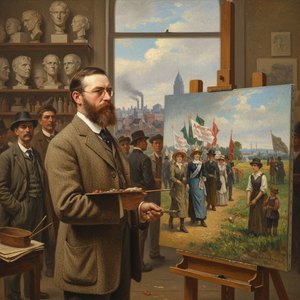
Thomas Pollock Anshutz: Capturing American Life with Realism & Reform
Explore the life & work of Thomas Pollock Anshutz, a key figure in American Realism. Discover his powerful paintings, influence on art education, and commitment to portraying everyday life with honesty and social awareness.

Grant Wood & American Regionalism: Identity, Myth & the Rural Landscape
Explore the world of Grant Wood & American Regionalism with OriginalUniqueArt. Discover the symbolism behind 'American Gothic', recurring themes, and the movement's lasting impact on art history. High-quality reproductions available.
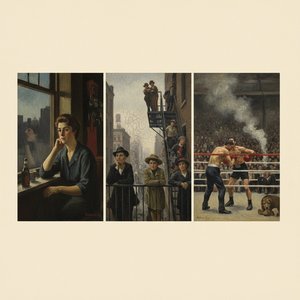
Amerykański Realizm: Społeczny Komentarz i Artystyczna Reprezentacja Początku XX Wieku
Odkryj amerykański realizm! Poznaj historie mistrzów i ich arcydzieła odzwierciedlające życie codzienne, pracę i zmieniającą się Amerykę. Inspiracje do Twojego wnętrza na OriginalUniqueArt.com.

Amerykański Realizm: 10 Arcydzieł, Które Zdefiniowały Epokę | OriginalUniqueArt
Poznaj 10 arcydzieł amerykańskiego realizmu! Odkryj historie Winslowa Homera, Edwarda Hoppera i innych mistrzów. Reprodukcje obrazów najwyższej jakości – inspiracje do Twojego wnętrza na OriginalUniqueArt.com
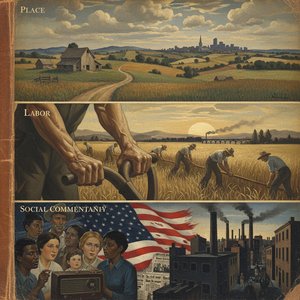
Amerykański Regionalizm: Studium Tożsamości w Obrazach Pracy, Miejsca i Krytyki Społecznej
Poznaj fascynujący świat amerykańskiego regionalizmu! Analiza kluczowych artystów, wpływ Wielkiego Kryzysu na sztukę i symbolika krajobrazu. Ekspercka analiza dla miłośników historii sztuki.