

 Zobacz w skali 1:1
 Wyślij
 Udostępnij
 Szczegóły
 Przewodnik

 Pobierz plik obrazu
 Podobne obiekty
 RTG
RTG Pokaz slajdów
 Statystyki
Grand Canyon


 Czytaj więcej
Giclée / Wydruk artystyczny
Wydruki giclée lub płótna o jakości muzealnej, szybka realizacja i szeroki wybór opcji wykończenia. ( Kup ręcznie malowany obraz Przełącz na wersję cyfrową)




P118B zł10

P118H zł10

P118W zł10

P438Z zł10

P508JH zł12

P508YH zł12

P805H zł10

P805Z zł10

P919BZ zł10

P919G zł10

P919XJ zł10

P959ZH zł10

P968JZ zł12

W106C zł8

W218G zł10

W218JH zł8

W218Y zł10

W307PJ zł10

W316G zł10

W316PJ zł8

W316Y zł10

W398PJ zł8

W4111J zł10

W500HY zł15

W500JH zł15

W692G zł12

W849H zł8

W940BG zł15

W953PJ zł8




Wybierz spośród naszych standardowych rozmiarów, które zachowują oryginalne proporcje dzieła sztuki.

Wpisz wymaganą szerokość i wysokość, aby dopasować grafikę do ramy lub ściany. Wydruk można jedynie przyciąć, nigdy nie powiększając go poza oryginalny obraz, dlatego format o innym proporcji spowoduje utratę części kompozycji. Przed rozpoczęciem druku prześlemy Ci cyfrowy podgląd do zatwierdzenia. Obraz wyświetlany na tej stronie nie pokazuje rzeczywistego przycięcia — jedynie podgląd oddaje ten efekt.
Dostawa na cały świat () w ciągu 2 tygodni zamiast standardowych 4/5 tygodni. (23 Październik)

Bezpłatna ekspresowa wysyłka na cały świat

Wysokiej jakości płótno lniane

Pełne ubezpieczenie transportowe

Gwarancja zwrotu należności celnych i podatków importowych

Gwarancja idealnego odwzorowania barw

100-dniowy okres na zwrot dzieła w przypadku wykrycia wad produkcyjnych

Gwarancja 100% zwrotu pieniędzy

Oferta przy zakupie wielu sztuk
 Opcja ze szkłem jest dostępna wyłącznie w rozmiarach poniżej 110 cm

Grand Canyon
Giclée / Wydruk artystyczny
Rozmiar reprodukcji
-


Suma do zapłaty
zł 307
A Symphony in Stone and Sky
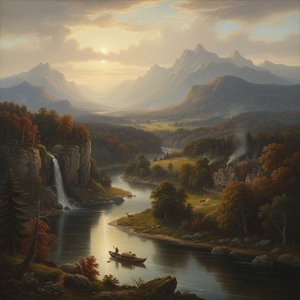
To gaze upon Thomas Moran’s 1912 masterpiece, Grand Canyon, is to step into the very heart of the American Romantic spirit. This is not merely a geological record of one of Earth's most profound chasms; it is an evocative embodiment of the sublime, designed to stir the deepest recesses of the human soul. As a prominent figure of the Hudson River School, Moran possessed a rare ability to translate the untamed wilderness into a visual language of awe and reverence. In this oil on canvas, the artist transcends simple representation, striving instead to capture the ephemeral essence of light, atmosphere, and the overwhelming majesty of the American West.
The painting serves as a breathtaking window into a landscape where the earth meets the heavens in a dramatic embrace. Through a masterful use of diagonal perspective, Moran draws the viewer’s eye upward, navigating through textured foreground rocks and lush foliage toward the dizzying heights of the canyon walls. This compositional choice is deeply intentional, reinforcing a sense of human insignificance when confronted with such monumental natural power. The interplay of light and shadow creates a palpable sense of depth, as if one could reach out and feel the cooling mist rising from the depths or the warmth of the sun breaking through a turbulent sky.
The Mastery of Light and Color
Moran’s technical prowess is most evident in his exquisite handling of color and light, a hallmark of his reputation as an unparalleled colorist. He employs a sophisticated technique of layering thin glazes of oil paint, a method that allows light to penetrate the surface and glow from within, creating a luminous, ethereal effect. The palette is a study in contrasts: warm, radiant yellows and fiery oranges illuminate the canyon's edges where sunlight pierces the clouds, while cooler blues, deep grays, and muted violets dominate the distant, receding peaks. This atmospheric perspective does more than create distance; it evokes the very breath of the continent.
The brushwork further enhances this sensory experience. While the foreground features textured, vigorous strokes that ground the viewer in the rugged reality of the terrain, the background transitions into smoother, softer applications that suggest the hazy, moisture-laden air of a storm passing over the mountains. This meticulous attention to detail—from the jagged edges of ancient stone to the soft, billowing clouds—ensures that the painting remains a visceral experience, inviting the observer to participate in the drama of the landscape.
A Timeless Legacy for the Discerning Collector
For the art lover, the collector, or the interior designer, a high-quality reproduction of this work offers more than mere decoration; it provides an emotional anchor for a space. The Grand Canyon by Thomas Moran carries with it a sense of historical grandeur and a profound connection to the American identity. Its scale and dramatic movement make it a commanding centerpiece, capable of transforming a room into a sanctuary of contemplation and wonder.
Whether placed in a sophisticated gallery setting or integrated into a curated residential interior, this painting brings the spirit of exploration and the beauty of the untamed world into the home. It remains a testament to a period when art sought to bridge the gap between the seen and the felt, making it an enduring choice for those who seek to surround themselves with works that possess both historical significance and an everlasting emotional resonance.
Pytania i odpowiedzi
Do jakiego stylu należy "Grand Canyon"?
„Grand Canyon” to dzieło należące do nurtu Hudson River School. Nurt ten określa tradycję artystyczną, w której osadzone jest dzieło.
Jaka jest kolorystyka dzieła „Grand Canyon” autorstwa Tomasz Moran?
„Grand Canyon” charakteryzuje się paletą Earthy, w której dominuje Quinacridone Magenta (#75604c).
Jaką nasycenie i intensywność prezentuje „Grand Canyon” autorstwa Tomasz Moran?
Kolory dzieła „Grand Canyon” autorstwa Tomasz Moran wykazują Subtle Color nasycenie przy Balanced intensywności.
Biografia artysty
A Pioneer of the American West
Thomas Moran, born in Bolton, England, in 1837, wasn’t destined for a life steeped in the rugged beauty of the American landscape he would come to immortalize. His family's emigration to the United States in 1844, seeking opportunity and escaping the burgeoning industrialization of their homeland, proved pivotal. This early transatlantic journey instilled within young Moran a lifelong fascination with the sea – a theme that subtly echoed throughout his later depictions of landlocked vistas. Initially apprenticed as a wood engraver in Philadelphia, he quickly discovered his true calling lay not in replicating images but creating them. The meticulous detail demanded by engraving honed his observational skills, yet it was the burgeoning world of watercolor and the influence of artists like J.M.W. Turner that truly ignited his artistic spirit. Moran’s brother, Edward, also a marine artist, provided early collaboration and support, sharing studio space and fostering a shared dedication to their craft. This familial bond laid the foundation for a career that would redefine how America saw itself – and its western territories.The Hudson River School and Beyond
Moran’s artistic development was deeply intertwined with the Hudson River School, though he ultimately transcended its conventions. While inheriting their reverence for nature and dramatic use of light and shadow, Moran brought a unique perspective shaped by his own experiences and an evolving American identity. The Hudson River School painters often focused on taming the wilderness, presenting it as a benevolent space ripe for cultivation. Moran, however, captured the West’s untamed grandeur with a sense of awe and respect that bordered on reverence. His style blended meticulous realism with romantic idealism, creating scenes that were both visually stunning and emotionally resonant. He wasn't merely documenting landscapes; he was crafting myths – visions of a land brimming with potential and spiritual significance. The influence of Turner is undeniable in Moran’s work—the swirling skies, the atmospheric perspective, and the emphasis on light as a transformative force all bear witness to this artistic debt. Yet, Moran infused these techniques with an American sensibility, focusing on the unique geological formations and vast scale of the Western territories. His paintings weren't simply representations of place; they were statements about national pride, environmental stewardship, and the power of art to influence public opinion.Documenting a Nation’s Expansion
Moran’s career reached its zenith during a period of intense national expansion and exploration. In 1871, he joined a government-sponsored expedition to Yellowstone, an area largely unknown to most Americans. The sketches and paintings that emerged from this journey were nothing short of revelatory. His monumental canvas, *The Grand Canyon of the Yellowstone*, purchased by the U.S. government for $10,000 – a staggering sum at the time – played a crucial role in galvanizing public support for establishing Yellowstone as the nation’s first national park in 1872. This wasn't simply artistic achievement; it was an act of conservation advocacy. Moran’s art didn’t just reflect the beauty of the West, it actively shaped its preservation. He continued to document other significant landscapes, including the Colorado River and the Grand Canyon, further solidifying his reputation as the premier painter of the American West. His work became synonymous with the spirit of exploration and the promise of a new frontier.Key Works & Recognition
- The Grand Canyon of the Yellowstone (1872): A pivotal painting instrumental in establishing Yellowstone National Park.
- Chasm of the Colorado (1873-74): Showcasing the immense scale and dramatic beauty of the Grand Canyon.
- Mountain of the Saints, Jackson Hole, Wyoming (1895): Demonstrating his mastery of atmospheric perspective and light.
- Numerous sketches and watercolors documenting expeditions to Yellowstone, Colorado, and other Western territories.
Legacy and Enduring Influence
Thomas Moran’s contributions extend far beyond his breathtaking canvases. He helped to define America's visual identity, shaping how generations perceived their own landscape. His paintings weren’t just representations of place; they were statements about national pride, environmental stewardship, and the power of art to influence public opinion. His legacy continues to inspire artists today, and his works remain highly sought after by museums and collectors worldwide. The Smithsonian American Art Museum, among many others, proudly displays his masterpieces, ensuring that his vision endures for future generations. While often categorized within the Hudson River School or the Rocky Mountain School, Moran’s artistic voice was distinctly his own—a powerful blend of observation, imagination, and a deep reverence for the natural world. He passed away in Santa Barbara, California, in 1926, leaving behind a body of work that continues to captivate and inspire, reminding us of the enduring beauty and fragility of the American West.
Tomasz Moran
1837 - 1926 , Wielka Brytania
Najważniejsze informacje
- Artistic Movement Or Style: Szkoła Hudson
- Artists Or Movements Influenced By This Artist: ['Rocky Mountain School']
- Artists Who Influenced This Artist:
- Turner
- Cole
- Date Of Birth: 12 lutego 1837
- Date Of Death: 25 sierpnia 1926
- Full Name: Thomas Moran
- Nationality: Amerykański
- Notable Artworks:
- Kanion Yellowstone
- Umiarkowanie Kolorado
- Place Of Birth: Bolton, Anglia
Zobacz także powiązane artykuły
Thomas Hill: Luminosity, Landscape & the American Pastoral Ideal
Explore the luminous landscapes of Thomas Hill, a pivotal figure in the Hudson River School & Luminism movements. Discover his artistic journey, philosophical depth, and enduring legacy with OriginalUniqueArt.
Robert Spencer: Luminism, Narrative & the American Landscape Tradition
Explore the captivating world of Luminism & the Hudson River School with our expert analysis. Discover the history, artists, and enduring beauty of 19th-century American landscape painting. Find museum-quality reproductions at OriginalUniqueArt.
Sublime Krajobrazy: Narodziny Amerykańskiej Tożsamości Artystycznej i Rola Szkoły Hudson River
Odkryj fascynującą historię Szkoły Hudson River i narodziny amerykańskiej tożsamości artystycznej. Poznaj kluczowych artystów, techniki malarskie i inspiracje. Reprodukcje najwyższej jakości na OriginalUniqueArt.com!
Szkoła Rzeki Hudson: 10 arcydzieł, które ukształtowały pejzaż amerykańskiej sztuki | OriginalUniqueArt
Odkryj 10 arcydzieł Szkoły Rzeki Hudson – malarstwo krajobrazowe Cole'a, Churcha i Bierstadta. Poznaj historię artystów i inspiracje romantyzmu amerykańskiego. Reprodukcje obrazów najwyższej jakości na OriginalUniqueArt.com! Eksploruj kolekcję online.
Capturing the American Spirit: A Journey Through Iconic Landscapes and the Legacy of the Hudson River School
Explore the profound beauty of American art history. From the Hudson River School to iconic landscapes, discover a curated journey through the masterpieces that defined a nation's spirit and the enduring legacy of American Romanticism.