Rozmiar tekstu

() ·

Obraz stworzony dla Ciebie, własnoręcznie

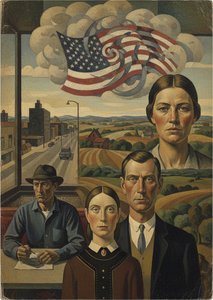
Instruments of Power

Ręcznie malowana reprodukcja olejowa

Ręcznie malowany obraz olejny na płótnie, wykonany na zamówienie przez naszych artystów w wybranym przez Ciebie wymiarze i oprawie. ( Przełącz na wydania drukowane Przejdź do wersji cyfrowej)

Opis obiektu

Thomas Hart Benton's "Instruments of Power" explodes with industrial might – trains, planes, clocks, and gears embody America’s technological drive. Explore this dynamic Regionalist masterpiece!

Biografia artysty

Thomas Hart Benton – amerykański malarz i muralista, pionier regionalizmu. Jego obrazy oddają ducha Ameryki, szczególnie jej terytorium, z dynamicznymi postaciami i patriotycznym przesłaniem.

od ·

Rozdział 1

Jak duży powinien być ten format?

Przesuń suwak, aby zmienić rozmiar; obraz po lewej stronie przedstawia ramę w jej rzeczywistej szerokości. Zachowano proporcje oryginału.

Standardowy format
personalizowane
CM
INCH

Wybierz spośród naszych standardowych rozmiarów, które zachowują oryginalne proporcje dzieła sztuki.

szerokość
wysokość

Wpisz wymaganą szerokość i wysokość, aby obraz pasował do Twojej ramy lub ściany. Ponieważ jest to dzieło malowane ręcznie, w przypadku rozmiaru o innych proporcjach artysta może domalować nieco więcej wokół obrazu lub przyciąć jego fragmenty — wybór należy do Ciebie. Przed rozpoczęciem pracy prześlemy Ci cyfrową wizualizację do zatwierdzenia. Obraz widoczny na tej stronie nie przedstawia rzeczywistego efektu — jedynie wizualizacja oddaje realny rezultat.

Rozdział 2

W jaki sposób ma zostać dostarczone?

Wybierz krawędzie płótna naciągniętego na ramę

Wybierz ramę

Corner sample of the WhiteWrap canvas edge finish, stretched on lite drewno bars
Białe krawędzie zł1
Corner sample of the BlurSideWrap canvas edge finish, stretched on lite drewno bars
rozmyte krawędzie zł1
Corner sample of the ExtendedWrap canvas edge finish, stretched on lite drewno bars
Przedłużony zł1
Corner sample of the P118B picture frame: polistyren formowany, 5 cm wide and 3 cm thick
P118B zł10
Corner sample of the P118H picture frame: polistyren formowany, 5 cm wide and 3 cm thick
P118H zł10
Corner sample of the P118W picture frame: polistyren formowany, 5 cm wide and 3 cm thick
P118W zł10
Corner sample of the P438Z picture frame: polistyren formowany, 5.5 cm wide and 3.5 cm thick
P438Z zł10
Corner sample of the P508JH picture frame: polistyren formowany, 7 cm wide and 3.5 cm thick
P508JH zł12
Corner sample of the P508YH picture frame: polistyren formowany, 7 cm wide and 3.5 cm thick
P508YH zł12
Corner sample of the P805H picture frame: polistyren formowany, 5 cm wide and 3.5 cm thick
P805H zł10
Corner sample of the P805Z picture frame: polistyren formowany, 5 cm wide and 3.5 cm thick
P805Z zł10
Corner sample of the P919BZ picture frame: polistyren formowany, 7 cm wide and 3.5 cm thick
P919BZ zł10
Corner sample of the P919G picture frame: polistyren formowany, 7 cm wide and 3.5 cm thick
P919G zł10
Corner sample of the P919XJ picture frame: polistyren formowany, 7 cm wide and 3.5 cm thick
P919XJ zł10
Corner sample of the P959ZH picture frame: polistyren formowany, 5 cm wide and 3 cm thick
P959ZH zł10
Corner sample of the P968JZ picture frame: polistyren formowany, 6 cm wide and 4 cm thick
P968JZ zł12
Corner sample of the W106C picture frame: lite drewno, 5 cm wide and 3 cm thick
W106C zł8
Corner sample of the W218G picture frame: lite drewno, 5 cm wide and 3 cm thick
W218G zł10
Corner sample of the W218JH picture frame: lite drewno, 5 cm wide and 3 cm thick
W218JH zł8
Corner sample of the W218Y picture frame: lite drewno, 5 cm wide and 3 cm thick
W218Y zł10
Corner sample of the W307PJ picture frame: lite drewno, 6 cm wide and 3 cm thick
W307PJ zł10
Corner sample of the W316G picture frame: lite drewno, 6 cm wide and 3 cm thick
W316G zł10
Corner sample of the W316PJ picture frame: lite drewno, 6 cm wide and 3 cm thick
W316PJ zł8
Corner sample of the W316Y picture frame: lite drewno, 6 cm wide and 3 cm thick
W316Y zł10
Corner sample of the W398PJ picture frame: lite drewno, 5 cm wide and 3 cm thick
W398PJ zł8
Corner sample of the W4111J picture frame: lite drewno, 6.5 cm wide and 3.5 cm thick
W4111J zł10
Corner sample of the W500HY picture frame: lite drewno, 7 cm wide and 5 cm thick
W500HY zł15
Corner sample of the W500JH picture frame: lite drewno, 7 cm wide and 5 cm thick
W500JH zł15
Corner sample of the W692G picture frame: lite drewno, 8 cm wide and 4 cm thick
W692G zł12
Corner sample of the W849H picture frame: lite drewno, 5 cm wide and 3 cm thick
W849H zł8
Corner sample of the W940BG picture frame: lite drewno, 7.5 cm wide and 4.5 cm thick
W940BG zł15
Corner sample of the W953PJ picture frame: lite drewno, 6 cm wide and 3.5 cm thick
W953PJ zł8
Corner sample of the H24-GOLD picture frame: rzeźbione drewno pokryte gipsem, 10 cm wide and 6 cm thick
H24-GOLD zł30
Corner sample of the H24-SILVER picture frame: rzeźbione drewno pokryte gipsem, 10 cm wide and 6 cm thick
H24-SILVER zł30
Corner sample of the H36-GOLD picture frame: rzeźbione drewno pokryte gipsem, 15 cm wide and 6.5 cm thick
H36-GOLD zł45
Corner sample of the H36-SILVER picture frame: rzeźbione drewno pokryte gipsem, 15 cm wide and 6.5 cm thick
H36-SILVER zł45

Profil: . Wymiar całkowity w ramie: .

Rozdział 3

Kto go maluje i czy coś powinno ulec zmianie?

Przykłady możliwych zmian: Zastąpienie twarzy zdjęciem klienta; Dodanie zwierzęcia (np. zamiana kota na psa); Ukrycie wiadomości w tle; Zmiana krajobrazu lub elementów tła.
Po złożeniu zamówienia zespół OriginalUniqueArt.com skontaktuje się z klientem drogą mailową w celu uzyskania instrukcji i prześle podgląd projektu

Dostawa na całym świecie () w ciągu 3–4 tygodni zamiast standardowych 5 tygodni. (5 Listopad). Bez kompromisów w kwestii jakości.

Rozdział 4

Ostatnie szlify

Tabliczka informacyjna, jak w muzeum?

Szczegóły grawerowanej brązowej tabliczki

This elegant plaque features the artist's name and the title of the artwork, finely engraved for a timeless presentation.

It is made from bronze with a refined, elegant finish. The text is precisely laser-engraved for a sharp and permanent result. Measuring 9x2 cm, the plaque is compact yet easy to read. It's built to be durable and scratch-resistant, offering a professional, museum-quality look. Mounting is simple thanks to the included adhesive backing.

Szczegóły przezroczystej tabliczki akrylowej

The plaque includes essential engraved details such as the artist's name, the title of the artwork, the date it was created, the type of media used-like oil on canvas or watercolor-a brief description of the piece, and a QR code that links to the complete artwork information.

It is crafted from clear acrylic, offering a sleek, modern appearance. The text is UV-engraved in black to ensure strong visual contrast. With a size of 10x15 cm, it ensures optimal readability. It comes equipped with two metal hooks for secure wall mounting. The plaque is designed to be weather-resistant, making it suitable for various environments, and it includes interactive features that work seamlessly with smartphone scanning.

Szczegóły czarnej tabliczki akrylowej

This elegant plaque includes engraved information such as the artist's name, the title of the artwork, the date it was created, the type of media used (like oil on canvas or watercolor), a short description of the artwork, and a QR code for quick access to more information.

The plaque itself is made from refined black acrylic with a premium finish. The text is laser-engraved in white for high contrast and readability. Its size is 10x15 cm, designed to be easy to read. It comes with two metal hooks for professional mounting. The design is sleek and fits any interior style. It is also weather-resistant and durable, with built-in digital integration for mobile compatibility.

Werniks ochronny?

Kiedy potrzebujesz dostawy?

Rozdział 5

Twoje dzieło, dokładnie tak, jak zamówiłeś

Instruments of Power

Technika reprodukcji

Wymiary reprodukcji

-

Wybitny mistrz artystyczny

Większa szczegółowość, finezja i dodatkowy czas na realizację

-

Opcje oprawy reprodukcji

-

-

W przypadku dzieł sztuki lub reprodukcji, których którykolwiek z boków przekracza 105 cm (około 41 cali), rama zostanie wysłana w formie zestawu do samodzielnego montażu. Metoda ta zapewnia bezpieczną dostawę i zapobiega uszkodzeniom podczas transportu.

Wymagany profesjonalny montaż – nie jest to produkt typu DIY.
Zestaw musi zostać złożony, a płótno naciągnięte przez doświadczonego profesjonalnego ramiarza, przy użyciu kleju do drewna (brak w zestawie), kleszczy do naciągania płótna oraz ścisków, które utrzymają krosna w równej pozycji podczas schnięcia kleju. Nieprawidłowy montaż lub nierównomierne napięcie płótna może trwale uszkodzić dzieło sztuki i nie podlega naszej gwarancji.

  • W zestawie znajdują się wszystkie listwy z litego drewna, precyzyjnie docięte do wymiarów.

  • Montaż odbywa się przy użyciu dołączonych wkrętów oraz kleju do drewna do łączenia narożników, którego zestaw nie zawiera i który musi zostać dostarczony przez ramiarza.

  • Wymagane są profesjonalne narzędzia, których nie ma w zestawie: kleszcze do naciągania płótna (napinacz) oraz zaciski, które pozwolą utrzymać listwy w równej pozycji podczas schnięcia kleju.

Ważne:
Do połączenia narożników niezbędny jest klej do drewna, listwy należy unieruchomić za pomocą ścisków do momentu całkowitego wyschnięcia kleju, a naciągnięcie płótna na złożoną ramę wymaga użycia kleszczy do naciągania płótna. Żaden z tych elementów nie jest dołączony do zestawu. Przed zamówieniem tego rozmiaru zalecamy konsultację z doświadczonym ramiarzem.

Etykieta obiektu

-

-

Lakier ochronny

Lakier z połyskiem (pogłębia kolory, chroni przed światłem i wilgocią)

-

Personalizacja dzieła

Przykłady możliwości personalizacji: zastąp twarz zdjęciem klienta; dodaj zwierzę domowe (np. zamień kota na psa); umieść ukrytą wiadomość w tle; zmień krajobraz lub elementy tła.

-

Ekspresowa

Dostawa na cały świat () w ciągu 3–4 tygodni zamiast standardowych 5 tygodni. (5 Listopad). Bez kompromisów w kwestii jakości.

-

Przesyłka ekspresowa

Dostawa na cały świat () w ciągu 5 tygodni. (12 Listopad).

W cenie

Cena całkowita

zł 1174

Suma całkowita zł 1174

Opcja ze szkłem jest dostępna wyłącznie w rozmiarach poniżej 110 cm

W każdym zamówieniu

  • Bezpłatna ekspresowa wysyłka na cały świat
  • Wysokiej jakości płótno lniane
  • Pełne ubezpieczenie przesyłki
  • Gwarancja zwrotu należności celnych i podatków importowych
  • Gwarancja wiernego odwzorowania kolorów
  • 100-dniowa polityka zwrotów (tylko w przypadku wad)
  • Gwarancja 100% zwrotu pieniędzy
  • Zniżka przy zakupie wielu sztuk

The Looming Machinery of Progress

Thomas Hart Benton's “Instruments of Power” isn’t merely a depiction of trains and airplanes; it’s a visceral declaration of America’s burgeoning industrial dominance in the early 20th century. Painted in 1931, during a period of immense social and economic upheaval – just before the full force of the Great Depression would hit – the painting captures a sense of both exhilarating advancement and unsettling mechanization. The sheer scale of the artwork, measuring an impressive 234 x 406 cm, immediately commands attention, drawing the viewer into a dynamic scene teeming with activity and symbolic weight. The train, a powerful locomotive cutting through a tunnel, represents not just transportation but also the relentless march of progress, pushing forward into the unknown. The smoke billowing from its engine is a visual metaphor for the energy – both productive and potentially destructive – unleashed by industrialization.

Regionalism Meets Modernity: Benton’s Unique Style

Benton was a pivotal figure in the Regionalist movement, deliberately rejecting European artistic trends in favor of portraying distinctly American subjects and experiences. “Instruments of Power” exemplifies this approach perfectly. While rooted in the traditions of mural painting – particularly the influence of Renaissance masters like Raphael and Michelangelo – Benton infused his work with a bold, almost aggressively direct style. His figures are powerfully rendered, often exaggerated in size and gesture, conveying a sense of urgency and dynamism. The use of flattened perspective and simplified forms, reminiscent of folk art, further emphasizes the American spirit. Notice how he employs a vibrant color palette—rich reds, blues, and yellows—to inject energy into the scene, contrasting sharply with the muted tones often associated with European realism.

Decoding the Symbols: Gears, Clocks, and the Pursuit of Power

Beyond the obvious imagery of trains and aircraft, “Instruments of Power” is laden with symbolic details. The prominent clock, a recurring motif in Benton’s work, represents time itself – the relentless passage of progress and the pressure to achieve. Scattered throughout the composition are gears, pulleys, and other mechanical devices, meticulously rendered to highlight the intricate workings of industrial machinery. These aren't simply decorative elements; they represent the complex systems that underpin America’s economic power. The inclusion of a telegraph wire suggests rapid communication, further accelerating the pace of progress. Even the figures themselves – laborers operating the machines – are depicted with a sense of purpose and determination, embodying the American ideal of self-reliance and hard work.

A Legacy in Reproduction: Bringing Benton’s Vision Home

OriginalUniqueArt offers meticulously crafted hand-painted reproductions of “Instruments of Power,” allowing you to bring this iconic artwork into your home or office. Our skilled artists replicate Benton's distinctive style with exceptional accuracy, capturing the painting’s vibrant colors and dynamic composition. The reproduction process utilizes archival-quality materials, ensuring that the image will retain its beauty and vibrancy for generations to come. More than just a decorative piece, this reproduction serves as a powerful reminder of America’s industrial past and its ongoing pursuit of innovation – a testament to Thomas Hart Benton's enduring legacy as one of America’s most important artists. Consider how this monumental work would complement your interior design scheme, injecting a sense of historical significance and visual drama into any space.

Pytania i odpowiedzi

Do którego etapu kariery Thomas Hart Benton należy dzieło „Instruments of Power” (1931)?

"Instruments of Power", powstałe w 1931, należy do Mid-Career Period w twórczości Thomas Hart Benton.

Skąd pochodzą odwiedzający „Instruments of Power” – Thomas Hart Benton?

Statystyki dotyczące „Instruments of Power” – Thomas Hart Benton znajdują się na stronie Statystyki wyświetleń dzieła: obejmują one miesięczną liczbę odwiedzin danego dzieła, wizyty przy pracach artysty oraz podział ostatnich odwiedzających według krajów i języków.

Jakie miejsce zajmuje „Instruments of Power” wśród powracających motywów w twórczości Thomas Hart Benton?

Wśród motywów charakterystycznych dla twórczości Thomas Hart Benton – takich jak european painting, american spirit, industrial progress, regional identity, political commentary – dzieło „Instruments of Power” wprowadza własne skupienie na trains, machinery, power, progress, industry, america, transportation, technology.

Więcej o tym obrazie

Podgląd w skali 1:1 Podgląd AR Przełącz na wydania drukowane Przejdź do wersji cyfrowej Wyślij jako kartkę
Szczegóły dzieła Przewodnik Dodaj do ulubionych Pobierz obraz Podobne obiekty RTG Pokaz slajdów Pytania i odpowiedzi Statystyki

W liczbach

  • 1931rok powstania dzieła
  • 29dostępne ramy do wyboru
  • standardowe formaty, w ich własnych proporcjach
  • 5tygodni na namalowanie i dostarczenie dzieła

O oryginale

Wymiary
234.0 x 406.0 cm
Thomas Hart Benton

Thomas Hart Benton

1889 - 1975, Stany Zjednoczone

Krótkie informacje o Thomas Hart Benton

  • Artistic Movement Or Style: Regionalizm
  • Date Of Birth: 15 kwietnia 1889
  • Date Of Death: 19 stycznia 1975
  • Full Name: Thomas Hart Benton
  • Nationality: Amerykanin
  • Notable Artworks:
    • Prodigal Son
    • Flood
    • City Building
  • Place Of Birth: Neosho, USA

Biografia artysty

A Midwestern Voice: The Life and Art of Thomas Hart Benton

Thomas Hart Benton, a name synonymous with American Regionalism, was more than just an artist; he was a chronicler of the heartland, a passionate advocate for its people, and a defiant voice against artistic trends that sought to diminish America’s unique identity. Born in Neosho, Missouri, in 1889, his journey from a politically-minded family's expectations to becoming one of the most recognizable figures in American art is a testament to an irrepressible creative spirit. His story begins not within the hallowed halls of academia but amidst the rolling plains and hardworking communities of the Midwest—a landscape that would forever shape his artistic vision. His father, Maecenas Benton, was a lawyer and congressman, envisioning a future for his son in the political arena; however, young Thomas possessed an innate desire to capture the world through brushstrokes, a yearning that ultimately led him down a vastly different path. This divergence began with his early work as a cartoonist for the *Joplin American* newspaper, a formative experience that honed his observational skills and instilled within him a deep appreciation for visual storytelling—a skill he would later translate into his monumental murals.

Early Influences and Parisian Experimentation

Benton’s formal artistic education commenced with studies at the Art Institute of Chicago and subsequently in Paris during 1909. While exposure to European artistic traditions was undoubtedly part of his training, Benton found himself increasingly disillusioned by their detachment from American life. He sought a visual language that could authentically reflect the spirit of his homeland—a landscape he deeply loved and a people he felt compelled to portray with honesty and respect. This period in Paris wasn’t merely an academic exercise; it was a crucial stage in his artistic development, marked by experimentation and a gradual rejection of European stylistic conventions. He explored various movements – from impressionism to synchromism – searching for a way to translate the essence of America onto canvas. His time in France also introduced him to a network of fellow American expatriates—artists like John Marin, Morgan Russell, and Stanton Macdonald-Wright—who shared his desire to forge an independent artistic identity. These encounters profoundly influenced his approach, encouraging him to embrace bold colors, dynamic compositions, and a distinctly American subject matter. Crucially, Benton’s travels during this period exposed him to the rich cultural heritage of Italy, particularly the works of El Greco, whose dramatic use of color and expressive figures would later inform his own style.

The Return to America and the Birth of Regionalism

Upon returning to the United States in 1911, Benton embarked on a deliberate quest to find his artistic voice within the context of American life. He initially struggled to establish himself as a professional artist, working various jobs – including teaching art and designing movie sets – while continuing to paint prolifically. It was during this period that he began to develop what would become known as Regionalism—an artistic movement characterized by its focus on depicting everyday scenes from rural America, often with a strong sense of social commentary. He spent considerable time sketching and painting in the Midwest, immersing himself in the lives of farmers, laborers, and small-town residents. This direct engagement with American life fueled his desire to capture the spirit of the nation’s heartland—its values, its struggles, and its enduring resilience. His early works from this period, such as *The Sheepherder* and *Prodigal Son*, demonstrate a shift towards a more narrative-driven style, incorporating elements of biblical storytelling alongside contemporary American themes. These paintings are characterized by their dynamic compositions, bold colors, and expressive figures—a departure from the more subdued palette and formal arrangements prevalent in European art at the time.

Murals as Public Statements: *America Today*

Benton’s most significant contribution to American art lies in his monumental mural projects, particularly the *America Today* murals commissioned for the New School for Social Research in New York City between 1930 and 1931. These vast panels—spanning over 4,000 square feet—depicted a panoramic view of American life during the Great Depression, encompassing scenes from across the country’s diverse regions. The murals were not merely decorative; they served as powerful social commentaries, highlighting the hardships faced by ordinary Americans while simultaneously celebrating their resilience and spirit. The *America Today* murals are considered masterpieces of Regionalist art—a testament to Benton's ability to synthesize his artistic skills with his deep understanding of American culture and history. They were a bold statement against European artistic dominance and a declaration of America’s unique identity. The murals, now housed at the Metropolitan Museum of Art, remain a powerful reminder of the challenges faced by the nation during that era and the enduring strength of its people.

Legacy and Influence

Thomas Hart Benton's impact on American art is profound and lasting. He played a pivotal role in shaping the Regionalist movement, alongside Grant Wood and John Steuart Curry, establishing a distinctly American artistic voice—one rooted in the landscapes, people, and stories of the nation’s heartland. His murals, paintings, and prints continue to inspire artists today, encouraging them to explore their own regional identities and cultural heritage. Beyond his artistic achievements, Benton was also a dedicated educator, mentoring countless aspiring artists at institutions like the Art Students League of New York and the Kansas City Art Institute. His legacy extends beyond the canvas—he championed social realism, engaged with contemporary issues, and used art as a platform for commentary and critique. He died in 1975, leaving behind a rich artistic heritage that continues to captivate and inspire audiences worldwide. His work stands as a powerful testament to the enduring spirit of America – its people, its landscapes, and its stories.

Najważniejsze informacje

  • Location: Metropolitan Museum of Art
  • Title: Instruments of Power
  • Subject or theme: Power, Machinery, Progress
  • Dimensions: 234 x 406 cm
  • Artist: Thomas Hart Benton
  • Movement: Regionalism

Quiz o sztuce

Do każdego pytania dotyczy tylko jedna poprawna odpowiedź.

Pytanie 1:
What is the primary theme depicted in Thomas Hart Benton’s ‘Instruments of Power’?
Pytanie 2:
The painting ‘Instruments of Power’ was originally commissioned for what purpose?
Pytanie 3:
What artistic style is most prominently associated with Thomas Hart Benton’s work?
Pytanie 4:
The depiction of trains and airplanes in ‘Instruments of Power’ reflects which historical period?
Pytanie 5:
What material did Benton use to create the paint for his mural ‘America Today’?
Odkryj dzieła sztuki uporządkowane według tematów, stylów i cech charakterystycznych.