Contemporary Realism · 1900
Frank Jay St. John (Thomas Eakins, 1900)
Thomas Eakins (1844–1916) stworzył Frank Jay St. John. Dzieło pochodzi z 1900. Należy do nurtu Contemporary Realism. Wykonano w technice Oil On Canvas. Przechowywane jest w Fine Arts Museums of San Francisco w San Francisco, Stany Zjednoczone Ameryki.
- 1900
- Oil On Canvas
- Fine Arts Museums of San Francisco

 Podgląd w skali 1:1

 Ręcznie malowany obraz olejny
 Wyślij jako kartkę
 Udostępnij
 Karta informacyjna


 Pobierz obraz
 Podobne obiekty
 RTG
 Pokaz slajdów
 Pytania i odpowiedzi

 Statystyki
Frank Jay St. John w skrócie
- Tytuł
- Frank Jay St. John
- Artysta
- Thomas Eakins (1844–1916)
- Miejsce urodzenia artysty
- Filadelfia, Stany Zjednoczone
- Data powstania
- 1900
- Technika wykonania
- Oil On Canvas
- Gdzie można je zobaczyć
- Fine Arts Museums of San Francisco, San Francisco, Stany Zjednoczone Ameryki
- Epoka
- 19th Century
- Temat
- portraiture, intellectualism, observation, anatomy, interior, reflection
Co przedstawia Frank Jay St. John?
The Anatomy of a Soul: Eakins’s Unflinching Realism
In the quiet, shadowed corners of art history, few works possess the psychological weight and anatomical precision found in Thomas Eakins’s 1900 masterpiece, Frank Jay St. John. This portrait is far more than a mere recording of a man’s likeness; it is a profound exploration of character, rendered through the lens of an artist who sought to bridge the gap between scientific observation and emotional truth. As one of the most significant figures in American Realism, Eakim approached his canvas with the meticulous eye of a surgeon, a trait that is palpably present in every brushstroke of this evocative piece. The painting captures St. John not in a moment of performative grandeur, but in a state of quiet introspection, inviting the viewer to peer into the very essence of his being.
The composition is masterfully orchestrated to create a sense of subtle tension and depth. St. John sits within a chair positioned diagonally across the canvas, a choice that breaks the static nature of traditional portraiture and introduces a dynamic visual energy. His posture—legs crossed and body slightly slumped—speaks volumes about the subject's temperament, suggesting a man comfortable in his own skin yet lost in deep thought. This physical presence is anchored by a subdued, somber color palette dominated by rich blacks, deep browns, and earthy tones. These dark hues do not merely serve as a backdrop; they sculpt the contours of St. John’s form, emphasizing the weight of his limbs and the intellectual gravity of his expression.
Symbolism and the Passage of Time
Beyond the immediate visual impact, Frank Jay St. John is layered with symbolic nuances that reward the attentive observer. The choice of black attire is far from accidental; in the context of Eakins’s era, such clothing served as a visual shorthand for intellect, seriousness, and social standing. This sartorial decision reinforces the portrait's atmosphere of solemnity and dignity. Even the background elements are carefully curated to deepen the narrative. Two framed pictures hang upon the wall behind him, acting as windows into a broader, unseen world, while their placement subtly directs the viewer’s gaze back toward the central figure.
Perhaps most poignant is the inclusion of a clock, tucked near the top left corner of the composition. This small but significant detail serves as a memento mori, a gentle yet persistent reminder of the relentless passage of time. It elevates the painting from a static portrait to a philosophical meditation on mortality and the fleeting nature of human existence. For the collector or the interior designer, this layer of meaning provides an intellectual depth that transforms a piece of decor into a conversation starter—a window into the complexities of the human condition that remains as relevant today as it was at the turn of the twentieth century.
A Timeless Addition to the Modern Interior
For those seeking to curate a space defined by sophistication and historical resonance, a high-quality reproduction of this Eakins masterpiece offers unparalleled inspiration. The painting’s ability to command attention through subtlety rather than spectacle makes it an ideal centerpiece for a variety of refined settings. Whether placed in a scholarly study, a quiet library, or a contemporary living space, the work brings with it an aura of contemplative elegance and academic prestige.
The texture of the oil on canvas, even when captured through masterful reproduction, retains that essential "fleshiness" and light-catching quality that Eakins was so famous for. To possess such a work is to invite the spirit of American Realism into one's home—a commitment to honesty, beauty, and the enduring power of the human gaze. It is an investment not just in art, but in an atmosphere of profound, quiet strength.
W którym muzeum znajduje się Frank Jay St. John?
Fine Arts Museums of San Francisco
San Francisco, Stany Zjednoczone Ameryki
Historia Fine Arts Museums of San Francisco Początki Fine Arts Museums of San Francisco sięgają 1871 roku, kiedy to narodziła się idea stworzenia miejsca poświęconego sztuce. Instytucja ta rozwijała się dynamicznie, wzbogacając się o kolejne filary swojej tożsamości: otwarcie de Young Museum w 1895 roku oraz powołanie do życia Legion of Honor w 1924 roku. Przez kilka dziesięcioleci te dwie odrębne jednostki funkcjonowały niezależnie, budując własne, unikalne dziedzictwo, zanim w 1972 roku, pod przewodnictwem Iana McKibbin White, zostały formalnie połączone w jedną, potężną całość.


Zdjęcia w wysokiej rozdzielczości dzieła Frank Jay St. John

Domena publiczna: artysta zmarł w 1916.
Inne rozmiary, kadrowanie i cytowanie →Thomas Eakins, Frank Jay St. John (1900), Fine Arts Museums of San Francisco. Domena publiczna
Odpowiedzi na pytania dotyczące Frank Jay St. John
Gdzie można zobaczyć oryginał „Frank Jay St. John” – Thomas Eakins?
Oryginał dzieła „Frank Jay St. John” można zobaczyć w Fine Arts Museums of San Francisco, San Francisco, Stany Zjednoczone Ameryki.
W którym roku powstało dzieło "Frank Jay St. John"?
Powstanie „Frank Jay St. John” – Thomas Eakins datuje się na 1900.
W jakiej technice wykonano „Frank Jay St. John” – Thomas Eakins?
„Frank Jay St. John” wykonano w technice Oil On Canvas.
Co przedstawia „Frank Jay St. John” – Thomas Eakins?
Tematyka dzieła "Frank Jay St. John" to portraiture, intellectualism, observation, anatomy, interior, reflection, detail, composition.
Czy obraz „Frank Jay St. John” – Thomas Eakins można swobodnie reprodukować?
Jeśli chodzi o prawa autorskie, "Frank Jay St. John" znajduje się w należy do domeny publicznej – autorskie prawa majątkowe wygasły.
Kto stworzył "Frank Jay St. John"?
„Frank Jay St. John” zostało stworzone przez Thomas Eakins. Informacje na tej stronie dotyczą oryginalnego dzieła autorstwa Thomas Eakins.
Do jakiego nurtu należy "Frank Jay St. John"?
„Frank Jay St. John” – Thomas Eakins należy do nurtu Contemporary Realism. Nurt ten stanowi stylistyczny kontekst dzieła.
Do którego etapu twórczości Thomas Eakins należy dzieło „Frank Jay St. John”?
W dorobku artystycznym Thomas Eakins dzieło „Frank Jay St. John” przypada na Mature Period. Ten etap pozwala zestawić je z innymi pracami twórcy.
Ile lat miał(a) Thomas Eakins, tworząc "Frank Jay St. John" w 1900 roku?
Thomas Eakins miał 56 lat w momencie powstania „Frank Jay St. John” w 1900. Wiek ten obliczono na podstawie roku urodzenia artysty, 1844.
O artyście: Thomas Eakins

1844–1916, Stany Zjednoczone
Thomas Eakins
Życie Thomasa Eakinsa Urodzony 25 lipca 1844 roku w Filadelfii, w stanie Pensylwania, Thomas Eakins prowadził życie głęboko zakorzenione w mieście swojego pochodzenia. Był człowiekiem wielu pasji i dyscyplin, rozwijającym się jako malarz, fotograf, rzeźbiarz oraz pedagog sztuk pięknych. Choć artystyczne poszukiwania często wiodły go na zagraniczne studia, geografia jego egzystencji pozostawała w dużej mierze skupiona wokół Filadelfii. Przenikał przez intelektualne i towarzyskie kręgi miasta, z niezwykłą uważnością obserwując ludzi oraz fizyczną rzeczywistość, która definiowała lokalny krajobraz.
Inne prace Thomas Eakins
 Gabinet Grossa1875
 Pływanie1885
 Max Schmitt na łódce jednoszczeblowej1871
 Portrait of Samuel Murray1889
Eseje o Frank Jay St. John
 American contemporary realist paintersMasterpieces by Chuck Close and Amy Sherald define American contemporary realism. Explore the full collection online at OriginalUniqueArt.c…
 The Two Johns: Distinguishing the Iconography of Saint John the Baptist and the Evangelist in Western ArtMaster the subtle iconography of Saint John the Baptist and the Evangelist. Explore these Renaissance masters with our expert guide.
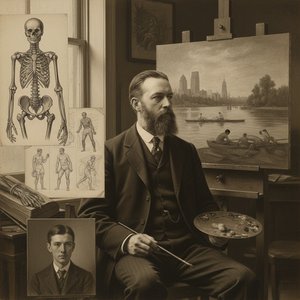 Thomas Eakins: Realism, Anatomy & the American Spirit – A Comprehensive Exploration of Life and LegacyExplore the life & legacy of Thomas Eakins, a pivotal American Realist painter. Discover his groundbreaking techniques, anatomical precisio…