Romanticism
Study, a man's face (Thomas Cole)
Thomas Cole (1801–1848) stworzył Study, a man's face. Należy do nurtu Romanticism.

 Podgląd w skali 1:1

 Ręcznie malowany obraz olejny
 Wyślij jako kartkę
 Udostępnij
 Karta informacyjna


 Pobierz obraz
 Podobne obiekty
 RTG
 Pokaz slajdów
 Pytania i odpowiedzi

 Statystyki
Study, a man's face w skrócie
- Tytuł
- Study, a man's face
- Artysta
- Thomas Cole (1801–1848)
- Miejsce urodzenia artysty
- Bolton, Wielka Brytania
- Ruch
- Romanticism
- Temat
- portrait, study, sketch, male face, pencil drawing, monochromatic
Co przedstawia Study, a man's face?
A Glimpse into Character: Thomas Cole's "Study, a Man's Face"
This evocative pencil sketch by Thomas Cole offers an intimate study of an older gentleman, capturing a moment of quiet contemplation. More than just a portrait, it’s a window into the artist’s process and a testament to his keen observational skills. Executed with remarkable economy of line, this work provides a fascinating insight into the mind of one of America's most important landscape painters, revealing a sensitivity that extended beyond grand vistas to the subtle nuances of human expression. The subject, rendered in shades of gray and white against a cream-colored background, exudes an air of wisdom and experience, inviting viewers to ponder his life story.Style & Technique: A Preparatory Sketch
Cole’s “Study, a Man's Face” exemplifies the style of a preparatory sketch or study. It isn't intended as a finished artwork in itself but rather as an exploration of form and likeness before embarking on a larger composition. The technique is characterized by quick, gestural pencil strokes – hatching and cross-hatching are skillfully employed to create shading and suggest volume without resorting to elaborate blending. This direct approach lends the piece a sense of immediacy and authenticity; it feels like a captured moment, a fleeting observation brought to life with remarkable efficiency. The artist’s mastery lies in his ability to convey depth and character using only lines and subtle tonal variations. The materials used – simple pencil on paper – further emphasize the work's raw and unadorned nature.Historical Context & Cole's Artistic Journey
Created during a period of burgeoning American artistic identity, this study reflects Thomas Cole’s broader engagement with portraiture alongside his celebrated landscape paintings. Born in England and later immigrating to the United States, Cole became a pivotal figure in the Hudson River School movement, known for its romantic depictions of the American wilderness. While renowned for his grand allegorical landscapes like "The Course of Empire," this sketch reveals another facet of his artistic practice – a dedication to capturing individual character with precision and sensitivity. It provides valuable insight into how Cole approached portraiture, likely informing his larger works by establishing a foundation of detailed observation.Symbolism & Emotional Resonance
The aged appearance of the subject immediately suggests wisdom, experience, and perhaps even a touch of melancholy. The sketch-like style itself contributes to an emotional impact; it conveys a sense of immediacy and intimacy, as if we are privy to a private moment. The limited color palette reinforces this feeling of quiet contemplation, drawing attention to the interplay of light and shadow across the man’s face. While seemingly simple, the work evokes a profound sense of human dignity and invites viewers to connect with the subject on an emotional level, prompting reflection on the passage of time and the richness of lived experience.Zdjęcia w wysokiej rozdzielczości dzieła Study, a man's face
Domena publiczna: artysta zmarł w 1848.
Thomas Cole, Study, a man's face. Domena publiczna
Odpowiedzi na pytania dotyczące Study, a man's face
Co przedstawia "Study, a man's face"?
„Study, a man's face” – Thomas Cole przedstawia: portrait, study, sketch, male face, pencil drawing, monochromatic, head, older man.
Czy dzieło "Study, a man's face" znajduje się w domenie publicznej?
Jeśli chodzi o prawa autorskie, "Study, a man's face" znajduje się w należy do domeny publicznej – autorskie prawa majątkowe wygasły.
Kto stworzył "Study, a man's face"?
Autorstwo dzieła "Study, a man's face" przypisuje się Thomas Cole.
Do jakiego nurtu w sztuce należy „Study, a man's face” – Thomas Cole?
„Study, a man's face” – Thomas Cole należy do nurtu Romanticism. Nurt ten stanowi stylistyczny kontekst dzieła.
Do którego okresu twórczości Thomas Cole należy dzieło „Study, a man's face”?
"Study, a man's face" reprezentuje Early Period twórczości Thomas Cole.
Z czego wynika obecny status praw autorskich dzieła "Study, a man's face"?
Dzieło "Study, a man's face" autorstwa Thomas Cole znajduje się w należy do domeny publicznej – autorskie prawa majątkowe wygasły. Okres ochrony praw autorskich liczony jest od daty śmierci artysty, a Thomas Cole zmarł(a) w 1848.
Jakie miejsce w dorobku twórczym Thomas Cole zajmuje dzieło "Study, a man's face"?
W dorobku Thomas Cole, "Study, a man's face" wpisuje się w styl Romanticism, nawiązując do tematów takich jak emphasis on observation & detail., likely influenced by academic drawing., preparatory study for larger works., demonstrates cole's drawing skills., illustrates his focus on realism., exploration of individual character., reflects early 19th-century portraiture..
Czy "Study, a man's face" wpisuje się w typową tematykę twórczości Thomas Cole?
Powracające motywy w twórczości Thomas Cole obejmują emphasis on observation & detail., likely influenced by academic drawing., preparatory study for larger works., demonstrates cole's drawing skills., illustrates his focus on realism., exploration of individual character., reflects early 19th-century portraiture.; „Study, a man's face” koncentruje się na portrait, study, sketch, male face, pencil drawing, monochromatic, head, older man.
O artyście: Thomas Cole

1801–1848, Wielka Brytania
Thomas Cole
Życie i sztuka Thomas Cole Urodzony 1 lutego 1801 roku w Bolton le Moors w hrabstwie Lancashire w Anglii, Thomas Cole rozpoczął swoją drogę daleko od krajobrazów, które ostatecznie miały stać się jego znakiem rozpoznawczym. Jego rodzina wyemigrowała do Stanów Zjednoczonych w 1818 roku, szukając nowego początku na ziemiach pełnych ogromnych, nieodkrytych jeszcze terytoriów. W tych wczesnych latach był człowiekiem wielu rzemiosł – pracował jako rytownik, by w 1822 roku odnaleźć stałe zajęcie jako portrecista. W dużej mierze był samoukiem; swoje wrażliwe oko wypracował poprzez uważną obserwację natury oraz lekturę książek, zamiast poprzez formalne wykształcenie akademickie.
Inne prace Thomas Cole
 Oxbow
 Sen architekta1840
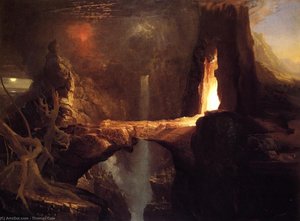 Wygnanie. Księżyc i Światło1828
 Widok Florencji z San Miniato1837
Eseje o Study, a man's face
 The Soul of the Sketch: Unveiling the Raw Beauty and Creative Intimacy of Artist StudiesDiscover the profound intimacy of artist studies. Explore how raw sketches and preparatory works capture the true soul of Impressionism, fr…
 Defining the American Sublime: The History and Legacy of the Hudson River SchoolMaster the history of the American Sublime and the Hudson River School. Explore the legacy of Cole and Church now.
 Francis Bacon: 25 Arcydzieł Ekspresjonizmu i Wnętrza Pełne Emocji | OriginalUniqueArt.comPoznaj 25 najbardziej znanych obrazów Francis Bacona – arcydzieł ekspresjonizmu pełnych emocji i dramatyzmu. Odkryj historię, technikę i wp…