Hudson River School · 1847
Prometheus Bound (Thomas Cole, 1847)
Thomas Cole (1801–1848) stworzył Prometheus Bound. Dzieło pochodzi z 1847. Należy do nurtu Hudson River School. Wykonano w technice Oil. Przechowywane jest w Fine Arts Museums of San Francisco w San Francisco, Stany Zjednoczone Ameryki. Wymiary to 162 × 243 cm.
- 1847
- Oil
- 162 × 243 cm
- Fine Arts Museums of San Francisco

 Podgląd w skali 1:1

 Ręcznie malowany obraz olejny
 Wyślij jako kartkę
 Udostępnij
 Karta informacyjna


 Pobierz obraz
 Podobne obiekty
 RTG
 Pokaz slajdów
 Pytania i odpowiedzi

 Statystyki
Prometheus Bound w skrócie
- Tytuł
- Prometheus Bound
- Artysta
- Thomas Cole (1801–1848)
- Miejsce urodzenia artysty
- Bolton, Wielka Brytania
- Data powstania
- 1847
- Technika wykonania
- Oil
- Wymiary
- 162 × 243 cm
- Gdzie można je zobaczyć
- Fine Arts Museums of San Francisco, San Francisco, Stany Zjednoczone Ameryki
- Temat
- landscape, prometheus, mythology, mountains, allegory, romanticism
Co przedstawia Prometheus Bound?
The Weight of Myth: Thomas Cole’s “Prometheus Bound”
Thomas Cole's "Prometheus Bound," painted in 1847, isn’t merely a landscape; it’s a profound meditation on defiance, punishment, and the enduring human spirit. This monumental canvas, now residing within the Fine Arts Museums of San Francisco, transcends its subject matter to become a powerful allegory for the struggles inherent in challenging authority and forging one's own destiny. Cole, a pivotal figure in the Hudson River School movement, masterfully blends Romanticism with an underlying moral urgency, creating an image that continues to resonate deeply with viewers today.
The scene depicts Prometheus, chained to a towering rock formation amidst a desolate, snow-laden mountainscape. The composition is strikingly dramatic – a vast expanse of jagged peaks dominates the background, dwarfing the solitary figure of the Titan and emphasizing his isolation and vulnerability. A vulture circles overhead, a constant reminder of Zeus’s relentless retribution, while a subtle hint of Jupiter, the Roman equivalent of Zeus, watches from above, embodying the cold indifference of divine power. Cole's use of light is particularly masterful; a diffused, almost ethereal glow illuminates the scene, casting long shadows and creating an atmosphere of both grandeur and despair. The color palette—primarily cool blues, grays, and whites—reinforces this sense of bleakness, punctuated by the fiery red underpaint used to render the snow-covered mountains – a deliberate choice that subtly hints at Prometheus’s stolen fire.
A Myth Made Manifest: Exploring the Narrative
The painting draws directly from Aeschylus's Greek tragedy, “Prometheus Bound,” a story of rebellion against the gods. Prometheus, in this narrative, is not simply a titan but a symbol of humanity’s relentless pursuit of knowledge and progress. He steals fire from Mount Olympus, gifting it to mankind – an act of defiance that ultimately earns him eternal torment at the hands of Zeus. Cole doesn't shy away from the brutality of the punishment; the stark depiction of Prometheus’s chains and the looming threat of the vulture vividly convey the weight of his transgression. However, within this scene of suffering, there is also a palpable sense of resilience. Prometheus’s gaze, fixed upon the viewer, exudes an almost defiant serenity—a refusal to succumb to despair.
The inclusion of the chorus, comprised of figures emerging from the depths of the mountains, adds another layer of complexity to the narrative. They represent the forces of nature, witnesses to Prometheus's plight, and perhaps even a subtle acknowledgment of his heroic struggle. Their hesitant approach, marked by curiosity and apprehension, suggests that even those seemingly untouched by divine wrath recognize the significance of Prometheus’s actions.
The Hudson River School: A New American Vision
“Prometheus Bound” is a quintessential example of the Hudson River School's artistic philosophy. Unlike earlier European landscape paintings that often focused on idyllic pastoral scenes, Cole sought to capture the raw power and sublime beauty of the American wilderness. He employed a technique known as “atmospheric perspective,” subtly blurring distant elements to create a sense of depth and vastness. This approach wasn’t simply about replicating reality; it was about conveying an emotional response—a feeling of awe and reverence for nature's grandeur.
Cole’s work also reflects the burgeoning American identity of the mid-19th century, grappling with themes of independence, self-reliance, and the relationship between humanity and the natural world. The painting can be interpreted as a metaphor for America’s own struggle to assert its sovereignty against established powers – a sentiment particularly relevant in the context of westward expansion and the nation's growing tensions with European empires.
A Timeless Masterpiece: Reproduction & Beyond
Reproductions of “Prometheus Bound” offer an exceptional opportunity to bring this powerful image into any setting. The meticulous detail, evocative atmosphere, and profound symbolism ensure that a high-quality reproduction will serve as both a beautiful work of art and a compelling conversation piece. Consider framing the artwork in a manner that complements its dramatic scale and reinforces its thematic resonance – perhaps within a contemporary interior space to juxtapose the ancient myth with modern life.
For those seeking an authentic experience, exploring the original painting at the Fine Arts Museums of San Francisco is highly recommended. It’s a truly immersive encounter with one of America's most significant artistic achievements—a testament to Thomas Cole’s genius and a timeless exploration of human courage in the face of overwhelming adversity.
W którym muzeum znajduje się Prometheus Bound?
Fine Arts Museums of San Francisco
San Francisco, Stany Zjednoczone Ameryki
Historia Fine Arts Museums of San Francisco Początki Fine Arts Museums of San Francisco sięgają 1871 roku, kiedy to narodziła się idea stworzenia miejsca poświęconego sztuce. Instytucja ta rozwijała się dynamicznie, wzbogacając się o kolejne filary swojej tożsamości: otwarcie de Young Museum w 1895 roku oraz powołanie do życia Legion of Honor w 1924 roku. Przez kilka dziesięcioleci te dwie odrębne jednostki funkcjonowały niezależnie, budując własne, unikalne dziedzictwo, zanim w 1972 roku, pod przewodnictwem Iana McKibbin White, zostały formalnie połączone w jedną, potężną całość.


Zdjęcia w wysokiej rozdzielczości dzieła Prometheus Bound

Domena publiczna: artysta zmarł w 1848.
Inne rozmiary, kadrowanie i cytowanie →Thomas Cole, Prometheus Bound (1847), Fine Arts Museums of San Francisco. Domena publiczna
Odpowiedzi na pytania dotyczące Prometheus Bound
Gdzie można zobaczyć oryginał „Prometheus Bound” – Thomas Cole?
Oryginał dzieła „Prometheus Bound” – Thomas Cole znajduje się w Fine Arts Museums of San Francisco, San Francisco, Stany Zjednoczone Ameryki. Reprodukcja pozwala na eksponowanie pracy w domu.
W którym roku powstało „Prometheus Bound” – Thomas Cole?
Powstanie „Prometheus Bound” – Thomas Cole datuje się na 1847.
Z jakiej techniki wykorzystano "Prometheus Bound"?
Thomas Cole wykorzystał/a technikę Oil w pracy „Prometheus Bound”. Technika ta definiuje materię oryginalnego dzieła.
Jakie są wymiary oryginalnego dzieła „Prometheus Bound” – Thomas Cole?
Oryginalny utwór „Prometheus Bound” – Thomas Cole ma wymiary 243 x 162 cm.
Co przedstawia „Prometheus Bound” – Thomas Cole?
Tematyka dzieła "Prometheus Bound" to landscape, prometheus, mythology, mountains, allegory, romanticism, wilderness.
Czy „Prometheus Bound” – Thomas Cole znajduje się w domenie publicznej?
Jeśli chodzi o prawa autorskie, "Prometheus Bound" znajduje się w należy do domeny publicznej – autorskie prawa majątkowe wygasły.
Któremu artyście przypisuje się "Prometheus Bound"?
Autorem dzieła „Prometheus Bound” jest Thomas Cole. Praca ta figuruje w katalogu pod nazwiskiem Thomas Cole.
Do jakiego nurtu artystycznego należy „Prometheus Bound” – Thomas Cole?
„Prometheus Bound” – Thomas Cole należy do nurtu Hudson River School. Nurt ten stanowi stylistyczny kontekst dzieła.
Do którego etapu twórczości Thomas Cole należy dzieło „Prometheus Bound”?
W dorobku artystycznym Thomas Cole dzieło „Prometheus Bound” przypada na Late Period. Ten etap pozwala zestawić je z innymi pracami twórcy.
O artyście: Thomas Cole

1801–1848, Wielka Brytania
Thomas Cole
Życie i sztuka Thomas Cole Urodzony 1 lutego 1801 roku w Bolton le Moors w hrabstwie Lancashire w Anglii, Thomas Cole rozpoczął swoją drogę daleko od krajobrazów, które ostatecznie miały stać się jego znakiem rozpoznawczym. Jego rodzina wyemigrowała do Stanów Zjednoczonych w 1818 roku, szukając nowego początku na ziemiach pełnych ogromnych, nieodkrytych jeszcze terytoriów. W tych wczesnych latach był człowiekiem wielu rzemiosł – pracował jako rytownik, by w 1822 roku odnaleźć stałe zajęcie jako portrecista. W dużej mierze był samoukiem; swoje wrażliwe oko wypracował poprzez uważną obserwację natury oraz lekturę książek, zamiast poprzez formalne wykształcenie akademickie.
Inne prace Thomas Cole
 Oxbow
 Sen architekta1840
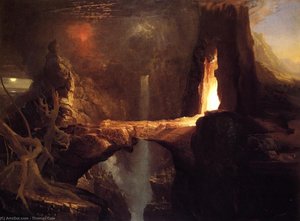 Wygnanie. Księżyc i Światło1828
 Widok Florencji z San Miniato1837

Eseje o Prometheus Bound
 Masterpieces of Light: The Top 25 Artworks by Duccio di BuoninsegnaJourney through the Sienese brilliance of Duccio di Buoninsegna. Explore 25 iconic masterpieces, from the Rucellai Madonna to the Maestà, f…
 Nature's Nation: The Hudson River School and the Art of the American SublimeExplore the spiritual depth of the Hudson River School through its masters. Discover the power of the American Sublime today.
 10 Arcydzieł Renesansu: Obrazy, które Zdefiniowały Epokę | OriginalUniqueArt.plOdkryj 10 arcydzieł renesansu – od Mona Lisy po freski Michała Anioła! Poznaj historie, techniki i wpływ największych artystów. Reprodukcje…