Romantic Landscape Painting · 1845
Landscape (Thomas Cole, 1845)
Thomas Cole (1801–1848) stworzył Landscape. Dzieło pochodzi z 1845. Należy do nurtu Romantic Landscape Painting. Wykonano w technice Oil On Canvas. Przechowywane jest w Minneapolis Institute of Art w Minneapolis, United States of America. Wymiary to 60 × 80 cm.
- 1845
- Oil On Canvas
- 60 × 80 cm
- Minneapolis Institute of Art

 Podgląd w skali 1:1

 Ręcznie malowany obraz olejny
 Wyślij jako kartkę
 Udostępnij
 Karta informacyjna


 Pobierz obraz
 Podobne obiekty
 RTG
 Pokaz slajdów
 Pytania i odpowiedzi

 Statystyki
Landscape w skrócie
- Tytuł
- Landscape
- Artysta
- Thomas Cole (1801–1848)
- Miejsce urodzenia artysty
- Bolton, Wielka Brytania
- Data powstania
- 1845
- Technika wykonania
- Oil On Canvas
- Wymiary
- 60 × 80 cm
- Gdzie można je zobaczyć
- Minneapolis Institute of Art, Minneapolis, United States of America
- Epoka
- 19th Century
- Temat
- american wilderness, landscape painting, romanticism, hudson river school, contemplation, natural harmony
Co przedstawia Landscape?
A Vision of American Transcendence
In the heart of the mid-19th century, as a young nation began to grapple with its burgeoning identity, Thomas Cole captured something far more profound than mere scenery. His 1845 masterpiece, Landscape, serves as a cornerstone of Romantic art, offering a window into the soul of the American wilderness. This oil on canvas is not simply a depiction of a picturesque vista; it is a testament to the burgeoning spirit of a continent. Through his brush, the rugged terrain becomes a stage for spiritual contemplation, inviting the viewer to move beyond the physical world and into a realm of profound transcendence.
As the founder of the Hudson River School, Cole spearheaded a movement that sought to convey the grandeur and the sublime of the American landscape. Unlike the European traditions of his time, which often leaned toward grand historical narratives or classical mythology, Cole turned his gaze toward the untamed forests and rocky precipices of the New World. He believed that by observing the raw majesty of nature, one could elevate the human spirit and uncover deeper moral truths. In this painting, we see that conviction realized through a composition that balances the immense scale of the earth with the quiet presence of humanity.
Mastery of Light and Atmosphere
The visual impact of this work lies in Cole’s masterful command of atmospheric perspective. To gaze upon this landscape is to feel the very air of the scene; he skillfully employs subtle shading and delicate tonal variations to create a convincing illusion of depth. The viewer is transported from the immediate, textured foreground into the serene, misty expanse of the distant hills. This technique does more than provide realism; it creates a sense of infinite possibility, drawing the eye toward a horizon that feels both reachable and divine.
Cole’s brushwork further enhances this immersive experience. His strokes are remarkably controlled yet possess a certain fluidity that mirrors the natural movement of wind through ancient trees and the shifting light of a passing cloud. The placement of figures—a solitary man contemplating the vastness—is a deliberate compositional choice designed to anchor the viewer's perspective. By positioning a human element against the overwhelming scale of the rocky hillside, Cole highlights the relationship between the individual and the infinite, making the painting an ideal centerpiece for those who appreciate art that evokes both peace and awe.
A Timeless Addition to the Collector’s Gallery
For the discerning collector or interior designer, a high-quality reproduction of this work offers more than just aesthetic beauty; it brings a sense of historical weight and emotional tranquility to any space. The painting's palette, rich with earthy tones and luminous highlights, provides a sophisticated foundation for various decor styles, from classic traditionalism to modern organic aesthetics. It serves as a conversation piece that invites contemplation, much like the figures within the landscape itself.
Owning a piece of this caliber allows one to inhabit the same spirit of American Romanticism that Cole so brilliantly captured. Whether placed in a quiet study, a grand living room, or a professional gallery setting, this reproduction of Landscape acts as a window into a lost era of discovery and reverence. It is an investment in atmosphere, bringing the enduring, peaceful energy of the Hudson River School into the contemporary home.
W którym muzeum znajduje się Landscape?
Minneapolis Institute of Art
Minneapolis, United States of America
Dziedzictwo Wizji Artystycznej: Odkrywanie Minneapolis Institute of Art Minneapolis Institute of Art (Mia) stanowi głęboki symbol artystycznego dziedzictwa amerykańskiego Midwest, oferując odwiedzającym niezrównaną podróż przez tysiąclecia twórczej ekspresji. Założone w 1883 roku przez Minneapolis Society of Fine Arts z jedną, szlachetną ambicją — wzbogaceniem kulturowej mozaiki Minnesoty — ewolucja muzeum odzwierciedla sam rozwój miasta. Od skromnych początków w murach lokalnej biblioteki publicznej, aż po wspaniałą budowlę w stylu Beaux-Arts, Mia ucieleśnia niezłomne oddanie zachowaniu artystycznych skarbów i pielęgnowaniu trwałej ciekawości intelektualnej.


Zdjęcia w wysokiej rozdzielczości dzieła Landscape

Domena publiczna: artysta zmarł w 1848.
Inne rozmiary, kadrowanie i cytowanie →Thomas Cole, Landscape (1845), Minneapolis Institute of Art. Domena publiczna
Odpowiedzi na pytania dotyczące Landscape
Gdzie można obecnie zobaczyć dzieło „Landscape” – Thomas Cole?
Oryginał dzieła „Landscape” można zobaczyć w Minneapolis Institute of Art, Minneapolis, United States of America.
W którym roku powstało dzieło "Landscape"?
„Landscape” – Thomas Cole powstało w 1845.
W jakiej technice wykonano „Landscape” – Thomas Cole?
Technika wykonania dzieła „Landscape” – Thomas Cole to Oil On Canvas. Reprodukcje mają na celu wierne oddanie wyglądu tej techniki.
Jakie są wymiary oryginalnego dzieła „Landscape” – Thomas Cole?
Oryginalne wymiary dzieła „Landscape” to 60 x 80 cm. Znajomość pierwotnej skali może być pomocna przy wyborze odpowiedniego rozmiaru reprodukcji.
Co przedstawia "Landscape"?
„Landscape” – Thomas Cole przedstawia: american wilderness, landscape painting, romanticism, hudson river school, contemplation, natural harmony, rock formation.
Czy dzieło "Landscape" znajduje się w domenie publicznej?
Status praw autorskich dla „Landscape” – Thomas Cole: dzieło znajduje się w należy do domeny publicznej – autorskie prawa majątkowe wygasły. Określa to, czy reprodukcje obrazu mogą być sporządzane swobodnie.
Kto stworzył "Landscape"?
Autorem dzieła „Landscape” jest Thomas Cole. Praca ta figuruje w katalogu pod nazwiskiem Thomas Cole.
Do jakiego nurtu artystycznego należy „Landscape” – Thomas Cole?
„Landscape” to dzieło należące do nurtu Romantic Landscape Painting. Nurt ten określa tradycję artystyczną, w której osadzone jest dzieło.
Do którego okresu twórczości Thomas Cole należy dzieło "Landscape"?
„Landscape” pochodzi z okresu Mature Period w twórczości Thomas Cole. Klasyfikacja ta wiąże dzieło z rozwojem artysty.
O artyście: Thomas Cole

1801–1848, Wielka Brytania
Thomas Cole
Życie i sztuka Thomas Cole Urodzony 1 lutego 1801 roku w Bolton le Moors w hrabstwie Lancashire w Anglii, Thomas Cole rozpoczął swoją drogę daleko od krajobrazów, które ostatecznie miały stać się jego znakiem rozpoznawczym. Jego rodzina wyemigrowała do Stanów Zjednoczonych w 1818 roku, szukając nowego początku na ziemiach pełnych ogromnych, nieodkrytych jeszcze terytoriów. W tych wczesnych latach był człowiekiem wielu rzemiosł – pracował jako rytownik, by w 1822 roku odnaleźć stałe zajęcie jako portrecista. W dużej mierze był samoukiem; swoje wrażliwe oko wypracował poprzez uważną obserwację natury oraz lekturę książek, zamiast poprzez formalne wykształcenie akademickie.
Inne prace Thomas Cole
 Oxbow
 Sen architekta1840
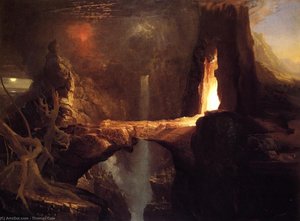 Wygnanie. Księżyc i Światło1828
 Widok Florencji z San Miniato1837

Eseje o Landscape
 Master of Light: Exploring the Timeless Landscapes and Atmospheric Brilliance of Jean-Baptiste-Camille CorotDiscover the ethereal beauty of Jean-Baptiste-Camille Corot. Explore how this master of light bridged Neoclassicism and Impressionism throu…
 American Romanticism: Capturing the Sublime Grandeur of the New World LandscapeExplore the profound beauty of American Romanticism. Discover how Hudson River School masters captured the sublime New World landscape thro…
 Timeless Elegance vs. Bold Expression: A Curator's Guide to Choosing Classical or Modern Art for Luxury InteriorsMaster the art of interior curation with our expert guide. Discover how to balance timeless classical masterpieces with bold modern express…