Menu
Text size

() ·

A painting made for you, by hand

LA CROIX DANS LA SOLITUDE

Ręcznie malowana reprodukcja olejowa

Ręcznie malowany obraz olejny na płótnie, wykonany na zamówienie przez naszych artystów w wybranym przez Ciebie wymiarze i oprawie. ( Przełącz na wydania drukowane Przejdź do wersji cyfrowej)

Opis obiektu

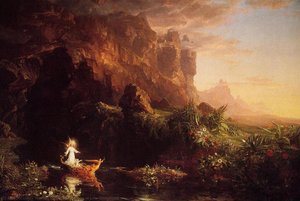
Experience the serene beauty of Thomas Cole’s ‘LA CROIX DANS LA SOLITUDE,’ a Romantic masterpiece capturing solitude and faith amidst an evocative American landscape. Explore a stunning oil painting reproduction.

Biografia artysty

Thomas Cole (1801-1848) – pionier amerykańskiej sztuki krajobrazowej, założyciel Hudson River School. Jego malarstwo łączy romantyzm z alegorią i głębokim oddaniem naturze. Odkryj jego legendy!

from ·

Chapter 1

How large should it be?

Slide to change the size; the picture on the left shows the frame at its real width. The proportions of the original are kept.

Standardowy format
personalizowane
CM
INCH

Wybierz spośród naszych standardowych rozmiarów, które zachowują oryginalne proporcje dzieła sztuki.

szerokość
wysokość

Wpisz wymaganą szerokość i wysokość, aby obraz pasował do Twojej ramy lub ściany. Ponieważ jest to dzieło malowane ręcznie, w przypadku rozmiaru o innych proporcjach artysta może domalować nieco więcej wokół obrazu lub przyciąć jego fragmenty — wybór należy do Ciebie. Przed rozpoczęciem pracy prześlemy Ci cyfrową wizualizację do zatwierdzenia. Obraz widoczny na tej stronie nie przedstawia rzeczywistego efektu — jedynie wizualizacja oddaje realny rezultat.

Chapter 2

How should it arrive?

Choose the edges of the stretched canvas

Choose your frame

Corner sample of the WhiteWrap canvas edge finish, stretched on lite drewno bars
White zł1
Corner sample of the BlurSideWrap canvas edge finish, stretched on lite drewno bars
Blurside zł1
Corner sample of the ExtendedWrap canvas edge finish, stretched on lite drewno bars
Extended zł1
Corner sample of the P118B picture frame: polistyren formowany, 5 cm wide and 3 cm thick
P118B zł10
Corner sample of the P118H picture frame: polistyren formowany, 5 cm wide and 3 cm thick
P118H zł10
Corner sample of the P118W picture frame: polistyren formowany, 5 cm wide and 3 cm thick
P118W zł10
Corner sample of the P438Z picture frame: polistyren formowany, 5.5 cm wide and 3.5 cm thick
P438Z zł10
Corner sample of the P508JH picture frame: polistyren formowany, 7 cm wide and 3.5 cm thick
P508JH zł12
Corner sample of the P508YH picture frame: polistyren formowany, 7 cm wide and 3.5 cm thick
P508YH zł12
Corner sample of the P805H picture frame: polistyren formowany, 5 cm wide and 3.5 cm thick
P805H zł10
Corner sample of the P805Z picture frame: polistyren formowany, 5 cm wide and 3.5 cm thick
P805Z zł10
Corner sample of the P919BZ picture frame: polistyren formowany, 7 cm wide and 3.5 cm thick
P919BZ zł10
Corner sample of the P919G picture frame: polistyren formowany, 7 cm wide and 3.5 cm thick
P919G zł10
Corner sample of the P919XJ picture frame: polistyren formowany, 7 cm wide and 3.5 cm thick
P919XJ zł10
Corner sample of the P959ZH picture frame: polistyren formowany, 5 cm wide and 3 cm thick
P959ZH zł10
Corner sample of the P968JZ picture frame: polistyren formowany, 6 cm wide and 4 cm thick
P968JZ zł12
Corner sample of the W106C picture frame: lite drewno, 5 cm wide and 3 cm thick
W106C zł8
Corner sample of the W218G picture frame: lite drewno, 5 cm wide and 3 cm thick
W218G zł10
Corner sample of the W218JH picture frame: lite drewno, 5 cm wide and 3 cm thick
W218JH zł8
Corner sample of the W218Y picture frame: lite drewno, 5 cm wide and 3 cm thick
W218Y zł10
Corner sample of the W307PJ picture frame: lite drewno, 6 cm wide and 3 cm thick
W307PJ zł10
Corner sample of the W316G picture frame: lite drewno, 6 cm wide and 3 cm thick
W316G zł10
Corner sample of the W316PJ picture frame: lite drewno, 6 cm wide and 3 cm thick
W316PJ zł8
Corner sample of the W316Y picture frame: lite drewno, 6 cm wide and 3 cm thick
W316Y zł10
Corner sample of the W398PJ picture frame: lite drewno, 5 cm wide and 3 cm thick
W398PJ zł8
Corner sample of the W4111J picture frame: lite drewno, 6.5 cm wide and 3.5 cm thick
W4111J zł10
Corner sample of the W500HY picture frame: lite drewno, 7 cm wide and 5 cm thick
W500HY zł15
Corner sample of the W500JH picture frame: lite drewno, 7 cm wide and 5 cm thick
W500JH zł15
Corner sample of the W692G picture frame: lite drewno, 8 cm wide and 4 cm thick
W692G zł12
Corner sample of the W849H picture frame: lite drewno, 5 cm wide and 3 cm thick
W849H zł8
Corner sample of the W940BG picture frame: lite drewno, 7.5 cm wide and 4.5 cm thick
W940BG zł15
Corner sample of the W953PJ picture frame: lite drewno, 6 cm wide and 3.5 cm thick
W953PJ zł8
Corner sample of the H24-GOLD picture frame: rzeźbione drewno pokryte gipsem, 10 cm wide and 6 cm thick
H24-GOLD zł30
Corner sample of the H24-SILVER picture frame: rzeźbione drewno pokryte gipsem, 10 cm wide and 6 cm thick
H24-SILVER zł30
Corner sample of the H36-GOLD picture frame: rzeźbione drewno pokryte gipsem, 15 cm wide and 6.5 cm thick
H36-GOLD zł45
Corner sample of the H36-SILVER picture frame: rzeźbione drewno pokryte gipsem, 15 cm wide and 6.5 cm thick
H36-SILVER zł45

Moulding: . Overall size with the frame: .

Chapter 3

Who paints it, and should anything change?

Examples of what can be changed: Replace face with customer photo; Add pet (e.g., replace cat with dog); Include hidden message in background; Change background landscape or elements.
After order, OriginalUniqueArt.com team will email client for instructions and provide a mockup preview

Dostawa na całym świecie () w ciągu 3–4 tygodni zamiast standardowych 5 tygodni. (29 Październik). Bez kompromisów w kwestii jakości.

Chapter 4

The finishing touches

A nameplate, as in a museum?

Szczegóły grawerowanej brązowej tabliczki

This elegant plaque features the artist's name and the title of the artwork, finely engraved for a timeless presentation.

It is made from bronze with a refined, elegant finish. The text is precisely laser-engraved for a sharp and permanent result. Measuring 9x2 cm, the plaque is compact yet easy to read. It's built to be durable and scratch-resistant, offering a professional, museum-quality look. Mounting is simple thanks to the included adhesive backing.

Szczegóły przezroczystej tabliczki akrylowej

The plaque includes essential engraved details such as the artist's name, the title of the artwork, the date it was created, the type of media used-like oil on canvas or watercolor-a brief description of the piece, and a QR code that links to the complete artwork information.

It is crafted from clear acrylic, offering a sleek, modern appearance. The text is UV-engraved in black to ensure strong visual contrast. With a size of 10x15 cm, it ensures optimal readability. It comes equipped with two metal hooks for secure wall mounting. The plaque is designed to be weather-resistant, making it suitable for various environments, and it includes interactive features that work seamlessly with smartphone scanning.

Szczegóły czarnej tabliczki akrylowej

This elegant plaque includes engraved information such as the artist's name, the title of the artwork, the date it was created, the type of media used (like oil on canvas or watercolor), a short description of the artwork, and a QR code for quick access to more information.

The plaque itself is made from refined black acrylic with a premium finish. The text is laser-engraved in white for high contrast and readability. Its size is 10x15 cm, designed to be easy to read. It comes with two metal hooks for professional mounting. The design is sleek and fits any interior style. It is also weather-resistant and durable, with built-in digital integration for mobile compatibility.

A protective varnish?

When do you need it?

Chapter 5

Your painting, as you ordered it

LA CROIX DANS LA SOLITUDE

Technika reprodukcji

Wymiary reprodukcji

-

Wybitny mistrz artystyczny

Większa szczegółowość, finezja i dodatkowy czas na realizację

-

Opcje oprawy reprodukcji

-

-

W przypadku dzieł sztuki lub reprodukcji, których którykolwiek z boków przekracza 105 cm (około 41 cali), rama zostanie wysłana w formie zestawu do samodzielnego montażu. Metoda ta zapewnia bezpieczną dostawę i zapobiega uszkodzeniom podczas transportu.

Wymagany profesjonalny montaż – nie jest to produkt typu DIY.
Zestaw musi zostać złożony, a płótno naciągnięte przez doświadczonego profesjonalnego ramiarza, przy użyciu kleju do drewna (brak w zestawie), kleszczy do naciągania płótna oraz ścisków, które utrzymają krosna w równej pozycji podczas schnięcia kleju. Nieprawidłowy montaż lub nierównomierne napięcie płótna może trwale uszkodzić dzieło sztuki i nie podlega naszej gwarancji.

  • W zestawie znajdują się wszystkie listwy z litego drewna, precyzyjnie docięte do wymiarów.

  • Montaż odbywa się przy użyciu dołączonych wkrętów oraz kleju do drewna do łączenia narożników, którego zestaw nie zawiera i który musi zostać dostarczony przez ramiarza.

  • Wymagane są profesjonalne narzędzia, których nie ma w zestawie: kleszcze do naciągania płótna (napinacz) oraz zaciski, które pozwolą utrzymać listwy w równej pozycji podczas schnięcia kleju.

Ważne:
Do połączenia narożników niezbędny jest klej do drewna, listwy należy unieruchomić za pomocą ścisków do momentu całkowitego wyschnięcia kleju, a naciągnięcie płótna na złożoną ramę wymaga użycia kleszczy do naciągania płótna. Żaden z tych elementów nie jest dołączony do zestawu. Przed zamówieniem tego rozmiaru zalecamy konsultację z doświadczonym ramiarzem.

Etykieta obiektu

-

-

Lakier ochronny

Lakier z połyskiem (pogłębia kolory, chroni przed światłem i wilgocią)

-

Personalizacja dzieła

Przykłady możliwości personalizacji: zastąp twarz zdjęciem klienta; dodaj zwierzę domowe (np. zamień kota na psa); umieść ukrytą wiadomość w tle; zmień krajobraz lub elementy tła.

-

Ekspresowa

Dostawa na cały świat () w ciągu 3–4 tygodni zamiast standardowych 5 tygodni. (29 Październik). Bez kompromisów w kwestii jakości.

-

Przesyłka ekspresowa

Dostawa na cały świat () w ciągu 5 tygodni. (5 Listopad).

W cenie

Cena całkowita

zł 1155

Suma całkowita zł 1155

Opcja ze szkłem jest dostępna wyłącznie w rozmiarach poniżej 110 cm

Included with every order

  • Bezpłatna ekspresowa wysyłka na cały świat
  • Wysokiej jakości płótno lniane
  • Pełne ubezpieczenie przesyłki
  • Gwarancja zwrotu należności celnych i podatków importowych
  • Gwarancja wiernego odwzorowania kolorów
  • 100-dniowa polityka zwrotów (tylko w przypadku wad)
  • Gwarancja 100% zwrotu pieniędzy
  • Zniżka przy zakupie wielu sztuk

A Sanctuary of Silence: The Soul of Thomas Cole’s Masterpiece

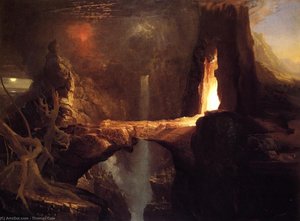
In the quietude of the American wilderness, where the shadows of ancient trees stretch across the earth like silent prayers, lies the profound essence of Thomas Cole’s "LA CROIX DANS LA SOLITUDE." Completed in 1845, this hauntingly beautiful oil painting serves as a cornerstone of Romantic landscape art, capturing a moment that transcends mere scenery to touch the very divine. As one gazes upon the canvas, the viewer is not simply looking at a clearing in the Hocking Hills; they are being invited into a sacred dialogue between humanity and the infinite. The artwork stands as a testament to the dawn of a distinctly American artistic identity, moving away from European tradition toward a raw, spiritual connection with the untamed New World.

The composition is masterfully orchestrated to evoke a sense of overwhelming scale and intimate devotion. At the heart of this verdant clearing, a solitary figure kneels in humble reverence before a weathered cross, a focal point that anchors the entire landscape. This deliberate placement creates a powerful tension between the smallness of man and the vast, undulating hills that recede into distant, misty mountains. Through the expert use of atmospheric perspective, Cole layers muted greens, deep browns, and soft ochres to build a palpable sense of depth, drawing the eye through the thicket and toward the horizon. The light, appearing as if caught in the delicate transition of dawn or dusk, bathes the scene in a soft, diffused glow that suggests a world suspended in a moment of eternal contemplation.

Symbolism and the Sublime: A Journey Through Light and Shadow

Beyond its breathtaking topography, "LA CROIX DANS LA SOLITUDE" is a rich tapestry of symbolic meaning. For the collector or the enthusiast of fine art, the painting offers much more than aesthetic pleasure; it provides a window into the 19th-century preoccupation with the Sublime—the feeling of awe mixed with a touch of terror when faced with the grandeur of nature. The cross serves as an unmistakable emblem of faith and mortality, while the solitary figure embodies the universal human experience of introspection and mourning. Every element, from the sturdy, framing tree on the left to the ethereal sky, works in harmony to reflect the spiritual revelation found within solitude.

Cole’s technical prowess is evident in his meticulous application of oil paint. By utilizing nuanced tonal gradations and a delicate layering of glazes, he achieved a luminous quality that makes the landscape appear to breathe. The texture of the brushwork, though controlled, lends a naturalistic vitality to the foliage and the rugged terrain. This mastery of light and shadow—the chiaroscuro of the natural world—allows the painting to shift in mood depending on the light of the room in which it is displayed. It is this very versatility that makes a high-quality reproduction of this work an extraordinary choice for interior designers seeking to introduce a sense of peace, history, and intellectual depth into a sophisticated living space.

An Enduring Legacy for the Discerning Collector

To possess a reproduction of this caliber is to bring a piece of the Hudson River School’s legacy into one's own home. Thomas Cole did not merely paint trees and hills; he painted the very spirit of a nation finding its footing in a vast, mysterious landscape. For those looking to curate an environment of reflection and elegance, "LA CROIX DANS LA SOLITUDE" offers an unparalleled emotional resonance. It is a work that commands attention through its quiet strength, making it a timeless centerpiece for any collection dedicated to the beauty of the Romantic era and the enduring power of the human spirit amidst the majesty of nature.

Pytania i odpowiedzi

Do czego zaleca się wykorzystanie wydruku "LA CROIX DANS LA SOLITUDE"?

Sugerowanym zastosowaniem dla „LA CROIX DANS LA SOLITUDE” – Tomasz Cole jest Accent, choć może on służyć również do innych celów.

Czy "LA CROIX DANS LA SOLITUDE" charakteryzuje się silnym kontrastem światłocienia?

„LA CROIX DANS LA SOLITUDE” – Tomasz Cole prezentuje Statement kontrast między jasnymi a ciemnymi partiami dzieła.

W jaki sposób Romantic Landscape dzieła „LA CROIX DANS LA SOLITUDE” nawiązuje do kraju pochodzenia artysty?

"LA CROIX DANS LA SOLITUDE" powstało dzięki Tomasz Cole, urodzonemu w Wielka Brytania, w ramach nurtu Romantic Landscape. Pochodzenie artysty wiąże to dzieło z Romantic Landscape w wydaniu twórców z Wielka Brytania.

More about this painting

Podgląd w skali 1:1 Podgląd AR Przełącz na wydania drukowane Przejdź do wersji cyfrowej Wyślij jako kartkę
Szczegóły dzieła Przewodnik Dodaj do ulubionych Pobierz obraz Podobne obiekty RTG Pokaz slajdów Q&A Statystyki

In numbers

  • 29frames to choose from
  • standard sizes, in its own proportions
  • 5weeks to paint and deliver it
Tomasz Cole

Tomasz Cole

1801 - 1848, Wielka Brytania

Quick facts about Tomasz Cole

  • Artistic Movement Or Style: Szkoła Hudson
  • Artists Or Movements Influenced By This Artist: ['Asher B. Durand']
  • Date Of Birth: 1 lutego 1801
  • Date Of Death: 11 lutego 1848
  • Full Name: Thomas Cole
  • Nationality: Amerykanin
  • Notable Artworks:
    • Course of Empire
    • Oxbow
    • Voyage of Life
  • Place Of Birth: Bolton, Wielka Brytania

Biografia artysty

A Pioneer of American Landscape Painting

Thomas Cole, a name inextricably linked to the birth of distinctly American art, stands as a pivotal figure in 19th-century painting. Born in Bolton le Moors, Lancashire, England, in 1801, his early life offered little indication of the profound impact he would have on the artistic landscape. Emigrating to the United States with his family in 1818 and settling in Ohio, Cole’s journey was one of self-discovery and artistic awakening. Initially working as an itinerant portrait painter—a common trade at the time—he soon found himself drawn to the untamed beauty of the American wilderness. This shift wasn't merely a change in subject matter; it represented a fundamental divergence from European artistic traditions, which often focused on historical or mythological narratives. Cole’s landscapes weren’t simply depictions of scenery; they were imbued with a spiritual and allegorical depth that resonated deeply with a nation forging its own identity. His move to Catskill, New York, in 1825 proved transformative, providing him with both inspiration and a permanent base from which to explore the surrounding Hudson River Valley—a region that would become inextricably linked with his artistic legacy.

The Hudson River School and Romantic Ideals

Cole is rightfully regarded as the founder of the Hudson River School, an art movement characterized by its romantic portrayal of the American landscape. However, to label him simply a “landscape painter” feels inadequate. His work transcended mere representation; it was deeply philosophical, often exploring themes of humanity’s relationship with nature, the passage of time, and the rise and fall of civilizations. Influenced by European Romanticism—particularly the works of Claude Lorrain and J.M.W. Turner—Cole adapted these sensibilities to an American context. Where European Romantics often depicted dramatic, sublime landscapes as a reflection of inner turmoil, Cole’s paintings frequently conveyed a sense of optimism and divine presence within the natural world. He saw in the vastness of the American wilderness a symbol of national potential and spiritual renewal. The Oxbow (1836), perhaps his most iconic work, exemplifies this perfectly—a sweeping vista that contrasts the wild, untamed river valley with the cultivated farmlands, representing both the promise and the challenges of westward expansion. The painting’s meticulous detail and subtle color variations capture not just a scene but also a feeling – a sense of awe and wonder at the power and beauty of nature.

Allegory and The Course of Empire

While celebrated for his realistic depictions of nature, Cole’s artistic ambition extended beyond pure landscape painting. He frequently employed allegory to convey complex moral and philosophical ideas. This is most powerfully demonstrated in his monumental series The Course of Empire, created between 1833 and 1836. Comprising five canvases—“Savage State,” “Pastoral State,” “Arcadian State,” “Consummation,” and “Destruction”—the series traces the cyclical history of a civilization, from its pristine origins to its inevitable decline. The paintings are not merely historical narratives; they serve as cautionary tales about the dangers of unchecked ambition and the fragility of human achievement. The series was inspired by the writings of Count de Volney, whose book *Ruines; or Meditations on the Ruins of Empires* explored similar themes. The dramatic lighting and carefully chosen symbols in each painting—ranging from towering forests to crumbling ruins—invite viewers to contemplate the consequences of their actions and the impermanence of worldly power.

Technique and Style

Cole’s artistic style was characterized by a remarkable blend of observation, skill, and imagination. He meticulously studied nature, often making numerous pencil sketches *en plein air* (outdoors) to capture the nuances of light, shadow, and color. However, he wasn't simply a recorder of reality; he skillfully manipulated these elements to create emotionally resonant compositions. Cole’s use of atmospheric perspective—the subtle blurring of distant objects—and his mastery of chiaroscuro (the contrast between light and dark) added depth and drama to his paintings. He was acutely aware of the limitations of his own technical abilities, famously stating that he avoided depicting human figures prominently in his landscapes, preferring instead to focus on the grandeur of nature itself. This decision allowed him to prioritize the spiritual and philosophical themes he sought to convey.

Legacy and Enduring Influence

Thomas Cole’s untimely death in 1848 at the age of 47 marked a significant loss for the American art world. However, his influence continued to reverberate through generations of artists. He directly mentored Frederic Edwin Church, who would become one of the leading figures of the second generation of Hudson River School painters. His emphasis on observation from nature, combined with a deeply personal and symbolic approach to landscape painting, laid the foundation for a distinctly American artistic tradition. Cole’s work continues to be exhibited in major museums across the United States, including the New-York Historical Society, the National Gallery of Art in Washington D.C., and the Smithsonian American Art Museum. His paintings are not merely historical artifacts; they remain powerfully evocative and relevant today, prompting viewers to contemplate their own relationship with nature and the enduring questions about humanity’s place in the world. The Thomas Cole National Historic Site in Catskill, New York, preserves his home and studio, offering visitors a glimpse into the life and work of this remarkable artist.

Najważniejsze informacje

  • Subject or theme: Solitude, Faith, Contemplation
  • Artistic style: Emotional expression
  • Movement: Romanticism
  • Medium: Oil on Canvas