Hudson River School · 1826
Kaaterskill Falls (Thomas Cole, 1826)
Thomas Cole (1801–1848) stworzył Kaaterskill Falls. Dzieło pochodzi z 1826. Należy do nurtu Hudson River School. Wykonano w technice Oil On Canvas. Przechowywane jest w Wadsworth Atheneum w Hartford, Stany Zjednoczone Ameryki. Wymiary to 64 × 91 cm.
- 1826
- Oil On Canvas
- 64 × 91 cm
- Wadsworth Atheneum, Hartford

 Podgląd w skali 1:1

 Ręcznie malowany obraz olejny
 Wyślij jako kartkę
 Udostępnij
 Karta informacyjna


 Pobierz obraz
 Podobne obiekty
 RTG
 Pokaz slajdów
 Pytania i odpowiedzi

 Statystyki
Kaaterskill Falls w skrócie
- Tytuł
- Kaaterskill Falls
- Artysta
- Thomas Cole (1801–1848)
- Miejsce urodzenia artysty
- Bolton, Wielka Brytania
- Data powstania
- 1826
- Technika wykonania
- Oil On Canvas
- Wymiary
- 64 × 91 cm
- Gdzie można je zobaczyć
- Wadsworth Atheneum, Hartford, Stany Zjednoczone Ameryki
- Epoka
- 19th Century
- Temat
- waterfall painting, american landscape, romanticism art, thomas cole artwork, hudson river scene, nature beauty
Co przedstawia Kaaterskill Falls?
Kaaterskill Falls: A Romantic Vision of American Wilderness
Thomas Cole’s “Kaaterskill Falls,” painted in 1826, is more than just a depiction of a beautiful waterfall; it's a foundational statement of American artistic identity. Created during the height of the Hudson River School movement, this oil on canvas captures a moment of profound connection between humanity and the untamed spirit of the American landscape. Measuring 64 x 91 cm, the painting’s scale invites viewers into its serene depths, allowing for an immersive experience that speaks to the burgeoning Romantic sensibility sweeping across Europe and America alike.
- Subject Matter: The scene centers around Kaaterskill Falls in New York, a location chosen not merely for its visual appeal but for its symbolic resonance. The cascading water represents both physical force and spiritual renewal – a common theme within the Romantic movement.
- Composition: Cole masterfully employs a pyramidal composition, drawing the eye upwards towards the falls while simultaneously utilizing atmospheric perspective to create a sense of depth and vastness. The trees flanking the waterfall aren’t simply decorative elements; they frame the scene, guiding the viewer's gaze and enhancing the overall harmony.
- Technique: Cole’s brushwork is characterized by its smooth, almost luminous quality, achieved through meticulous layering of oil paint. This technique allows for a remarkable sense of light and shadow, particularly in the depiction of the water itself – shimmering with reflected brilliance.
The Romantic Spirit and Thomas Cole's Vision
Painted at the dawn of the 19th century, “Kaaterskill Falls” embodies the core tenets of American Romanticism. Unlike the classical traditions prevalent in Europe, which often prioritized historical or mythological narratives, the Hudson River School sought to capture the sublime beauty of the natural world – a concept deeply rooted in the burgeoning sense of national identity. Cole’s work reflects this shift, portraying the wilderness not as something to be conquered or exploited but as a source of spiritual inspiration and moral guidance.
Born in Bolton, England, in 1801, Cole's journey to America marked a pivotal moment in his artistic development. His early experiences with portraiture instilled a keen eye for detail and observation, which he later applied to his landscapes. However, it was his immersion in the American wilderness that truly ignited his creative spirit, leading him to develop a uniquely American style – one characterized by its reverence for nature and its profound emotional impact.
Symbolism and Historical Context
The cloudy sky above the falls isn’t merely atmospheric; it adds an element of drama and mystery, hinting at the untamed forces of nature. The small stream flowing through the landscape symbolizes the flow of time and the interconnectedness of all things. “Kaaterskill Falls” was created during a period of significant social and political change in America – a nation grappling with its identity and forging its own path. Cole’s paintings served as visual manifestos, promoting an idealized vision of American wilderness that resonated deeply with the public.
Alongside "Kaaterskill Falls," other notable works by Cole such as “An Evening in Arcadia” and “Evening in Arcadia” further solidified his position as a pioneer of American landscape painting. These paintings are available as handmade oil painting reproductions on https://OriginalUniqueArt.com.
Bringing the Masterpiece Home
A hand-painted reproduction of “Kaaterskill Falls” offers a unique opportunity to bring this iconic work of art into your home or office. Each reproduction is meticulously crafted by skilled artisans, ensuring that it captures the essence of Cole’s original vision with remarkable accuracy and detail. This artwork is perfect for collectors, interior designers, and anyone seeking to infuse their space with the timeless beauty and emotional power of the Hudson River School.
W którym muzeum znajduje się Kaaterskill Falls?
Wadsworth Atheneum
Hartford, Stany Zjednoczone Ameryki
Dziedzictwo wykute w kamieniu i płótnie: Odkrywanie Wadsworth Atheneum Położone w samym sercu Hartford w stanie Connecticut, Wadsworth Atheneum stanowi świadectwo trwałej pasji Amerykanów do sztuki – nie jest to jedynie skarbiec arcydzieł, lecz żywa kronika artystycznej ewolucji. Założone w 1842 roku przez Daniela Wadswortha, człowieka, który marzył o instytucji poświęconej podnoszeniu ducha i inspirowaniu poprzez piękno, dzieje muzeum są nierozerwalnie związane z samym miastem oraz jego dążeniem do kulturalnego wzbogacenia. Spacerowanie po jego wspaniałych salach przypomina podróż przez wieki, podczas której napotykamy dzieła rezonujące głęboką emocjonalną głębią i intelektualną siłą – namacalny łącznik z artystami i nurtami, które ukształtowały nasz świat.


Zdjęcia w wysokiej rozdzielczości dzieła Kaaterskill Falls

Domena publiczna: artysta zmarł w 1848.
Inne rozmiary, kadrowanie i cytowanie →Thomas Cole, Kaaterskill Falls (1826), Wadsworth Atheneum. Domena publiczna
Odpowiedzi na pytania dotyczące Kaaterskill Falls
Gdzie można zobaczyć oryginał „Kaaterskill Falls” – Thomas Cole?
Oryginał dzieła „Kaaterskill Falls” – Thomas Cole znajduje się w Wadsworth Atheneum, Hartford, Stany Zjednoczone Ameryki. Reprodukcja pozwala na eksponowanie pracy w domu.
W którym roku powstało dzieło "Kaaterskill Falls"?
„Kaaterskill Falls” – Thomas Cole powstało w 1826.
Z jakiej techniki wykorzystano "Kaaterskill Falls"?
Technika wykonania dzieła „Kaaterskill Falls” – Thomas Cole to Oil On Canvas. Reprodukcje mają na celu wierne oddanie wyglądu tej techniki.
Jakie są wymiary oryginału "Kaaterskill Falls"?
Oryginalne wymiary dzieła „Kaaterskill Falls” to 64 x 91 cm. Znajomość pierwotnej skali może być pomocna przy wyborze odpowiedniego rozmiaru reprodukcji.
Co przedstawia „Kaaterskill Falls” – Thomas Cole?
„Kaaterskill Falls” – Thomas Cole przedstawia: waterfall painting, american landscape, romanticism art, thomas cole artwork, hudson river scene, nature beauty, mountain cascade.
Czy „Kaaterskill Falls” – Thomas Cole znajduje się w domenie publicznej?
„Kaaterskill Falls” – Thomas Cole znajduje się w domenie publicznej (należy do domeny publicznej – autorskie prawa majątkowe wygasły). Status ten określa zasady reprodukcji obrazu tego dzieła.
Kto stworzył "Kaaterskill Falls"?
Autorstwo dzieła "Kaaterskill Falls" przypisuje się Thomas Cole.
Do jakiego nurtu artystycznego należy „Kaaterskill Falls” – Thomas Cole?
„Kaaterskill Falls” to dzieło należące do nurtu Hudson River School. Nurt ten określa tradycję artystyczną, w której osadzone jest dzieło.
Do którego okresu twórczości Thomas Cole należy dzieło „Kaaterskill Falls”?
W dorobku artystycznym Thomas Cole dzieło „Kaaterskill Falls” przypada na Mature Period. Ten etap pozwala zestawić je z innymi pracami twórcy.
O artyście: Thomas Cole

1801–1848, Wielka Brytania
Thomas Cole
Życie i sztuka Thomas Cole Urodzony 1 lutego 1801 roku w Bolton le Moors w hrabstwie Lancashire w Anglii, Thomas Cole rozpoczął swoją drogę daleko od krajobrazów, które ostatecznie miały stać się jego znakiem rozpoznawczym. Jego rodzina wyemigrowała do Stanów Zjednoczonych w 1818 roku, szukając nowego początku na ziemiach pełnych ogromnych, nieodkrytych jeszcze terytoriów. W tych wczesnych latach był człowiekiem wielu rzemiosł – pracował jako rytownik, by w 1822 roku odnaleźć stałe zajęcie jako portrecista. W dużej mierze był samoukiem; swoje wrażliwe oko wypracował poprzez uważną obserwację natury oraz lekturę książek, zamiast poprzez formalne wykształcenie akademickie.
Inne prace Thomas Cole
 Oxbow
 Sen architekta1840
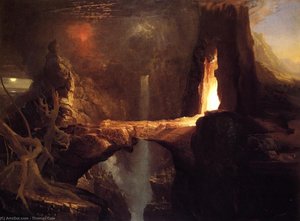 Wygnanie. Księżyc i Światło1828
 Widok Florencji z San Miniato1837

Eseje o Kaaterskill Falls
 Own a Masterpiece: The Timeless Elegance of Hand-Painted Oil Reproductions of the World's Most Iconic ArtworksDiscover the profound beauty of hand-painted oil reproductions. Our master academicians recreate the world's most iconic masterpieces on 10…
 Nature's Nation: The Hudson River School and the Art of the American SublimeExplore the spiritual depth of the Hudson River School through its masters. Discover the power of the American Sublime today.
 American Romanticism: Capturing the Soul of the Wild Frontier through the Hudson River SchoolExplore the profound beauty of American Romanticism. Discover how the Hudson River School captured the wild frontier through masterful land…