

 Podgląd w skali
 Wyślij jako kartkę
 Udostępnij
 Szczegóły dzieła

 Pobierz
 Podobne obiekty
 RTG
RTG Pokaz slajdów
Octave Maus Reading
 Oil On Canvas
- WallArt
- Post-Impressionism
 1883
1883- 19th Century
 55.0 x 38.0 cm
 Musée d'Ixelles
 Rozwiń treść
Giclée / Wydruk artystyczny
Druk giclée lub płótno o jakości muzealnej, szybka realizacja i szeroki wybór opcji wykończenia. ( Zamów ręcznie malowaną reprodukcję Kup obraz wysokiej rozdzielczości)




P118B $10

P118H $10

P118W $10

P438Z $10

P508JH $12

P508YH $12

P805H $10

P805Z $10

P919BZ $10

P919G $10

P919XJ $10

P959ZH $10

P968JZ $12

W106C $8

W218G $10

W218JH $8

W218Y $10

W307PJ $10

W316G $10

W316PJ $8

W316Y $10

W398PJ $8

W4111J $10

W500HY $15

W500JH $15

W692G $12

W849H $8

W940BG $15

W953PJ $8




Wybierz spośród naszych standardowych rozmiarów, które zachowują oryginalne proporcje dzieła sztuki.

Możesz wprowadzić własne wymiary, aby dopasować dzieło do konkretnej ramy lub przestrzeni. Jeśli wybrany rozmiar nie będzie odpowiadał proporcjom oryginalnego obrazu, przytniecie dzieło lub rozszerzymy obraz za pomocą odbicia lustrzanego lub jednolitego wypełnienia krawędzi. Przed rozpoczęciem produkcji prześlemy cyfrową wizualizację do Twojej akceptacji.
Prosimy pamiętać, że podgląd na ekranie nie odzwierciedla faktycznego przycinania ani rozszerzania. Tylko wizualizacja dokładnie pokaże końcową kompozycję.
Mimo dostępności niestandardowych rozmiarów, zalecamy wybór wymiaru z listy zdefiniowanej, aby zachować oryginalne proporcje.
Dostawa na cały świat () w ciągu 2 tygodni zamiast standardowych 4/5 tygodni. (27 Sierpień)

Bezpłatna ekspresowa wysyłka na cały świat

Wysokiej jakości płótno lniane

Pełne ubezpieczenie przesyłki

Gwarancja zwrotu należności celnych i podatków importowych

Gwarancja wiernego odwzorowania kolorów

Polityka 60-dniowego zwrotu (tylko w przypadku wad)

Gwarancja 100% zwrotu kosztów

Zniżka przy zamówieniu wielu produktów
 Opcja ze szkłem jest dostępna wyłącznie w rozmiarach poniżej 110 cm

Octave Maus Reading
Giclée / Wydruk artystyczny
Wymiary reprodukcji
-


Cena całkowita
$ 80
Octave Maus Reading: A Portrait of Quiet Contemplation by Theo van Rysselberghe
Theo van Rysselberghe’s 1883 painting, “Octave Maus Reading,” is more than just a portrait; it's an invitation to pause and observe the profound beauty of stillness. Housed within the Musée d'Ixelles in Brussels, this oil on canvas offers a glimpse into the private world of a gentleman lost in thought, rendered with the artist’s signature blend of realism and evocative light. Measuring 55 x 38 cm, the painting immediately draws the viewer in with its serene atmosphere and meticulous attention to detail.
- Subject Matter: The central figure, Octave Maus, is depicted seated comfortably in a chair, absorbed in reading – whether a book or newspaper remains subtly ambiguous. This simple act of reading becomes imbued with significance, representing intellectual pursuit, introspection, and the quiet pleasures of solitude.
- Technique & Style: Van Rysselberghe’s masterful use of warm earth tones—ochres, browns, and muted reds—creates a sense of deep comfort and tranquility. His brushwork is delicate yet precise, allowing light to softly illuminate the subject's face and clothing, contributing to the painting’s overall feeling of intimacy. The artist’s approach aligns perfectly with his post-impressionist style, prioritizing emotional resonance over strict representation.
Historical Context & Artistic Influences
Created during a period of significant artistic transition – bridging the late 19th century and the dawn of the 20th – “Octave Maus Reading” reflects the evolving tastes of the time. Van Rysselberghe, influenced by Impressionism’s focus on light and color, and Neo-Impressionism's use of complementary hues, sought to capture not just a likeness but also an emotional state. His Belgian artistic training at the Academy of Ghent under Theo Canneel provided him with a solid foundation in traditional realism, which he then skillfully adapted to his own unique vision. The inclusion of details like the dining table and scattered books adds depth to the scene, suggesting a space of intellectual engagement and leisurely contemplation – a common theme within Belgian artistic circles of the era.
Symbolism & Emotional Impact
Beyond its realistic depiction, “Octave Maus Reading” possesses a subtle symbolic weight. The act of reading itself is laden with meaning, representing knowledge, escape, and perhaps even a yearning for something beyond the immediate present. The carefully arranged background – the two chairs, the clock, and the scattered books – contributes to the painting’s sense of order and tranquility, reinforcing the feeling of peaceful contemplation. Van Rysselberghe's ability to evoke such a profound emotional response through seemingly simple subject matter is a testament to his artistic skill and sensitivity.
Owning a Piece of Art History
Handmade oil painting reproductions of “Octave Maus Reading” are now available from OriginalUniqueArt.com, offering art lovers the opportunity to bring this captivating post-impressionist masterpiece into their homes or offices. These meticulously crafted reproductions capture not only the visual details but also the emotional essence of Van Rysselberghe’s original work. Whether you're a seasoned collector, an interior designer seeking a touch of timeless elegance, or simply someone who appreciates beautiful art, this reproduction provides a unique and accessible way to experience the legacy of Theo van Rysselberghe.
O artyście
A Pioneer of Light: The Life and Art of Théo van Rysselberghe
Théophile “Théo” van Rysselberghe, born in Ghent, Belgium, in 1862, emerged as a pivotal figure bridging the gap between Impressionism and Neo-Impressionism. His journey wasn’t one of immediate stylistic conviction but rather an evolving exploration sparked by travel, intellectual exchange, and a relentless pursuit of capturing light's essence. Coming from a comfortably bourgeois French-speaking family, van Rysselberghe received his initial artistic training at the Academy of Ghent under Theo Canneel, followed by studies at the prestigious Académie Royale des Beaux-Arts in Brussels. These formative years instilled in him a foundation rooted in traditional realism, evident in early works like *Self-Portrait with Pipe* (1880), characterized by somber tones and meticulous detail—a reflection of the prevailing Belgian artistic climate. However, even within these early pieces, hints of a burgeoning sensitivity to light and color began to surface, foreshadowing his future trajectory.Moroccan Impressions and the Birth of Les XX
A transformative chapter unfolded with van Rysselberghe’s voyages to Morocco between 1882 and 1888. These extended sojourns immersed him in a world of vibrant colors, intense sunlight, and exotic landscapes—a stark contrast to the subdued tones of his earlier work. Paintings like *Arabian Street Cobbler* (1882), *Arabian Boy* (1882), and *Resting Guard* (1883) demonstrate a growing fascination with capturing the effects of light on form, moving away from strict realism towards a more impressionistic sensibility. The Moroccan experience wasn’t merely about visual observation; it was an immersion into a different culture that broadened his artistic horizons and instilled a lifelong love for travel. He documented these experiences in numerous paintings, seeking to capture not just the appearance but also the atmosphere of the North African world. Upon returning to Brussels, van Rysselberghe became a driving force in the Belgian art scene, co-founding the influential group *Les XX* (The Twenty) in 1883 alongside Octave Maus and Émile Verhaeren. This collective served as a platform for showcasing avant-garde art, introducing new movements like Impressionism and Symbolism to a Belgian audience largely unfamiliar with such innovations. *Arabian Phantasia* (1884), a large-scale exotic painting depicting a Moroccan scene, became his most celebrated work from this period, demonstrating his mastery of light and composition. The group’s aim was to foster artistic experimentation and challenge established norms within the Belgian art world.Embracing Neo-Impressionism: A Scientific Approach to Color
The true turning point in van Rysselberghe’s artistic development arrived with his encounter with Georges Seurat's *A Sunday on La Grande Jatte* at the eighth Impressionist exhibition in Paris in 1886. Initially skeptical of Seurat’s meticulous “pointillist” technique—the systematic application of tiny dots of pure color—van Rysselberghe gradually came to appreciate its scientific basis and potential for achieving luminous effects. He began experimenting with divisionism, the Neo-Impressionist method of separating colors into their constituent parts and allowing the viewer’s eye to blend them optically. This wasn't simply a technical shift; it represented a fundamental change in his approach to painting—a move towards a more analytical and objective representation of light and color. He forged close friendships with other Neo-Impressionist painters like Paul Signac, traveling with him along the French Riviera and exchanging ideas about technique and theory. Van Rysselberghe distinguished himself within the movement by applying pointillism not only to landscapes but also to portraiture, creating strikingly vibrant and psychologically insightful likenesses of his family and friends—works such as *Madame Charles Maus* (1890) are prime examples. The meticulous layering of tiny dots created a shimmering effect, capturing the nuances of light and atmosphere with remarkable precision.A Lasting Legacy: Beyond Pointillism
While deeply committed to Neo-Impressionism for a significant period, van Rysselberghe eventually moved beyond its strict tenets in the late 1890s. He sought greater freedom in his brushwork and compositions, exploring new ways to express emotion and atmosphere. He continued to be a prolific artist, working in various media including furniture design, book illustration, and decorative arts. His influence extended far beyond Belgium, impacting artists like Piet Mondrian and Jan Toorop who were inspired by his innovative use of color and light. He also experimented with Symbolist themes, incorporating elements of mysticism and dream imagery into his work. His dedication to exploring the interplay of light, color, and form cemented his place as a true pioneer of modern painting. Van Rysselberghe’s works are now held in prominent museum collections worldwide, including the Musée du Luxembourg in Paris and the Museum voor Schone Kunsten in Ghent, ensuring that his contribution to the history of art continues to be celebrated and appreciated by generations to come. His legacy lies not only in his beautiful paintings but also in his role as a catalyst for artistic change—a champion of modernism who helped introduce new ideas and techniques to the Belgian art world.Key Works
* *Self-Portrait with Pipe* (1880) * *Child in an Open Spot of the Forest* (1880) * *Arabian Street Cobbler* (1882) * *Arabian Boy* (1882) * *Resting Guard* (1883) * *La Pointe Perkiridec Near Roscoff in Brittany* (1889) * *Madame Charles Maus* (1890) * *Family in the Orchard* (1890)
Teofil van Rysselberghe
1862 - 1926 , Belgia
Krótka nota
- Artistic Movement Or Style: Neo-Impressionizm
- Artists Or Movements Influenced By This Artist:
- Piet Mondrian
- Jan Toorop
- Artists Who Influenced This Artist:
- Jean-François Portaels
- Georges Seurat
- Paul Signac
- Date Of Birth: 23 listopada 1862
- Date Of Death: 13 grudnia 1926
- Full Name: Théo van Rysselberghe
- Nationality: Belgijski
- Notable Artworks:
- Arabian Phantasia
- Sevillan Woman
- Place Of Birth: Ghent, Belgia
Powiązane artykuły
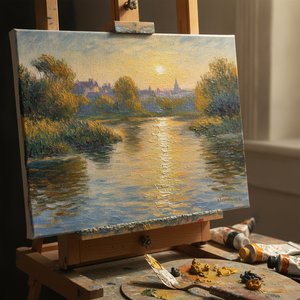
The Soul of Impressionism: Why Oil on Canvas Captures Eternal Light and Timeless Emotion
Discover the enchanting alchemy of Impressionism. Explore how the mastery of oil on canvas, through glazing and impasto, captures eternal light and emotion. Perfect for lovers of Monet and Van Gogh seeking the profound depth of hand-painted fine art.

10 Arcydzieł Postimpresjonizmu, Które Zdefiniowały Sztukę. Inspiracje do Dekoracji Domu.
Odkryj 10 arcydzieł postimpresjonizmu Van Gogha, Moneta i Cézanne'a! Poznaj historie artystów, techniki malarskie i inspiracje do dekoracji wnętrz. Reprodukcje obrazów najwyższej jakości na OriginalUniqueArt.com – sztuka dla Twojego domu.

Olej na płótnie: Historia, techniki i ponadczasowy urok malarskiego medium
Poznaj historię i techniki malarstwa olejowego! Od renesansowych mistrzów po współczesne zastosowania – wszystko o oleju na płótnie. Poradniki, konserwacja i inspiracje dla pasjonatów sztuki.

Trwała Spuścizna Malarstwa Olejnego: Technika, Historia i Estetyczny Wpływ
Poznaj historię i technikę malarstwa olejnego! Eksperckie artykuły o konserwacji, renowacji oraz współczesnych zastosowaniach. Dowiedz się więcej o mistrzach i trwałości obrazów olejnych.

Rembrandt van Rijn: 25 Najwybitniejszych Dzieł Sztuki – Reprodukcje i Inspiracje do Wnętrz
Poznaj 25 arcydzieł Rembrandta van Rijn! Odkryj fascynujące historie, techniki i wpływ holenderskiego mistrza baroku na świat sztuki. Reprodukcje obrazów najwyższej jakości – inspiracje do wnętrz na OriginalUniqueArt.com



