

 Zobacz w skali 1:1
 Wyślij
 Udostępnij
 Szczegóły
 Przewodnik

 Pobierz plik obrazu
 Podobne obiekty
 RTG
RTG Pokaz slajdów
 Statystyki
Card players
 Acrylic On Canvas
- WallArt
- Neoplasticism / De Stijl
 1917
1917 1562.0 x 1262.0 cm
 Kunstmuseum
 Czytaj więcej
Giclée / Wydruk artystyczny
Wydruki giclée lub płótna o jakości muzealnej, szybka realizacja i szeroki wybór opcji wykończenia. ( Kup ręcznie malowany obraz Przełącz na wersję cyfrową)




P118B zł10

P118H zł10

P118W zł10

P438Z zł10

P508JH zł12

P508YH zł12

P805H zł10

P805Z zł10

P919BZ zł10

P919G zł10

P919XJ zł10

P959ZH zł10

P968JZ zł12

W106C zł8

W218G zł10

W218JH zł8

W218Y zł10

W307PJ zł10

W316G zł10

W316PJ zł8

W316Y zł10

W398PJ zł8

W4111J zł10

W500HY zł15

W500JH zł15

W692G zł12

W849H zł8

W940BG zł15

W953PJ zł8




Wybierz spośród naszych standardowych rozmiarów, które zachowują oryginalne proporcje dzieła sztuki.

Możesz wprowadzić własne wymiary, aby dopasować dzieło do konkretnej ramy lub przestrzeni. Jeśli wybrany rozmiar nie będzie odpowiadał proporcjom oryginalnego obrazu, przytniecie dzieło lub rozszerzymy obraz za pomocą odbicia lustrzanego lub jednolitego wypełnienia krawędzi. Przed rozpoczęciem produkcji prześlemy cyfrową wizualizację do Twojej akceptacji.
Prosimy pamiętać, że podgląd na ekranie nie odzwierciedla faktycznego przycinania ani rozszerzania. Tylko wizualizacja dokładnie pokaże końcową kompozycję.
Mimo dostępności niestandardowych rozmiarów, zalecamy wybór wymiaru z listy zdefiniowanej, aby zachować oryginalne proporcje.
Dostawa na cały świat () w ciągu 2 tygodni zamiast standardowych 4/5 tygodni. (5 Październik)

Bezpłatna ekspresowa wysyłka na cały świat

Wysokiej jakości płótno lniane

Pełne ubezpieczenie transportowe

Gwarancja zwrotu należności celnych i podatków importowych

Gwarancja idealnego odwzorowania barw

100-dniowy okres na zwrot dzieła w przypadku wykrycia wad produkcyjnych

Gwarancja 100% zwrotu pieniędzy

Oferta przy zakupie wielu sztuk
 Opcja ze szkłem jest dostępna wyłącznie w rozmiarach poniżej 110 cm

Card players
Giclée / Wydruk artystyczny
Rozmiar reprodukcji
-


Suma do zapłaty
zł 297
The Genesis of Abstraction: Van Doesburg’s “Card Players”
Theo van Doesburg's "Card Players," painted in the spring of 1917, isn’t merely a depiction of a game; it’s a pivotal moment in the evolution of modern art. Emerging from the fertile ground of early 20th-century experimentation, this work embodies the core tenets of De Stijl and Neoplasticism – a radical departure from representational painting towards pure abstraction. The canvas itself is a carefully constructed stage, dominated by a stark white background that serves to amplify the geometric forms and their interplay. Van Doesburg, deeply influenced by Bart van der Leck’s earlier explorations of fragmented figures, took this concept to its logical extreme, dissolving human form into a series of interlocking, simplified shapes – circles, squares, and lines – arranged with meticulous precision.

Image: Card Players by Theo van Doesburg (Kunstmuseum Den Haag)
Deconstructing the Human Form: A Geometric Language
The figures within “Card Players” are not portraits in the traditional sense. Instead, they’ve been meticulously broken down and rebuilt using a vocabulary of pure geometry. The seated man, leaning forward with an air of focused concentration, is rendered as a collection of overlapping rectangles and circles. His posture, his hands – even the suggestion of his face – are conveyed through these abstracted shapes, creating a sense of both familiarity and detachment. The other figures share this treatment, their bodies dissolving into a dynamic arrangement of lines and forms that suggest movement and interaction without explicitly depicting action. This deliberate fragmentation reflects Van Doesburg’s belief that art should transcend the limitations of imitation and instead communicate directly through its formal elements – color, line, shape.
The painting's composition is remarkably balanced, achieved through a careful consideration of negative space and the relationships between the geometric forms. The stark contrast between the white background and the dark shapes creates a powerful visual impact, drawing the viewer’s eye to the intricate arrangement of elements on the canvas. It’s a testament to Van Doesburg's mastery of abstraction – a demonstration that beauty and meaning can be found not in representation but in the precise manipulation of form.
Historical Context: The Birth of De Stijl
“Card Players” was created during a period of intense artistic ferment, as European artists grappled with the challenges of modernity. The rise of industrialization, urbanization, and new technologies were profoundly impacting society, leading to a questioning of traditional values and aesthetics. Van Doesburg, along with Piet Mondrian and other members of De Stijl, sought to create a new visual language that reflected this changing world – one based on clarity, simplicity, and geometric harmony. The movement’s core principles extended beyond painting to encompass architecture, design, and even music, aiming for a total synthesis of art and life.
Van Doesburg's encounter with Bart van der Leck’s earlier work in 1916 proved crucial to the development of this aesthetic. Van der Leck’s fragmented figures provided a springboard for Van Doesburg’s own explorations, leading him to embrace abstraction as a means of expressing universal truths and spiritual values. “Card Players” stands as a direct result of this intellectual and artistic dialogue – a culmination of these ideas into a single, powerful image.
Symbolism and Emotional Resonance
While seemingly simple in its composition, "Card Players" is rich with symbolic meaning. The game itself represents human interaction, competition, and the pursuit of pleasure. The abstracted figures suggest a detachment from individual identity, inviting viewers to contemplate the universal themes of social dynamics and the nature of reality. The stark white background symbolizes purity and clarity, while the geometric forms represent order and harmony – values that were central to De Stijl’s philosophy.
Ultimately, “Card Players” is a work of profound emotional resonance. Despite its abstract form, it evokes a sense of quiet contemplation and intellectual curiosity. It's an invitation to engage with the complexities of modern life through the lens of geometric abstraction – a timeless masterpiece that continues to inspire artists and art lovers alike.
Pytania i odpowiedzi
Jaką nasycenie i intensywność prezentuje „Card players” autorstwa Teo van Doesburg?
Kolor dzieła "Card players" charakteryzuje się nasyceniem na poziomie Subtle Color oraz intensywnością wynoszącą Balanced.
Jakiej techniki użyto do wykonania „Card players” autorstwa Teo van Doesburg?
Teo van Doesburg wykorzystał/a technikę Acrylic On Canvas w pracy "Card players". Technika ta definiuje materię oryginalnego dzieła.
Jakie są prawa do reprodukcji dzieła "Card players" znajdującego się w Kunstmuseum?
Status praw autorskich do dzieła „Card players” autorstwa Teo van Doesburg jest jasny: utwór znajduje się w stanowi domenę publiczną – autorskie prawa majątkowe wygasły. Jego obecność w Kunstmuseum nie zmienia tego stanu rzeczy.
W jakim wieku Teo van Doesburg stworzył(a) "Card players"?
Teo van Doesburg miał 34 lat, tworząc „Card players” w 1917. Wiek ten został obliczony na podstawie roku urodzenia artysty, 1883.
Kto jest autorem dzieła "Card players"?
„Card players” zostało stworzone przez Teo van Doesburg. Informacje na tej stronie opisują oryginalne dzieło autorstwa Teo van Doesburg.
Jaka jest data powstania dzieła „Card players” autorstwa Teo van Doesburg?
Dzieło "Card players" pochodzi z 1917 roku. Data ta pozwala umiejscowić pracę w kontekście twórczości Teo van Doesburg oraz epoki, w której powstała.
Czy „Card players” autorstwa Teo van Doesburg znajduje się w domenie publicznej?
Jeśli chodzi o prawa autorskie, "Card players" znajduje się w stanowi domenę publiczną – autorskie prawa majątkowe wygasły.
Biografia artysty
The Architect of Abstraction: A Life in Geometric Harmony
Theo van Doesburg, born Christian Emil Marie Küpper in 1883 in Utrecht, Netherlands, wasn’t merely a painter; he was a revolutionary force who fundamentally reshaped the landscape of modern art. His journey began amidst the lingering echoes of Impressionism and Post-Impressionism – initially mirroring styles reminiscent of Vincent van Gogh – both in subject matter and emotional intensity. However, this early phase served as a crucial prelude, a necessary stepping stone toward the radical transformation that would define his enduring legacy. A pivotal moment arrived in 1913 with his encounter with Wassily Kandinsky’s *Rückblicke*. This text ignited within van Doesburg a profound realization: true artistic expression lay not in replicating the external world but in channeling an inner, spiritual reality through pure abstraction. It was this conviction that birthed Neoplasticism – more commonly known as De Stijl – a movement he founded and fiercely championed, becoming its most ardent advocate.Forging a New Visual Language: The Principles of De Stijl
De Stijl wasn’t simply an artistic style; it was a comprehensive philosophical manifesto translated into visual form. Van Doesburg believed in stripping art down to its most essential elements – straight lines, right angles, and the primary colors of red, yellow, and blue, alongside black, white, and gray. This austere palette wasn't born from limitation but from a desire for universality—a belief that these fundamental forms resonated with an underlying cosmic order. He envisioned a *total* work of art, extending beyond the canvas to encompass architecture, design, and even everyday objects. Collaboration was key; van Doesburg worked closely with architects like J.J.P. Oud and Gerrit Rietveld, designing stained glass windows, furniture, and entire interiors that embodied the principles of De Stijl. His collaborations extended to fellow artists such as Piet Mondrian, with whom he co-founded the influential journal *De Stijl*, a platform for disseminating their ideas and attracting like-minded creatives. However, despite their shared origins, tensions arose between van Doesburg and Mondrian regarding the rigidity of Neoplasticism. Van Doesburg introduced “Elementarism” in 1926, advocating for diagonal lines and more dynamic compositions – a departure that ultimately led to a schism within the movement, revealing his restless spirit and constant pursuit of artistic evolution.A Multifaceted Artistic Vision: Beyond Painting
While celebrated as a painter, van Doesburg’s artistic pursuits were remarkably diverse. He was a prolific writer, poet, and critic, using his pen to articulate the theoretical underpinnings of De Stijl and challenge conventional notions of art. His engagement with Dadaism in the early 1920s further broadened his artistic horizons, leading to experimental works that incorporated collage and typography. This period also saw him teaching at the Bauhaus, where he shared his ideas with a new generation of artists and designers. He wasn’t content to remain within the confines of traditional art forms; van Doesburg actively sought to integrate art into everyday life, believing it had the power to transform society. His designs for interiors and furniture weren't merely aesthetic exercises but attempts to create harmonious living spaces that reflected the principles of De Stijl. A prime example is his collaboration with Sophie Taeuber-Arp and Georges Vantongerloo on designing artist residences, showcasing a holistic approach to artistic creation – an attempt to build a world *in* the image of his ideals.Key Works & Lasting Influence
- Study for Simultaneous Compositions XXII (1922): A quintessential example of Neoplasticism, showcasing the movement’s signature geometric forms and limited color palette.
- Composition with half values (1928): Demonstrates van Doesburg's exploration of tonal variations within the De Stijl aesthetic.
- Dancers (1917-1918): Represents a transitional phase in his work, blending figurative elements with emerging abstract tendencies.
- Collaboration on *De Stijl* journal: A crucial platform for disseminating the movement’s ideas and fostering dialogue among artists and intellectuals.
- Elementarism (1926): Van Doesburg's attempt to inject dynamism into Neoplasticism, introducing diagonal lines and a more fluid approach to composition.
The Architect of Abstraction: A Life in Geometric Harmony
Theo van Doesburg, born Christian Emil Marie Küpper in 1883 in Utrecht, Netherlands, was more than a painter; he was a revolutionary force who reshaped the very foundations of modern art. His journey began amidst the lingering echoes of Impressionism and Post-Impressionism, initially mirroring styles reminiscent of Vincent van Gogh – both in subject matter and emotional intensity. However, this early phase served as a crucial prelude, a necessary stepping stone toward the radical transformation that would define his enduring legacy. A pivotal moment arrived in 1913 with his encounter with Wassily Kandinsky’s *Rückblicke*. This text sparked within van Doesburg a profound realization: true artistic expression lay not in replicating the external world but in channeling an inner, spiritual reality through pure abstraction. It was this conviction that birthed Neoplasticism – more commonly known as De Stijl – a movement he founded and fiercely championed, becoming its most ardent advocate.Forging a New Visual Language: The Principles of De Stijl
De Stijl wasn’t simply an artistic style; it was a comprehensive philosophical manifesto translated into visual form. Van Doesburg believed in stripping art down to its most essential elements – straight lines, right angles, and the primary colors of red, yellow, and blue, alongside black, white, and gray. This austere palette wasn't born from limitation but from a desire for universality—a belief that these fundamental forms resonated with an underlying cosmic order. He envisioned a *total* work of art, extending beyond the canvas to encompass architecture, design, and even everyday objects. Collaboration was key; van Doesburg worked closely with architects like J.J.P. Oud and Gerrit Rietveld, designing stained glass windows, furniture, and entire interiors that embodied the principles of De Stijl. His collaborations extended to fellow artists such as Piet Mondrian, with whom he co-founded the influential journal *De Stijl*, a platform for disseminating their ideas and attracting like-minded creatives. However, despite their shared origins, tensions arose between van Doesburg and Mondrian regarding the rigidity of Neoplasticism. Van Doesburg introduced “Elementarism” in 1926, advocating for diagonal lines and more dynamic compositions – a departure that ultimately led to a schism within the movement, revealing his restless spirit and constant pursuit of artistic evolution.A Multifaceted Artistic Vision: Beyond Painting
While celebrated as a painter, van Doesburg’s artistic pursuits were remarkably diverse. He was a prolific writer, poet, and critic, using his pen to articulate the theoretical underpinnings of De Stijl and challenge conventional notions of art. His engagement with Dadaism in the early 1920s further broadened his artistic horizons, leading to experimental works that incorporated collage and typography. This period also saw him teaching at the Bauhaus, where he shared his ideas with a new generation of artists and designers. He wasn’t content to remain within the confines of traditional art forms; van Doesburg actively sought to integrate art into everyday life, believing it had the power to transform society. His designs for interiors and furniture weren't merely aesthetic exercises but attempts to create harmonious living spaces that reflected the principles of De Stijl. A prime example is his collaboration with Sophie Taeuber-Arp and Georges Vantongerloo on designing artist residences, showcasing a holistic approach to artistic creation – an attempt to build a world *in* the image of his ideals.Key Works & Lasting Influence
- Study for Simultaneous Compositions XXII (1922): A quintessential example of Neoplasticism, showcasing the movement’s signature geometric forms and limited color palette.
- Composition with half values (1928): Demonstrates van Doesburg's exploration of tonal variations within the De Stijl aesthetic.
- Dancers (1917-1918): Represents a transitional phase in his work, blending figurative elements with emerging abstract tendencies.
- Collaboration on *De Stijl* journal: A crucial platform for disseminating the movement’s ideas and fostering dialogue among artists and intellectuals.
- Elementarism (1926): Van Doesburg's attempt to inject dynamism into Neoplasticism, introducing diagonal lines and a more fluid approach to composition.

Teo van Doesburg
1883 - 1931 , Holandia
Najważniejsze informacje
- Artistic Movement Or Style: De Stijl, Neoplastyzm
- Artists Or Movements Influenced By This Artist:
- Bauhaus
- Minimalizm
- Artists Who Influenced This Artist:
- Wassili Kandinsky
- Vincent van Gogh
- Date Of Birth: 30 sierpnia 1883
- Date Of Death: 7 marca 1931
- Full Name: Christian Emil Marie Küpper
- Nationality: Holender
- Notable Artworks:
- Badanie dla kompozycji z półwartościami
- Kompozycja z półwartościami
- Tancerze
- Place Of Birth: Utrecht, Holandia
Zobacz także powiązane artykuły

Francisco Goya: 25 Arcydzieł Genialnego Malarza Hiszpańskiego | OriginalUniqueArt.pl
Odkryj 25 arcydzieł Francisco Goyi – od portretów królewskich po dramatyczne 'Czarne Malowidła'. Poznaj historię, technikę i emocje hiszpańskiego mistrza. Reprodukcje obrazów najwyższej jakości na OriginalUniqueArt.com! Eksploruj kolekcję online.

10 Arcydzieł Wczesnoniderlandzkiego Malarstwa, które Zdefiniowały Epokę | Reprodukcje Obrazów
Odkryj 10 arcydzieł wczesnoniderlandzkiego malarstwa! Poznaj historie van Eycka, Weydena i Memlinga. Reprodukcje obrazów najwyższej jakości dla Twojego wnętrza. Inspiracje i dekoracje ścienne na OriginalUniqueArt.com

O nas
Odkryj naszą historię! Wprowadzamy światowej klasy sztukę do Twojego życia dzięki starannie dobranym dziełom, personalizowanym kreacjom i bezpłatnym podglądom. Cenione przez osoby prywatne i firmy od 2000 roku.

Rembrandt van Rijn: 25 Najwybitniejszych Dzieł Sztuki – Reprodukcje i Inspiracje do Wnętrz
Poznaj 25 arcydzieł Rembrandta van Rijn! Odkryj fascynujące historie, techniki i wpływ holenderskiego mistrza baroku na świat sztuki. Reprodukcje obrazów najwyższej jakości – inspiracje do wnętrz na OriginalUniqueArt.com
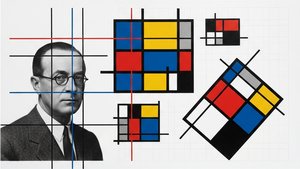
Theo van Doesburg: Pioneering De Stijl & the Evolution of Neo-Plasticism
Explore the revolutionary De Stijl movement & Neo-Plasticism with our expert guide. Discover Piet Mondrian, Theo van Doesburg, and the lasting impact of this influential art style. Learn about collecting & investing in De Stijl masterpieces.
