

 Podgląd w skali 1:1
 Wyślij jako kartkę
 Udostępnij
 Szczegóły dzieła
 Przewodnik

 Pobierz obraz
 Podobne obiekty
 RTG
RTG Pokaz slajdów
 Statystyki
Ukośny bieg
 Olej na płótnie
- Sztuka ścienna
- American Impressionism
 1885
1885- XIX wiek
 46.0 x 66.0 cm
 Indianapolis Museum of Art
 Rozwiń treść
Giclée / Wydruk artystyczny
Wydruki giclée lub płótna o jakości muzealnej, szybka realizacja i szeroki wybór opcji wykończenia. ( Zamów ręcznie malowaną reprodukcję Przejdź do wersji cyfrowej)




P118B zł10

P118H zł10

P118W zł10

P438Z zł10

P508JH zł12

P508YH zł12

P805H zł10

P805Z zł10

P919BZ zł10

P919G zł10

P919XJ zł10

P959ZH zł10

P968JZ zł12

W106C zł8

W218G zł10

W218JH zł8

W218Y zł10

W307PJ zł10

W316G zł10

W316PJ zł8

W316Y zł10

W398PJ zł8

W4111J zł10

W500HY zł15

W500JH zł15

W692G zł12

W849H zł8

W940BG zł15

W953PJ zł8




Wybierz spośród naszych standardowych rozmiarów, które zachowują oryginalne proporcje dzieła sztuki.

Wpisz wymaganą szerokość i wysokość, aby dopasować grafikę do ramy lub ściany. Wydruk można jedynie przyciąć, nigdy nie powiększając go poza oryginalny obraz, dlatego format o innych proporcjach spowoduje utratę części kompozycji. Przed rozpoczęciem druku prześlemy Ci cyfrowy podgląd do zatwierdzenia. Obraz wyświetlany na tej stronie nie pokazuje rzeczywistego przycięcia — jedynie podgląd oddaje ten efekt.
Dostawa na cały świat () w ciągu 2 tygodni zamiast standardowych 4/5 tygodni. (26 Październik)

Bezpłatna ekspresowa wysyłka na cały świat

Wysokiej jakości płótno lniane

Pełne ubezpieczenie przesyłki

Gwarancja zwrotu należności celnych i podatków importowych

Gwarancja wiernego odwzorowania kolorów

100-dniowa polityka zwrotów (tylko w przypadku wad)

Gwarancja 100% zwrotu pieniędzy

Zniżka przy zakupie wielu sztuk
 Opcja ze szkłem jest dostępna wyłącznie w rozmiarach poniżej 110 cm

Ukośny bieg
Giclée / Wydruk artystyczny
Wymiary reprodukcji
-


Cena całkowita
zł 307
Serenity Captured: “Pleasant Run” by Theodore Clement Steele
Theodore Clement Steele’s “Pleasant Run,” painted in 1885, is more than just a landscape; it's an immersion into a world of quiet contemplation and the subtle beauty of the American Midwest. This evocative work, now beautifully reproduced on OriginalUniqueArt.com, transports us to a misty autumn scene – a stream meandering through a dense woodland, reflecting the muted light of a gray sky. Steele’s genius lies in his ability to capture not just what he saw, but also the feeling of being enveloped by nature's tranquility, a hallmark of his distinctive Impressionist style.
A Fusion of European Refinement and American Soul
Steele’s artistic journey was one profoundly shaped by his time in Europe. After studying at the Royal Academy in Munich, he returned to America with a renewed appreciation for light and color, yet remained deeply rooted in the landscapes of his native Indiana. “Pleasant Run” exemplifies this synthesis – it's a testament to Steele’s ability to blend European techniques, particularly the atmospheric effects favored by Impressionists like Monet and Pissarro, with a distinctly American sensibility. The loose brushstrokes, almost vibrating with movement, aren’t intended for photographic realism; instead, they aim to convey the *impression* of the scene – the fleeting quality of light, the dampness of the air, the rustling of leaves.
The Language of Light and Color
Observe closely the masterful use of color in “Pleasant Run.” Steele employs a palette dominated by browns, greens, and grays, creating an atmosphere of subdued elegance. The layering of paint – a technique known as *glazing* – builds up depth and luminosity, particularly around the water’s surface where light catches and dances. Note how he uses diffused lighting to soften the edges of the trees and create a sense of atmospheric perspective; distant elements are rendered in paler hues, subtly suggesting their greater distance. The composition itself is carefully balanced, with the stream acting as a visual anchor, drawing the eye into the heart of the scene. A small bridge adds a touch of human presence, grounding the viewer within this serene wilderness.
Symbolism and Emotional Resonance
Beyond its aesthetic beauty, “Pleasant Run” resonates with deeper symbolic meaning. The misty landscape evokes feelings of introspection and solitude – it’s an invitation to pause and reflect on the passage of time. The autumnal colors—the yellows, browns, and reds—represent change and decay, a poignant reminder of nature's cyclical rhythms. The presence of the cow grazing peacefully by the stream further reinforces this sense of tranquility and harmony with the natural world. Steele wasn’t simply painting a picturesque scene; he was communicating an emotional experience – a longing for simplicity, connection to nature, and a quiet appreciation for beauty.
A Timeless Addition to Your Space
Reproduced with meticulous attention to detail by OriginalUniqueArt.com, “Pleasant Run” offers a stunning opportunity to bring the serenity of Steele’s landscape into your home or office. This artwork is ideal for creating a calming and contemplative atmosphere – perfect for a reading nook, meditation space, or simply as a focal point in any room. Its timeless beauty and evocative power will undoubtedly enrich your surroundings and inspire a sense of peace and wonder. Explore the high-quality reproduction available on OriginalUniqueArt.com today and experience the magic of “Pleasant Run” firsthand.
Pytania i odpowiedzi
W jakim wieku Teodor Clement Steele stworzył(a) "Ukośny bieg"?
Teodor Clement Steele miał 38 lat w momencie powstania „Ukośny bieg” w 1885. Wiek ten obliczono na podstawie roku urodzenia artysty, 1847.
Ile światła zdają się odbijać kolory dzieła "Ukośny bieg"?
„Ukośny bieg” – Teodor Clement Steele ma luminancję na poziomie Subtelna luminancja. Luminancja określa, jak dużą ilość światła zdają się odbijać kolory.
Jaki jest zalecany rozmiar wydruku dla „Ukośny bieg” – Teodor Clement Steele?
Dla dzieła „Ukośny bieg” – Teodor Clement Steele sugerowana jest reprodukcja w formacie Format średni. Rozmiar można dostosować, zachowując proporcje.
Biografia artysty
A Luminary of the American Landscape: The Life and Art of Theodore Clement Steele
Theodore Clement Steele, a name inextricably linked to the flourishing of American Impressionism, stands as a pivotal figure in our nation’s artistic heritage. Born in 1847 amidst the serene beauty of Owen County, Indiana, his journey was one marked by dedicated study, transatlantic influences, and an unwavering commitment to translating the soul of his native land onto canvas. His life unfolded during a period of profound transformation – a time when American art sought to break free from mere imitation of European masters, forging its own distinct visual language rooted in the experiences of its people. From humble beginnings sketching in the rolling hills of Indiana, Steele embarked on a path that led him to Munich’s prestigious Royal Academy and back again, forever shaped by his experiences yet deeply connected to the landscapes he held dear. He wasn't simply painting what he saw; he was conveying an emotional resonance with nature, imbuing each work with a sense of quiet contemplation and profound beauty.European Training and the Embrace of Impressionism
Steele’s artistic inclinations were nurtured early on through initial studies at Indiana State University, providing him with a solid foundation in drawing and painting techniques. However, recognizing the need for more rigorous training and exposure to contemporary artistic trends, he ventured to Europe in 1880, settling in Munich – a vibrant hub of artistic innovation during that era. It was here, amidst the bustling studios and galleries of Germany, that Steele truly blossomed, immersing himself fully in the burgeoning Impressionist movement. The influence of French masters like Monet and Pissarro is undeniably present in his evolving style; a shift away from the darker, more academic palettes prevalent in earlier art towards brighter, more luminous colors and broken brushstrokes – a technique designed to capture the fleeting effects of light and atmosphere. This wasn’t merely a superficial adoption; it represented a fundamental philosophical change. Steele began prioritizing the *feeling* of being present in a particular moment, striving to convey not just what he saw but also how it *felt* to experience that scene. He meticulously studied the way sunlight danced through leaves, the subtle shifts in color as clouds drifted across the sky, and the interplay of light and shadow on landscapes – skills he would later bring back to his beloved Indiana.The Hoosier Group and a Distinctly American Vision
Upon returning to Indiana in 1885, Steele became an integral part of the “Hoosier Group,” a collective of artists dedicated to establishing a uniquely American style of landscape painting. Alongside fellow artists like William Forsyth, J. Ottis Adams, Richard B. Gruelle, and Otto Stark, he championed the depiction of Midwestern landscapes – the rolling hills, lush forests, and tranquil waterways of his homeland. While deeply influenced by European techniques and artistic principles, Steele and his colleagues were determined to create a distinctly *American* vision. They sought to capture the spirit of their region, its rugged beauty, and its quiet charm, moving beyond mere topographical representation. This synthesis resulted in works that possessed both technical sophistication – honed through years of study abroad – and an authentic sense of place, reflecting the unique character of Indiana’s natural world. Steele's portraits also garnered recognition, including commissions to paint official portraits of several Indiana governors, demonstrating his versatility as an artist.The House of the Singing Winds and a Legacy of Inspiration
Steele’s artistic journey reached its zenith in 1907 when he purchased a vast tract of land in Brown County, Indiana, and built “The House of the Singing Winds” – a home and studio that became both his personal sanctuary and a beacon for future generations of artists. This idyllic setting, surrounded by rolling hills and dense forests, provided him with endless inspiration and allowed him to fully immerse himself in his artistic pursuits. The house quickly became a gathering place for fellow artists, fostering a vibrant community known as the Brown County Art Colony – a testament to Steele’s generosity and vision. He later married Selma Neubacher, the sister of his son-in-law, solidifying this creative haven. In 1922, Steele accepted an honorary professorship at Indiana University in Bloomington, further cementing his role as a mentor and advocate for the arts within his state. His legacy extends beyond his paintings; he was a dedicated educator, lecturer, and champion of artistic expression.A Lasting Impression on American Art
Theodore Clement Steele’s work continues to captivate audiences today, not only for its aesthetic beauty but also for its historical significance. He played a crucial role in bridging the gap between European traditions and American innovation, helping to forge a uniquely American artistic identity. His paintings are held in prestigious collections across the country – including those of the Indianapolis Museum of Art, the Los Angeles County Museum of Art, and the Indiana University Art Museum – serving as enduring reminders of his talent and vision. Steele’s ability to translate light, color, and emotion onto canvas ensures his place as a true luminary in the history of American art, inspiring generations of artists to embrace their own unique perspectives and capture the beauty that surrounds them. His work stands as a testament to the power of observation, dedication, and a profound connection with the natural world.
Teodor Clement Steele
1847 - 1926 , Stany Zjednoczone
Krótka nota
- Artistic Movement Or Style: Impresjonizm amerykański
- Artists Or Movements Influenced By This Artist: ['Hoosier Group']
- Artists Who Influenced This Artist: ['Malarze francuscy']
- Date Of Birth: 11 września 1847
- Date Of Death: 24 lipca 1926
- Full Name: Theodore Clement Steele
- Nationality: Amerykański
- Notable Artworks:
- Indian Summer
- The Artist's Garden
- Place Of Birth: Owen County, USA
Powiązane artykuły
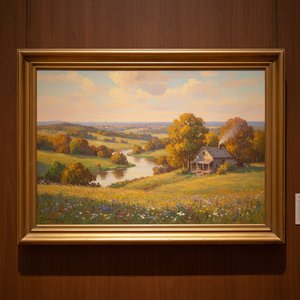
Theodore Clement Steele: American Impressionism's Hoosier Visionary – A Comprehensive Exploration of Life, Art, and Legacy
Explore the life & art of Theodore Clement Steele, a leading American Impressionist painter. Discover his luminous Indiana landscapes, contributions to the Hoosier Group, and enduring legacy. A comprehensive guide for art enthusiasts.

Herman Armour Webster: Capturing Atmospheric Light in American Impressionism
Explore the captivating world of Herman Armour Webster, an American Impressionist master. Discover his Parisian influences, unique style, and lasting legacy with OriginalUniqueArt.

Frederick Childe Hassam: American Impressionism's Chronicler of Light & Modern Life
Explore the captivating world of Frederick Childe Hassam, a pioneer of American Impressionism. Discover his iconic paintings capturing light, urban life & coastal beauty. Learn about his legacy and influence on American art history.

Grant Wood & American Regionalism: Identity, Myth & the Rural Landscape
Explore the world of Grant Wood & American Regionalism with OriginalUniqueArt. Discover the symbolism behind 'American Gothic', recurring themes, and the movement's lasting impact on art history. High-quality reproductions available.
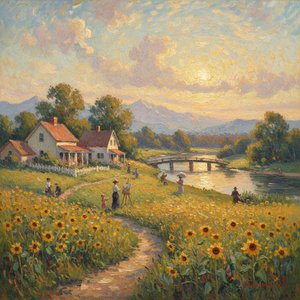
Uchwycenie Światła Narodu: Amerykański Impresjonizm – Ewolucja i Dziedzictwo Ruchu
Odkryj fascynujący świat amerykańskiego impresjonizmu! Poznaj historię, kluczowych artystów i unikalne cechy tego wyjątkowego ruchu. Ekspercka analiza i piękne reprodukcje obrazów na OriginalUniqueArt.com.

