Przełącz na wydania drukowane
 Rozwiń treść







































 W przypadku dzieł sztuki lub reprodukcji, których którykolwiek z boków przekracza 105 cm (około 41 cali), rama zostanie wysłana w formie zestawu do samodzielnego montażu. Metoda ta zapewnia bezpieczną dostawę i zapobiega uszkodzeniom podczas transportu.


Unable to Wait - Telemaco Signorini: A Window Into Tuscan Modernity
“Unable to Wait,” painted in 1867 by Telemaco Signorini, stands as a cornerstone of the Macchiaioli movement—a revolutionary artistic endeavor that irrevocably altered the landscape of Italian painting. More than just a depiction of a scene; it’s an embodiment of Signorini's profound engagement with the burgeoning spirit of modern Tuscany and his unwavering commitment to capturing fleeting moments of natural light and emotion.
Historical Context & The Macchiaioli Movement
The Macchiaioli (“the spot painters”) emerged in Florence during the mid-1860s as a defiant reaction against the academic conventions dominating artistic circles. Dissatisfied with idealized portrayals of history and mythology, these artists sought to liberate painting from dogma, prioritizing direct observation of nature—specifically *plein air* painting—over studio reproductions. Giovanni Fattori, Giuseppe De Nittis, Silvestro Lega, and Signorini himself formed the core group, united by a shared desire to depict life as it truly unfolded.
Subject Matter & Composition: A Domestic Scene Illuminated
The artwork portrays a young lady seated at an easel in what appears to be an artist’s studio. This intimate setting—a deliberate choice reflecting Signorini's fascination with capturing everyday life—is bathed in dramatic light, characteristic of the Macchiaioli style. The composition centers around Caterina Eyre, Signorini’s muse and a student he taught drawing lessons to in Siena. Her posture conveys thoughtfulness and concentration as she writes a letter, symbolizing creativity and communication amidst the quietude of domestic space.
Style & Technique: Impressionistic Light Effects
Signorini's masterful technique exemplifies the stylistic innovations of Impressionism. He employs rapid brushstrokes—a hallmark of *plein air* painting—to convey immediacy and vibrancy. The artist pays meticulous attention to textural nuances, utilizing thick impasto to render the surfaces of fabrics and canvases with remarkable realism. Furthermore, Signorini skillfully manipulates light and shadow, creating a palpable sense of atmosphere and enhancing the emotional impact of the scene. The use of complementary colors – particularly blues and yellows – contributes to the overall luminosity and depth.
Symbolism & Artistic Significance
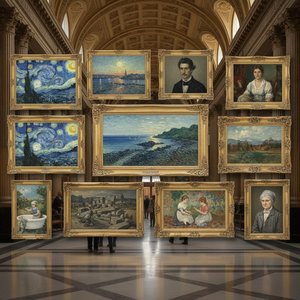
Beyond its aesthetic beauty, “Unable to Wait” carries symbolic weight. The easel itself represents artistic endeavor—the pursuit of knowledge and expression. The surrounding paintings on the wall serve as reminders of Signorini’s artistic influences and his engagement with broader intellectual currents. Most notably, the depiction of Furnishing details – frames of paintings crowded together on the wall – underscores Signorini's preoccupation with capturing the essence of a particular moment in time and conveying its emotional resonance. It is a testament to Signorini’s ability to transform observation into art—a legacy that continues to inspire artists today.
Provenance & Legacy
Originally owned by Alessandro Magnelli, a fervent admirer of the Macchiaioli movement, “Unable to Wait” subsequently resided in the Bernocchi family collection until 1997. Its exhibition at the Florence Promotrice in 1867 garnered critical acclaim from Diego Martelli, cementing Signorini’s reputation as one of Tuscany's foremost painters.
Pytania i odpowiedzi
Ile światła zdają się odbijać kolory dzieła "Nie mogę czekać"?
Jasność zarejestrowana dla „Nie mogę czekać” – Telemaco Signorini wynosi Miękki cień.
Jaki jest zalecany rozmiar wydruku dla „Nie mogę czekać” – Telemaco Signorini?
Zalecany rozmiar wydruku dla „Nie mogę czekać” – Telemaco Signorini to Duży format.
Jakie zastosowanie i przestrzeń są zalecane dla „Nie mogę czekać” – Telemaco Signorini?
„Nie mogę czekać” idealnie sprawdzi się w Akcent kolorystyczny, a rekomendowanym miejscem jego ekspozycji jest Salon lub strefa dzienna.
 Podgląd w skali 1:1
 Wyślij jako kartkę
 Udostępnij
 Szczegóły dzieła
 Przewodnik

 Pobierz obraz
 Podobne obiekty
 RTG
RTG Pokaz slajdów
 Q&A
Q&A Statystyki