
 Podgląd w skali
 Wyślij jako kartkę
 Udostępnij
 Szczegóły dzieła

 Pobierz
 Podobne obiekty
 RTG
RTG Pokaz slajdów
Unititled


 Rozwiń treść
Giclée / Wydruk artystyczny
Druk giclée lub płótno o jakości muzealnej, szybka realizacja i szeroki wybór opcji wykończenia. ( Przełącz na obraz ręcznie malowany Przełącz na obraz)




P118B $10

P118H $10

P118W $10

P438Z $10

P508JH $12

P508YH $12

P805H $10

P805Z $10

P919BZ $10

P919G $10

P919XJ $10

P959ZH $10

P968JZ $12

W106C $8

W218G $10

W218JH $8

W218Y $10

W307PJ $10

W316G $10

W316PJ $8

W316Y $10

W398PJ $8

W4111J $10

W500HY $15

W500JH $15

W692G $12

W849H $8

W940BG $15

W953PJ $8




Wybierz spośród naszych standardowych rozmiarów, które zachowują oryginalne proporcje dzieła sztuki.

Możesz wprowadzić własne wymiary, aby dopasować dzieło do konkretnej ramy lub przestrzeni. Jeśli wybrany rozmiar nie będzie odpowiadał proporcjom oryginalnego obrazu, przytniecie dzieło lub rozszerzymy obraz za pomocą odbicia lustrzanego lub jednolitego wypełnienia krawędzi. Przed rozpoczęciem produkcji prześlemy cyfrową wizualizację do Twojej akceptacji.
Prosimy pamiętać, że podgląd na ekranie nie odzwierciedla faktycznego przycinania ani rozszerzania. Tylko wizualizacja dokładnie pokaże końcową kompozycję.
Mimo dostępności niestandardowych rozmiarów, zalecamy wybór wymiaru z listy zdefiniowanej, aby zachować oryginalne proporcje.
Dostawa na cały świat () w ciągu 2 tygodni zamiast standardowych 4/5 tygodni. (9 Sierpień)

Bezpłatna ekspresowa wysyłka na cały świat

Wysokiej jakości płótno lniane

Pełne ubezpieczenie przesyłki

Gwarancja zwrotu należności celnych i podatków importowych

Gwarancja wiernego odwzorowania kolorów

Polityka 60-dniowego zwrotu (tylko w przypadku wad)

Gwarancja 100% zwrotu kosztów

Zniżka przy zamówieniu wielu produktów
 Opcja ze szkłem jest dostępna wyłącznie w rozmiarach poniżej 110 cm

Unititled
Giclée / Wydruk artystyczny
Wymiary reprodukcji
-


Cena całkowita
$ 80
Opis kolekcjonerski
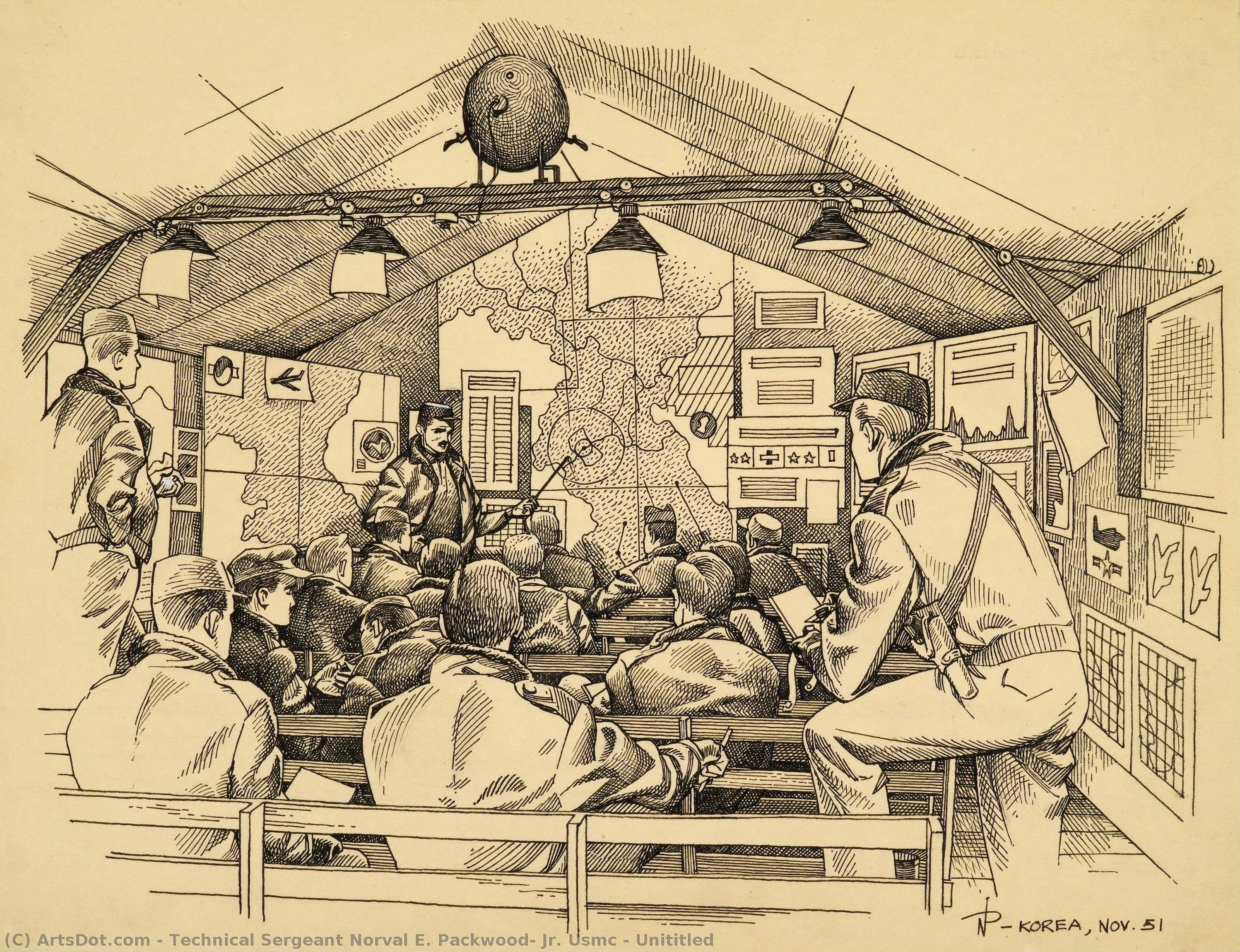
A Moment Frozen in Time: The Quietude of War
In the evocative depths of this monochromatic masterpiece, we are transported to a moment of profound stillness amidst the turbulence of history. Created in 1951 by Technical Sergeant Norval E. Packwood, Jr., this untitled work serves as a hauntingly beautiful window into the lives of those stationed during the Korean War. The scene captures a group of individuals gathered within a room, perhaps a mess hall or a communal gathering space, where the heavy atmosphere of military life meets the simple, human necessity of companionship. Through the masterful use of light and shadow, Packwood invites us to sit at these very tables, feeling the weight of the era and the quiet tension that exists between moments of respite and the call to duty.
The composition is a delicate dance of figures and furniture, where the arrangement of chairs and dining tables creates a sense of structured intimacy. As eyes wander across the canvas, one notices the subtle interplay of textures—the stark contrast of light hitting a tabletop against the deep, velvety blacks of the shadows. This technique does more than just define form; it builds an emotional landscape. The presence of a clock on the wall acts as a silent sentinel, a poignant symbol of the passing time and the uncertain future awaiting those in uniform. It is a piece that speaks to the universality of the human condition, finding beauty in the mundane even when surrounded by the specter of conflict.
The Hand of a Combat Artist
To understand this work, one must understand the soul of its creator. Norval “Gene” Packwood, Jr. was not merely an observer; he was a witness. Having served in the Marine Corps during both World War II and the Korean War, his art is imbued with an authenticity that only comes from lived experience. His training at the Art Institute of Chicago provided him with the technical prowess to execute such detailed realism, yet it was his deployment to Korea that gave his work its heartbeat. This drawing reflects a sophisticated command of line and tonal gradation, characteristic of a skilled commercial artist turned combat chronicler.
For the discerning collector or interior designer, this reproduction offers more than just aesthetic value; it offers a narrative of resilience. The monochromatic palette lends itself perfectly to sophisticated, modern, or even classic historical decor, allowing it to serve as a focal point in a room that values depth and storytelling. It is an ideal acquisition for those who seek art that transcends mere decoration, providing a conversation piece that honors the dignity of the human spirit during times of great upheaval. Bringing this work into a space invites a sense of contemplative history, making it a timeless addition to any curated collection.
O artyście
Norval E. Packwood Jr.: The Soul of Korea Through Watercolor
Born in Dona Vista, New Mexico, on November 18, 1923, Norval E. Packwood Jr., known affectionately as “Gene,” embarked on a remarkable journey from humble beginnings to become one of the most celebrated combat artists of the Korean War era and a lifelong advocate for preserving military history.
Packwood’s artistic talent blossomed early, nurtured by his father, Gene Sr., who instilled in him a passion for drawing and painting. After graduating from high school, he enlisted in the United States Marine Corps in 1942, serving valiantly during World War II aboard USS Boise (CVE-76). His wartime experience profoundly shaped his worldview and fueled his desire to document history through art—a conviction that would define his subsequent career.
The Korean War presented Packwood with an unparalleled opportunity to translate his artistic vision into tangible reality. Recognizing the importance of conveying the realities faced by American soldiers on the front lines, he volunteered for the Combat Artist Program, joining forces with fellow artist Fred Lasswell. Together they established Leatherneck Studios in Arlington, Virginia, where they produced iconic illustrations that captured the spirit and hardship of the conflict.
Packwood’s artistic style was characterized by meticulous realism—a technique honed through years of observation and disciplined practice. He favored watercolor as his medium, skillfully blending hues to evoke atmosphere and emotion. His compositions often depicted scenes of everyday life amidst the chaos of battle, capturing not only physical landscapes but also the psychological toll endured by servicemen.
- Notable Works: Packwood’s portfolio includes “Crow,” a poignant depiction of a Marine observing a Korean landscape; “Unititled,” showcasing an isolated soldier contemplating his surroundings; and “Technical Sergeant Packwood, Combat Artist” which appeared on the cover of the March 1952 Marine Corps Gazette.
- Leatherneck Studios Legacy: He spearheaded Leatherneck Studios’ artistic endeavors, fostering collaboration among veteran artists and establishing it as a cornerstone of military journalism.
- Community Involvement: Packwood remained active in Lake County, Florida, serving on the Mount Dora Historical Society board for decades and donating his expertise to commemorate Marine WWII Medal of Honor recipient Pvt. William M. McTureous Jr., creating an unforgettable portrait that honored his service.
Beyond his artistic achievements, Packwood’s dedication to preserving military history extended far beyond the canvas. He tirelessly championed initiatives aimed at honoring veterans and educating the public about the sacrifices made during wartime—a testament to his unwavering belief in the importance of remembrance.
Packwood passed away peacefully on August 26, 2019, leaving behind a legacy of artistic excellence and civic devotion. His work continues to inspire artists and historians alike, ensuring that the spirit of Korea—and Gene Packwood’s indelible contribution to its portrayal—lives on.

technical sergeant norval e. packwood, jr. usmc
United States of America
Krótka nota
- Artistic Movement Or Style: Realism
- Artists Or Movements Influenced By This Artist: ['Leatherhead in Korea']
- Artists Who Influenced This Artist: ['']
- Date Of Birth: Dona Vista
- Date Of Death: Living
- Full Name: Norval E. Packwood Jr.
- Nationality: American
- Notable Artworks:
- Crow
- Unititled
- Untitled
- Place Of Birth: United States of America
Powiązane artykuły

Białe arcydzieła: Top 10 słynnych obrazów pełnych światła i emocji | OriginalUniqueArt.pl
Odkryj 10 najsłynniejszych obrazów, w których biel dominuje i tworzy wyjątkową atmosferę. Poznaj historie Moneta, Van Gogha i innych mistrzów! Reprodukcje najwyższej jakości na OriginalUniqueArt.com – inspiracje wnętrzarskie i kolekcjonerstwo sztuki online.

Czarne arcydzieła: Top 10 słynnych obrazów pełnych mroku i ekspresji | OriginalUniqueArt.com
Odkryj 10 słynnych obrazów, w których czerń króluje! Poznaj historie artystów, ekspresjonizm i mroczną paletę barw. Reprodukcje dzieł sztuki najwyższej jakości na OriginalUniqueArt.com – inspiracje do wnętrz i kolekcjonerstwo.

Monochromatyczne Wizje: Estetyka i Historyczne Znaczenie Fotografii Czarno-Białej
Odkryj fascynujący świat fotografii czarno-białej! Poznaj historię, techniki i arcydzieła monochromatycznej sztuki. Inspiracje, porady i analiza wpływu na współczesną estetykę. OriginalUniqueArt.com.
Shadow & Soul: Why Black & White Photography Remains the Ultimate Power Move in Modern Art
Discover why black & white photography remains a powerful force in contemporary art. Explore the impact of light, shadow, and texture through a visual journey of monochrome mastery and learn how to elevate your space with timeless grayscale aesthetics.
Czarne arcydzieła: 10 słynnych obrazów w odcieniach mroku | OriginalUniqueArt.pl
Odkryj 10 słynnych obrazów, w których dominuje głęboka czerń – od Rembrandta po Picassa. Poznaj historie artystów i techniki tworzenia mrocznych arcydzieł. Reprodukcje najwyższej jakości na OriginalUniqueArt.com! Eksploruj kolekcję online.

