Cubism
Interior (Stuart Davis)
Stuart Davis (1892–1964) stworzył Interior. Należy do nurtu Cubism.

 Podgląd w skali 1:1

 Ręcznie malowany obraz olejny
 Wyślij jako kartkę
 Udostępnij
 Przewodnik


 Pobierz obraz
 Podobne obiekty
 RTG
 Pokaz slajdów
 Pytania i odpowiedzi

 Statystyki
Interior: najważniejsze informacje
- Tytuł
- Interior
- Artysta
- Stuart Davis (1892–1964)
- Miejsce urodzenia artysty
- Filadelfia, Stany Zjednoczone
- Ruch
- Cubism
- Temat
- abstract, geometric, modernism, composition, lines, forms
Co przedstawia Interior?
A Dynamic Vision of Modernity: Exploring Stuart Davis’s “Interior”
Stuart Davis's “Interior” is a captivating example of American Modernism, pulsating with energy and reflecting the artist’s unique response to the burgeoning urban landscape and the rhythms of jazz. Created sometime during his prolific career (1892-1964), this work embodies Davis’s commitment to developing a distinctly American visual language, moving beyond European influences towards a bold, independent style.
Deconstructing Space: Style & Technique
- The artwork is immediately striking for its geometric abstraction. Davis employs fragmented forms and flattened perspectives – hallmarks of both Cubism and Constructivism – but infuses them with a uniquely American sensibility.
- A vibrant palette dominates, anchored by the stark contrast between the white background, bold reds, blues, and greys, and punctuated by energetic black lines. The orange border further intensifies this visual impact.
- Davis’s technique is evident in the visible brushstrokes and layering of paint, creating a subtle texture that adds depth despite the overall flattened composition. This suggests an active process of building up form and color on the canvas, likely using oil paints as his primary medium.
- The arrangement isn't simply random; it’s carefully orchestrated into distinct zones – a tower-like structure in blue-grey, a dynamic red section with a vertical ‘sail’ or flag element, and a central area of interwoven geometric shapes. This zoning creates a sense of controlled chaos.
Echoes of Jazz & the Machine Age: Context & Symbolism
Davis was deeply influenced by jazz music, which he saw as embodying the spirit of modern America – improvisational, energetic, and uniquely its own. While “Interior” isn’t a direct representation of musical notes, the dynamic interplay of shapes and colors evokes the same sense of rhythm and syncopation found in jazz compositions.
- The architectural elements, particularly the stylized tower, could be interpreted as representing aspiration or the burgeoning skyscrapers of American cities. Davis frequently engaged with urban themes throughout his career.
- The ‘sail’ or flag-like form introduces a sense of movement and direction, perhaps symbolizing progress or the forward momentum of modern life.
- His early exposure to the Armory Show in 1913 was pivotal. While his initial works reflected the Ashcan School style, he quickly absorbed and transformed European avant-garde ideas into something distinctly American.
Emotional Resonance & Lasting Impact
“Interior” is not a tranquil scene; it’s charged with energy and tension. The fragmented forms and bold colors create a sense of dynamism, while the lack of traditional perspective can be slightly unsettling. This emotional complexity reflects the anxieties and excitements of a rapidly changing world.
- The artwork invites viewers to actively engage with its abstract language, prompting individual interpretations and fostering a personal connection.
- As a pioneering figure in American Modernism, Stuart Davis paved the way for subsequent generations of artists. His work continues to inspire those seeking to break free from convention and explore new forms of visual expression.
Interior w wysokiej rozdzielczości
Chronione prawem autorskim: obraz przedstawiono wyłącznie w celach informacyjnych.
Więcej rozmiarów, kadrowania i cytowań →Stuart Davis, Interior.
Pytania o Interior
Czy „Interior” – Stuart Davis to dzieło o jasnej czy ciemnej kolorystyce?
„Interior” charakteryzuje się ogólną jasnością na poziomie brilliant, a jej luminancja wynosi Bright Balance.
Co wyjaśnia sytuację prawną dotyczącą praw autorskich do „Interior” – Stuart Davis?
„Interior” – Stuart Davis jest nadal objęte ochroną prawa autorskiego. Okres ochrony praw autorskich liczony jest od śmierci artysty, która nastąpiła w 1964.
Gdzie mogę zobaczyć podgląd dzieła "Interior"?
Aby podglądnąć reprodukcję dzieła „Interior” – Stuart Davis, otwórz stronę Podgląd w pomieszczeniu danego utworu.
Czy istnieje karta informacyjna o „Interior” – Stuart Davis przeznaczona dla studentów?
Strona Karta informacyjna dla uczniów dzieła „Interior” – Stuart Davis oferuje dwustronicową kartę informacyjną w formacie do druku: samo dzieło wraz z tabelą identyfikacyjną, oś czasu umieszczającą je w latach życia artysty, inne prace tego twórcy, zmierzoną paletę kolorystyczną oraz gotowe do skopiowania cytaty w czterech stylach.
Pod jakimi innymi nazwiskami znany jest Stuart Davis?
Inne znane nazwiska Stuart Davis, twórcy "Interior", to Davis, Edward Stuart Davis.
Czy Interior jest w ogólnym ujęciu jasny?
Postrzegana jasność dzieła „Interior” – Stuart Davis wynosi brilliant. Można ją dopasować do oświetlenia w docelowym pomieszczeniu.
Czy kolory w "Interior" są intensywne czy stonowane?
„Interior” – Stuart Davis charakteryzuje się Vivid intensywnością kolorów.
Jaki dominujący odcień przenika „Interior” – Stuart Davis?
Dominującym odcieniem dzieła „Interior” – Stuart Davis jest Amber to Saffron. Odcień ten stanowi bazową tonację palety barw.
Czy mogę obejrzeć "Interior" w formie pełnoekranowej prezentacji slajdów?
Prezentację slajdów utworu "Interior" można obejrzeć na stronie Prezentacja slajdów tego dzieła.
O artyście: Stuart Davis
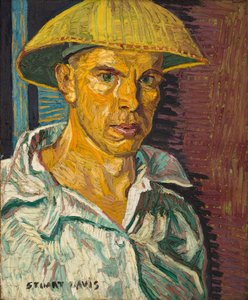
1892–1964, Stany Zjednoczone
Stuart Davis
Stuart Davis: Pionier Amerykańskiego Modernizmu Wczesne lata i edukacja Urodzony 7 grudnia 1892 roku w Filadelfii, Stuart Davis od najmłodszych lat był zanurzony w świecie pełnym sztuki. Jego ojciec, Edward Wyatt Davis, pełnił funkcję redaktora sztuki w Philadelphia Press, podczas gdy jego matka, Helen Stuart Davis, była rzeźbiarką. To rodzinne dziedzictwo bez wątpienia pielęgtał w nim wczesną pasję do sztuk wizualnych. Davis przeszedł formalne kształcenie w Robert Henri School of Art w Nowym Jorku w latach 1909–1912 pod okiem Roberta Henri’ego.
Inne prace Stuart Davis
 Odol
 Lucky Strike1924
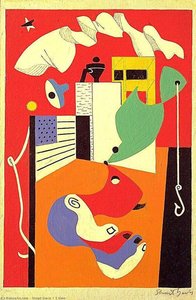 T View1951
 Blue Café1928
Eseje o Interior
 Stuart Davis: Modernist Abstraction & the Vibrant Spirit of the Jazz AgeExplore the vibrant world of Stuart Davis, a pioneer of American Modernism. Discover his jazz-inspired paintings, signature style & investm…
 The Geometry of Elegance: Elevating Modern Villa Interiors with Cubist-Inspired ArtDiscover how Cubist-inspired art elevates modern villa interiors. Explore the intersection of geometric precision and luxury design through…
 Steel & Soul: The Rhythmic Geometry and Industrial Resonance of the Machine AgeExplore the rhythmic geometry of Fernand Leger and the Machine Age. Discover the power of industrial art today.