Neo-Romantic Landscape · 1944
Ardrossan (Stephen Bone, 1944)
Stephen Bone (1904–1958) stworzył Ardrossan. Dzieło pochodzi z 1944. Należy do nurtu Neo-Romantic Landscape. Wykonano w technice Oil On Canvas. Przechowywane jest w Walker Art Gallery w Liverpool, Wielka Brytania. Wymiary to 51 × 61 cm.
- 1944
- Oil On Canvas
- 51 × 61 cm
- Walker Art Gallery, Liverpool

 Podgląd w skali 1:1

 Ręcznie malowany obraz olejny
 Wyślij jako kartkę
 Udostępnij
 Karta informacyjna


 Pobierz obraz
 Podobne obiekty
 RTG
 Pokaz slajdów
 Pytania i odpowiedzi

 Statystyki
Ardrossan w skrócie
- Tytuł
- Ardrossan
- Artysta
- Stephen Bone (1904–1958)
- Miejsce urodzenia artysty
- Chiswick, Wielka Brytania
- Data powstania
- 1944
- Technika wykonania
- Oil On Canvas
- Wymiary
- 51 × 61 cm
- Gdzie można je zobaczyć
- Walker Art Gallery, Liverpool, Wielka Brytania
- Temat
- coastal townscape, monochrome, harbor, shipbuilding, nostalgia, 1940s
Co przedstawia Ardrossan?
A Moment Frozen in Time: The Essence of Ardrossan
Stephen Bone’s Ardrossan isn't merely a depiction of a coastal town; it’s a carefully constructed evocation of memory, atmosphere, and the quiet dignity of a bygone era. Painted in 1944, during the tumultuous years of World War II, the canvas captures a specific moment – a fleeting glimpse of a bustling harbor scene rendered with a deliberate restraint that speaks volumes about the artist's sensibility. The painting immediately draws the viewer into its monochrome world, a carefully calibrated palette of grays and blacks that feels both familiar and profoundly melancholic. It’s a visual poem to the resilience of place and the enduring power of observation.
- Historical Context: Bone's work during this period is deeply intertwined with his role as an Admiralty war artist, documenting naval activities and coastal defenses. This experience undoubtedly informed his approach to capturing the essence of Ardrossan – a town vital to maritime trade and strategically positioned along the Firth of Clyde.
- The Artist’s Vision: Bone was known for his ability to distill complex landscapes into their most essential elements, prioritizing mood and atmosphere over photographic realism. He sought not just to represent Ardrossan, but to convey a feeling – a sense of timelessness and quiet contemplation.
The Language of Line and Tone
Bone’s masterful use of line is immediately striking. Strong, confident strokes delineate the buildings lining the waterfront, creating a sense of solidity and permanence despite the cloudy sky above. These lines aren't rigid or geometric; they possess a subtle fluidity, suggesting movement and life within the town. The boats in the harbor are rendered with varying degrees of detail, their forms subtly suggested through carefully placed lines, contributing to the overall depth and spatial awareness of the composition. Crucially, the artist employs a sophisticated understanding of tonal variation – light and shadow are used not just for visual interest but also to create a palpable sense of atmosphere. The darker tones in the foreground anchor the scene, while the lighter shades receding into the distance evoke a feeling of atmospheric perspective, drawing the eye deeper into the image.
The painting’s monochromatic palette is particularly effective in conveying a mood of nostalgia and understated drama. It's reminiscent of vintage photographs, lending the work an almost documentary quality while simultaneously elevating it to the realm of art.Symbolism and Emotional Resonance
Beyond its technical merits, Ardrossan is rich in symbolic resonance. The cloudy sky, a dominant feature of the composition, can be interpreted as a metaphor for uncertainty and hardship – reflecting the anxieties of wartime Britain. The harbor itself, with its bustling activity, represents both connection and isolation, highlighting the town’s role as a vital link between land and sea. The presence of the boats suggests trade, industry, and perhaps even a longing for distant horizons. There's an underlying sense of quiet dignity in the scene, a suggestion that life continues despite the challenges of the time.
The painting’s emotional impact is profoundly subtle yet undeniably powerful – it invites contemplation and evokes a feeling of wistful remembrance.A Window into the Past: Technical Details
Painted in oil on canvas, Ardrossan demonstrates Bone's mastery of layering and blending techniques. The visible brushstrokes add texture and depth to the scene, creating a sense of immediacy and authenticity. The careful attention to detail – from the reflections shimmering on the water to the subtle variations in tone – speaks to the artist’s meticulous approach. The dimensions of 51 x 61 cm suggest a scale that is intimate yet expansive, allowing for both detailed observation and a broader appreciation of the scene.
W którym muzeum znajduje się Ardrossan?
Walker Art Gallery
Liverpool, Wielka Brytania
Historia Walker Art Gallery Początki tej niezwykłej kolekcji sięgają 1819 roku, kiedy to Liverpool Royal Institution nabyło pierwsze 37 obrazów. To pierwotne zgromadzenie stało się fundamentem dla zbiorów, które przez kolejne dziesięciolecia nieustannie i z niezwykłą regularnością wzbogacały się o nowe dzieła. Walker Art Gallery to instytucja o randze Grade II*, będąca obecnie dumnym członkiem grupy National Museums Liverpool.


Zdjęcia w wysokiej rozdzielczości dzieła Ardrossan

Chronione prawem autorskim: pliki te służą wyłącznie do osobistego wglądu i nie stanowią licencji na ich powielanie.
Stephen Bone, Ardrossan (1944), Walker Art Gallery.
Odpowiedzi na pytania dotyczące Ardrossan
Gdzie można obecnie zobaczyć dzieło „Ardrossan” – Stephen Bone?
Oryginał dzieła „Ardrossan” – Stephen Bone znajduje się w Walker Art Gallery, Liverpool, Wielka Brytania. Reprodukcja pozwala na eksponowanie pracy w domu.
W którym roku powstało „Ardrossan” – Stephen Bone?
Powstanie „Ardrossan” – Stephen Bone datuje się na 1944.
Z jakiej techniki wykorzystano "Ardrossan"?
Stephen Bone wykorzystał/a technikę Oil On Canvas w pracy „Ardrossan”. Technika ta definiuje materię oryginalnego dzieła.
Jakie są rzeczywiste wymiary dzieła „Ardrossan” – Stephen Bone?
Oryginalne wymiary dzieła „Ardrossan” to 51 x 61 cm. Znajomość pierwotnej skali może być pomocna przy wyborze odpowiedniego rozmiaru reprodukcji.
Co przedstawia "Ardrossan"?
Tematyka obecna w „Ardrossan” – Stephen Bone obejmuje coastal townscape, monochrome, harbor, shipbuilding, nostalgia, 1940s, british landscape. Razem stanowią one podsumowanie tematyki dzieła.
Czy dzieło "Ardrossan" znajduje się w domenie publicznej?
Status praw autorskich dla „Ardrossan” – Stephen Bone: dzieło znajduje się w nadal objęte ochroną prawa autorskiego. Określa to, czy reprodukcje obrazu mogą być sporządzane swobodnie.
Kto jest autorem dzieła "Ardrossan"?
„Ardrossan” zostało stworzone przez Stephen Bone. Informacje na tej stronie dotyczą oryginalnego dzieła autorstwa Stephen Bone.
Do jakiego nurtu należy "Ardrossan"?
„Ardrossan” – Stephen Bone należy do nurtu Neo-Romantic Landscape. Nurt ten stanowi stylistyczny kontekst dzieła.
Do którego okresu twórczości Stephen Bone należy dzieło „Ardrossan”?
"Ardrossan" reprezentuje Mid-Career Period twórczości Stephen Bone.
O artyście: Stephen Bone

1904–1958, Wielka Brytania
Stephen Bone
Stephen Bone: Życie i Sztuka Wczesne lata i edukacja Urodzony: Chiswick, Wielka Brytania (1904) Zmarł: 1958 Stephen Bone był synem znamienitego artysty, sir Muirheada Bone'a, oraz pisarki Gertrude Heleny Dodd. To artystyczne dziedzictwo rodzinne wywarło głęboki wpływ na jego wczesny rozwój. Edukację rozpoczął w Bedales School, by w 1922 roku podjąć studia w Slade School of Fine Art. Jednakże, zniechęcony akademickim podejściem panującym w Slade, opuścił uczelnię w 1924 roku, aby poświęcić się ilustracji książkowej.
Inne prace Stephen Bone
 Bow Gun, HMS 'Southern Star'1943
 Stormy Evening1926
 Arisaig1940
 Royal Air Force Air Sea Rescue Launches, Stornoway The Fish Quay Beyond1943
Eseje o Ardrossan
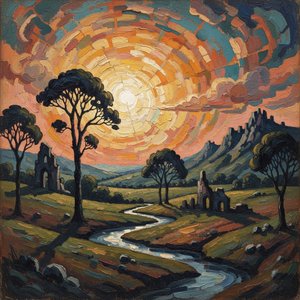 Stephen Bone: A Reassessment of Colour, Form & the British Neo-Romantic Landscape TraditionExplore the vibrant world of Stephen Bone (1904-1958), a key figure in British Neo-Romanticism. Discover his captivating landscapes, impact…
 The Language of Light and Form: Emotional Resonance in Abstract LandscapesExplore the emotional depth of abstract landscapes through Kandinsky and Gauguin. Discover the power of color and form today.
 Spontaneity and Matter: Distinguishing CoBrA from Art InformelMaster the differences between CoBrA and Art Informel with our expert guide. Learn to identify these post-war movements today.