() ·

A painting made for you, by hand

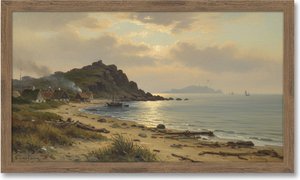
The Canal

Ręcznie malowana reprodukcja olejowa

Ręcznie malowany obraz olejny na płótnie, wykonany na zamówienie przez naszych artystów w wybranym przez Ciebie wymiarze i oprawie. ( Przełącz na wydania drukowane Przejdź do wersji cyfrowej)

Opis obiektu

Biografia artysty

Poznaj Emil Carlsen (1853-1932), „Amerykańskiego Chardina”. Eksponuj jego wyjątkowe obrazy krajobrazowe i sztukę dekoracyjną inspirowaną impresjonizmem francuskim oraz wpływem Jean-Baptiste Siméon Chardina.

from ·

Chapter 1

How large should it be?

Slide to change the size; the picture on the left shows the frame at its real width. The proportions of the original are kept.

Standardowy format
personalizowane
CM
INCH

Wybierz spośród naszych standardowych rozmiarów, które zachowują oryginalne proporcje dzieła sztuki.

szerokość
wysokość

Wpisz wymaganą szerokość i wysokość, aby obraz pasował do Twojej ramy lub ściany. Ponieważ jest to dzieło malowane ręcznie, w przypadku rozmiaru o innych proporcjach artysta może domalować nieco więcej wokół obrazu lub przyciąć jego fragmenty — wybór należy do Ciebie. Przed rozpoczęciem pracy prześlemy Ci cyfrową wizualizację do zatwierdzenia. Obraz widoczny na tej stronie nie przedstawia rzeczywistego efektu — jedynie wizualizacja oddaje realny rezultat.

Chapter 2

How should it arrive?

Choose the edges of the stretched canvas

Choose your frame

Corner sample of the WhiteWrap canvas edge finish, stretched on lite drewno bars
White zł1
Corner sample of the BlurSideWrap canvas edge finish, stretched on lite drewno bars
Blurside zł1
Corner sample of the ExtendedWrap canvas edge finish, stretched on lite drewno bars
Extended zł1
Corner sample of the P118B picture frame: polistyren formowany, 5 cm wide and 3 cm thick
P118B zł10
Corner sample of the P118H picture frame: polistyren formowany, 5 cm wide and 3 cm thick
P118H zł10
Corner sample of the P118W picture frame: polistyren formowany, 5 cm wide and 3 cm thick
P118W zł10
Corner sample of the P438Z picture frame: polistyren formowany, 5.5 cm wide and 3.5 cm thick
P438Z zł10
Corner sample of the P508JH picture frame: polistyren formowany, 7 cm wide and 3.5 cm thick
P508JH zł12
Corner sample of the P508YH picture frame: polistyren formowany, 7 cm wide and 3.5 cm thick
P508YH zł12
Corner sample of the P805H picture frame: polistyren formowany, 5 cm wide and 3.5 cm thick
P805H zł10
Corner sample of the P805Z picture frame: polistyren formowany, 5 cm wide and 3.5 cm thick
P805Z zł10
Corner sample of the P919BZ picture frame: polistyren formowany, 7 cm wide and 3.5 cm thick
P919BZ zł10
Corner sample of the P919G picture frame: polistyren formowany, 7 cm wide and 3.5 cm thick
P919G zł10
Corner sample of the P919XJ picture frame: polistyren formowany, 7 cm wide and 3.5 cm thick
P919XJ zł10
Corner sample of the P959ZH picture frame: polistyren formowany, 5 cm wide and 3 cm thick
P959ZH zł10
Corner sample of the P968JZ picture frame: polistyren formowany, 6 cm wide and 4 cm thick
P968JZ zł12
Corner sample of the W106C picture frame: lite drewno, 5 cm wide and 3 cm thick
W106C zł8
Corner sample of the W218G picture frame: lite drewno, 5 cm wide and 3 cm thick
W218G zł10
Corner sample of the W218JH picture frame: lite drewno, 5 cm wide and 3 cm thick
W218JH zł8
Corner sample of the W218Y picture frame: lite drewno, 5 cm wide and 3 cm thick
W218Y zł10
Corner sample of the W307PJ picture frame: lite drewno, 6 cm wide and 3 cm thick
W307PJ zł10
Corner sample of the W316G picture frame: lite drewno, 6 cm wide and 3 cm thick
W316G zł10
Corner sample of the W316PJ picture frame: lite drewno, 6 cm wide and 3 cm thick
W316PJ zł8
Corner sample of the W316Y picture frame: lite drewno, 6 cm wide and 3 cm thick
W316Y zł10
Corner sample of the W398PJ picture frame: lite drewno, 5 cm wide and 3 cm thick
W398PJ zł8
Corner sample of the W4111J picture frame: lite drewno, 6.5 cm wide and 3.5 cm thick
W4111J zł10
Corner sample of the W500HY picture frame: lite drewno, 7 cm wide and 5 cm thick
W500HY zł15
Corner sample of the W500JH picture frame: lite drewno, 7 cm wide and 5 cm thick
W500JH zł15
Corner sample of the W692G picture frame: lite drewno, 8 cm wide and 4 cm thick
W692G zł12
Corner sample of the W849H picture frame: lite drewno, 5 cm wide and 3 cm thick
W849H zł8
Corner sample of the W940BG picture frame: lite drewno, 7.5 cm wide and 4.5 cm thick
W940BG zł15
Corner sample of the W953PJ picture frame: lite drewno, 6 cm wide and 3.5 cm thick
W953PJ zł8
Corner sample of the H24-GOLD picture frame: rzeźbione drewno pokryte gipsem, 10 cm wide and 6 cm thick
H24-GOLD zł30
Corner sample of the H24-SILVER picture frame: rzeźbione drewno pokryte gipsem, 10 cm wide and 6 cm thick
H24-SILVER zł30
Corner sample of the H36-GOLD picture frame: rzeźbione drewno pokryte gipsem, 15 cm wide and 6.5 cm thick
H36-GOLD zł45
Corner sample of the H36-SILVER picture frame: rzeźbione drewno pokryte gipsem, 15 cm wide and 6.5 cm thick
H36-SILVER zł45

Moulding: . Overall size with the frame: .

Chapter 3

Who paints it, and should anything change?

Examples of what can be changed: Replace face with customer photo; Add pet (e.g., replace cat with dog); Include hidden message in background; Change background landscape or elements.
After order, OriginalUniqueArt.com team will email client for instructions and provide a mockup preview

Dostawa na całym świecie () w ciągu 3–4 tygodni zamiast standardowych 5 tygodni. (1 Listopad). Bez kompromisów w kwestii jakości.

Chapter 4

The finishing touches

A nameplate, as in a museum?

Szczegóły grawerowanej brązowej tabliczki

This elegant plaque features the artist's name and the title of the artwork, finely engraved for a timeless presentation.

It is made from bronze with a refined, elegant finish. The text is precisely laser-engraved for a sharp and permanent result. Measuring 9x2 cm, the plaque is compact yet easy to read. It's built to be durable and scratch-resistant, offering a professional, museum-quality look. Mounting is simple thanks to the included adhesive backing.

Szczegóły przezroczystej tabliczki akrylowej

The plaque includes essential engraved details such as the artist's name, the title of the artwork, the date it was created, the type of media used-like oil on canvas or watercolor-a brief description of the piece, and a QR code that links to the complete artwork information.

It is crafted from clear acrylic, offering a sleek, modern appearance. The text is UV-engraved in black to ensure strong visual contrast. With a size of 10x15 cm, it ensures optimal readability. It comes equipped with two metal hooks for secure wall mounting. The plaque is designed to be weather-resistant, making it suitable for various environments, and it includes interactive features that work seamlessly with smartphone scanning.

Szczegóły czarnej tabliczki akrylowej

This elegant plaque includes engraved information such as the artist's name, the title of the artwork, the date it was created, the type of media used (like oil on canvas or watercolor), a short description of the artwork, and a QR code for quick access to more information.

The plaque itself is made from refined black acrylic with a premium finish. The text is laser-engraved in white for high contrast and readability. Its size is 10x15 cm, designed to be easy to read. It comes with two metal hooks for professional mounting. The design is sleek and fits any interior style. It is also weather-resistant and durable, with built-in digital integration for mobile compatibility.

A protective varnish?

When do you need it?

Chapter 5

Your painting, as you ordered it

The Canal

Technika reprodukcji

Wymiary reprodukcji

-

Wybitny mistrz artystyczny

Większa szczegółowość, finezja i dodatkowy czas na realizację

-

Opcje oprawy reprodukcji

-

-

W przypadku dzieł sztuki lub reprodukcji, których którykolwiek z boków przekracza 105 cm (około 41 cali), rama zostanie wysłana w formie zestawu do samodzielnego montażu. Metoda ta zapewnia bezpieczną dostawę i zapobiega uszkodzeniom podczas transportu.

Wymagany profesjonalny montaż – nie jest to produkt typu DIY.
Zestaw musi zostać złożony, a płótno naciągnięte przez doświadczonego profesjonalnego ramiarza, przy użyciu kleju do drewna (brak w zestawie), kleszczy do naciągania płótna oraz ścisków, które utrzymają krosna w równej pozycji podczas schnięcia kleju. Nieprawidłowy montaż lub nierównomierne napięcie płótna może trwale uszkodzić dzieło sztuki i nie podlega naszej gwarancji.

  • W zestawie znajdują się wszystkie listwy z litego drewna, precyzyjnie docięte do wymiarów.

  • Montaż odbywa się przy użyciu dołączonych wkrętów oraz kleju do drewna do łączenia narożników, którego zestaw nie zawiera i który musi zostać dostarczony przez ramiarza.

  • Wymagane są profesjonalne narzędzia, których nie ma w zestawie: kleszcze do naciągania płótna (napinacz) oraz zaciski, które pozwolą utrzymać listwy w równej pozycji podczas schnięcia kleju.

Ważne:
Do połączenia narożników niezbędny jest klej do drewna, listwy należy unieruchomić za pomocą ścisków do momentu całkowitego wyschnięcia kleju, a naciągnięcie płótna na złożoną ramę wymaga użycia kleszczy do naciągania płótna. Żaden z tych elementów nie jest dołączony do zestawu. Przed zamówieniem tego rozmiaru zalecamy konsultację z doświadczonym ramiarzem.

Etykieta obiektu

-

-

Lakier ochronny

Lakier z połyskiem (pogłębia kolory, chroni przed światłem i wilgocią)

-

Personalizacja dzieła

Przykłady możliwości personalizacji: zastąp twarz zdjęciem klienta; dodaj zwierzę domowe (np. zamień kota na psa); umieść ukrytą wiadomość w tle; zmień krajobraz lub elementy tła.

-

Ekspresowa

Dostawa na cały świat () w ciągu 3–4 tygodni zamiast standardowych 5 tygodni. (1 Listopad). Bez kompromisów w kwestii jakości.

-

Przesyłka ekspresowa

Dostawa na cały świat () w ciągu 5 tygodni. (8 Listopad).

W cenie

Cena całkowita

zł 1167

Suma całkowita zł 1167

Opcja ze szkłem jest dostępna wyłącznie w rozmiarach poniżej 110 cm

Included with every order

  • Bezpłatna ekspresowa wysyłka na cały świat
  • Wysokiej jakości płótno lniane
  • Pełne ubezpieczenie przesyłki
  • Gwarancja zwrotu należności celnych i podatków importowych
  • Gwarancja wiernego odwzorowania kolorów
  • 100-dniowa polityka zwrotów (tylko w przypadku wad)
  • Gwarancja 100% zwrotu pieniędzy
  • Zniżka przy zakupie wielu sztuk

A Window Into Venetian Tranquility: Exploring Soren Emil Carlsen’s “The Market”

Danish-born painter Søren Emil Carlsen (1853 – 1932) stands as an intriguing figure in the annals of American Impressionism, bridging the gap between European artistic traditions and burgeoning landscapes of the Hudson River Valley. While often overshadowed by his contemporaries—Childe Hassam, J. Alden Weir, and John La Farge—Carlsen possessed a singular vision that distinguished him within the Cos Cob group, prioritizing delicate atmospheric perspectives and nuanced tonal gradations to convey profound emotional resonance. This essay delves into “The Market,” Venice – a captivating canvas reflecting Carlsen’s distinctive approach to capturing fleeting moments of beauty and serenity.

Subject Matter and Composition: A Slice of Venetian Life

“The Market” depicts a vibrant yet understated scene unfolding along the Grand Canal in Venice during the early 20th century. The artist eschews grand narratives, instead focusing on the everyday rhythms of Venetian commerce and leisure. Dominating the composition is a tranquil waterway populated by boats laden with goods – merchants exchanging wares amidst the gentle ripple of water. At the center stands a solitary figure, presumably observing the activity with contemplative gaze, subtly anchoring the viewer’s eye within the expansive vista. Scattered amongst the boats are architectural elements—buildings lining the canal's edge—adding depth and texture to the overall impression. Carlsen meticulously rendered these details, capturing not just visual accuracy but also the palpable atmosphere of a bustling Venetian marketplace.

Style and Technique: Impressionistic Sensitivity

Carlsen’s artistic style aligns closely with Impressionism, albeit tempered by his Scandinavian heritage. He skillfully employed loose brushstrokes—characteristic of Impressionist painters—to depict light and color with remarkable sensitivity. Unlike the bold palettes favored by some Impressionists, Carlsen opted for muted hues—primarily blues, greens, and ochres—creating a harmonious blend that evokes a sense of calm and nostalgia. The artist’s technique involved layering thin glazes of pigment onto the canvas, allowing underlying tones to subtly influence the final appearance. This meticulous process resulted in luminous surfaces imbued with atmospheric haze, mirroring the hazy light conditions prevalent during Venetian summers – a hallmark of Impressionistic painting.

Historical Context: Venice at the Dawn of Modernity

“The Market” was created during a period of significant artistic experimentation and cultural transformation. The Impressionist movement challenged academic conventions, advocating for direct observation of nature and prioritizing subjective experience over idealized representation. Carlsen’s Venetian landscape reflects this spirit of innovation, aligning with the broader trend toward capturing fleeting impressions rather than striving for photographic realism. Furthermore, Venice itself was undergoing modernization—the arrival of tourists and the gradual electrification of its infrastructure—creating a dynamic backdrop for Carlsen's artistic endeavors. The painting serves as a poignant reminder of a bygone era – one where beauty resided in simplicity and tranquility.

Symbolism: Light, Reflection, and Contemplation

Beyond its visual splendor, “The Market” resonates with symbolic significance. The canal itself represents fluidity and change—mirroring the ceaseless flow of life—while the boats symbolize commerce and human interaction. Most notably, Carlsen’s depiction of a solitary figure gazing upon the scene embodies contemplation and introspection. This pose invites viewers to consider their own relationship with the natural world and to appreciate the profound beauty found in quiet observation. The diffused light filtering through the Venetian haze contributes to this symbolic dimension, suggesting an ethereal quality that transcends mere visual perception.

Emotional Impact: A Moment Frozen in Time

Ultimately, “The Market” succeeds in conveying a powerful emotional response—a feeling of serene contemplation and nostalgic longing for a simpler time. Carlsen’s masterful use of color and brushwork evokes the warmth of summer sunlight and the gentle murmur of Venetian life. The painting's understated elegance speaks to an enduring appreciation for beauty—beauty rooted not in grand spectacle but in subtle nuance and atmospheric depth. It remains a testament to Carlsen’s ability to transform observation into art, capturing a fleeting moment of Venetian tranquility that continues to captivate audiences today.

Pytania i odpowiedzi

Czy dzieło „The Canal” – Soren Emil Carlsen znajduje się w kraju pochodzenia artysty?

Nie – dzieło znajduje się poza granicami kraju artysty. Soren Emil Carlsen urodził(a) się w Dania, a oryginał dzieła „The Canal” znajduje się w muzeum w Stany Zjednoczone Ameryki.

Co łączy "The Canal" z resztą twórczości Soren Emil Carlsen?

"The Canal" wpisuje się w nurt Impressionistic Landscape w twórczości Soren Emil Carlsen, której charakterystyczne motywy obejmują european training, impressionist style, tranquil scenes, rural life, landscape legacy.

Czy mogę obejrzeć "The Canal" w formie pełnoekranowej prezentacji slajdów?

Dostępna jest prezentacja zdjęć: strona Prezentacja slajdów dzieła „The Canal” – Soren Emil Carlsen.

More about this painting

Podgląd w skali 1:1 Podgląd AR Przełącz na wydania drukowane Przejdź do wersji cyfrowej Wyślij jako kartkę
Szczegóły dzieła Przewodnik Dodaj do ulubionych Pobierz obraz Podobne obiekty RTG Pokaz slajdów Q&A Statystyki

In numbers

  • 29frames to choose from
  • standard sizes, in its own proportions
  • 5weeks to paint and deliver it
Soren Emil Carlsen

Soren Emil Carlsen

1853 - 1932, Dania

Quick facts about Soren Emil Carlsen

  • Artistic Movement Or Style: Impressionizm tonalistyczny
  • Artists Or Movements Influenced By This Artist: ['Lauritz Holst']
  • Artists Who Influenced This Artist: ['Jean-Baptiste-Siméon Chardin']
  • Date Of Birth: 1853-10-19
  • Full Name: Soren Emil Carlsen
  • Nationality: Dania
  • Notable Artworks:
    • Żółw i muszle
    • Kwiaty
  • Place Of Birth: Kopenhaga, Dania

Biografia artysty

Soren Emil Carlsen (1848 or 53 - 1932): The American Chardin

  • Early Life and Artistic Foundations
  • Emigration to America and Impressionist Influences
  • The Mastery of Still Life: A Unique Style
  • Teaching Legacy and Shaping Future Artists
  • A Lasting Impact on American Art

Early Life and Artistic Foundations

Soren Emil Carlsen was born in Copenhagen, Denmark, on October 19, 1853 (though some records indicate 1848 or 1853), a fact that would later become central to his artistic identity. He descended from an artistic lineage; his mother practiced painting, and his cousin Viggo Johansen was a prominent Danish painter who profoundly impacted Carlsen’s worldview. Initially drawn to architecture at the Royal Academy in Copenhagen for four years—a discipline that instilled within him a meticulous understanding of structure and form—Carlsen swiftly recognized the allure of pure artistic expression. This formative period cemented his appreciation for visual harmony and geometric precision, elements that would subtly permeate his later landscapes and still lifes. His early training with Lauritz Holst, a marine artist celebrated for capturing the ethereal beauty of the Danish coastlines, further honed his observational skills and nurtured his fascination with light—a preoccupation that would become a defining characteristic of his artistic vision.

Emigration to America and Impressionist Influences

A transformative juncture arrived in 1872 when Carlsen embarked on an ambitious journey across the Atlantic, establishing himself in Chicago, Illinois – a burgeoning epicenter for artistic innovation. This relocation wasn’t merely geographical; it represented a profound intellectual shift. Leaving behind his architectural pursuits, he pursued art with renewed fervor, enrolling at the Royal Academy and immersing himself in the teachings of Holst. Simultaneously, he cultivated friendships with fellow artists who championed innovative approaches to painting—most notably Jean-Baptiste-Siméon Chardin, whose masterful depictions of everyday objects imbued with quiet dignity captivated Carlsen’s imagination. The Parisian encounter proved pivotal, exposing him to Chardin's distinctive tonalist aesthetic—characterized by muted palettes, subtle gradations of light, and an unwavering focus on mood and atmosphere. This influence would indelibly shape Carlsen’s artistic style, guiding him toward a contemplative exploration of texture, form, and the passage of time.

The Mastery of Still Life: A Unique Style

Carlsen quickly distinguished himself as “The American Chardin,” a testament to his unparalleled ability to transform commonplace objects into vehicles for poetic contemplation. His early works—often featuring copper pans gleaming softly, meticulously arranged game birds, and delicate flowers poised in vases—were deeply rooted in the tonalist tradition. He wasn’t merely replicating what he saw; rather, he sought to convey *how* he felt when observing it—a feat achieved through painstaking attention to detail and a masterful manipulation of light and color. This sensitivity to atmospheric conditions became his signature trait, setting him apart from many of his contemporaries who favored brighter hues and more dramatic compositions. He meticulously studied Chardin’s technique, adopting his approach to capturing the subtle nuances of light and texture—a decision that would propel Carlsen's artistic development toward a singular vision: one where beauty resided in simplicity and understated elegance.

Teaching Legacy and Shaping Future Artists

Carlsen’s influence extended far beyond his own canvases; he was a devoted educator who profoundly impacted generations of aspiring artists. He inaugurated the first instructor of drawing and painting at the Chicago Academy of Design, laying the groundwork for countless future creatives—a role that instilled in him a deep conviction about the importance of fostering artistic curiosity and nurturing individual expression. Later, he served as director of the California School of Design (now San Francisco Art Institute) from 1887 to 1889, shaping the artistic landscape of the West Coast. His pedagogical philosophy emphasized observation, technical proficiency, and a comprehensive understanding of artistic principles—a commitment that earned him numerous accolades, including the Samuel T. Shaw Purchase Prize, the Gold Medal at the Louisiana Purchase Exposition, and membership in the National Academy of Design. Among his most notable students was Guy Rose, who would become a prominent figure in California Impressionism—a testament to Carlsen’s enduring legacy as a mentor and innovator.

A Lasting Impact on American Art

Soren Emil Carlsen's artistic contribution solidified his position as one of America’s foremost painters. His distinctive style—characterized by tonalist palettes, meticulous attention to detail, and an unwavering devotion to capturing the ethereal beauty of light—continues to inspire artists today. He purchased a home in Falls Village, Connecticut in 1905, finding solace and inspiration in the Berkshire Mountains, where he painted numerous landscapes during his summers. His sales improved significantly after joining Macbeth Gallery, allowing him to live comfortably and pursue his artistic vision with unwavering dedication. Solo exhibitions at Macbeth Gallery throughout the 1910s and 1920s further cemented Carlsen’s reputation as a visionary artist—a figure whose paintings resonate with timeless elegance and profound emotional depth. His work resides in prominent museums across the United States, ensuring that his artistic legacy endures for generations to come.

Najważniejsze informacje

  • Movement: Impressionism
  • Artistic style: Sensuous Still-Life
  • Medium: Oil on Canvas
  • Artist: Soren Emil Carlsen
  • Title: The Canal