

 Zobacz w skali 1:1
 Wyślij
 Udostępnij
 Szczegóły
 Przewodnik

 Pobierz plik obrazu
 Podobne obiekty
 RTG
RTG Pokaz slajdów
 Statystyki
Beech Tree Reflections
 Oil On Canvas
- WallArt
 1930
1930- Modern
 59.0 x 74.0 cm
 Royal Scottish Academy of Art - Architecture
 Czytaj więcej
Dzieło sztuki prezentowane na tej stronie podlega ochronie prawem autorskim, co oznacza, że nie mamy prawa do tworzenia ani sprzedaży jego identycznej reprodukcji. Ochrona ta jest egzekwowana na mocy umów międzynarodowych, takich jak Konwencja berneńska oraz przez przepisy prawa krajowego, w tym te określone w Prawo autorskie USA – Tytuł 17.
Metoda ta jest w pełni zgodna z przepisami prawa autorskiego, ponieważ nie polega na kopiowaniu ani powielaniu chronionego dzieła. Stanowi ona kreatywną reinterpretację – nowy obraz, który czerpie inspirację z oryginału, ale nie jest z nim tożsamy.
Giclée / Wydruk artystyczny
Wydruki giclée lub płótna o jakości muzealnej, szybka realizacja i szeroki wybór opcji wykończenia. ( Kup ręcznie malowany obraz Przełącz na wersję cyfrową)




P118B zł10

P118H zł10

P118W zł10

P438Z zł10

P508JH zł12

P508YH zł12

P805H zł10

P805Z zł10

P919BZ zł10

P919G zł10

P919XJ zł10

P959ZH zł10

P968JZ zł12

W106C zł8

W218G zł10

W218JH zł8

W218Y zł10

W307PJ zł10

W316G zł10

W316PJ zł8

W316Y zł10

W398PJ zł8

W4111J zł10

W500HY zł15

W500JH zł15

W692G zł12

W849H zł8

W940BG zł15

W953PJ zł8




Wybierz spośród naszych standardowych rozmiarów, które zachowują oryginalne proporcje dzieła sztuki.

Wpisz wymaganą szerokość i wysokość, aby dopasować grafikę do ramy lub ściany. Wydruk można jedynie przyciąć, nigdy nie powiększając go poza oryginalny obraz, dlatego format o innym proporcji spowoduje utratę części kompozycji. Przed rozpoczęciem druku prześlemy Ci cyfrowy podgląd do zatwierdzenia. Obraz wyświetlany na tej stronie nie pokazuje rzeczywistego przycięcia — jedynie podgląd oddaje ten efekt.
Dostawa na cały świat () w ciągu 2 tygodni zamiast standardowych 4/5 tygodni. (23 Październik)

Bezpłatna ekspresowa wysyłka na cały świat

Wysokiej jakości płótno lniane

Pełne ubezpieczenie transportowe

Gwarancja zwrotu należności celnych i podatków importowych

Gwarancja idealnego odwzorowania barw

100-dniowy okres na zwrot dzieła w przypadku wykrycia wad produkcyjnych

Gwarancja 100% zwrotu pieniędzy

Oferta przy zakupie wielu sztuk
 Opcja ze szkłem jest dostępna wyłącznie w rozmiarach poniżej 110 cm

Beech Tree Reflections
Giclée / Wydruk artystyczny
Rozmiar reprodukcji
-


Suma do zapłaty
zł 307
A Symphony of Reflection: Exploring Sir William George Gillies’ Beech Tree Reflections
Sir William George Gillies (1898–1973), a pivotal figure in Scottish Colourism, gifted us with “Beech Tree Reflections,” a masterpiece born from the crucible of artistic experimentation and deeply rooted in the landscape traditions of his homeland. Painted circa 1930, this artwork transcends mere depiction; it embodies a profound meditation on nature’s beauty and tranquility, achieved through masterful technique and infused with subtle symbolic resonance.The Landscape Visionary: Gillies' Artistic Influences
Gillies’ artistic journey began in earnest at the Edinburgh College of Art, where he honed his skills under the tutelage of André Lhote, absorbing the revolutionary ideas of Cubism – particularly those championed by Picasso and Braque. This initial foray into abstraction instilled a foundational understanding of geometric forms and fragmented perspectives that would inform his subsequent explorations. However, it was a transformative encounter with Paul Klee’s work in 1934 that truly ignited Gillies' imagination. Klee’s embrace of childlike spontaneity and vibrant colour palettes profoundly impacted Gillies’ approach to composition, encouraging him to prioritize emotional expression alongside formal considerations.A Cézanne Echo: Composition and Technique
“Beech Tree Reflections” exemplifies Gillies’ unwavering commitment to Cézanne’s influence – a cornerstone of Scottish Colourism. Like Cézanne's celebrated landscapes, the painting prioritizes solidity and depth through careful layering of pigment and meticulous attention to tonal variations. The artist skillfully captures the dappled light filtering through the beech tree canopy onto the still waters below, creating an illusionistic surface that convincingly simulates natural textures. Notice the subtle brushstrokes—delicate yet purposeful—that contribute to the overall sense of atmosphere and convey a palpable feeling of serenity. The muted palette – predominantly greens and browns – reinforces this mood, mirroring the understated grandeur of the Scottish Highlands.Symbolism Within Tranquility: Interpreting Visual Elements
Beyond its technical prowess, “Beech Tree Reflections” speaks volumes about symbolic meaning. Beech trees themselves hold significance in Celtic folklore, representing resilience, protection, and connection to the spiritual realm. Their drooping branches mirror the melancholic beauty of autumn, hinting at themes of impermanence and acceptance. The mirrored reflection of the trees adds another layer of complexity, suggesting duality – stillness juxtaposed with movement—and inviting contemplation on the relationship between observer and observed. It’s a painting that encourages viewers to pause, breathe deeply, and appreciate the quiet majesty of the natural world.Legacy and Influence: Gillies' Contribution to Scottish Art
Sir William George Gillies remains an enduring icon of Scottish Colourism, shaping the artistic landscape of his era and inspiring generations of artists. His dedication to capturing the essence of Scottish landscapes—infused with both intellectual rigor and emotional sensitivity—established a precedent for future painters striving to express profound ideas through visual form. “Beech Tree Reflections,” therefore, stands not merely as a beautiful artwork but as a testament to Gillies’ artistic vision and his indelible mark on British art history.Pytania i odpowiedzi
Czy dostępna jest możliwość pobrania obrazu "Beech Tree Reflections"?
Obraz „Beech Tree Reflections” autorstwa William George Gillies można pobrać ze strony Pobierz dzieła: wysokiej rozdzielczości cyfrowe zdjęcie do pobrania.
W jakiej technice wykonano "Beech Tree Reflections" i jakie są jego wymiary?
"Beech Tree Reflections" powstało przy użyciu Oil On Canvas i w swojej oryginalnej formie ma wymiary 59 x 74 cm.
Do jakiego pomieszczenia polecane jest dzieło „Beech Tree Reflections” autorstwa William George Gillies?
Zalecaną przestrzenią dla „Beech Tree Reflections” autorstwa William George Gillies jest Living Room. Sugestia ta może zostać oczywiście dostosowana do Twojego wnętrza.
Biografia artysty
Early Life and Education
Sir William George Gillies, a name synonymous with the evocative beauty of Scottish landscapes and still lifes, was born in Haddington, East Lothian, on September 21st, 1898. His early life unfolded amidst the rolling hills and historic charm of his native region – an environment that would profoundly shape his artistic vision. Initially enrolled at the Edinburgh College of Art, Gillies’ academic pursuits were tragically interrupted by the exigencies of World War I. He bravely enlisted with the Royal Engineers, serving with distinction during a period of immense national upheaval. Following the war's conclusion, he returned to complete his education at the same institution, ultimately graduating and dedicating over four decades to nurturing young artists as a teacher. This commitment to education wasn’t merely a profession; it was a deeply held belief in the transformative power of art and its ability to connect individuals with their surroundings.Artistic Development and Influences
Gillies' artistic journey began with an initial exploration of Cubism, a movement that had captivated European artists in the early 20th century. His studies under André Lhote in Paris (1923) provided him with invaluable insight into the principles of this revolutionary style – its fragmented forms and geometric arrangements. A subsequent trip to Italy in 1924 further broadened his artistic horizons, exposing him to the classical traditions that had informed so much of Western art. Early works like “Two Pots, Saucer and Fruit” (1933) demonstrate this early influence, showcasing a Cézanne-inspired composition characterized by carefully arranged objects and a muted color palette reminiscent of Braque and Picasso. However, a pivotal moment arrived in 1934 when Gillies encountered the work of Paul Klee. The whimsical use of colour, the childlike quality of his forms, and the imaginative narratives embedded within Klee’s paintings profoundly impacted Gillies' approach to art. He began to incorporate these elements into his own compositions, gradually moving away from strict Cubist dogma and developing a distinctive style rooted in Scottish landscape and still life traditions.The 1922 Group and Collaborative Spirit
In 1922, a year marked by significant artistic ferment in Scotland, Gillies played a crucial role in establishing the “1922 Group.” Alongside fellow artists such as William Crozier, William Geissler, and William MacTaggart, he envisioned an exhibition society dedicated to providing a platform for emerging Scottish talent. The New Gallery in Edinburgh became the focal point of this collective endeavor for a decade, fostering a vibrant community of artists who shared a passion for innovation and experimentation. The 1922 Group wasn’t simply a means of showcasing art; it was a crucible where ideas were exchanged, techniques were refined, and a sense of camaraderie flourished – a vital ingredient in the development of Scottish modernism. It represented a conscious effort to elevate the profile of young artists within their country.Themes and Subject Matter
Gillies’ artistic focus primarily revolved around two distinct yet interconnected themes: landscapes and still lifes. He possessed an extraordinary ability to capture the essence of the Lothian, Fife, and Border regions of Scotland – translating the rugged beauty of these areas onto canvas with a remarkable sensitivity. His paintings weren't merely depictions of scenery; they were imbued with a profound understanding of light, atmosphere, and the subtle nuances of color. Equally significant was his exploration of still life compositions. These works often featured ceramics created by his younger sister, Emma Smith Gillies, whose untimely death in 1936 cast a long shadow over his artistic life. The poignant beauty of these objects served as a powerful reminder of loss and grief, imbuing the paintings with an undercurrent of melancholy and introspection. While he experimented with portraiture early in his career, landscapes and still lifes ultimately became the cornerstones of his artistic legacy.Major Achievements and Recognition
Throughout his illustrious career, Sir William George Gillies achieved numerous accolades that recognized his exceptional talent and unwavering dedication to art. He was elected an Associate of the Royal Scottish Academy (ARSA) in 1940, a significant step towards establishing his place within the established artistic community. In 1947, he received full membership into the Royal Scottish Academy (RSA), solidifying his position as one of Scotland’s leading artists. In 1957, he was awarded the Commander of the Order of the British Empire (CBE) for his contributions to art in Scotland, and later, in 1964, he became an Associate of the Royal Academy (RA). The highest honor bestowed upon him – knighthood – arrived in 1970. His legacy extended beyond his artistic achievements; he served as Principal of the Edinburgh College of Art from 1961 to 1966, guiding a new generation of artists and shaping the future direction of art education in Scotland. Gillies’ prolific output—estimated at over 2,000 works—testifies to his unwavering commitment to his craft. His paintings are now found in prestigious collections across Scotland and internationally, including those of Aberdeen, Dundee, Edinburgh, Glasgow, the Scottish Arts Council, the National Galleries of Scotland (Tate London, Ottawa, Peru), demonstrating a lasting impact on the art world.
William George Gillies
1898 - 1973 , Wielka Brytania
Najważniejsze informacje
- Artistic Movement Or Style: Kubizm, Malarstwo Szkockie
- Artists Or Movements Influenced By This Artist: ['Malarstwo Szkockie']
- Artists Who Influenced This Artist:
- André Lhote
- Cézanne
- Braque
- Picasso
- Paul Klee
- Date Of Birth: 1898
- Date Of Death: 1973
- Full Name: Sir William George Gillies
- Nationality: Skoćy
- Notable Artworks:
- Young Boy with a Teapot
- Krajobraz Śródziemnomorski z Pochmurnym Niebem
- Kompozycja – Żółty Misa i Przegrodzony Tkanina
- Place Of Birth: Haddington, Wielka Brytania
Zobacz także powiązane artykuły
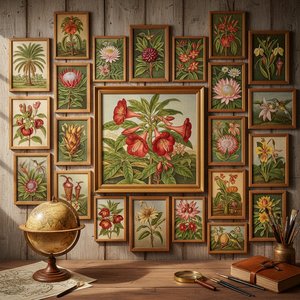
Marianne North: 25 Najpiękniejszych Obrazów Botanicznych i Krajobrazów – Kolekcja OriginalUniqueArt
Odkryj 25 fascynujących obrazów Marianne North – wiktoriańskiej artystki i botaniczki. Egzotyczne krajobrazy, kolorowe kwiaty i inspiracje wnętrzarskie. Reprodukcje najwyższej jakości na OriginalUniqueArt.com! Poznaj pełną kolekcję online.
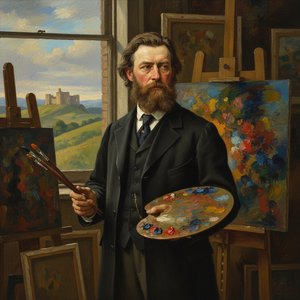
George Paul Chalmers: Rediscovering the Angus Rembrandt & Scottish Colourist Roots
Explore the captivating world of George Paul Chalmers (1833-1878), a pivotal Scottish painter. Discover his landscapes, portraits & connection to the Aesthetic Movement and Colourists. Learn about this 'Angus Rembrandt's' legacy with OriginalUniqueArt.
Arboreal Echoes: A Historical & Artistic Exploration of Trees in Painting
Explore the rich history of trees in painting! Discover symbolism, Romantic masterpieces by Caspar David Friedrich & beyond. A curated journey for art enthusiasts.

Drzewa w malarstwie: Historia, symbolika i artystyczne interpretacje od antyku do współczesności
Odkryj fascynującą historię drzew w malarstwie! Poznaj symbolikę, interpretacje i wpływ tego archetypu na sztukę od antyku do współczesności. Ekspercka analiza dla miłośników historii sztuki.
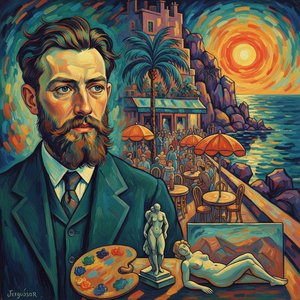
John Duncan Fergusson: A Pioneer of Scottish Modernism & the Vibrant Colour of Post-Impressionist Influence
Explore the life & art of John Duncan Fergusson, a leading Scottish Colourist. Discover his vibrant Post-Impressionist paintings, influences, and legacy with expert insights from OriginalUniqueArt.


