

 Zobacz w skali 1:1
 Wyślij
 Udostępnij
 Szczegóły
 Przewodnik

 Pobierz plik obrazu
 Podobne obiekty
 RTG
RTG Pokaz slajdów
 Statystyki
Mare and Foal
 Oil On Canvas
- WallArt
- Victorian Animalier
 1865
1865 112.0 x 143.0 cm
 Walker Art Gallery
 Czytaj więcej
Giclée / Wydruk artystyczny
Wydruki giclée lub płótna o jakości muzealnej, szybka realizacja i szeroki wybór opcji wykończenia. ( Kup ręcznie malowany obraz Przełącz na wersję cyfrową)




P118B $10

P118H $10

P118W $10

P438Z $10

P508JH $12

P508YH $12

P805H $10

P805Z $10

P919BZ $10

P919G $10

P919XJ $10

P959ZH $10

P968JZ $12

W106C $8

W218G $10

W218JH $8

W218Y $10

W307PJ $10

W316G $10

W316PJ $8

W316Y $10

W398PJ $8

W4111J $10

W500HY $15

W500JH $15

W692G $12

W849H $8

W940BG $15

W953PJ $8




Wybierz spośród naszych standardowych rozmiarów, które zachowują oryginalne proporcje dzieła sztuki.

Możesz wprowadzić własne wymiary, aby dopasować dzieło do konkretnej ramy lub przestrzeni. Jeśli wybrany rozmiar nie będzie odpowiadał proporcjom oryginalnego obrazu, przytniecie dzieło lub rozszerzymy obraz za pomocą odbicia lustrzanego lub jednolitego wypełnienia krawędzi. Przed rozpoczęciem produkcji prześlemy cyfrową wizualizację do Twojej akceptacji.
Prosimy pamiętać, że podgląd na ekranie nie odzwierciedla faktycznego przycinania ani rozszerzania. Tylko wizualizacja dokładnie pokaże końcową kompozycję.
Mimo dostępności niestandardowych rozmiarów, zalecamy wybór wymiaru z listy zdefiniowanej, aby zachować oryginalne proporcje.
Dostawa na cały świat () w ciągu 2 tygodni zamiast standardowych 4/5 tygodni. (26 Wrzesień)

Bezpłatna ekspresowa wysyłka na cały świat

Wysokiej jakości płótno lniane

Pełne ubezpieczenie transportowe

Gwarancja zwrotu należności celnych i podatków importowych

Gwarancja idealnego odwzorowania barw

100-dniowy okres na zwrot dzieła w przypadku wykrycia wad produkcyjnych

Gwarancja 100% zwrotu pieniędzy

Oferta przy zakupie wielu sztuk
 Opcja ze szkłem jest dostępna wyłącznie w rozmiarach poniżej 110 cm

Mare and Foal
Giclée / Wydruk artystyczny
Rozmiar reprodukcji
-


Suma do zapłaty
$ 80
A Moment Frozen in Time: Landseer’s “Mare and Foal”
Sir Edwin Henry Landseer's "Mare and Foal," painted in 1865, isn’t merely a depiction of two horses; it’s a profound meditation on maternal love, the cycle of life, and the enduring bond between generations. Born into a family steeped in artistic tradition – his father, John Landseer, was a celebrated engraver – Edwin Henry Landseer inherited not only technical skill but also an innate understanding of capturing the essence of animal emotion. This painting stands as a testament to that gift, radiating warmth and tenderness with remarkable realism. The scene unfolds within a softly rendered, almost dreamlike landscape, suggesting a tranquil haven far removed from the bustle of Victorian London. The muted palette – dominated by earthy browns, greens, and soft blues – contributes to an atmosphere of quiet contemplation, drawing the viewer into the intimate connection between mother and child.A Masterclass in Animal Anatomy and Expression
Landseer’s genius lay not just in his ability to paint horses beautifully, but in his meticulous study of their anatomy and behavior. He famously dissected animals – a practice considered unconventional at the time – to gain an unparalleled understanding of musculature, posture, and movement. This dedication is immediately apparent in “Mare and Foal.” The mare’s stance is both regal and protective; her head held high, conveying a sense of authority tempered by gentle affection. Her gaze is fixed on her foal, radiating a deep wellspring of maternal concern. The foal itself embodies youthful exuberance, its posture alert and inquisitive, reaching tentatively towards its mother's flank. Notice the subtle details: the delicate curve of the foal’s neck, the texture of its coat, the way light catches the sheen of its eyes – all meticulously rendered to create a sense of palpable life. Landseer masterfully employed sfumato, a technique borrowed from Renaissance masters, to soften edges and create an atmospheric haze, lending the scene an ethereal quality.Victorian Sentimentality and the Animalier Tradition
“Mare and Foal” is deeply rooted in the Victorian era’s fascination with animals – a period often referred to as the “animalier tradition.” Queen Victoria herself was a devoted animal lover, and her influence permeated much of British art. Landseer, keenly attuned to this cultural shift, elevated the depiction of animals from mere subjects to embodiments of human emotions. This painting exemplifies that sentimentality; it’s not simply a portrait of two horses but an exploration of familial devotion and the cyclical nature of life. The choice of a horse – a symbol of strength, nobility, and connection to the land – further reinforces this theme. The composition itself is carefully balanced, mirroring the harmony between mother and child, reflecting Victorian ideals of domesticity and family values.Symbolism and Enduring Legacy
Beyond its technical brilliance, “Mare and Foal” resonates with deeper symbolic meaning. The image speaks to themes of nurturing, protection, and continuity – qualities highly valued in Victorian society. The foal represents the future, while the mare embodies experience and wisdom. Together, they symbolize the passing down of values and traditions from one generation to the next. Furthermore, the painting’s enduring popularity is a testament to its universal appeal. It taps into our innate empathy for animals and our appreciation for the beauty of the natural world. It's a scene that evokes feelings of warmth, comfort, and a profound connection to something larger than ourselves. Today, reproductions of “Mare and Foal” continue to grace homes and galleries worldwide, serving as reminders of Landseer’s artistic legacy and the timeless power of his vision.Biografia artysty
A Life Etched in Animal Form: The World of Sir Edwin Landseer
Sir Edwin Henry Landseer, born in London on March 7, 1802, was more than merely a painter of animals; he became a visual chronicler of the Victorian soul as reflected through them. His father, John Landseer, an accomplished engraver, instilled in young Edwin an early appreciation for art and technique, but it was the boy’s innate talent – a prodigious gift for capturing the essence of living creatures – that truly set him on his path. From a tender age, he demonstrated remarkable skill, exhibiting at the Royal Academy at just thirteen, a feat unheard of for most aspiring artists. This early success wasn't simply luck; it was the culmination of dedicated study, initially under his father and later with history painter Benjamin Robert Haydon, who uniquely encouraged anatomical dissection to fully understand animal musculature – a practice that would profoundly influence Landseer’s realism. He absorbed knowledge like a sponge, mastering not only form but also the subtle nuances of expression that breathed life into his canvases. This dedication to understanding the very structure of his subjects set him apart, allowing for an unparalleled level of authenticity in his depictions.From Highland Stags to Royal Commissions: A Flourishing Career
Landseer’s artistic career blossomed with an exceptional focus on animals – horses, dogs, and stags becoming his signature subjects. However, to categorize him solely as an “animal painter” would be a disservice. His work transcended mere representation; it imbued these creatures with human-like qualities, often laden with symbolic meaning that resonated deeply with Victorian sensibilities. A pivotal moment came with his travels to Scotland in 1824, where he encountered the majestic landscapes and wildlife that would forever shape his artistic vision. This experience birthed iconic works like *Monarch of the Glen*, completed in 1851, a breathtaking depiction of a stag embodying nobility, power, and the untamed beauty of the Highlands. The painting’s composition—the stag standing proudly on a rocky outcrop against a dramatic backdrop—became an enduring symbol of Scottish identity and romanticism. His ability to capture not just physical likeness but also character and emotion quickly garnered him widespread acclaim. This talent led to commissions from Queen Victoria herself, solidifying his position as a leading artist of the era. He painted portraits of the royal family alongside their beloved pets, further cementing his status within aristocratic circles. Perhaps his most enduring legacy are the lions that guard Nelson’s Column in Trafalgar Square – powerful testaments to his sculptural skill and national recognition; they were unveiled in 1867 after years of dedicated work. These monumental sculptures weren't simply decorative; they represented British strength and imperial power, further elevating Landseer to a position of national importance.A Master of Technique and Emotional Resonance
Landseer’s technical mastery was undeniable. He wasn’t simply replicating what he saw, but interpreting it through a lens of profound understanding. His paintings are characterized by meticulous detail, dramatic lighting, and a masterful use of color to evoke mood and atmosphere. He skillfully blended realism with romanticism, creating scenes that were both visually stunning and emotionally engaging. *Off to the Rescue*, painted in 1827, exemplifies this skill; the Newfoundland dog depicted isn’t just a canine rescuer but a symbol of loyalty, courage, and selfless devotion – qualities highly valued by Victorian society. The painting's composition—the dog bravely pulling a drowning child from the water—resonates with Victorian ideals of heroism and compassion. Even his more satirical works, such as *Laying Down the Law* (1840), featuring a group of dogs engaged in human-like legal proceedings, reveal a keen observational wit and a subtle commentary on societal norms. He wasn’t afraid to inject humor into his art, demonstrating a versatility that extended beyond grand landscapes and noble animal portraits. This ability to convey complex narratives through animal subjects was a hallmark of his style, appealing to a broad audience while simultaneously offering layers of intellectual engagement.Shadows and Legacy: A Complex Artistic Journey
Despite his immense success, Landseer’s life was not without its struggles. In his later years, he battled recurring bouts of depression and ill health, exacerbated by alcohol and drug use. A nervous breakdown in 1840 marked a turning point, casting a shadow over his final decades. Despite these personal demons, he continued to produce remarkable work, but a sense of melancholy often permeated his paintings. His declining mental state eventually led to him being declared insane in 1872, a tragic end for such a brilliant mind. Yet, his legacy remains firmly etched in the annals of British art history. The “Landseer” variety of Newfoundland dog – characterized by its distinctive black and white markings – stands as a living tribute to his influence. His paintings continue to captivate audiences with their beauty, emotional depth, and masterful technique. He wasn’t just an artist who painted animals; he was an interpreter of the natural world, a storyteller who used brushstrokes to reveal the hidden emotions and symbolic meanings within it, leaving behind a body of work that continues to inspire and resonate today.Further Exploration
- Museums: Tate Britain, London; Victoria and Albert Museum, London; Kenwood House, London; The Wallace Collection, London.
- Online Resources: OriginalUniqueArt.com; Wikipedia (Sir Edwin Landseer).

Edwin Landseer
1802 - 1873 , Wielka Brytania
Najważniejsze informacje
- Artistic Movement Or Style: Realizm wiktoriański
- Artists Or Movements Influenced By This Artist: ['Rasowy pies Nowofundland']
- Artists Who Influenced This Artist:
- John Landseer
- B.R. Haydon
- Date Of Birth: 7 marca 1802
- Date Of Death: 1 października 1873
- Full Name: Sir Edwin Henry Landseer
- Nationality: Brytyjski
- Notable Artworks:
- Monarch of the Glen
- Saved
- Laying Down the Law
- Place Of Birth: Londyn, Anglia
Zobacz także powiązane artykuły
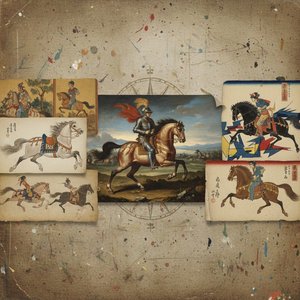
The Noble Steed on Canvas: A Historical & Artistic Exploration of Horse Painting Across Cultures
Explore the rich history of horse painting! Discover masterpieces from Stubbs to Munnings & learn about symbolism, techniques & artists. Find museum-quality reproductions at OriginalUniqueArt.
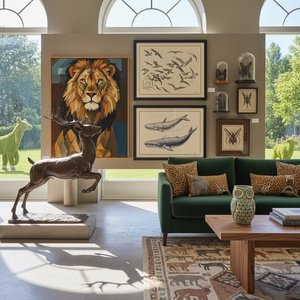
Zwierzęta w Sztuce: Wprowadzanie Życia do Twojej Przestrzeni
Odkryj fascynujący świat zwierząt w sztuce! Poznaj symbolikę, historię i współczesne interpretacje. Znajdź idealny obraz ze zwierzęciem do swojego wnętrza z .
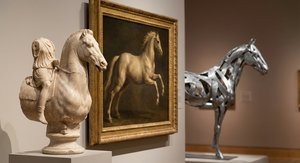
Konie w sztuce: Symbolika, reprezentacje i ewolucja motywu od starożytności do współczesności
Odkryj fascynującą historię koni w sztuce! Poznaj symbolikę, reprezentacje i ewolucję motywu od starożytności do współczesności. Ekspercka analiza dla miłośników sztuki i historii.

Konie jako Muzy w Sztuce: Historyczna i Artystyczna Eksploracja Końskiego Wizerunku
Odkryj fascynującą historię koni w sztuce! Eksploracja końskiego wizerunku od mitologii po współczesność. Analiza symboliki, gatunków i wpływowych dzieł malarskich. Poznaj bogactwo artystycznej interpretacji konia.

Sir Edwin Landseer: Sentiment, Society & the Victorian Animalier Tradition
Explore the life & art of Sir Edwin Landseer, Victorian Britain's foremost animal painter. Discover his iconic works, societal impact, and collecting guide at OriginalUniqueArt.
